
Moses Lake seed breeder honored
JOEL MARTIN | Hagadone News Network | UPDATED 2 years, 1 month AGO
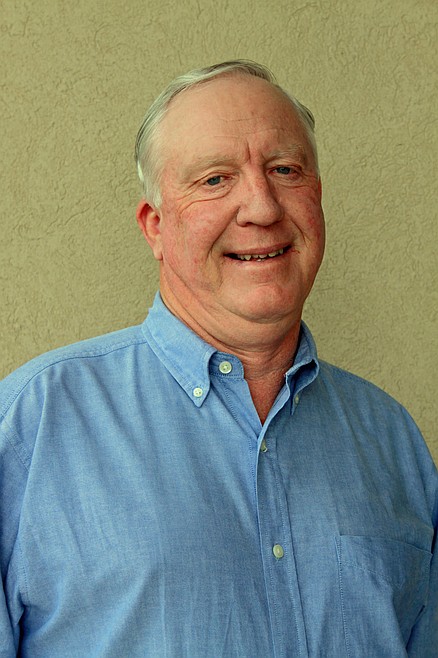
Jerry Benson, owner of BFI Native Seeds in Moses Lake, was named an Arthur R. Kruckeberg Fellow by the Washington Native Plant Society.
COURTESY PHOTO/WASHINGTON NATIVE PLANT SOCIETY
Joel Martin has been with the Columbia Basin Herald for more than 25 years in a variety of roles and is the most-tenured employee in the building. Martin is a married father of eight and enjoys spending time with his children and his wife, Christina. He is passionate about the paper’s mission of informing the people of the Columbia Basin because he knows it is important to record the history of the communities the publication serves. | August 23, 2024 2:10 AM
SEATTLE — Jerry Benson of Moses Lake was recently honored by the Washington Native Plant Society, according to an announcement from the society.
Benson, owner of BFI Native Seeds in Moses Lake, was named a WNPS Arthur R. Kruckeberg Fellow, according to the announcement. This is the highest honor given by the Society and recognizes outstanding contributions to the understanding and preservation of Washington’s flora.
According to the announcement, Benson has a degree in botany from Central Washington University and worked for 30 years as a restoration ecologist with the Washington Department of Fish and Wildlife. He recognized that there were better alternatives to the commercially available non-native and cultivar grass and forb seeds that were traditionally used in restoration projects. In retirement, he used his farm background, botany knowledge, and experience to found BFI Native Seeds, which has presented regularly at the WSU Grant-Adams Master Gardeners’ annual eco-gardening symposium.
Native plants have been gaining prominence among gardeners in the Columbia Basin because they use very little water, a precious commodity in this climate.
“People just think of sagebrush when we think of our native plants, but there's so many beautiful wildflowers out there that actually thrive in our yards,” Dinah Rouleau, program manager with the Columbia Basin Conservation District, told the Columbia Basin Herald in an interview last year. “They like our sandy soil that people think is pretty crappy, but they love it and they like our desert landscape without any water.”
Benson researched and developed methods to grow locally sourced native plant seeds and restoration strategies to ensure their success, the WNPS wrote. He is the lead author of the publication “Shrub-Steppe and Grassland Restoration Manual for the Columbia River Basin,” which has guided landowners and managers of large-scale projects since 2011. In the past five years, BFI Native Seeds has produced 1.4 million pounds of seeds for restoration work throughout Washington and Oregon.
“Jerry is widely respected in his field and has influenced numerous disciplines, Kelly Evans, a natural resource specialist with the U.S. Forest Service, wrote in the announcement. “He is an expert in native plant restoration and native plant propagation on a large scale. His willingness to share his experience and knowledge is phenomenal and his contribution to the advancement of using genetically appropriate native plant material in restoration is history in the making.”
“We all work atop the foundation that Jerry built, and many of us continue to seek his counsel,” wrote Kurt Merg, shrub-steppe restoration coordinator with the WDFW, in the announcement. “I can’t think of anyone that has contributed more than Jerry to the conservation of native plant communities in Washington.”
The WNPS Fellows award is named after Art Kruckeberg, who founded WNPS in 1976 and was a longtime professor of botany at the University of Washington, according to the announcement.
ARTICLES BY JOEL MARTIN

Endless battle
Noxious Weed Control Board works to keep invasive plants under control
MOSES LAKE — Some of the nastiest plants in Grant County were the topic of a class led by Jay Johnson, a consultant with the Grant County Noxious Weed Control Board, Tuesday. The Noxious Weed Control Board, as its name would suggest, is tasked with keeping weeds under control in Grant County. That’s not a small job; the board’s website lists 129 species of noxious weeds that are found around Grant County. A noxious weed is defined as an invasive, non-native plant that threatens agricultural crops, local ecosystems or fish and wildlife habitat, according to the Noxious Weed Control Board. Washington state law requires that these weeds be identified and their spread kept to a minimum, if not completely eradicated. “We’re one of those agencies a lot of people don’t really understand,” Johnson said. “We’re a county office and … our funding is tax-based assessment. When you get your tax bill and you look down at all the expenses that you pay for, there we are.”

BASIN EVENTS: Oct. 16-24
COLUMBIA BASIN — Whether you feel like shopping, crafting, learning or seeing a show, there’s something happening for you this week in the Basin. Oct. 16 ‘My Family (Mi Familia)’ screening Spanning three generations, “My Family (Mi Familia)” is a heartfelt drama that follows the Sánchez family as they build their lives in East Los Angeles. Through love, hardship, triumph, and sacrifice, the film explores the immigrant experience, the strength of family bonds, and the traditions that connect one generation to the next. Lowrider show and taco truck before the screening. Sponsored by Columbia Basin Allied Arts, EDUBS C/S and the Moses Lake Creative District. $12 per person. Doors open at 6 p.m., film begins at 7 p.m. at the Moses Lake Civic Center Auditorium, 401 S. Balsam St. Tickets and info: www.cba-arts.org.

Moses Lake author encourages women to look beyond church culture norms
MOSES LAKE — A Moses Lake author’s book, “A Christian Woman Striving to Live Her Faith in a Man-Controlled World,” takes aim at the role to which many churches relegate the female half of their congregations. “It’s to encourage women in the faith,” Linda Curran said. “A lot of churches say, ‘Teach Sunday school, do this, do that, but don’t (evangelize.)’" In her book, Curran recounts a time when she moved to a new community and joined a church there. She was surprised to learn that, as a new female member, she had been automatically assigned church cleaning duties. When she questioned it, she wrote, she was met with condescension and her objections were brushed aside. In other churches, she said, women who were capable of teaching were relegated to “women’s ministry.”