
Home at last
JOEL MARTIN | Hagadone News Network | UPDATED 1 year, 2 months AGO
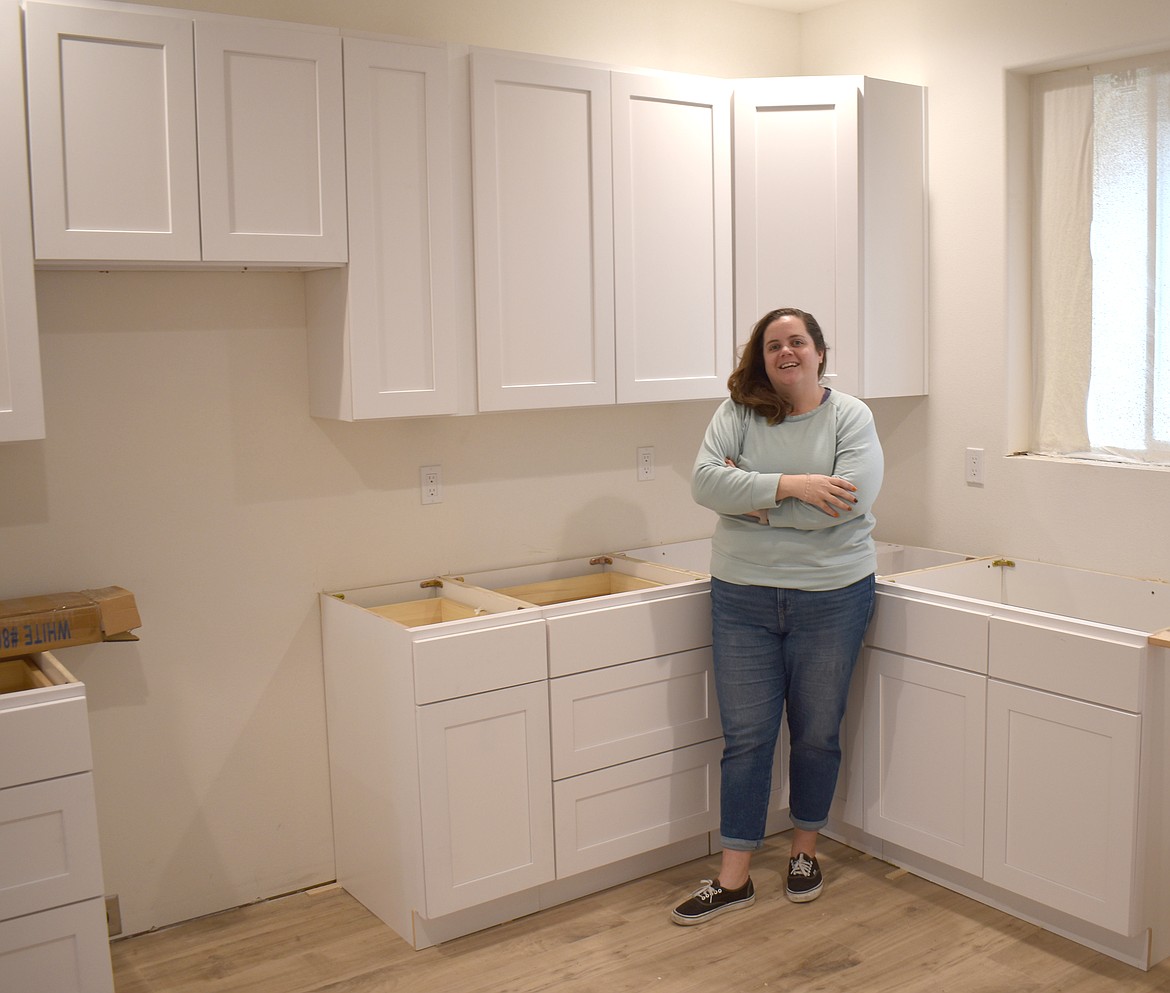
Habitat for Humanity of Greater Moses Lake Executive Director Rebecca Mabius stands in the nearly-finished kitchen of the newest Habitat home in Moses Lake. Mabius said she expects the home to be finished and the family moved in by the end of the year.
JOEL MARTIN/COLUMBIA BASIN HERALD
Joel Martin has been with the Columbia Basin Herald for more than 25 years in a variety of roles and is the most-tenured employee in the building. Martin is a married father of eight and enjoys spending time with his children and his wife, Christina. He is passionate about the paper’s mission of informing the people of the Columbia Basin because he knows it is important to record the history of the communities the publication serves. | December 6, 2024 3:30 AM
MOSES LAKE — A Moses Lake family will move into its first home in the coming weeks, thanks to Habitat for Humanity.
“This family is a family of four,” said Rebecca Mabius, executive director of Habitat for Humanity of Greater Moses Lake. “They were able to select the flooring. They're able to select the color of their house, all the cabinets. They came in and they did the tile work themselves which, God bless them, that's a feat in itself.”
Citing safety concerns, the family asked not to be identified and preferred not to speak directly with the Columbia Basin Herald.
The new home — 1,205 square feet on a corner lot with three bedrooms, two baths and a garage — has been a long time coming. County records show that Habitat purchased the land in 2009, and Mabius said this is the first home Habitat has built since 2018. A family had been selected for a home in 2019, she said, but took themselves off the list before the process was finished. And then came the pandemic.
“COVID was really difficult on a lot of organizations, individuals, agencies,” Mabius said. “When you're as small as we are, trying to keep up with restrictions and specifications, it's going to be more problematic.”
The house is mostly finished now; the countertops and appliances aren’t in yet and there are a few places still to be painted. The backyard is a fairly large one — Mabius said there had been tentative efforts at putting a duplex on the lot — but only a small area will be covered with lawn, both to save on water and because the children have allergies to pollen.
“We live in a desert; it takes a lot to keep a yard green,” Mabius said. And they're saying, ‘You know what? We don't really want that. So if we could do native plants and rocks, we'd really like to do that.’”
Habitat for Humanity was established in the 1970s as a way to increase access to adequate, affordable housing and enable people to own their own homes who might never be able to otherwise, according to its website. The concept was simple: Habitat volunteers would build a home and the family would pay for it with a zero-interest loan, which would then be used to finance another home for another family. Part of the deal was that the family would participate in the construction — investing 400 hours of what Habitat calls “sweat equity” — to give them a stronger feeling of ownership.
A few things have changed over the years, Mabius said.
“(400 hours is) a full-time job,” Mabius said. “(Habitat recognizes that) in most families, both parents are working. So they have 150 hours, and 50 has to be specifically within the home: doing tile work, painting, helping with cabinetry, helping with framing, and then a portion of it has to be in the community, volunteering with others, because we are a service organization.”
And the community returns the favor. Mabius said much of the material and labor for the home was given to them. Students from the Columbia Basin Job Corps Center pitched in with some of the work as well.
“Our roofing was donated,” she said. “Our framer donated a ton of his time. Our interior and exterior paint got donated. This laundry list of people who are willing to help and support it goes on and on and on.”
In Washington, the zero-interest loan isn’t feasible anymore, Mabius said, but Habitat works through various lenders, particularly the U.S. Department of Agriculture and the Washington Housing Finance Commission. Families that meet the income criteria for a Habitat home frequently, though not always, qualify for loans through those agencies, Mabius said.
Habitat is careful in screening applicants to make sure the family will be able to continue to pay the mortgage down the road, Mabius said.
“(We’re) looking at this as the foreseeable future, not just the here and now,” she said. “We know that insurance will increase. We know property tax will likely increase. So just because you can pay whatever the mortgage payment is right now, in 10 years, can you still make those mortgage payments successfully and not be house-poor? That's the biggest part of this is setting individuals up for success.”
Applying for a Habitat for Humanity home
The path to homeownership is an important and in-depth process, requiring hard work, time, and dedication. But this helps to ensure the long-term success of Habitat homeowners. The application process can take 6-8 months, and if you are selected for a home, it could take an additional 10-16 months for the home to be built. The application process depends on you, the applicants, time and availability, and the home build timeline depends on available land and funding.
1. Work with the organization’s mortgage originator to determine the home loan amount you are qualified for and your credit score.
2. Fill out a Homeowner application and turn in all required documents.
3. Attend and complete credit counseling and financial literacy courses based on the home loan.
4. A home visit with an HFHGML Homeowner Selection Committee member.
Information and forms can be found at habitatgreatermoseslake.org.
SOURCE: HABITAT FOR HUMANITY OF GREATER MOSES LAKE
ARTICLES BY JOEL MARTIN

Space Burger booth open March 13-15
MOSES LAKE — Those who can’t wait for the Grant County Fair can get their Space Burger fix next weekend, according to an announcement from the Lioness Club of Moses Lake. The iconic Grant County sandwiches will be available at the Grant County Fairgrounds March 13-15, according to the announcement. There is no admission fee to get into the fairgrounds that weekend.
SENIOR EVENTS: March 2026
COLUMBIA BASIN — Plays, art shows, auctions and more await seniors in the Columbia Basin this month. Here are some opportunities to get out and about in March.

Valentine’s Day cards flood Brookdale Hearthstone with love
MOSES LAKE — Residents at Brookdale Hearthstone Assisted Living in Moses Lake got Valentine’s Day greetings from across the country last month. “I believe that the only states we have not received (cards from) yet are Vermont and Maine,” Lifestyle Director Imelda Broyles said Feb. 24. “We keep receiving new cards every single day. They have not stopped. My residents are in awe with every single one of the cards that we’ve been receiving.” The Hearts Across America project started as a way for children in school classrooms to exchange Valentine’s Day cards with classes in other states or even countries, but the idea has expanded to senior living facilities, according to the project’s social media.