
Retail Flexibility: With a little imagination, shopping malls still booming
JOEL MARTIN | Hagadone News Network | UPDATED 1 year, 10 months AGO

Shoppers roam Valley Mall in Union Gap on a Friday afternoon. Although many mall stores are geared for younger shoppers, the mall attracts all demographics, said General manager Linda DiLembo.
JOEL MARTIN/BASIN BUSINESS JOURNAL
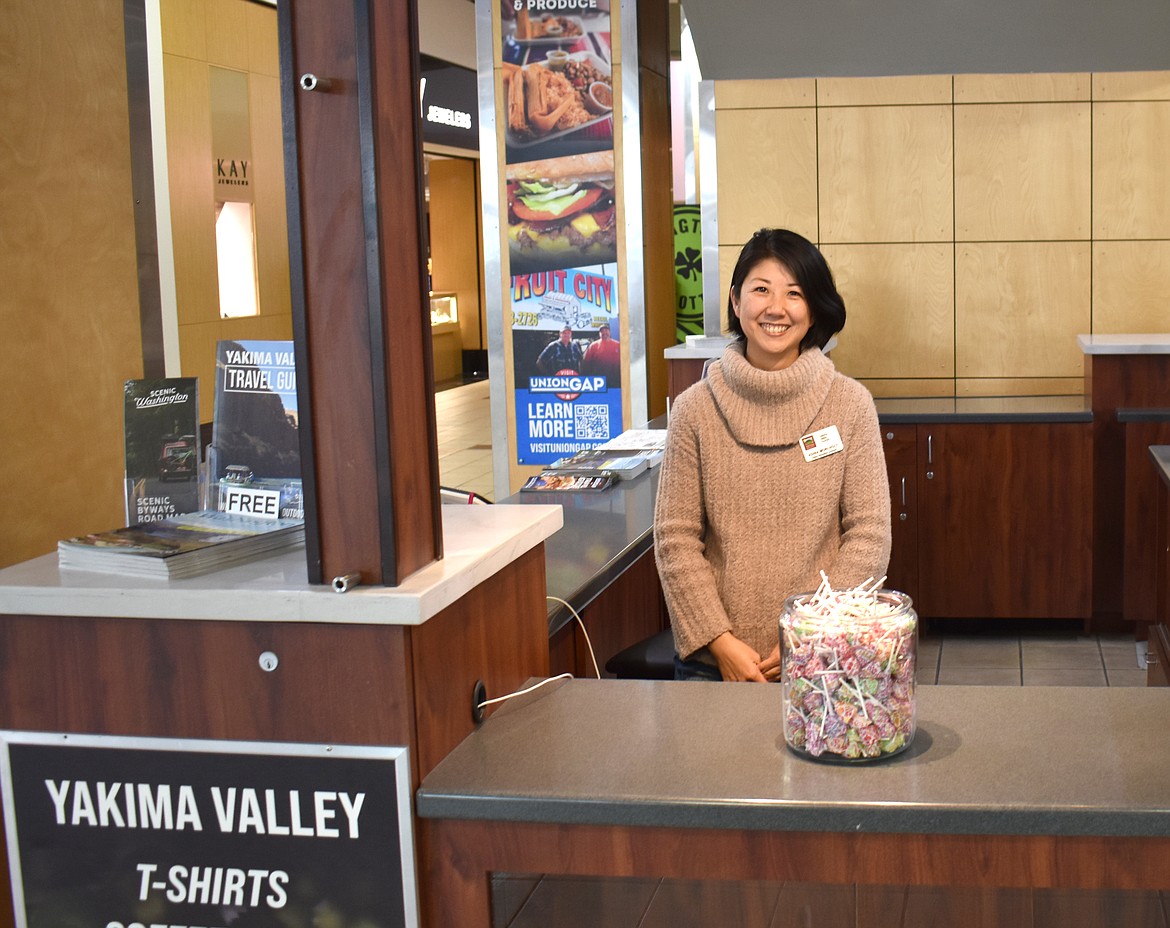
Adina Mori-Holt staffs the Yakima Valley Tourism kiosk at Valley Mall. Because the kiosk is located at the front entrance of the mall, Mori-Holt said, she’s often mistaken for a mall employee and asked for directions.
JOEL MARTIN/BASIN BUSINESS JOURNAL
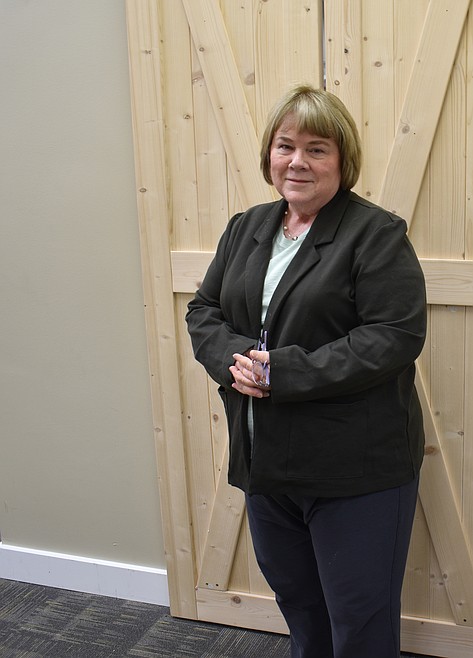
Valley Mall General Manager Linda DiLembo stands in her office on the second floor of the mall.
JOEL MARTIN/BASIN BUSINESS JOURNAL
Joel Martin has been with the Columbia Basin Herald for more than 25 years in a variety of roles and is the most-tenured employee in the building. Martin is a married father of eight and enjoys spending time with his children and his wife, Christina. He is passionate about the paper’s mission of informing the people of the Columbia Basin because he knows it is important to record the history of the communities the publication serves. | December 16, 2024 1:00 AM
UNION GAP — There was a time when the shopping mall was the place to be. From the late 1970s to the early 2000s, indoor shopping spaces dominated American cities and suburbs. Big department stores did a thriving business side-by-side with small boutiques, food courts, jewelry stores and video arcades. When it came to retail, the shopping mall was king.
Today, by some estimates, there are only about 700 enclosed shopping malls left in the United States, compared to more than 2,500 at their height in the 1980s. To hear some people tell it, the shopping mall has gone the way of the drive-in theater or the automat.
But rumors of its demise are greatly exaggerated, said Linda DiLembo, general manager of Valley Mall in Union Gap, near Yakima.
“Shopping centers are very much alive,” DiLembo said. “It’s like any product; there are different favorite stores that are no longer with us, and that’s because they didn’t answer a need of their community … But if you’re doing your job and you are leasing well, and you’re picking the types of services and shops and restaurants that people demand and want, people come.”
Flexibility is an important factor, DiLembo said. Valley Mall is kind of a hybrid, she explained; most retail shopping centers have either an enclosed mall or a strip center, but not both together. The enclosed mall, anchored by Kohl’s and Macy’s, is still the heart of Valley Mall, but it’s not the entirety. The 61-acre property, including the outdoor-facing Valley Mall Plaza, Valley Mall Frontage and Washington Plaza, includes more than 800,000 square feet of retail and restaurants, according to CenterCal Properties, which owns Valley Mall along with six other shopping centers in Washington and Oregon.
“It’s a little bit of everything,” DiLembo said. “You have two power centers, an enclosed mall, and also a strip center, and they’re all within close proximity of each other. That’s part of the reason why we’re successful.”
Adina Mori-Holt, who was staffing the Yakima Valley Tourism kiosk at the front entrance of Valley Mall proper, said that took her by surprise as an incoming transplant from southern California.
“This mall is a little unusual, in my opinion, because it’s kind of spread out like a campus more than it is like a Galleria-type mall that I’m used to seeing in L.A.,” Mori-Holt said. “If they had all the stores together this would be a megamall.”
The location is also a factor, DiLembo said. Yakima is a smaller market than Seattle or Portland, but it’s central to a sparsely-populated, spread-out region.
“Smaller markets can be much, much more profitable, because many times they don’t have a lot of other shopping centers near them, a lot of competition, so to speak,” she said. “The next closest shopping center would be in Tri-Cities, which is over 75 miles away. So, it’s just a question of how far you want to drive, and really, everything these days is a matter of convenience.”
That has enabled Valley Mall to bring in stores like Nordstrom Rack, she said, the only one in central Washington.
“We were very well aware of the fact that that was a retailer that people wanted to see out here,” DiLembo said. “And it’s become a demand tenant. People drive (from) as far away from Wenatchee, Ellensburg, Tri-Cities. they drive from quite a distance. The next one that’s available would be either in Spokane or in Seattle. Nobody really wants to drive that far.”
Part of location is the community surrounding the mall. DiLembo said some cities are more business-friendly than others, and Union Gap is one of them.
“If you go into a city and they make your life difficult with regards to new rules, regulations, higher taxes or business taxes, or they make bringing a new tenant almost impossible, then you don’t do too well,” she said. “If you come to a city like Union Gap, which is very business friendly, you can go ahead and file a permit and get it done within a reasonable period of time … I think this is one of the best communities I have ever worked with in the last 20 years.”
“I want to say that the customer service in a place like this is top notch compared to LA,” Mori-Holt said. “This community is very kind-hearted and community oriented.”
Several generations of Americans came of age at shopping malls, whether buying or just hanging out. Things aren’t that different today, DiLembo said.
“This is a very much a strong teen market,” she said. “We have a store here called Buckle that is really dead-on (for) 25-to-34-year-olds and they just do outstanding.”
“The busiest time that I’ve noticed is during the summer, and then after school or on the weekend,” Mori-Holt said. “Saturday is the busiest day. We see a lot of teenagers.”
Valley Mall had already decorated for Christmas shopping season in early November, and despite the specter of online retail giants like Amazon, DiLembo said the mall still does a booming business during the holidays.
“In this community, our shoppers tend to like to actually touch and feel and see the merchandise,” she said.
“There is a novelty behind having physical things that I think younger generations are kind of gravitating back towards,” Mori-Holt said. “I think they’re catching on (that) being on your phone is not good for your mental health, and they’re trying to cleanse themselves.”
Those shoppers who do order online, DiLembo said, can have products shipped to the local store, and if they need to, return it there. That online flexibility was a huge boon during the pandemic, she said.
“If I go online right now, and I don’t want to go in and face all the crowds in there, I can go ahead and click a little, you know, check mark, and I can see what they have in store,” she said. “And if I know what I’m looking for, and I know the brands that I want … I can go ahead and pick all the items I want. They’ll go ahead and have it in the bag for me ready to go that afternoon. It’s just again, because of COVID, that was something that naturally came out.”
The mall was closed for four months during the pandemic, she added, but with careful management, they made it through without losing a single valued tenant.
“If you’ve supported your community, they’re going to turn around and support you,” she said. “(If) I have a choice of going online or walking down the block and coming to the mall, who’s been a good partner with us for all these years, I’m going to support my local community.”
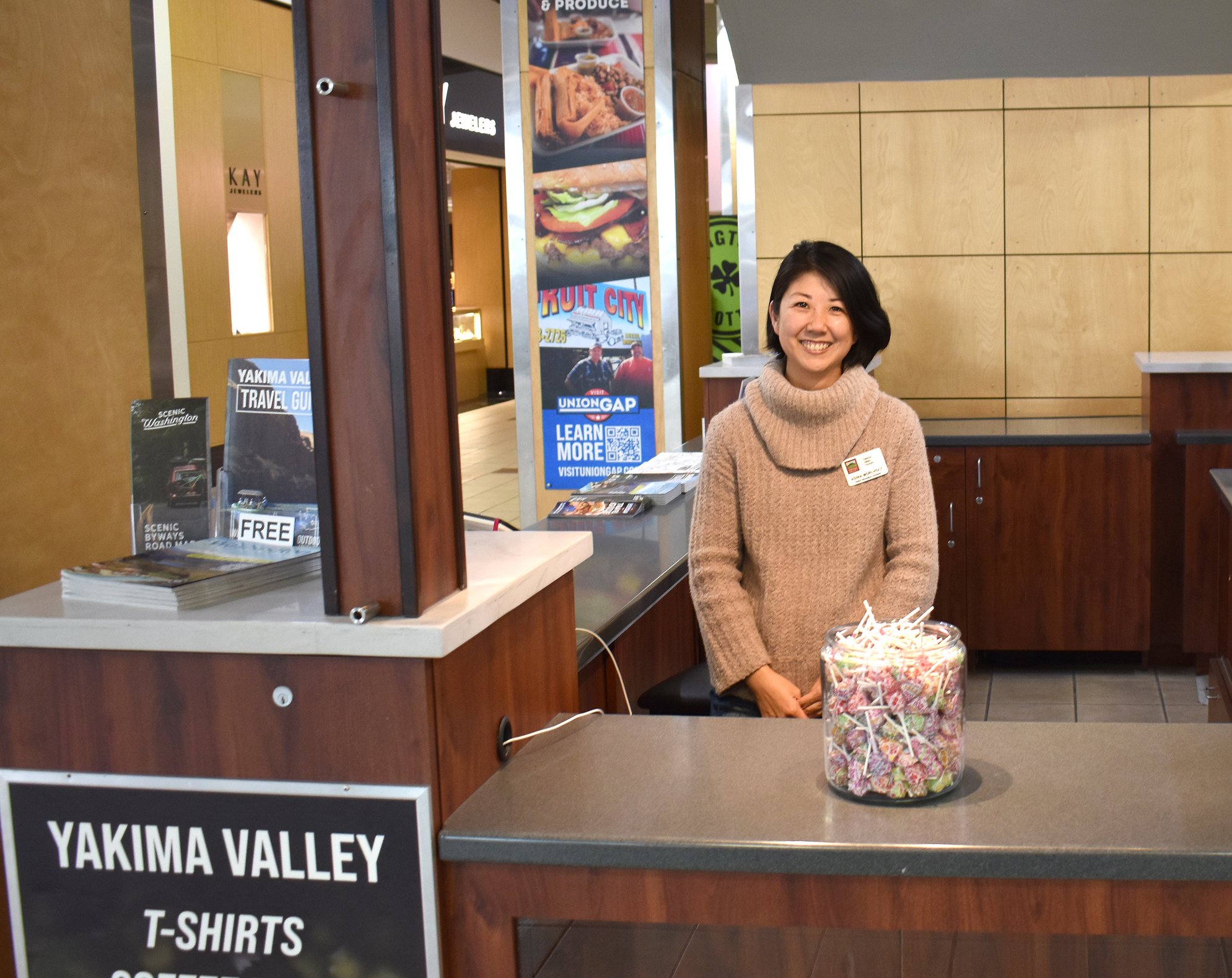 Adina Mori-Holt staffs the Yakima Valley Tourism kiosk at Valley Mall. Because the kiosk is located at the front entrance of the mall, Mori-Holt said, she’s often mistaken for a mall employee and asked for directions.
JOEL MARTIN/BASIN BUSINESS JOURNAL
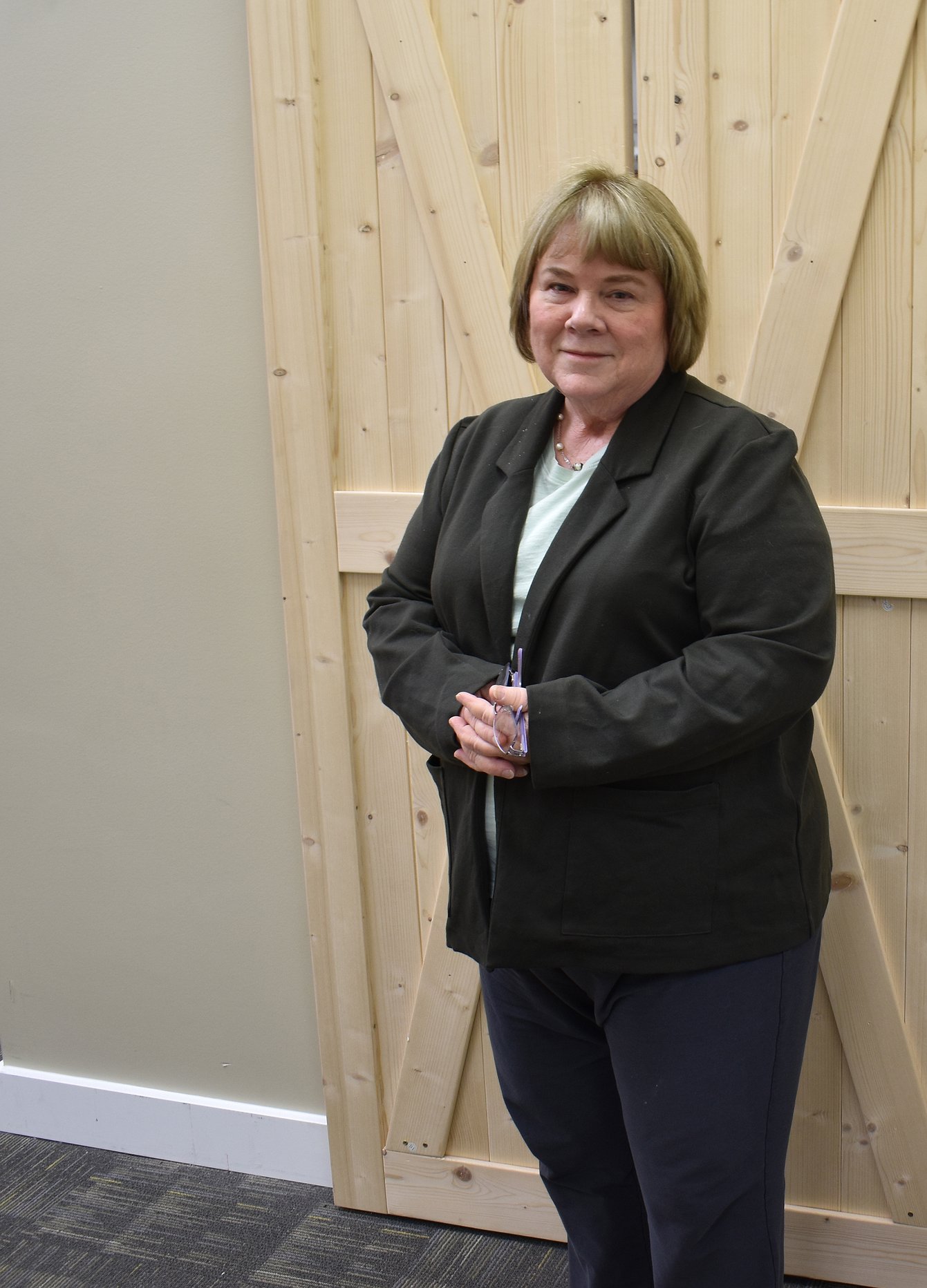 Valley Mall General Manager Linda DiLembo stands in her office on the second floor of the mall.
JOEL MARTIN/BASIN BUSINESS JOURNAL
ARTICLES BY JOEL MARTIN
Endless battle
Noxious Weed Control Board works to keep invasive plants under control
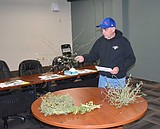
MOSES LAKE — Some of the nastiest plants in Grant County were the topic of a class led by Jay Johnson, a consultant with the Grant County Noxious Weed Control Board, Tuesday. The Noxious Weed Control Board, as its name would suggest, is tasked with keeping weeds under control in Grant County. That’s not a small job; the board’s website lists 129 species of noxious weeds that are found around Grant County. A noxious weed is defined as an invasive, non-native plant that threatens agricultural crops, local ecosystems or fish and wildlife habitat, according to the Noxious Weed Control Board. Washington state law requires that these weeds be identified and their spread kept to a minimum, if not completely eradicated. “We’re one of those agencies a lot of people don’t really understand,” Johnson said. “We’re a county office and … our funding is tax-based assessment. When you get your tax bill and you look down at all the expenses that you pay for, there we are.”
BASIN EVENTS: Oct. 16-24
COLUMBIA BASIN — Whether you feel like shopping, crafting, learning or seeing a show, there’s something happening for you this week in the Basin. Oct. 16 ‘My Family (Mi Familia)’ screening Spanning three generations, “My Family (Mi Familia)” is a heartfelt drama that follows the Sánchez family as they build their lives in East Los Angeles. Through love, hardship, triumph, and sacrifice, the film explores the immigrant experience, the strength of family bonds, and the traditions that connect one generation to the next. Lowrider show and taco truck before the screening. Sponsored by Columbia Basin Allied Arts, EDUBS C/S and the Moses Lake Creative District. $12 per person. Doors open at 6 p.m., film begins at 7 p.m. at the Moses Lake Civic Center Auditorium, 401 S. Balsam St. Tickets and info: www.cba-arts.org.
Moses Lake author encourages women to look beyond church culture norms
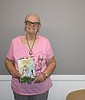
MOSES LAKE — A Moses Lake author’s book, “A Christian Woman Striving to Live Her Faith in a Man-Controlled World,” takes aim at the role to which many churches relegate the female half of their congregations. “It’s to encourage women in the faith,” Linda Curran said. “A lot of churches say, ‘Teach Sunday school, do this, do that, but don’t (evangelize.)’" In her book, Curran recounts a time when she moved to a new community and joined a church there. She was surprised to learn that, as a new female member, she had been automatically assigned church cleaning duties. When she questioned it, she wrote, she was met with condescension and her objections were brushed aside. In other churches, she said, women who were capable of teaching were relegated to “women’s ministry.”