
Grant PUD rates to increase in 2025
CHERYL SCHWEIZER | Hagadone News Network | UPDATED 1 year, 8 months AGO
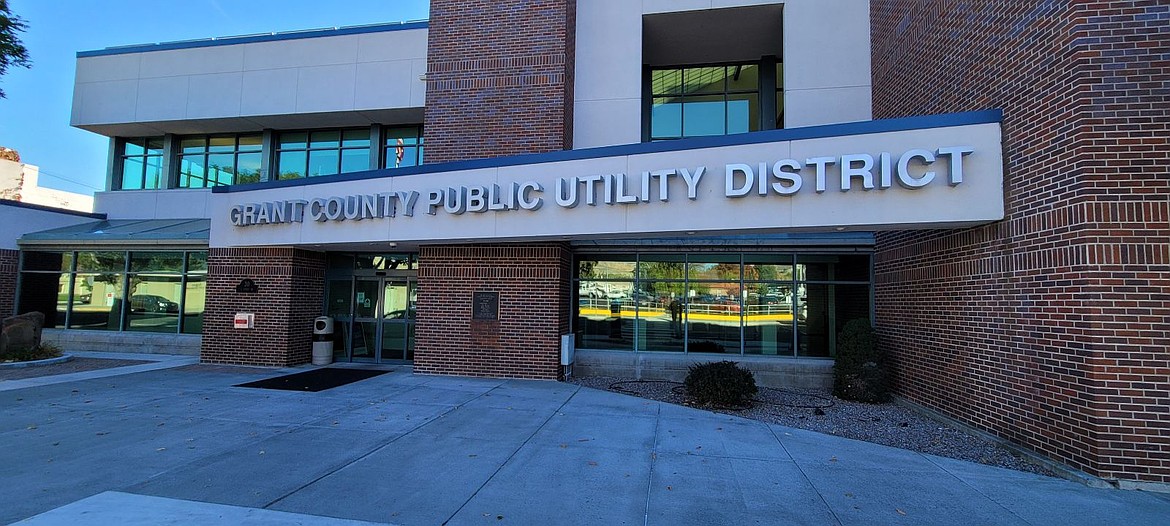
All Grant County PUD customers will see a rate increase in 2025, but not all classes will have the same increase. Residential users will see an increase of about $2.58 on average in their monthly bills, but that increase will be higher for users such as various data farms in the area.
FILE PHOTO
Senior Reporter Cheryl Schweizer is a journalist with more than 30 years of experience serving small communities in the Pacific Northwest. She began her post-high-school education at Treasure Valley Community College and enerned her journalism degree at Oregon State University. After working for multiple publications, she has settled down at the Columbia Basin Herald and has been a staple of the newsroom for more than a decade. Schweizer’s dedication to her communities and profession has earned her the nickname “The Baroness of Bylines.” She covers a variety of beats including health, business and various municipalities. | December 17, 2024 3:30 AM
EPHRATA — Grant County PUD customers will be paying more for electricity in 2025, although not all customers will see the same increase. Utility district commissioners approved the 2025 budget with a 3% overall rate increase at their regular meeting Dec. 10.
The draft 2025 budget projected a 2% average increase, but commissioners opted for 3% instead. The rate increases will go into effect April 1.
Residential electric customers will receive a 2.5% increase, which Christine Pratt, PUD public information officer, said would add an average of about $2.58 to the bill.
Commissioners had the option of a 2% or 2.5% overall increase, ultimately opting for 3% overall, which is about the same as the increase approved for 2024, according to a PUD memo detailing the changes to each rate class.
Utility district commissioners did defer rate increases at times in the past, 2020 being an example. Commissioner Larry Schaapman said in an earlier interview that’s less likely in the future.
The PUD didn’t always need the revenue, Schaapman said, and as a result, didn’t raise the rates.
“In the foreseeable future, we don’t see that happening,” he said.
Times have changed, in part because the PUD is coming close to the point where it will have to find new sources of electricity to meet demand, said Ty Ehrman, PUD chief customer officer, in an earlier interview.
Commissioners also opted to charge different rates to different rate classes, rather than charging an across-the-board increase. Julio Aguirre, manager of rates and pricing, told commissioners Nov. 12 that was the staff’s recommendation.
“We do believe that this provides for taking an additional step in mitigating some of the significant cost differences between what customers are currently paying, and what the cost of service for 2023 has indicated,” Aguirre said.
Utility district officials analyze how much it costs to provide service to each customer class as part of the rate-setting process. The last analysis was done in 2023. It was in line with previous studies, which have shown some classes are paying more than what it costs to provide them with electricity, and some of them are paying less.
Commission policy establishes a list of “core customers,” which include residential and irrigation customers, along with businesses that use under 500 kilowatts of power. Those customers are first in line to receive the benefits of electricity generated at Priest Rapids and Wanapum dams, both of which are owned by the PUD. Power from the two dams, called the Priest Rapids Project, is cheaper.
General service customers (Class 2) are the ones who use under 500 kilowatts; their rates also will increase by 2.5%. So will the rate for irrigation customers, which is defined as operations with irrigation, orchard temperature control or soil drainage equipment not exceeding 2,500 horsepower.
Large industrial customers (Class 15) will receive a 2.5% increase. They are not core customers and are paying more than it costs to provide their electricity, according to the results of the 2023 cost of service analysis.
“We recognize they are paying above cost of service, and in order to mitigate some of that gap, we are recommending that the increase that they pay is set equal to the core classes,” Aguirre said.
Large general customers, businesses that use between 200 and 5,000 kilowatts, will receive a 4.9% increase. Aguirre said they were a special case.
“This is in part to align the relative economics of what these customers pay compared to what they would pay (in general service or industrial classes),” Aguirre said. “And facilitate moving this gradually toward the cost of service level.”
Industrial customers (Class 14) will be charged a 6% increase. They’re defined as customers that use more than five megawatts of power but less than 10 megawatts. They are paying more than the cost to provide their electricity, but not as much as the large industrial class.
“They are above cost of service, but we do feel there is room to increase their margin contributions. They are closer to the cost of service, and we do feel it is possible to increase their rates without impacting them significantly,” Aguirre said.
Streetlights are their own class, and rates will go up 6%. So will ag processing (Class 16), vehicle fast charging (Class 19), ag boiler (Class 85) and evolving industry customers (Class 17). As of now, cryptocurrency businesses are the only customers in the evolving industry class.
The customers who got 6% increases are mostly paying below the cost of their service, Aguirre said.
ARTICLES BY CHERYL SCHWEIZER
Road projects on hold for Labor Day weekend
MOSES LAKE — With Labor Day weekend dead ahead, drivers will be able to move freely about the state. Most road projects are on hold for the holiday weekend. Nobody will be working on the Hansen Road overpass on Interstate 90, but the lane restrictions that are in effect will continue through the end of the project.

Cost estimates for water source alternatives given to Moses Lake City Council
Protected under the U.S. Endangered Species Act, efforts are ongoing to keep it self-sufficient
MOSES LAKE — It’s going to cost a lot of money to provide alternative water sources for the city of Moses Lake, but some of the possible alternatives will cost more than others. City officials provided the Moses Lake City Council with costs for various alternatives Tuesday.

Dryer vent cleaning is important -- but often overlooked
MOSES LAKE — Not all the maintenance a house needs is visible. Sometimes a potential problem just goes unnoticed until it causes trouble, sometimes serious trouble. But a lot of potential problems give off warning signs. Clothes dryers often do when they need a good cleaning.