
Fighting sadness
JOEL MARTIN | Hagadone News Network | UPDATED 2 years, 8 months AGO
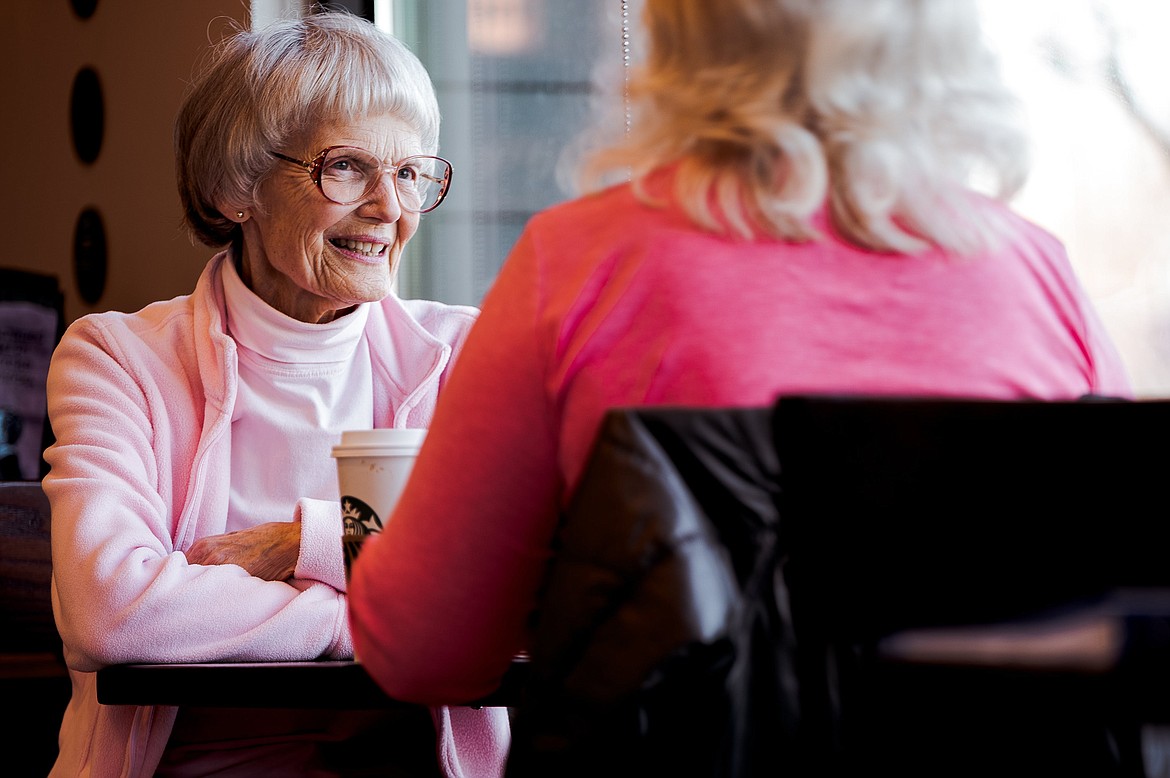
A new program called “Do More Feel Better” aims to fight depression in seniors in the Columbia Basin. Experts say retirees and seniors in general face depression for a variety of reasons unique to their situations.
COURTESY PHOTO/BRETT SAYLES/PEXELS
Joel Martin has been with the Columbia Basin Herald for more than 25 years in a variety of roles and is the most-tenured employee in the building. Martin is a married father of eight and enjoys spending time with his children and his wife, Christina. He is passionate about the paper’s mission of informing the people of the Columbia Basin because he knows it is important to record the history of the communities the publication serves. | February 7, 2024 1:30 AM
COLUMBIA BASIN — A new program to identify and cope with depression in seniors is expanding to the Columbia Basin. It’s called “Do More Feel Better,” and it will be offered free in both English and Spanish.
“Older adults who have mental health or emotional concerns like depression really are not getting the care that they need,” said Dr. Patrick Raue, a clinical psychologist at the University of Washington Medical Center, who developed the Do More Feel Better program. “That's for a lot of reasons. There are not a lot of trained professionals out there, but there's also a lot of stigma, denying that (they) need help, or there's nothing that is being offered that (they) find acceptable.”
Raue said he’s been testing Do More Feel Better for several years in partnership with senior centers in Seattle as well as Florida and New York with funding from the National Institute of Mental Health. The current expansion into Central Washington will be a little different, he said, because it will be done remotely through either Zoom or phone calls. One reason for this approach is to reach Spanish speakers who may not have a senior center locally that serves their needs, Raue said.
“Volunteer coaches who themselves are 60 or older (will) help older adults with depression to manage their depression and reengage with activities that they used to find really important to them, or rewarding or meaningful, or that gave them a sense of accomplishment, but they may have stopped doing or do a lot less of since becoming depressed,” he said.
Some enrollees will partner with volunteer coaches and others with clinical psychotherapists, Raue explained. Participants will meet online for nine weeks with their provider and look for ways to reengage in activities that can help to keep depression at bay.
“We follow them up and research to see how they're doing three and six months later,” Raue said, “because we want to keep tabs on them, and to see the longer-term impact of this program, and to see if they can be their own coach even after they stopped seeing their coach.”
The meetings will also serve as a test for the program to see how volunteer coaches compare to the professionals, Raue explained. The volunteers will go into the sessions rigorously trained by him or a member of his team in learning about depression and older adults, and overseen by professionals at every stage.
“(Do More Feel Better) is sort of shorthand for doing more of the activities that you find rewarding or valuable or that give you a sense of accomplishment,” Raue said. “If people become depressed, they tend to withdraw and do less activities because they're not feeling well, they're not feeling motivated, they're not feeling the energy that they used to have. It's a really natural response. But unfortunately, it creates a vicious cycle where they're doing less physically, they're being less social, less involved, and it maintains the depression and keeps them depressed.”
Participants can also receive up to $130 in compensation for their help in the testing, according to the program’s promotional materials.
Each coach will help an older adult start with activities that are feasible for their situation, Raue said, even if it’s only for 10 minutes a day.
“It’s ideally over and above their routine, something they can do that it's going to give them a mood boost,” Raue said. “And then they see they start to develop greater self-efficacy and feeling like, ‘There's actually a few things that I can do to improve my quality of life and my mood.’”
Participants should be 60 or older and live on their own or with family rather than a nursing home or assisted living facility, Raue said. Staff will evaluate people who are interested to see if they meet the criteria for clinical depression.
“Depression can really kind of poison the way we think and make us think there's nothing we can do,” Raue said. “(We feel like) ‘the way I'm feeling now is the way I've always felt and will always feel,’ This is a program that shows them ‘Hey, there's actually a few things that I can do to make myself feel better.’
Joel Martin may be reached via email at [email protected].
More info:
To find out more about Do More Feel Better, call 206-616-2129 in English or 206-507-4155 in Spanish, or email [email protected].
ARTICLES BY JOEL MARTIN
Endless battle
Noxious Weed Control Board works to keep invasive plants under control
MOSES LAKE — Some of the nastiest plants in Grant County were the topic of a class led by Jay Johnson, a consultant with the Grant County Noxious Weed Control Board, Tuesday. The Noxious Weed Control Board, as its name would suggest, is tasked with keeping weeds under control in Grant County. That’s not a small job; the board’s website lists 129 species of noxious weeds that are found around Grant County. A noxious weed is defined as an invasive, non-native plant that threatens agricultural crops, local ecosystems or fish and wildlife habitat, according to the Noxious Weed Control Board. Washington state law requires that these weeds be identified and their spread kept to a minimum, if not completely eradicated. “We’re one of those agencies a lot of people don’t really understand,” Johnson said. “We’re a county office and … our funding is tax-based assessment. When you get your tax bill and you look down at all the expenses that you pay for, there we are.”
BASIN EVENTS: Oct. 16-24
COLUMBIA BASIN — Whether you feel like shopping, crafting, learning or seeing a show, there’s something happening for you this week in the Basin. Oct. 16 ‘My Family (Mi Familia)’ screening Spanning three generations, “My Family (Mi Familia)” is a heartfelt drama that follows the Sánchez family as they build their lives in East Los Angeles. Through love, hardship, triumph, and sacrifice, the film explores the immigrant experience, the strength of family bonds, and the traditions that connect one generation to the next. Lowrider show and taco truck before the screening. Sponsored by Columbia Basin Allied Arts, EDUBS C/S and the Moses Lake Creative District. $12 per person. Doors open at 6 p.m., film begins at 7 p.m. at the Moses Lake Civic Center Auditorium, 401 S. Balsam St. Tickets and info: www.cba-arts.org.
Moses Lake author encourages women to look beyond church culture norms
MOSES LAKE — A Moses Lake author’s book, “A Christian Woman Striving to Live Her Faith in a Man-Controlled World,” takes aim at the role to which many churches relegate the female half of their congregations. “It’s to encourage women in the faith,” Linda Curran said. “A lot of churches say, ‘Teach Sunday school, do this, do that, but don’t (evangelize.)’" In her book, Curran recounts a time when she moved to a new community and joined a church there. She was surprised to learn that, as a new female member, she had been automatically assigned church cleaning duties. When she questioned it, she wrote, she was met with condescension and her objections were brushed aside. In other churches, she said, women who were capable of teaching were relegated to “women’s ministry.”