
Reichert’s Showhouse in Othello for sale after 32 years of business
GABRIEL DAVIS | Hagadone News Network | UPDATED 2 years, 1 month AGO

Exterior of Reichert’s Showhouse 3 in Othello, owned and operated by Bob and Donna Reichert for 32 years. The theater, located at 130 N. Broadway Ave., was recently listed for sale for $1.25 million.
GABRIEL DAVIS/COLUMBIA BASIN HERALD

From left to right, Bob Reichert, Robert Reichert and Donna Reichert stand in the lobby of Othello’s Reichert’s Showhouse 3, the theater Bob and Donna Reichert purchased in 1992 and have operated since. The Reicherts recently listed the building for sale.
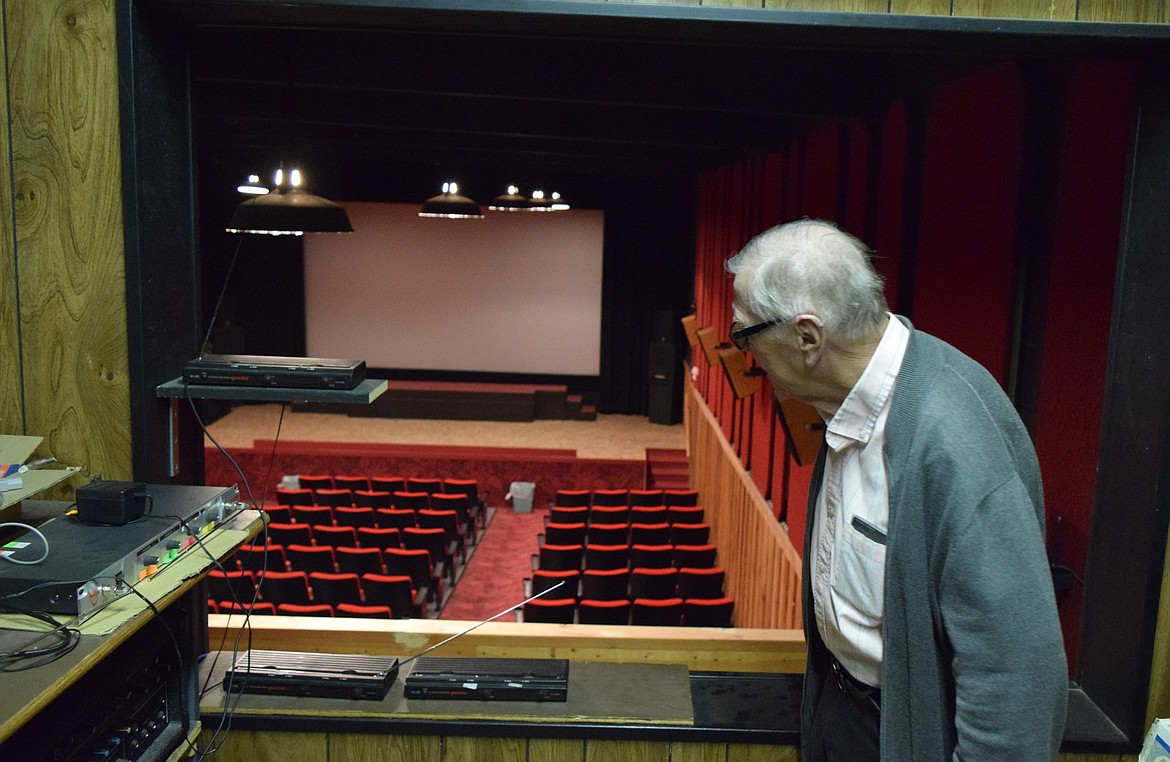
Bob Reichert looks down from the viewing room above Reichert’s Showhouse 3’s original auditorium, which the Reicherts had to completely restore after it was left in disrepair by the previous owners of the theater.
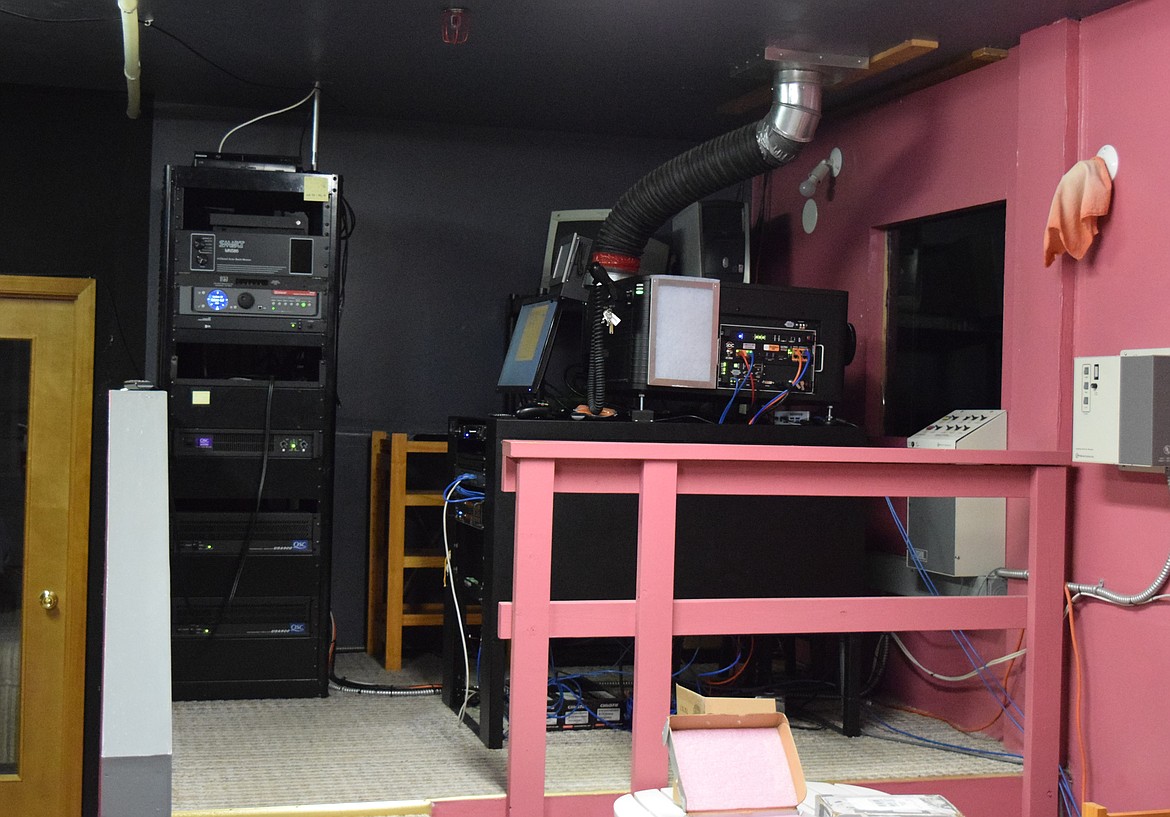
A digital projector points out a window above one of Reichert’s Showhouse 3’s newer theaters. Reichert’s has three newer digital projectors for its three theater screens.
Gabriel Davis is a resident of Othello who enjoys the connections with his sources. Davis is a graduate of Northwest Nazarene University where he studied English and creative writing. During his free time, he enjoys reading, TV, movies and games – anything with a good story, though he has a preference for science fiction and crime. He covers the communities on the south end of Grant County and in Adams County. | February 7, 2024 1:35 AM
OTHELLO — Bob and Donna Reichert have owned and operated Reichert’s Showhouse 3 in Othello with their son, Robert Reichert, for 32 years. Now, they are selling the building and retiring from the theater business.
“I'm getting so old I don't have the energy anymore,” Bob said. “That's the main reason for selling, it's our health … Rob is okay, but he's been at it a long time, he's ready to move on too.”
Bob said it took them about 10 years after purchasing the building to construct two additional theater auditoriums, about five years for each room. The building was in need of significant renovations and cleaning after sitting empty for eight years.
“They just closed her up one night and walked away,” Bob said.
The Reicherts moved to Othello in 1978, Bob said, and worked with the Othello School District.
“We're both retired music teachers,” Bob said. “I taught for 30 years and (Donna) taught for 38 years … Scootney Springs, I taught there for five years … But for those five years, it was a fifth- and sixth-grade school. Just two grades. Then they decided they were going to reconfigure again, K-6. So here I was, all the stuff I had built up in the music program. I decided, ‘I don't want to start all over. Not with elementary.’ So I was applying around and (the theater) was for sale and I said, ‘I think I’ll try that. That might be fun.’”
Robert has worked at the theater in some capacity since it opened, he said.
“I left for a little bit and worked for Regal,” Robert said. “And then I did one year of customer service. Basically, there was only one year where I wasn't involved (with the theater business).
Robert talked about some of the challenges of running the theater.
“That's part of the thing, I don't have a manager. We don’t have the means to keep it going with personnel, and the minimum wage of $16, that’s killing us,” he said. “I can't pay a manager 25 bucks an hour like I should be able to.”
The movie-making industry has also had a significant impact on the theater’s sales.
“Well, that writer's strike put us back into COVID mode. We get out of COVID, we scratch and crawl, think we're done and get the help we need and then we get going again, then the strike hits and now we haven't had a $100 million-dollar movie opening since like last summer,” Robert said. “Everything's just been $25 (million) to $35 million openings or less and that's not going to cut it.”
Bob Reichert said the changing ways people consume media have also impacted the theater.
“That's what's really hurting us right now, is this streaming,” he said. “Right now the movie business is very cyclical. There’s nothing steady about it. The good movies, the really good movies, they try to release to the theaters only. But they keep breaking their words, and they decide to stream it … It’s up and down, really up and down; it's worse than farming.”
The COVID-19 pandemic also forced the theater to shut down for a while, with very few movies being produced and released in theaters.
Bob said renting the films for their theater from the studios is based on a percentage of the movie’s gross.
“They're getting very greedy because the studios are hurting also. Right now, the rental is running anywhere from, for the bigger movies 58%, sometimes 60%. That's a lot of money.”
Despite their challenges and reasons for leaving the theater, Bob said they wanted to leave it correctly.
“Our goal is to sell it, but our biggest goal right now is to make sure it's in working order,” he said. “We don't want to sell a failing business. We probably can't do that; nobody will want it. So we're struggling to keep it going.”
Overall, Bob said he feels good about the theater’s 32-year run but is ready to retire from it.
“All I’m doing right now is worrying about books and money, where it's going to come from, and that takes all the fun out of it,” he said.
Donna added her input on the theater’s future.
“(It should) continue to have movies,” she said. “I really hope they don’t change it to a playroom or something like that. We still want movies, because this is Othello. There's nothing else to do now that the bowling alley is closed. There's no entertainment, really.”
Bob said the theater will be open until they can sell the building, at which point it will be up to the new owners what they want to do with it.
“I just want to see a new owner coming in here and be successful,” he said.
Gabriel Davis may be reached at [email protected]. Download the Columbia Basin Herald app on iOS and Android.
 From left to right, Bob Reichert, Robert Reichert and Donna Reichert stand in the lobby of Othello’s Reichert’s Showhouse 3, the theater Bob and Donna Reichert purchased in 1992 and have operated since. The Reicherts recently listed the building for sale.
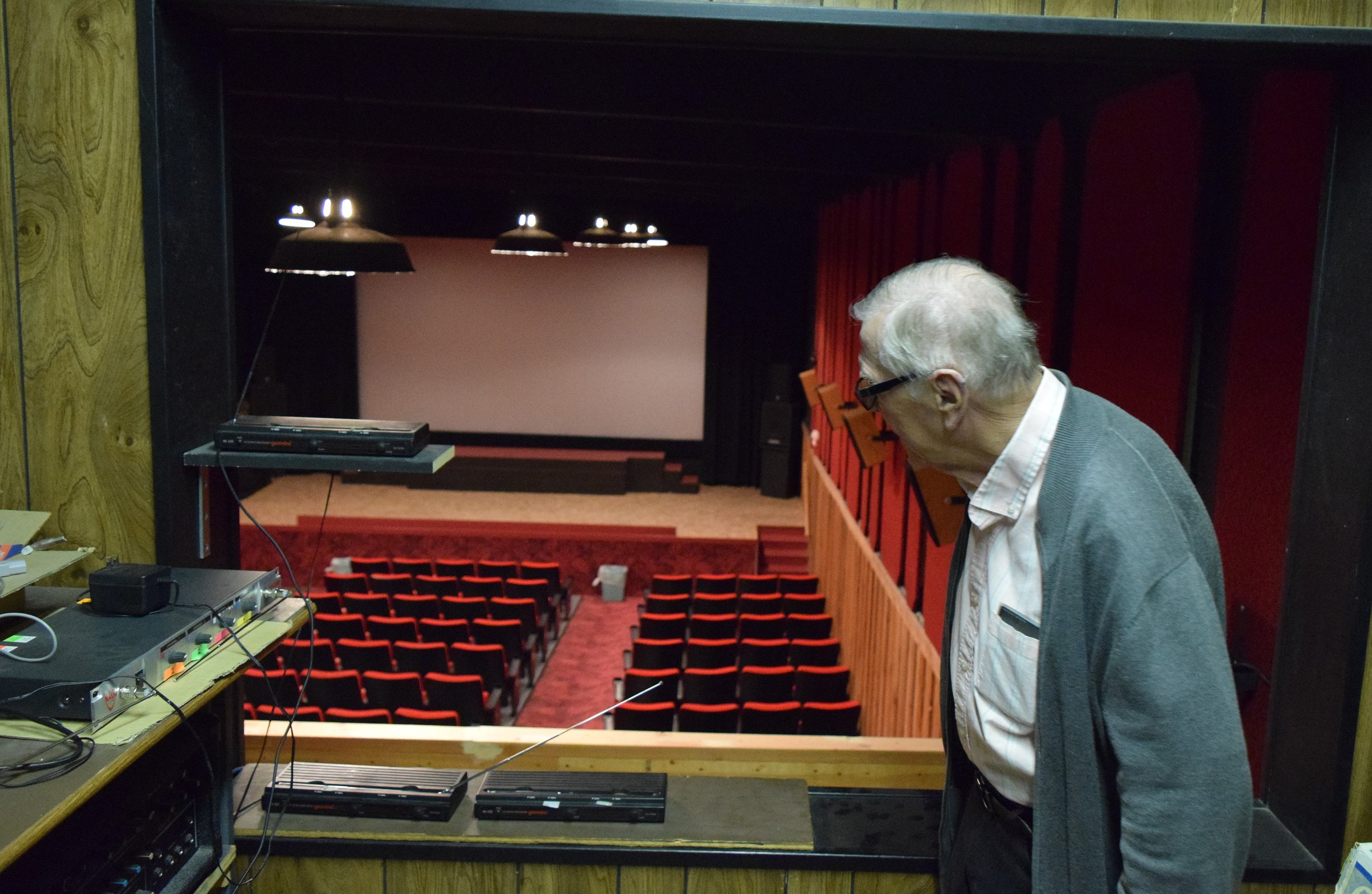 Bob Reichert looks down from the viewing room above Reichert’s Showhouse 3’s original auditorium, which the Reicherts had to completely restore after it was left in disrepair by the previous owners of the theater.
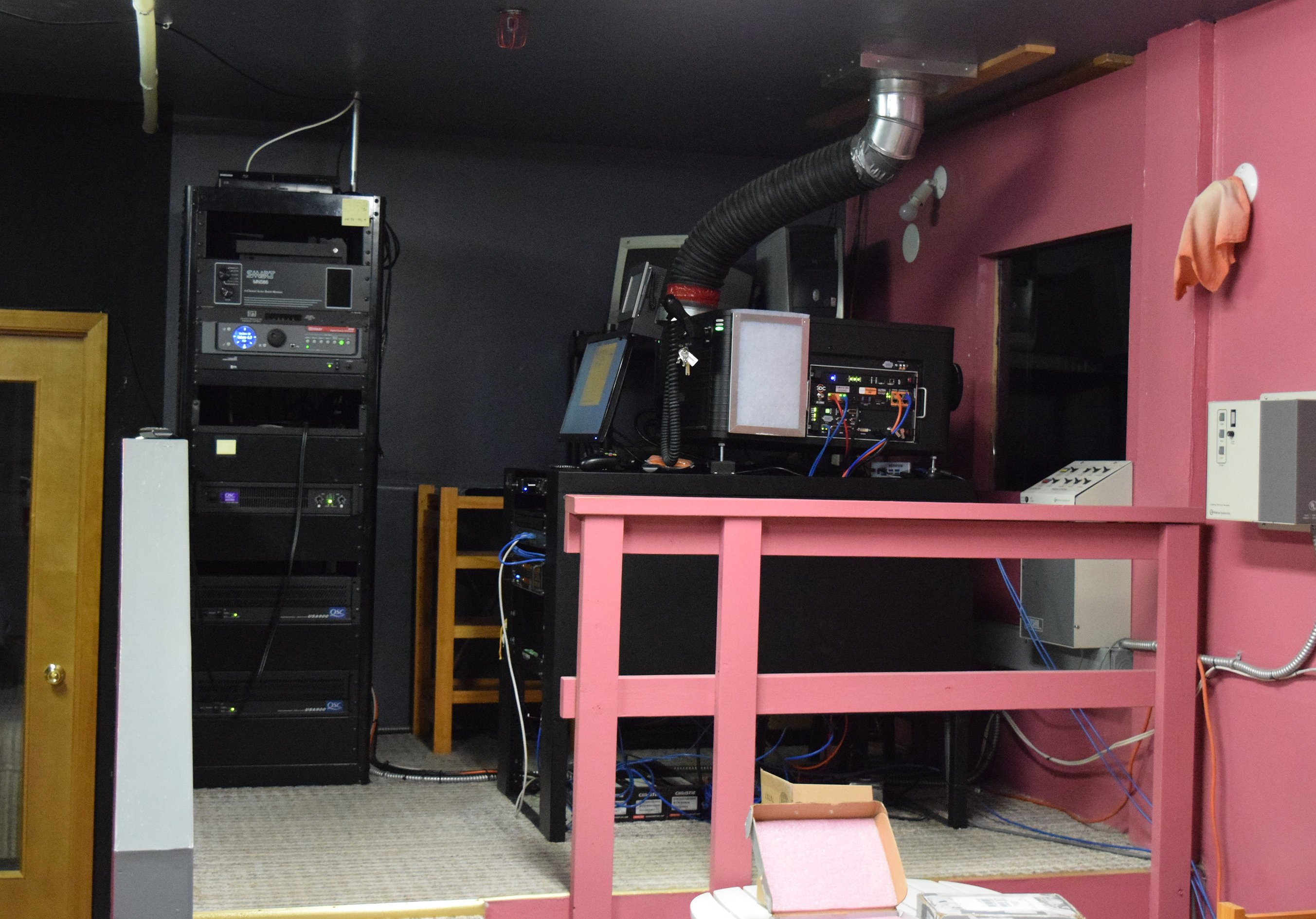 A digital projector points out a window above one of Reichert’s Showhouse 3’s newer theaters. Reichert’s has three newer digital projectors for its three theater screens.
ARTICLES BY GABRIEL DAVIS

Work-based learning lets students build their own futures
MOSES LAKE — Work-based learning provides education opportunities for the workforce to receive hands-on training and technical education and prepare themselves to enter various industries. Educators and workforce development professionals from Eastern Washington discussed some the training they offer and the benefits of their programs. Next Generation Zone, an affiliate of WorkSource based in Spokane, provides job training opportunities for youth and young adults ages 16 to 24. Program Coordinator Kate Martin said there are multiple benefits to the program. “One of them is a paid work experience, and that’s where we reach out to area employers who are willing to take a young person and train them,” she said. “This is a short-term learning experience, so it’s typically about 240 hours; sometimes it could be longer or shorter. We’re the actual employer; we cover all of their wages, taxes, the L&I, and the employer just agrees to give them the experience and train them in whatever field it is that they’re wanting to go into.”

Serving schools: ESD superintendents reflect on operations, priorities
MOSES LAKE — Educational service districts are government-mandated agencies put in place to provide services to school districts across the state. ESD Superintendents discussed what they do and their priorities in operating their districts. ESD 105, led by Superintendent Kevin Chase, serves four counties, including Kittitas, Yakima and portions of Klickitat and Grant counties and provides support for 25 school districts – including Royal School District and Wahluke School District – and more than 66,000 students. “We help them collaborate with each other as well or collaborate with other partners,” Chase said. “(It’s) a lot of advocacy work, either regionally or across the state, or even federally, working on different issues that impact our education. And we provide very specialized services in certain situations in order to meet the needs of our students in our region and of our school districts.”

Columbia Basin Project making headway through Odessa Groundwater program
CASHMERE — The Columbia Basin Project is making gradual progress toward completion with particularly significant accomplishments for the Odessa Groundwater Replacement Program in the last six months or so, according to Columbia Basin Development League Executive Director Sara Higgins. “When we’re dealing with a project of this size, advancement is kind of like watching paint dry, but yes, there have been (developments),” she said. “There are a lot of exciting things happening right now.” There are more than 300 miles of main canals, about 2,000 miles of lateral canals and 3,500 miles of drains and wasteways in the irrigation project, according to the U.S. Bureau of Reclamation website. The CBDL advocates for the operation of those waterways and for the project to continue “build-out.”