
Growing season inbound
GABRIEL DAVIS | Hagadone News Network | UPDATED 1 year, 10 months AGO

Seed potatoes in a planter on its way to sow an acre of potatoes belonging to Schneider Farms of Pasco.
FILE PHOTO
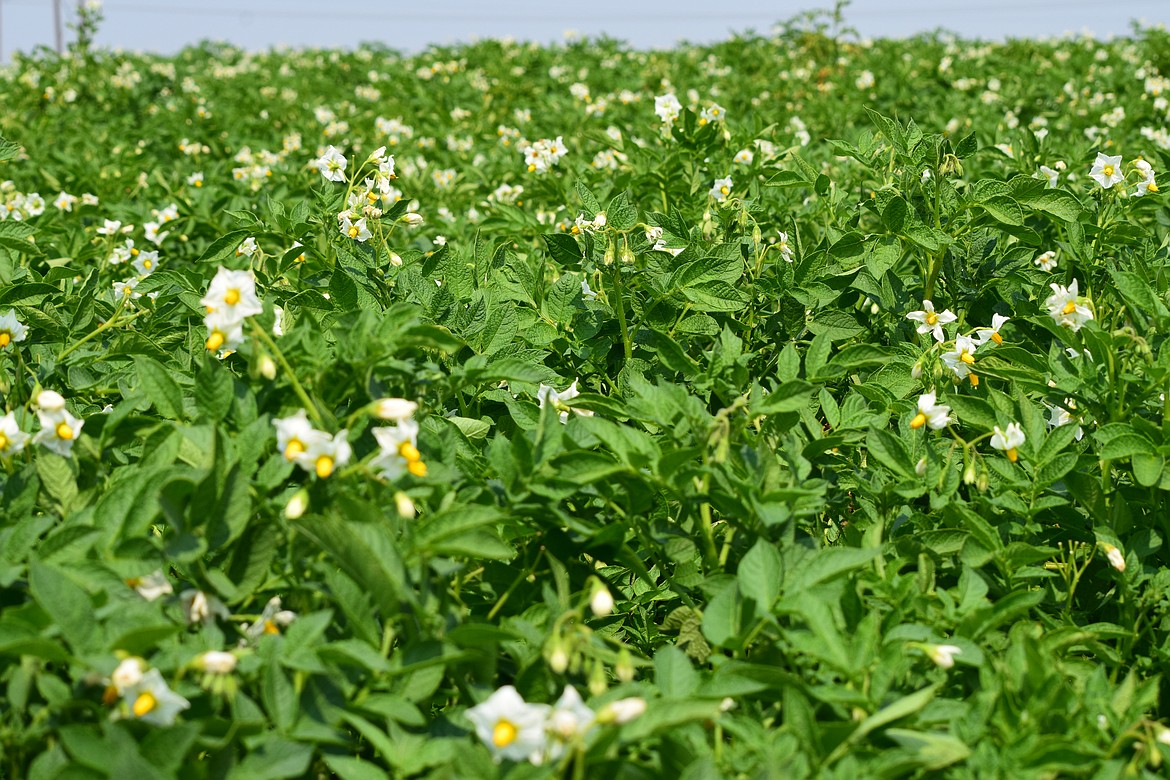
A field of potatoes in bloom south of Quincy. Potatoes and corn are both planted in the spring, meaning factors such as weather, variety, timing and equipment all play an important role when it comes time to plant.
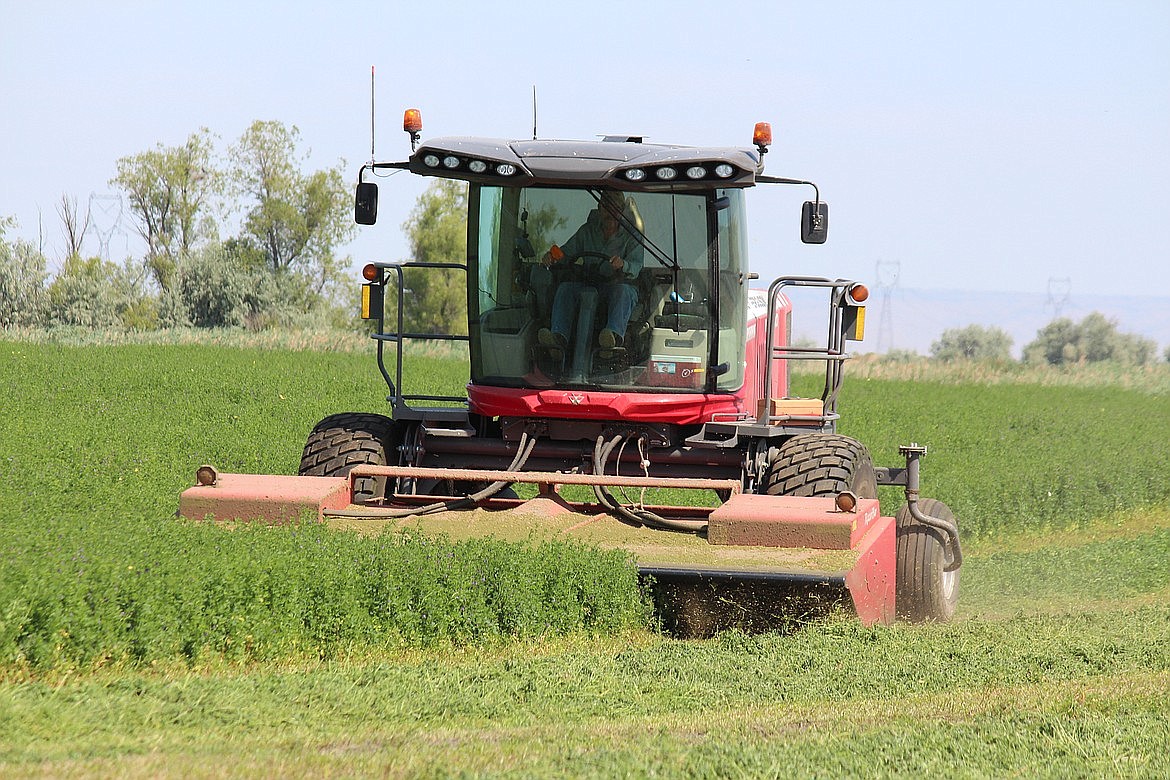
A farmer cuts alfalfa in a field near Royal City during harvest. Soon, farmers across the Columbia Basin will be preparing to enter the spring planting season.
Gabriel Davis is a resident of Othello who enjoys the connections with his sources. Davis is a graduate of Northwest Nazarene University where he studied English and creative writing. During his free time, he enjoys reading, TV, movies and games – anything with a good story, though he has a preference for science fiction and crime. He covers the communities on the south end of Grant County and in Adams County. | February 8, 2024 1:35 AM
MOSES LAKE — Mark Kallstrom and Travis Meacham, of Kallstrom Sweet Corn and Friehe Farms respectively, have decades of combined commercial farming experience and discussed some of the ways they prepare for the spring planting season and how their practices have evolved over the years.
Friehe Farms, located in Moses Lake, grows potatoes and corn, among other crops. Kallstrom grows and retails sweet corn, located between George and Ephrata.
Meacham, Friehe Farm’s manager, and Kallstrom, one of his farm’s founders, both mentioned the importance of ordering seeds and making sure you buy the right varieties of the crop.
“It's pretty important when choosing varieties and then what crops are going in (because) some of the most desired varieties and seeds are taken up,” he said. “So some of the stuff we planted last fall or even last summer, and so we're just confirming that that seed is available, and then just adjusting our schedule to make sure we have enough of the varieties that we want on the acres that we want.”
Kallstrom also commented on the variety and how it affects sweet corn.
“They hold their great taste for a number of days after they’re picked,” he said. “(Some factors are) will it mature too fast, disease resistance and of course a good flavor that people like and it takes a long time to narrow that down.”
Meacham and Kallstrom both said maintaining and checking over equipment is part of heading into spring.
“There's quite a bit of equipment (usage) that takes place,” Meacham said, “so this is a good time of year to bring things into the shop and kind of work on them and make sure that they're all in the best condition.”
Friehe Farm’s techniques and technology often change and adapt from year to year, seeking new methods to grow more produce or save money in the process, Meacham said.
“When the heat of the battle comes, you kind of have to just go with your game plan,” he said. “So this time of year we’re kind of laying out what we're going to do, what varieties we're going to plant, what methods we're going to use, are we going to change anything or is there any new technology that can come along that is going to help us, so we're spending a lot of time right now kind of looking over that.”
A lot of coordination goes into preparing for planting, but predicting or adapting to weather is also important for both the crop and the equipment.
“If we get really wet (weather), or if we get really dry (weather), we do have to do some changing as we go,” Meacham said. “For the most part, we have a pretty good idea of what the weather does, but there are some curveballs in there, so we have to adjust for those.”
Kallstrom also said analyzing weather is an integral part of preparing for spring planting.
“During the plant, I have a whole notebook on when to plant and so forth. It can change from year to year. The weather makes a big difference, but continually planting from the middle of March to the first week in July was a big learning curve.”
The corn on Kallstrom’s farm is planted under plastic, a technique Kallstrom started after learning it from other farms.
“You want to buy seed that is cold-soil-resistant or cold-soil-tolerant,” Kallstrom said. “Some seeds don't work very well at all if the ground’s too cold; that's why you use the plastic, to warm the ground up.”
Kallstrom said you also want to be careful not to pull off the plastic too soon.
“One year, (I made a) big mistake. I pulled the plastic and the next day we got a freeze,” he said. “(The corn) did come back, but it put us behind maybe two weeks.”
There are other resources besides trial and error as well.
“The internet is a huge (help),” Kallstrom said. “I've spent countless hours on there researching sweet corn and the varieties, and varieties are everything.”
Kallstrom said he uses YouTube to learn how to improve his techniques and farming equipment, including making his own equipment.
“I put together my own planter,” he said. “In one pass I can spray, plant and cover with plastic, and fertilize too, at the same time.”
It seems trial and error, adaptation and knowing one’s resources are all important not just to preparing for spring, but all year round.
“Even though the big picture is still probably the same as it's been done for hundreds of thousands of years, how we're doing it on a year-to-year basis changes all the time,” Meacham said.
Gabriel Davis may be reached at [email protected]. Download the Columbia Basin Herald app on iOS and Android.
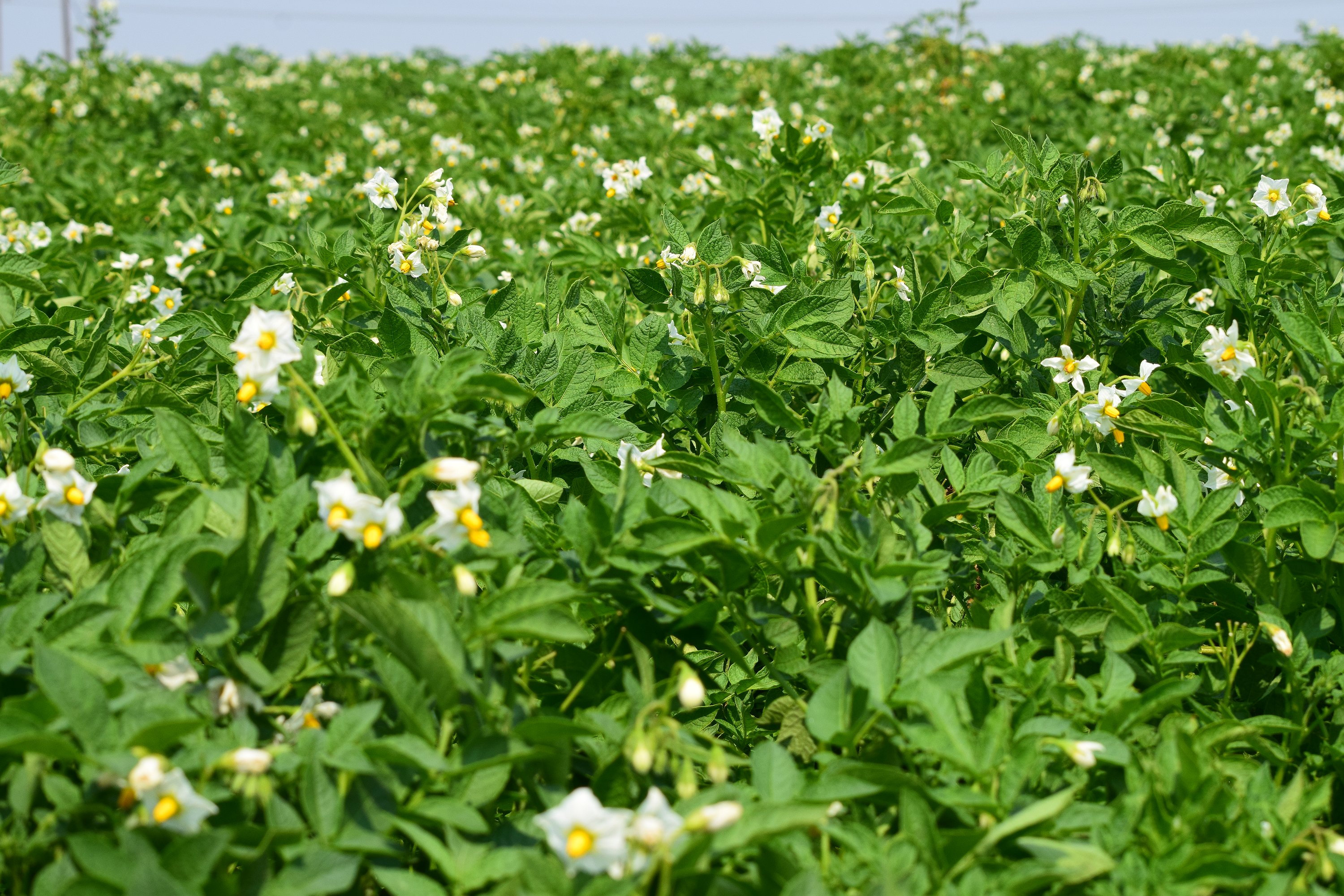 A field of potatoes in bloom south of Quincy. Potatoes and corn are both planted in the spring, meaning factors such as weather, variety, timing and equipment all play an important role when it comes time to plant.
 A farmer cuts alfalfa in a field near Royal City during harvest. Soon, farmers across the Columbia Basin will be preparing to enter the spring planting season.
ARTICLES BY GABRIEL DAVIS

Work-based learning lets students build their own futures
MOSES LAKE — Work-based learning provides education opportunities for the workforce to receive hands-on training and technical education and prepare themselves to enter various industries. Educators and workforce development professionals from Eastern Washington discussed some the training they offer and the benefits of their programs. Next Generation Zone, an affiliate of WorkSource based in Spokane, provides job training opportunities for youth and young adults ages 16 to 24. Program Coordinator Kate Martin said there are multiple benefits to the program. “One of them is a paid work experience, and that’s where we reach out to area employers who are willing to take a young person and train them,” she said. “This is a short-term learning experience, so it’s typically about 240 hours; sometimes it could be longer or shorter. We’re the actual employer; we cover all of their wages, taxes, the L&I, and the employer just agrees to give them the experience and train them in whatever field it is that they’re wanting to go into.”

Serving schools: ESD superintendents reflect on operations, priorities
MOSES LAKE — Educational service districts are government-mandated agencies put in place to provide services to school districts across the state. ESD Superintendents discussed what they do and their priorities in operating their districts. ESD 105, led by Superintendent Kevin Chase, serves four counties, including Kittitas, Yakima and portions of Klickitat and Grant counties and provides support for 25 school districts – including Royal School District and Wahluke School District – and more than 66,000 students. “We help them collaborate with each other as well or collaborate with other partners,” Chase said. “(It’s) a lot of advocacy work, either regionally or across the state, or even federally, working on different issues that impact our education. And we provide very specialized services in certain situations in order to meet the needs of our students in our region and of our school districts.”

Columbia Basin Project making headway through Odessa Groundwater program
CASHMERE — The Columbia Basin Project is making gradual progress toward completion with particularly significant accomplishments for the Odessa Groundwater Replacement Program in the last six months or so, according to Columbia Basin Development League Executive Director Sara Higgins. “When we’re dealing with a project of this size, advancement is kind of like watching paint dry, but yes, there have been (developments),” she said. “There are a lot of exciting things happening right now.” There are more than 300 miles of main canals, about 2,000 miles of lateral canals and 3,500 miles of drains and wasteways in the irrigation project, according to the U.S. Bureau of Reclamation website. The CBDL advocates for the operation of those waterways and for the project to continue “build-out.”