
MARCH NIBJ: Economic development taking a community-centered approach
CAROLINE LOBSINGER | Hagadone News Network | UPDATED 1 year, 9 months AGO
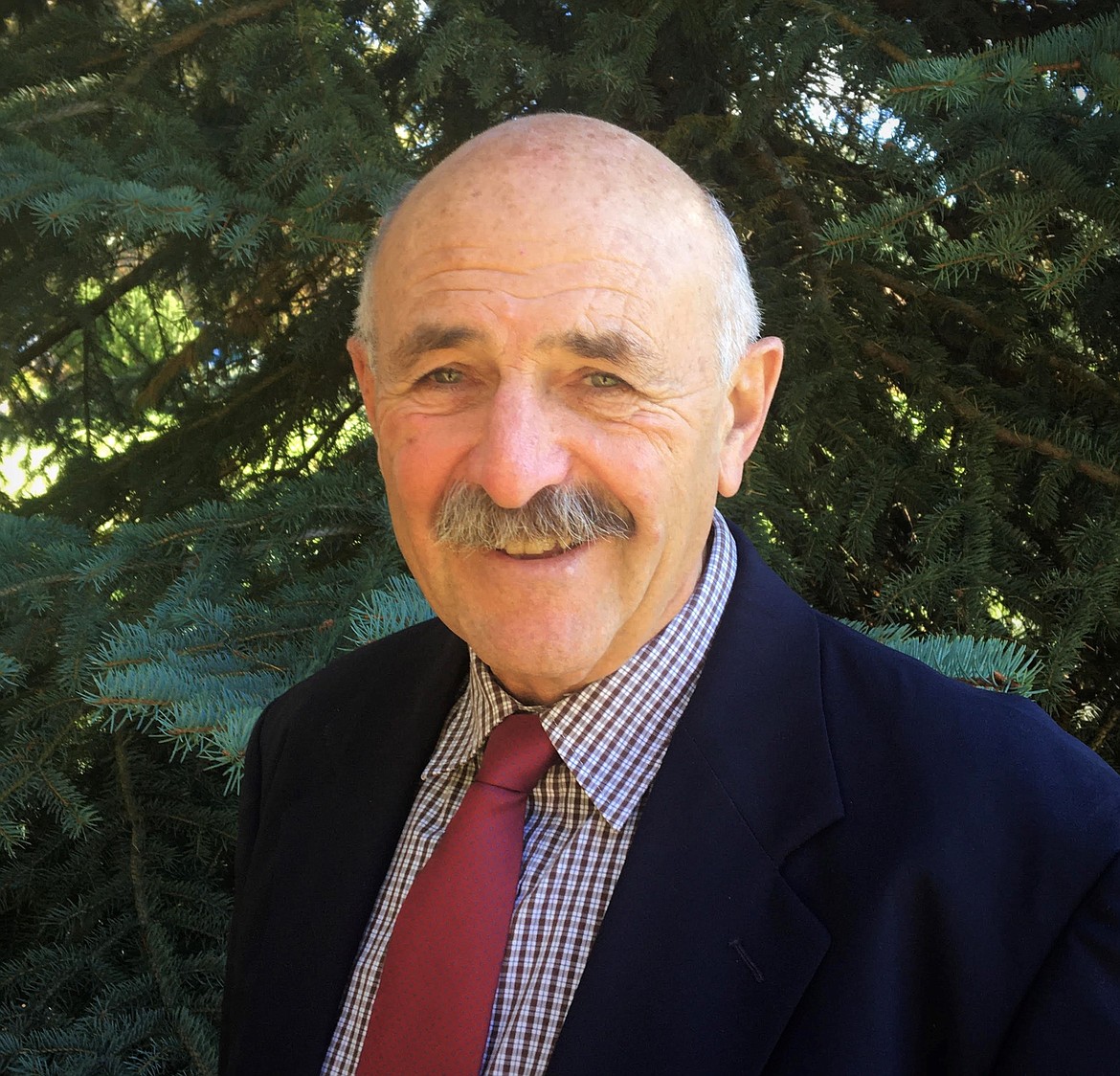
Baker
I grew up in the Tri-Cities, Wash., and have always loved to write. I attended the University of Washington, where I earned a double major in journalism and political science, with an area of emphasis in history. I am the fifth out of six kids — don't believe any of the stories that my siblings tell. To be able to tell others stories and take photos for a living is a dream come true — and I considered myself blessed to be a community journalist. When I am not working, I enjoy spending time with family and friends, hiking and spending time outdoors, genealogy, reading, and watching the UW Huskies and the Seattle Seahawks. I am a servant to my cat, Frankie, who yes, will eat anything and everything in sight … even wedding cookies. | February 27, 2024 1:00 AM
Economic development groups aren't what they used to be.
And that, Pend Oreille Economic Partnership's Brent Baker said is a good thing.
Instead of offering discounts, tax breaks, and other incentives to entice businesses, Baker said the new trend is to build from within.
"So the shift, generally in communities, is has been away from economic development in the old traditional business attraction stance," Baker said. "Although that's still a component, it's really thought of more as community development. Yes, we're going to develop our economy, but we're going to do it in a kind of a defined way. We're going to know what makes our lives better as a community."
It used to be that economic development was all about attracting new business to augment the existing economy, Baker said. But from the economic downturns to the pandemic, communities have broadened their perspective on what would best fit them from an economic perspective.
"The old school of economic development was about business attraction, largely attraction and retention was the focus," he said. "And what's happened here, is that we already have a pretty diverse economy for such a small community, by most measures."
Now, Baker said, it's about what falls in line with each community's identity.
"So, you think about your infrastructure, and you think about what you want life to look like for your community," he added. "And now let's attract and grow and strengthen the economic condition with that in mind, not just measure it where the only measure is jobs."
Economic development groups not only aim to diversify their local economies, Baker said the emphasis now is also on creating economic empowerment — creating jobs that pay real, livable wages and helping both the businesses but the workforce thrive.
The challenges facing Bonner County — like much of North Idaho — stem from its inherent character as a resort community, combined with an influx of new residents pressured a problematic housing and labor market, Baker said.
"Now it's even harder to get employees, as for the existing businesses, he added. "We already can't house our workers and we already can't find enough workers with the right qualifications to just plug into the potential workflow we could have."
That means business attraction only makes sense if it is very targeted, Baker said.
"Traditional business attraction is not something we want to do," he added. "Business attraction, in and of itself, without it being very targeted and strategic, ends up hurting our local businesses because it just makes the competition for workers even worse and it put pressure on an already stressed housing market."
Many states pitch low-cost land, cheap energy and other perks, designed industrial parks, and offers incentives to attract manufacturing as means to diversify their economies. However, in areas like North Idaho, Baker said the areas are already attractive places to live. There is only so much available land for manufacturing parks or to expand existing sites.
"It's going to be more about improving our water systems and improving our sewage systems and being able to increase densities in some areas, to basically develop infrastructure that will let us build the kind of communities that we want to see develop in the future," PEP's economic director said. "And so, to start with that, you have to define it."
Recent conversations at the Northwest Community Development Institute, an intensive week-long training program put on by the Idaho Department of Commerce, back up community-focused approach.
"It's really more of a coming together of a community around that focus and community development," Baker added. "It's thinking about public spaces, infrastructure, education, quality of life, [and] equity.
What make more sense for the region, and is more in line with an emerging trend in economic development, is PEP's current path — provide talent, training and ideas to local businesses and work with others in the community on solutions to alleviate the area's housing crisis.
"Because until we can solve housing, and, you know, talent, flow to the companies that economic development hurts us, it doesn't help us in the traditional sense," Baker added. "What we want to do is help vitalize the people that are already here so the workshops feed into that really nicely."
Just as economic development groups are taking a growth-from-within perspective, Baker said he's working to do the same within Bonner County itself. Each community within the county has unique challenges and needs.
"When we talk about community development, we need to be really, really clear and defined for the different communities that exist here," he added. "We don't want to be imposing any one idea on other parts of the county. So we really need to, you know, define a little bit who are the diverse communities we have in here and what are their needs and what would they like to see and help create that vision."
As with other economic development groups in the state and the country, what that means to each community in Bonner County is different for each. A grant being spearheaded by the Coeur d'Alene's economic development officials aims to help the region's economic entities create specific, target pipelines to businesses in their communities, Baker said.
ARTICLES BY CAROLINE LOBSINGER

'Tots' aims to make holidays bright
Help the Sandpoint Lions reach their $75,000 goal for Toys for Tots.

USACE keeping eye on region's flood risk
U.S. Army Corps of Engineers said they are managing rising Lake Pend Oreille and Libby Dam outflows amid heavy rains and atmospheric rivers.
'Tots' creates special Christmas memories
Help the Sandpoint Lions reach their $75,000 goal for Toys for Tots.