
Othello council deliberates cargo containers, increases splash pad budget
GABRIEL DAVIS | Hagadone News Network | UPDATED 2 years, 8 months AGO
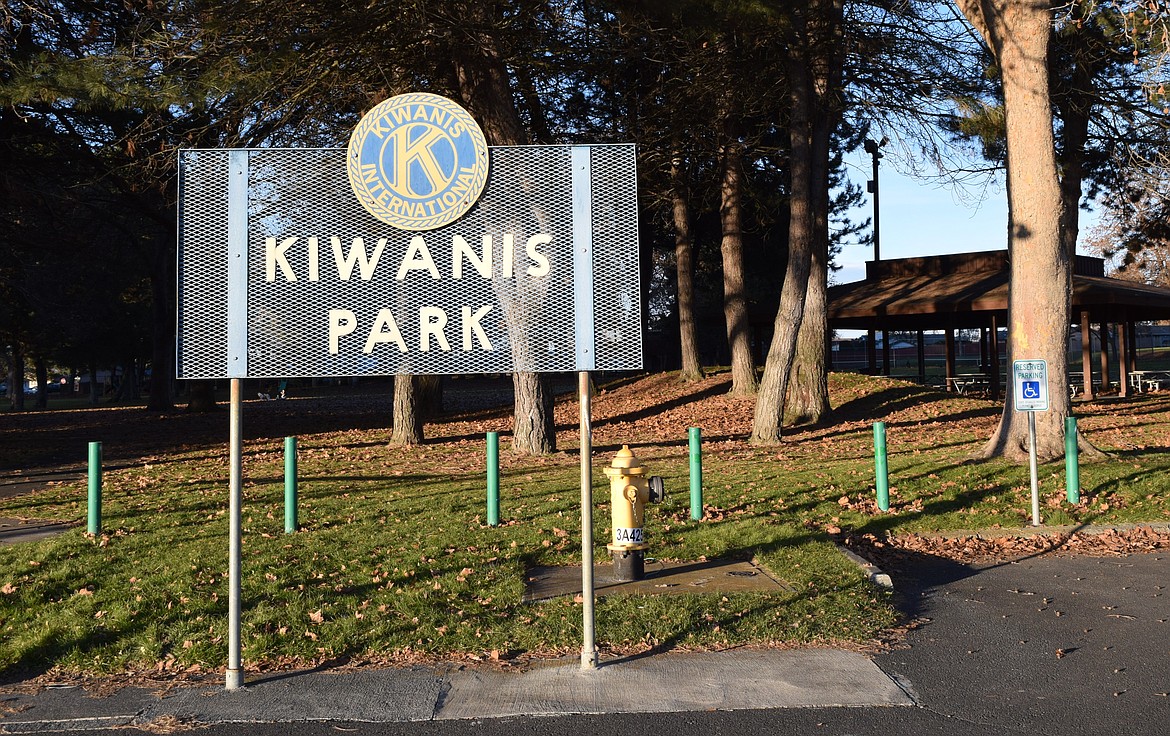
Othello’s Kiwanis Park, pictured, will eventually be home to a new splash pad, which the Othello City Council voted unanimously to increase the budget for during Monday’s meeting to accommodate the addition of a mega soaker to the design.
Gabriel Davis/Columbia Basin Herald
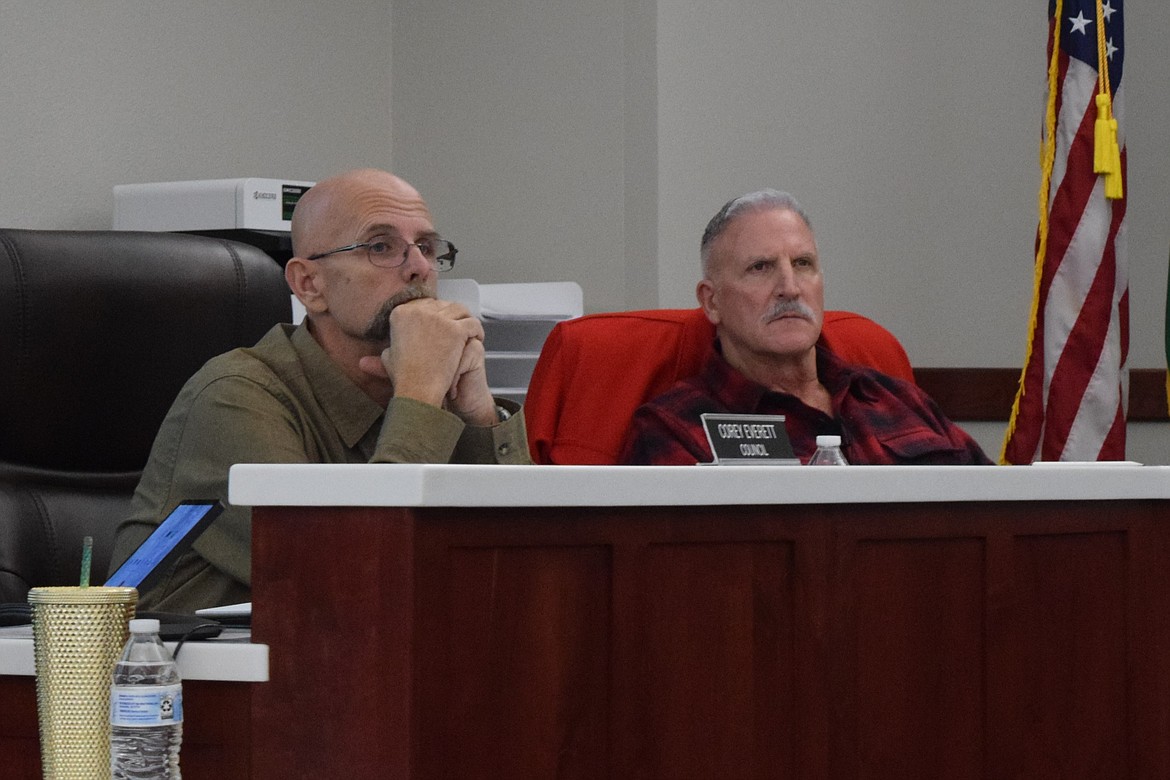
Othello City Council members Corey Everett, left, and John Lallas, right, discuss cargo containers in commercial zones in Othello during Monday’s regular meeting.
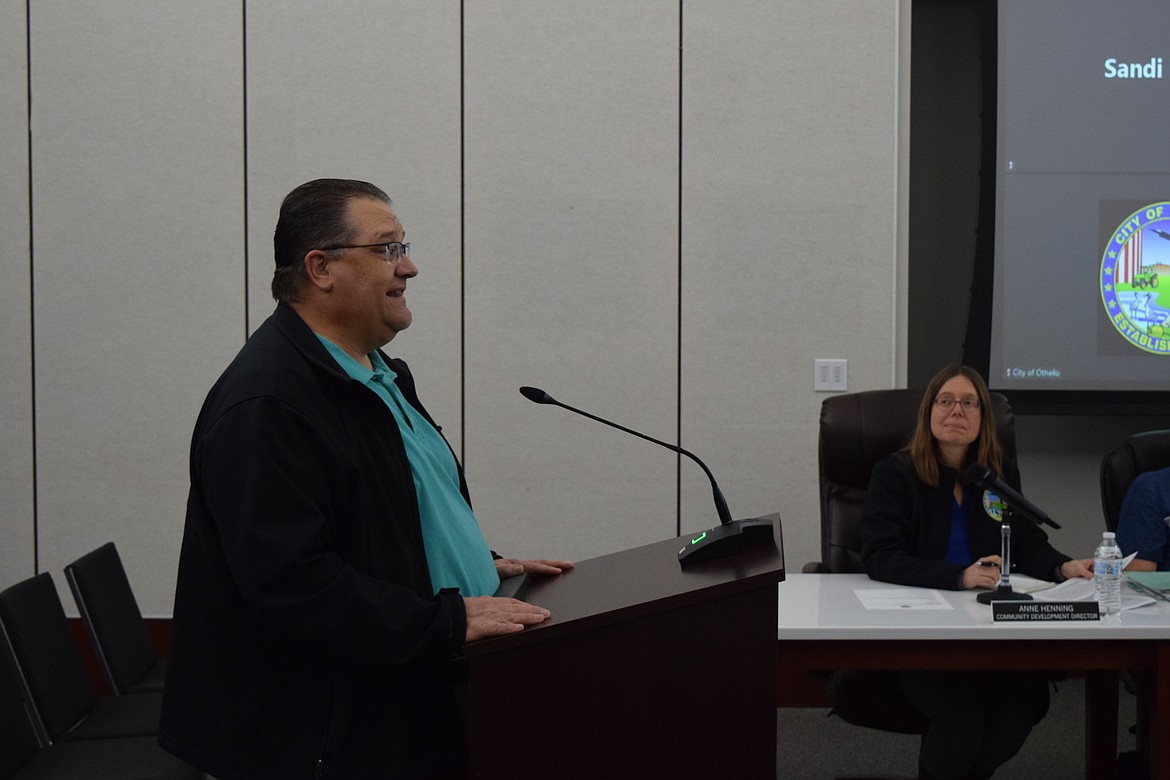
Othello Planning Commission Chair Chris Dorow, standing, and Othello Community Development Director Anne Henning, sitting, participate in the discussion around cargo containers in C-1 commercial zones in Othello during Monday evening’s regular city council meeting at Othello City Hall.
Gabriel Davis is a resident of Othello who enjoys the connections with his sources. Davis is a graduate of Northwest Nazarene University where he studied English and creative writing. During his free time, he enjoys reading, TV, movies and games – anything with a good story, though he has a preference for science fiction and crime. He covers the communities on the south end of Grant County and in Adams County. | January 10, 2024 5:27 PM
OTHELLO — The Othello City Council’s regular meeting on Monday featured a unanimous vote to spend an additional $35,000 on an improved future installation of a splash pad in Kiwanis Park, as well as discussion regarding the Planning Commission’s recommendation on cargo containers in C-1 commercial zones.
City Engineer Shawn O’Brien said city staff had inquired about adding a “mega soaker” to the recreational splash pad design, which dumps 55 gallons of water at once onto the pad.
“We took that to the Parks and Rec Committee (to see) if they were still interested at that price,” O’Brien said. “This is the very early stages of this project, which is about a $1.258 million project which $1.1 million of is a grant, and just because the additional cost may go outside of the original budget I wanted to bring it to council and ask for approval to give the mayor authority to make an amendment to the contract that we've entered into with Northwest Playgrounds.”
Mayor Shawn Logan asked council member John Lallas, the council’s liaison with the Parks and Recreation Committee, to discuss whether the committee recommended adding the mega soaker.
“We definitely did. We were in agreement. As a committee we decided that we wanted to go big or go home,” Lallas said. “What we're going to do is increase the splash pad by 540 square feet to accommodate the splash that comes out of the mega soaker, so that's almost 50%of the additional cost to do the mega soaker, but it's a bigger feature than what we had gotten in the first proposal. I think it's worth it for us, the city, to spend that $35,000. It’ll be there for 10-20 years at least, so it's going to give enjoyment to the community.”
O’Brien said that since the city is still early in the process of implementing the splash pad, the project may cost less and the city would be able to cover the expenses with the grant money, but the change in the contract and the additional budget needs to be approved. The council voted unanimously to approve the contract amendment.
After approving the $35,000 amendment, the council also discussed the city’s Planning Commission recommendations on whether to allow cargo containers as storage in C-1 commercial zones – the historic portion of Othello’s Main Street and First Avenue – in the city after holding a public hearing on the subject. There was no citizen input on the matter.
Othello Community Development Director Anne Henning relayed the commission’s three recommendations.
“The first one is that our containers would be allowed in the C-1 zone, but with additional conditions having to do with only sites that have parking and then not taking it more than a fourth of the parking to really limit where those containers can be placed in C-1,” Henning said. “The second part is that all containers in commercial districts would be temporary, only three years maximum and that there would be an annual permit with an additional fee … And then the third part of their recommendation is requiring a permit for the cargo containers that are used as part of a construction project.”
Henning said that two of the five commission members agreed with the second and third recommendation, but were against the first recommendation of allowing cargo containers in C-1.
City code already requires that the containers blend into a building or be fenced in, according to Planning Commission chair Chris Dorow, who said the original zoning was intended to establish Othello’s historical district as separate from other commercial zones.
“I'm not in favor of them at all,” Council Member Corey Everett said. “Well, let me rephrase that. I actually don’t have a problem with the storage containers as long as they're not visible at all from Main Street. Just painting them the same color as a building, they're still visible from Main Street. I think they're ugly and I think it's going to tear up the looks of Main Street.”
Lallas also said he was not in favor of allowing containers in C-1.
Council member Darryl Barnes said that despite the requirement for the cargo container to blend into a building or be fenced in, it still does not fit with historic downtown.
“That detracts from the look of the C-1 zone. I have yet to see an area with a cargo container, with a fence or not, that looks historic. It looks like an industrial zone,” he said.
The council decided to table the agenda item to consult legal counsel about limiting the temporary container permit to three years and to have the motion revised to remove the recommendation to allow cargo containers in C-1.
Gabriel Davis may be reached at [email protected]. Download the Columbia Basin Herald app on iOS and Android.
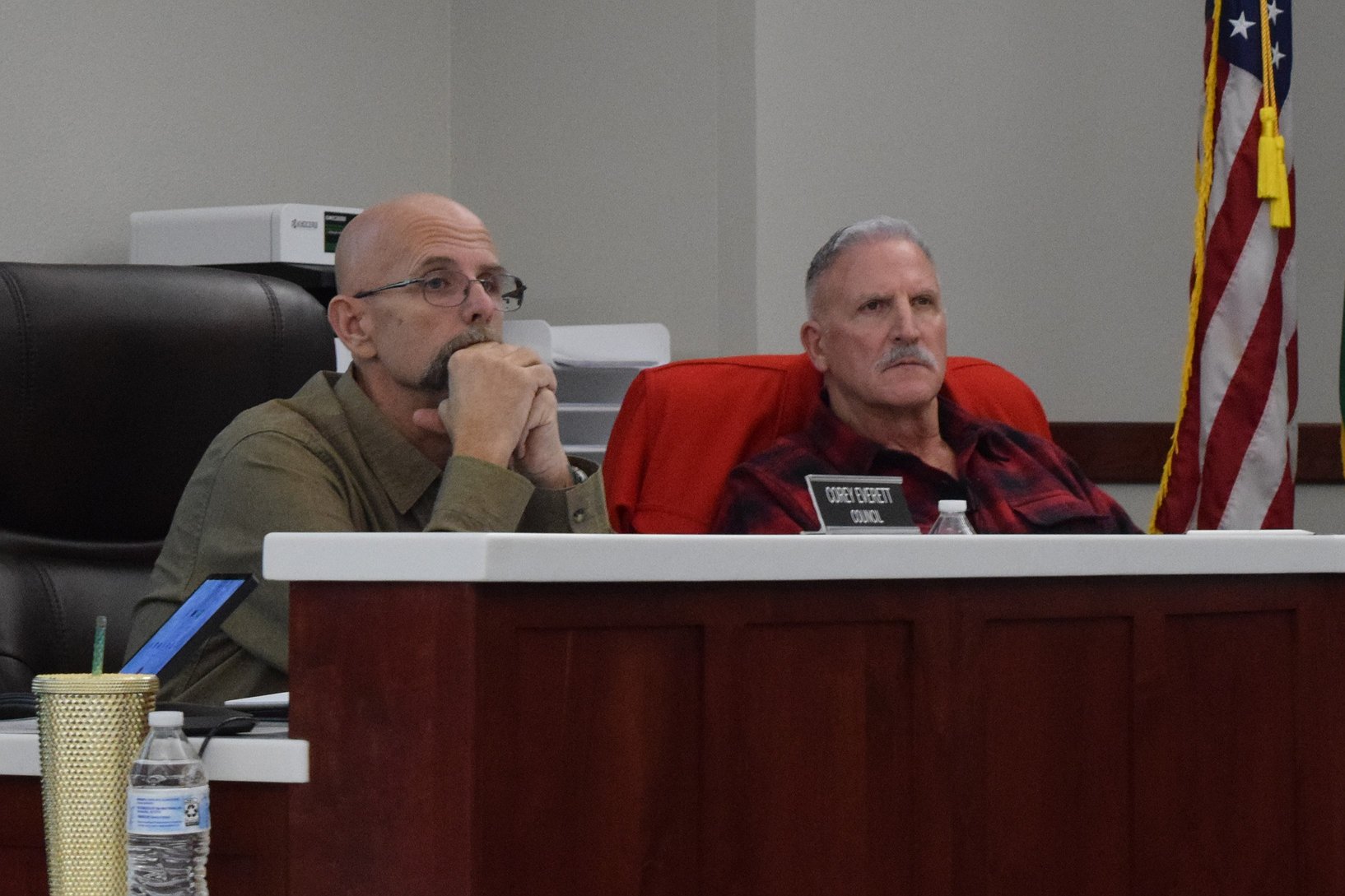 Othello City Council members Corey Everett, left, and John Lallas, right, discuss cargo containers in commercial zones in Othello during Monday’s regular meeting.
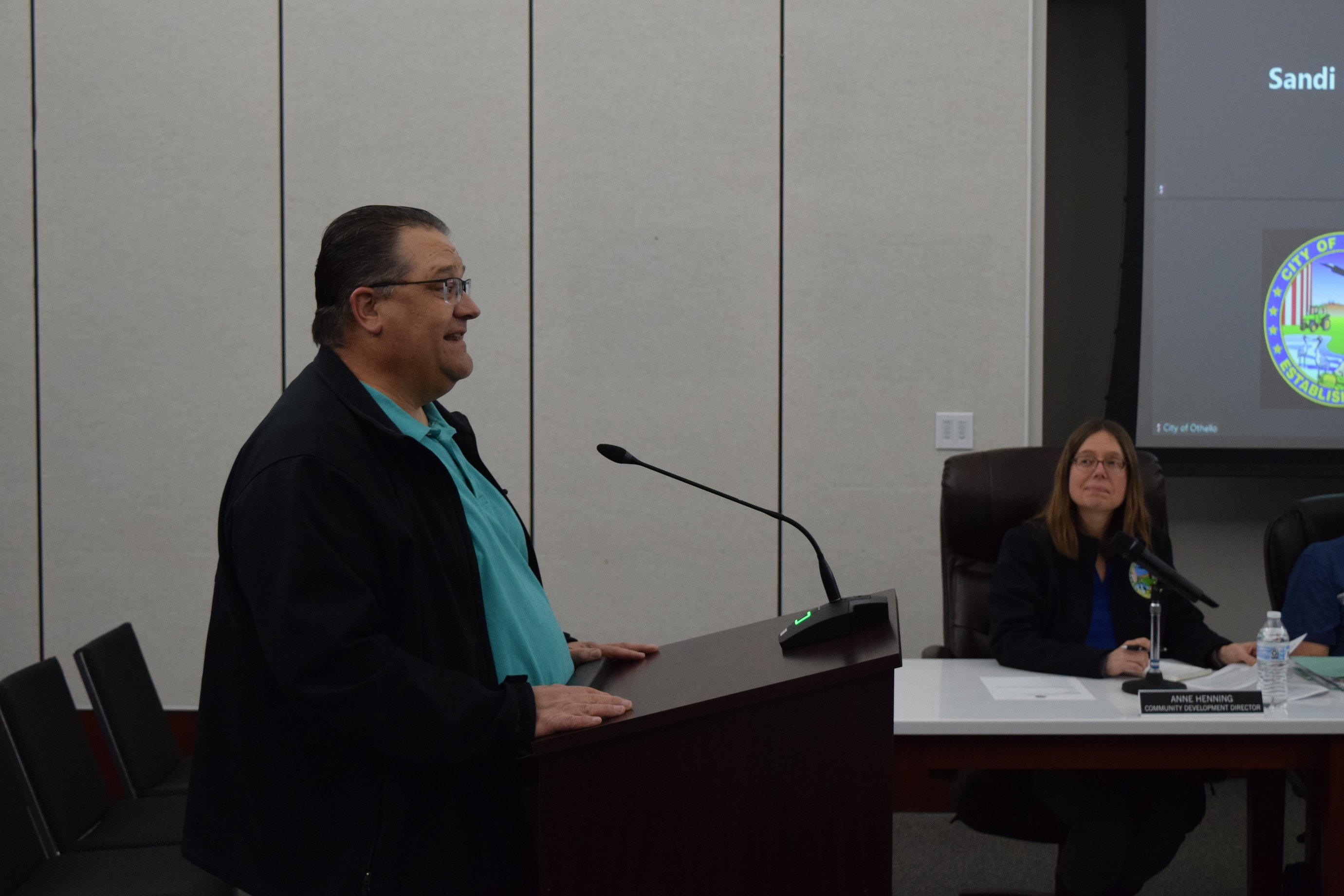 Othello Planning Commission Chair Chris Dorow, standing, and Othello Community Development Director Anne Henning, sitting, participate in the discussion around cargo containers in C-1 commercial zones in Othello during Monday evening’s regular city council meeting at Othello City Hall.
ARTICLES BY GABRIEL DAVIS

Work-based learning lets students build their own futures
MOSES LAKE — Work-based learning provides education opportunities for the workforce to receive hands-on training and technical education and prepare themselves to enter various industries. Educators and workforce development professionals from Eastern Washington discussed some the training they offer and the benefits of their programs. Next Generation Zone, an affiliate of WorkSource based in Spokane, provides job training opportunities for youth and young adults ages 16 to 24. Program Coordinator Kate Martin said there are multiple benefits to the program. “One of them is a paid work experience, and that’s where we reach out to area employers who are willing to take a young person and train them,” she said. “This is a short-term learning experience, so it’s typically about 240 hours; sometimes it could be longer or shorter. We’re the actual employer; we cover all of their wages, taxes, the L&I, and the employer just agrees to give them the experience and train them in whatever field it is that they’re wanting to go into.”

Serving schools: ESD superintendents reflect on operations, priorities
MOSES LAKE — Educational service districts are government-mandated agencies put in place to provide services to school districts across the state. ESD Superintendents discussed what they do and their priorities in operating their districts. ESD 105, led by Superintendent Kevin Chase, serves four counties, including Kittitas, Yakima and portions of Klickitat and Grant counties and provides support for 25 school districts – including Royal School District and Wahluke School District – and more than 66,000 students. “We help them collaborate with each other as well or collaborate with other partners,” Chase said. “(It’s) a lot of advocacy work, either regionally or across the state, or even federally, working on different issues that impact our education. And we provide very specialized services in certain situations in order to meet the needs of our students in our region and of our school districts.”

Columbia Basin Project making headway through Odessa Groundwater program
CASHMERE — The Columbia Basin Project is making gradual progress toward completion with particularly significant accomplishments for the Odessa Groundwater Replacement Program in the last six months or so, according to Columbia Basin Development League Executive Director Sara Higgins. “When we’re dealing with a project of this size, advancement is kind of like watching paint dry, but yes, there have been (developments),” she said. “There are a lot of exciting things happening right now.” There are more than 300 miles of main canals, about 2,000 miles of lateral canals and 3,500 miles of drains and wasteways in the irrigation project, according to the U.S. Bureau of Reclamation website. The CBDL advocates for the operation of those waterways and for the project to continue “build-out.”