
Two endangered lynx caught by trappers, one dies of injuries
CHRIS PETERSON | Hagadone News Network | UPDATED 1 year, 11 months AGO
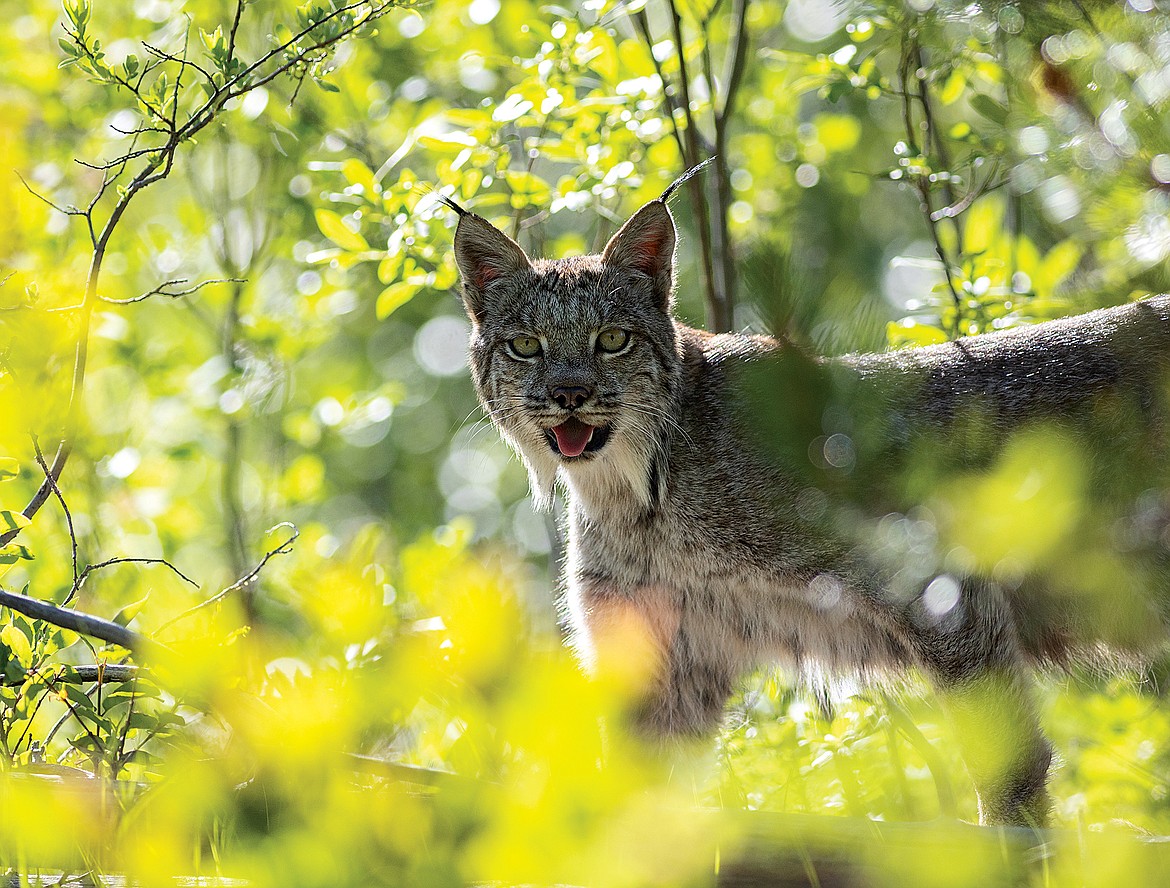
A Canada lynx is a rare sight indeed. The species is listed as threatened under the Endangered Species Act. (Chris Peterson photo)
Chris Peterson is the editor of the Hungry Horse News. He covers Columbia Falls, the Canyon, Glacier National Park and the Bob Marshall Wilderness. All told, about 4 million acres of the best parts of the planet. He can be reached at [email protected] or 406-892-2151. | January 10, 2024 1:00 AM
Bobcat trappers in northwest Montana caught two lynx recently and one died as a result on Dec. 27.
The other lynx was released unharmed, Montana Fish, Wildlife and Parks said, but it didn’t say how long the surviving lynx had been in the trap.
The capture that resulted in the killed lynx was an illegal set. The trapper was cited, according to FWP spokesman Greg Lemon. Lemon did not immediately confirm whether the trapper would also face federal charges. Lynx are listed as threatened under the Endangered Species Act. The U.S. Fish and Wildlife Service did not immediately respond to a request for comment.
Both instances were self-reported by the trappers and were subsequently reported to the U.S. Fish and Wildlife Service by FWP, it said in a release.
The U.S. Fish and Wildlife Service has established an allowable incidental take for lynx in the lower 48 states.
Allowable take of lynx in the lower 48 is complicated, FWP claims. The concept of “allowable take” acknowledges that in states with bobcat trapping seasons, some incidental capture of lynx is possible. With “allowable take,” the U.S. Fish and Wildlife Service establishes a number of incidental captures that would be “allowable” and still provide for the conservation of the species.
Allowable take of lynx in the lower 48 states is six trapped/captured or three killed/captured as a result of legal bobcat trapping within three consecutive years. Maine operates under its own allowable take permit and so is not included in the remaining lower 48 states. Recently, a lynx in Minnesota was killed in a trap, and two lynx were trapped in Idaho but were released during the 2021 trapping season. The current number of lynx incidentally trapped in legal sets stands at four captured and one killed in the three-year window, FWP said.
If the allowable take number is met, the U.S. Fish and Wildlife Service would initiate a review to ensure conservation of the species.
“We’ve worked hard to conserve lynx in Montana, including trapping regulations specifically designed to avoid capture of non-target species. We’re watching this circumstance very closely,” said FWP Director Dustin Temple.
In the 2023 Wolf and Furbearer Regulations, the FWP commission recognized lynx protection zones and special restrictions for trapping within those zones to minimize incidental capture of lynx. Trappers who inadvertently capture a lynx must release it unharmed if possible and report it to FWP within 24 hours, or if it’s wounded, contact FWP immediately to “determine disposition and/or collection of the animal.”
Montana also has specific trapping regulations to reduce the potential capture of lynx. For example:
• Lynx Protection Zones (LPZ) prohibit wolf snaring on public lands.
• Wolf foothold traps in Regions 1 through 5 are required to have a minimum of 10 pounds of pan tension to keep animals like lynx from tripping them.
• No natural feathers or pieces of fur can be used in the LPZs so that lynx are not visually attracted to the set intended for another species.
• Bobcat and wolf traps set in the LPZs are required to be checked every 48 hours.
• Regulations for conibear traps are also more restrictive in the LPZs to mitigate the potential of catching a lynx.
• Additionally, all snares in the LPZs are required to have a relaxing lock, which decreases the lethality of the device.
Footloose Montana, an organization that opposes recreational trapping on public lands, was critical of the incidents.
“Why protect a species if incidental take will be allowed? What the USFWS is doing by allowing take of lynx is allowing the hunting of lynx. If you allow hunting, you are not protecting a species. The USFWS can claim they are allowing only a certain number of incidental takes, but they can’t monitor or account for those kills. In all practicality they have no way of knowing how many lynx have been killed or the intent of the trapper who kills a lynx, incidental or not,” Footloose director Jessica Karjala said. “Trapping is indiscriminate killing by design. You can’t protect a species and allow trapping. It just doesn’t work. Montana FWP can claim they are ‘watching the circumstance very closely’ by recognizing ‘lynx protection zones and special restrictions for trapping within those zones to minimize incidental capture of lynx,’ but the truth is that lynx are being killed. FWP does not have the staffing or capacity to watch closely - and they never will. There just aren’t enough taxpayers in the state of Montana to fund the scope and size of the type of monitoring program necessary to ensure protection and conservation of lynx when it comes to trapping. Worse, when FWP has moved away from a system of field work to law enforcement, protection of any species is unlikely. It sounds good and they think they are telling the people what they want to hear, but it’s pablum and talking points.”
ARTICLES BY CHRIS PETERSON

Columbia Falls School District makes pitch for charter school
Columbia Falls School District Superintendent Cory Dziowgo and staff recently made a pitch to the Montana Board of Public Education for a new Columbia Falls Trades Academy.
Columbia Falls concerned sewer system could be bottleneck for growth
The City of Columbia Falls could see a significant bottleneck in future growth due to its sewage treatment plant, depending how the city and the state calculate the sewage treatment plant’s maximum treatment capacity without a major upgrade.
Columbia Falls City Council tables e-bike law
The Columbia Falls City Council last week voted to table a city ordinance that would restrict e-bikes and e-motorcycles along with other electrically powered vehicles on its sidewalks and city parks.