
Overcoming barriers
JOEL MARTIN | Hagadone News Network | UPDATED 2 years, 9 months AGO

Joel Martin has been with the Columbia Basin Herald for more than 25 years in a variety of roles and is the most-tenured employee in the building. Martin is a married father of eight and enjoys spending time with his children and his wife, Christina. He is passionate about the paper’s mission of informing the people of the Columbia Basin because he knows it is important to record the history of the communities the publication serves. | January 19, 2024 1:35 AM
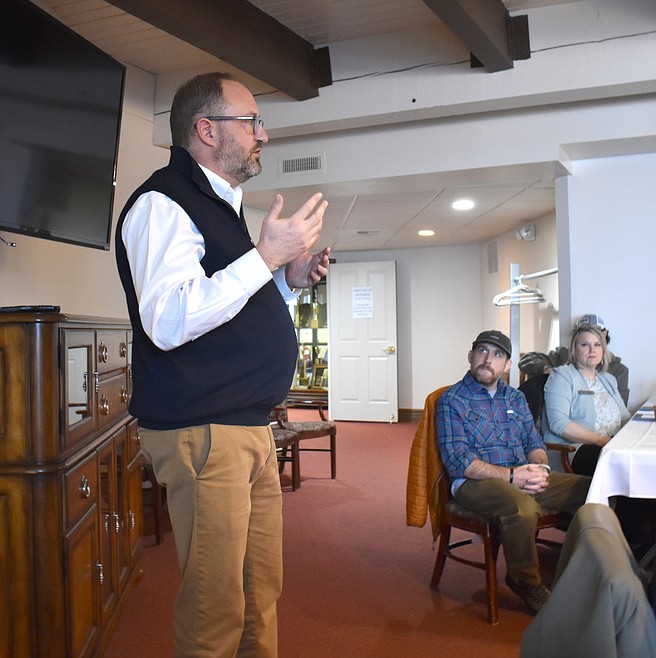
MOSES LAKE — Overregulation is standing in the way of building more housing nationwide, a speaker told local housing professionals last week, but it’s not necessarily coming from state governments.
“At the state level, in 2023, that was a really good year for housing,” said Karl Eckhart, vice president of intergovernmental affairs for the National Association of Home Builders, at a happy hour in Moses Lake sponsored by the Spokane Home Builders Association. “The governors in a lot of states decided to go big on housing policy. They decided to do funding for infrastructure; they decided to let you build your (auxiliary dwelling units) anywhere you wanted if you own the land. They said ‘Let's build duplexes on single-family lots. Let's have the government make it faster to get permits. Let's not put in design standards so every house has to be brick.’ And those bills got launched in almost every state. And in most of the states, they all failed.”
The same thing happened in both red and blue states, Eckhart said. The reason wasn’t partisan politics, but that some cities and counties pushed back against state attempts to increase the amount of affordable housing in their areas.
“I get phone calls, ‘Hey, my city wants to implement a tree ordinance,” Eckhart said. “There's ideas out there, you can't cut down any trees. But if you can't cut down trees, how do you put in new houses? … (Or) the city will say every new house has to be brick, or have a solar panel or have a basement or a two-car garage … They'll say, ‘Well, we just want to make sure that the right people are living here.’ Sorry, it's 2024. We don't get to say that. I've had mayors on the phone say the most amazingly wrong things when they try to tell me why they're stopping development.”
The situation in Washington is different, said Joel White, executive director of the Spokane Home Builders Association, which covers Grant County, because Washington state has unusually tough environmental and labor laws compared to the rest of the country.
“We have some of the strictest codes in the nation,” White said. “We just raise them. We keep raising our codes so if there’s a federal rule, we've already beaten it.”
White gave the example of minimum wage. The federally mandated minimum wage is $7.25 per hour. Some states, including Idaho, set theirs at the same rate, but 27 states have a higher minimum. Washington’s is the highest in the country, at $16.28 per hour, and it increases every year to keep pace with inflation. Combine that with unusually stringent green energy laws, and it’s an expensive market to build homes in.
“All those pieces that state has added for benefit to employees, those costs hit the buyer of the home,” White said. “They don’t get eaten by the contractor; those costs are passed along to the home buyer.”
Among the hot topics, so to speak, in the housing market both nationally and in Washington is the use of natural gas. A 2023 law passed in New York state prohibits natural gas heating in most new residential construction, but allows it in existing structures. Eckhart cited that law as an example of inequity in regulation because most construction takes place outside expensive areas like New York City.
“But the poor son-of-a-gun in Buffalo, he's gonna freeze to death when the power goes out, because he doesn't have a natural gas heater,” Eckhart said.
Washington has also taken aim at natural gas, White said. Under building codes adopted in July 2023, new residential construction must be heated primarily by a heat pump. Natural gas can be used for appliances or as a backup, but rooms and hot water tanks must be heated by electricity.
In addition to state regulations, Washington adheres to the International Building Code, which was last updated in 2018 and is being updated again this year. The changes are likely to cost more than they’re worth, Eckhart said, and those costs will affect home buyers.
“The 2018 code house is secure and tight and energy efficient,” he said. “(The 2024 code) is about 5% at the most more efficient, but it costs $60,000 more than the 2018 code house.”
“We predict $40,000-$50,000 in our market,” White said, adding that much of the increase is connected with Washington’s carbon credit system.
“You have to have a certain number of credits in the energy code,” White said. “So you might have to put solar panels on your roof to meet the number of credits, or you'd have to do heavier installation or even solar orientation, building the house so it faces the sun.”
State legislators and officials aren’t taking the builders’ input into account, White said, and that’s hurting consumers.
“They're not fully engaging the housing industry in that discussion of what the true problems are and what the real solutions to those problems would be,” he said. “… (They’re) well-intentioned, but sometimes they don't realize what the secondary impact of those decisions is.”
Joel Martin may be reached at [email protected].
ARTICLES BY JOEL MARTIN
Endless battle
Noxious Weed Control Board works to keep invasive plants under control
MOSES LAKE — Some of the nastiest plants in Grant County were the topic of a class led by Jay Johnson, a consultant with the Grant County Noxious Weed Control Board, Tuesday. The Noxious Weed Control Board, as its name would suggest, is tasked with keeping weeds under control in Grant County. That’s not a small job; the board’s website lists 129 species of noxious weeds that are found around Grant County. A noxious weed is defined as an invasive, non-native plant that threatens agricultural crops, local ecosystems or fish and wildlife habitat, according to the Noxious Weed Control Board. Washington state law requires that these weeds be identified and their spread kept to a minimum, if not completely eradicated. “We’re one of those agencies a lot of people don’t really understand,” Johnson said. “We’re a county office and … our funding is tax-based assessment. When you get your tax bill and you look down at all the expenses that you pay for, there we are.”
BASIN EVENTS: Oct. 16-24
COLUMBIA BASIN — Whether you feel like shopping, crafting, learning or seeing a show, there’s something happening for you this week in the Basin. Oct. 16 ‘My Family (Mi Familia)’ screening Spanning three generations, “My Family (Mi Familia)” is a heartfelt drama that follows the Sánchez family as they build their lives in East Los Angeles. Through love, hardship, triumph, and sacrifice, the film explores the immigrant experience, the strength of family bonds, and the traditions that connect one generation to the next. Lowrider show and taco truck before the screening. Sponsored by Columbia Basin Allied Arts, EDUBS C/S and the Moses Lake Creative District. $12 per person. Doors open at 6 p.m., film begins at 7 p.m. at the Moses Lake Civic Center Auditorium, 401 S. Balsam St. Tickets and info: www.cba-arts.org.
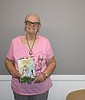
Moses Lake author encourages women to look beyond church culture norms
MOSES LAKE — A Moses Lake author’s book, “A Christian Woman Striving to Live Her Faith in a Man-Controlled World,” takes aim at the role to which many churches relegate the female half of their congregations. “It’s to encourage women in the faith,” Linda Curran said. “A lot of churches say, ‘Teach Sunday school, do this, do that, but don’t (evangelize.)’" In her book, Curran recounts a time when she moved to a new community and joined a church there. She was surprised to learn that, as a new female member, she had been automatically assigned church cleaning duties. When she questioned it, she wrote, she was met with condescension and her objections were brushed aside. In other churches, she said, women who were capable of teaching were relegated to “women’s ministry.”