
Funding research, educating public among jobs of potato commissions
CHERYL SCHWEIZER | Hagadone News Network | UPDATED 2 years, 7 months AGO
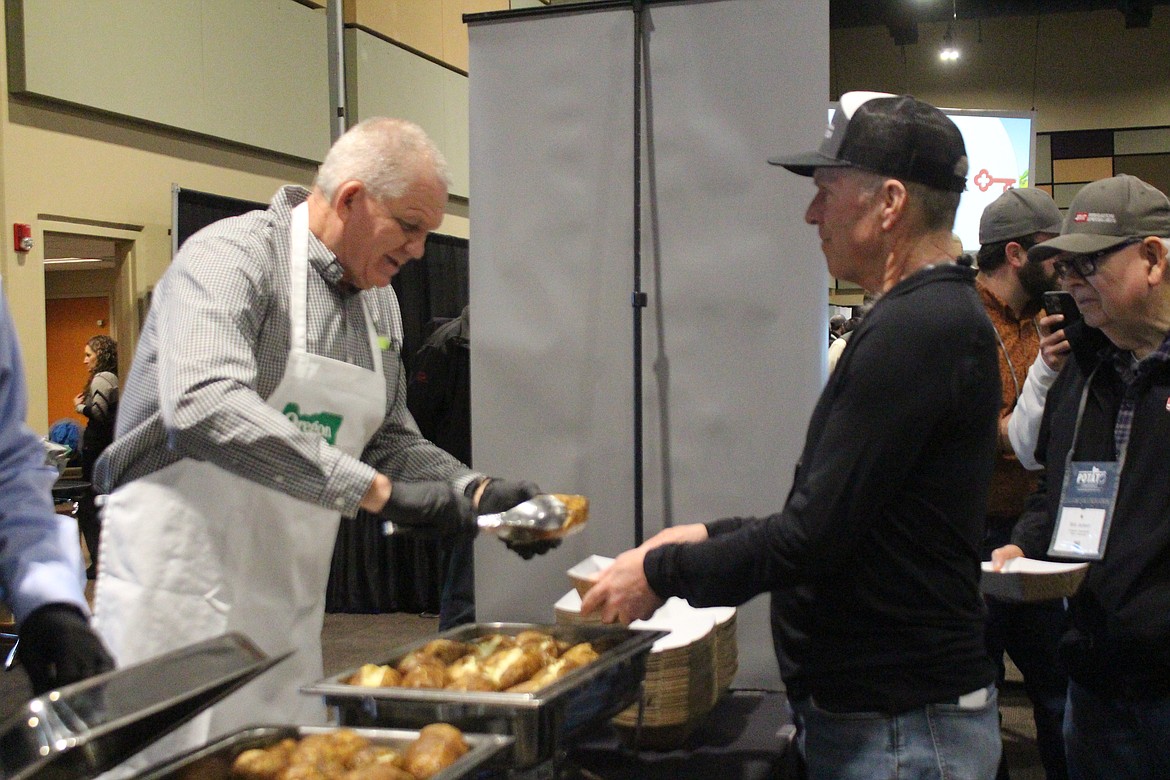
Oregon Potato Commissioner Rob Wagstaff serves potatoes at the baked potato bar at the annual Washington-Oregon Potato Conference in Kennewick last week.
CHERYL SCHWEIZER/COLUMBIA BASIN HERALD
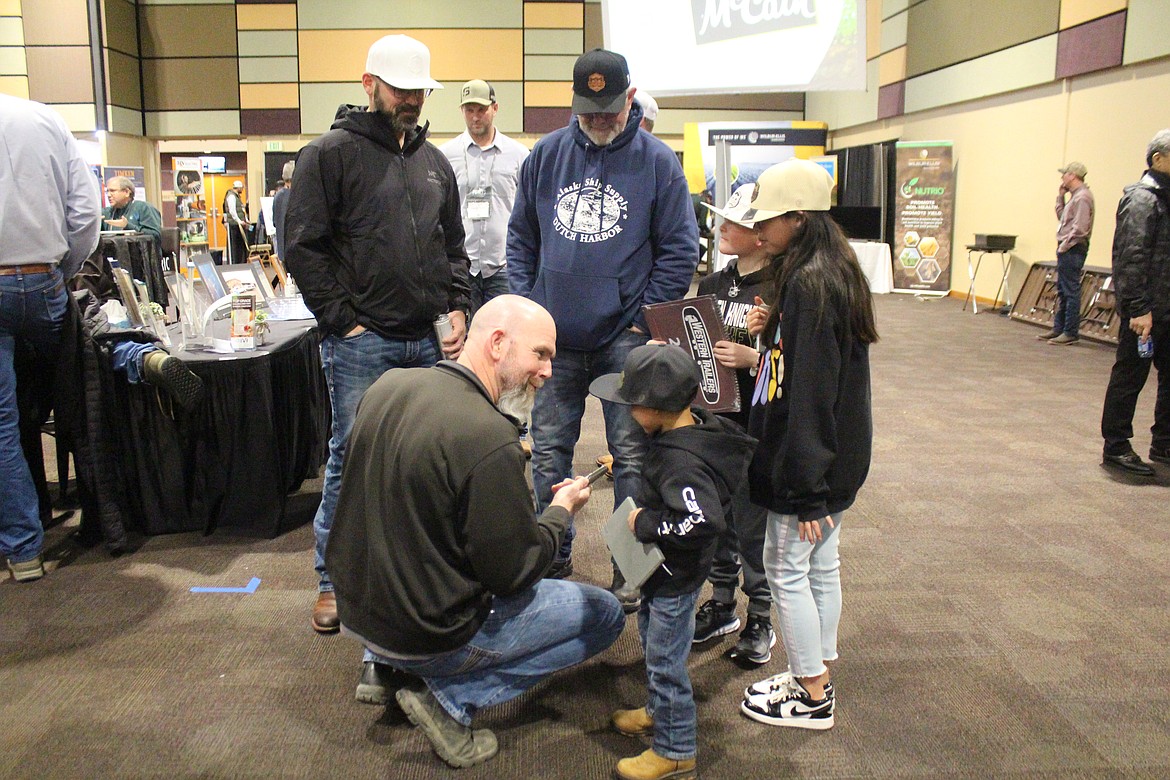
Potential future farmers show off some of the goodies from the Washington-Oregon Potato Conference last week in Kennewick.
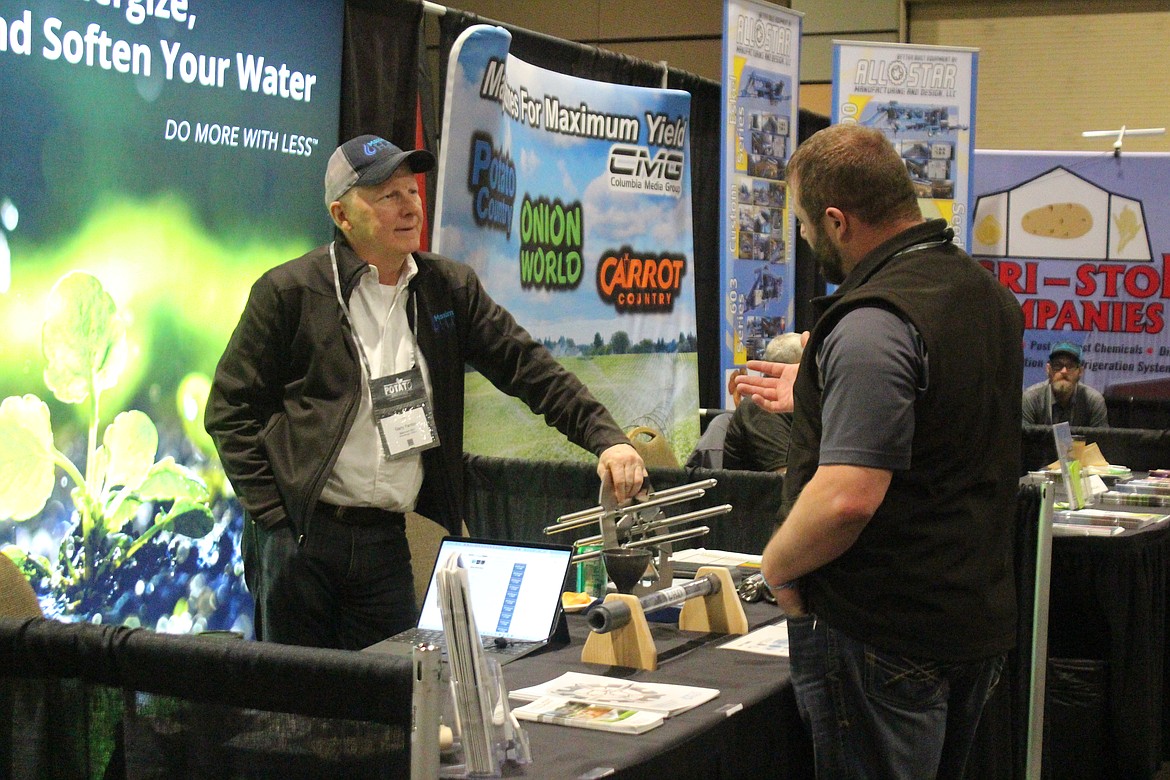
A vendor chats with a customer at the potato conference, sponsored by the potato commissions from Washington and Oregon.
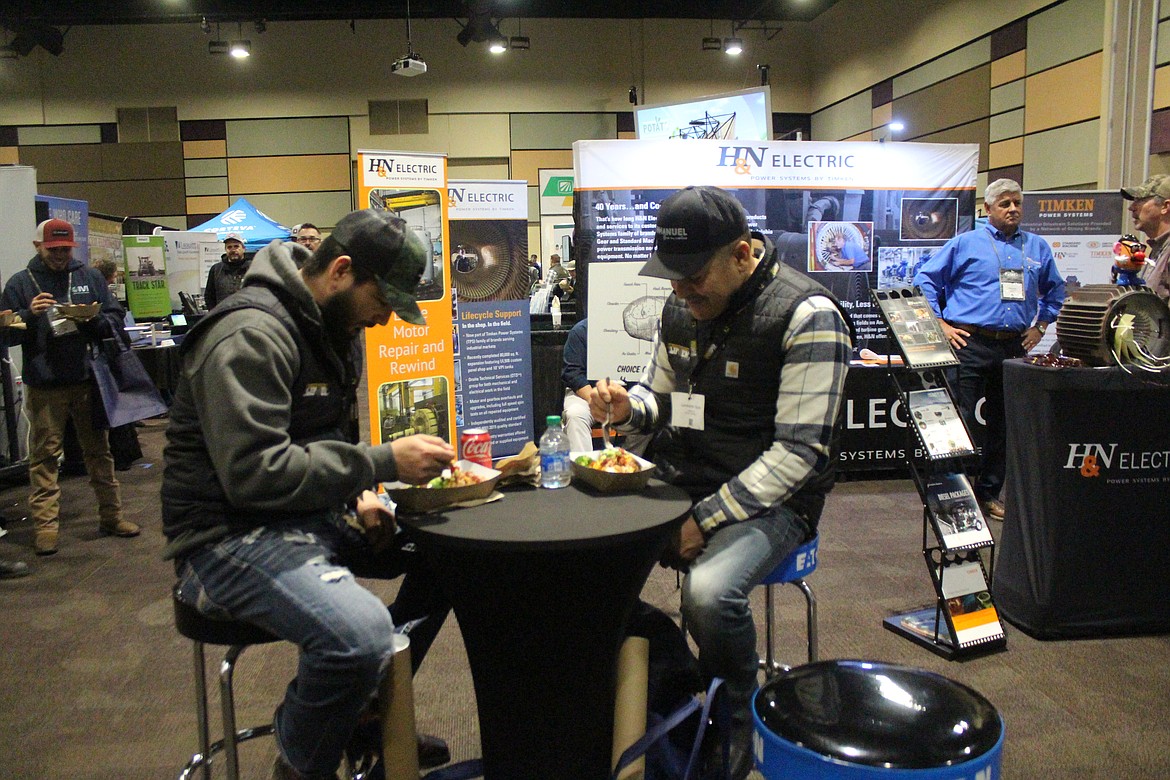
Attendees at the potato conference dig into the baked potatoes served by Washington, Oregon and Idaho potato commissioners.
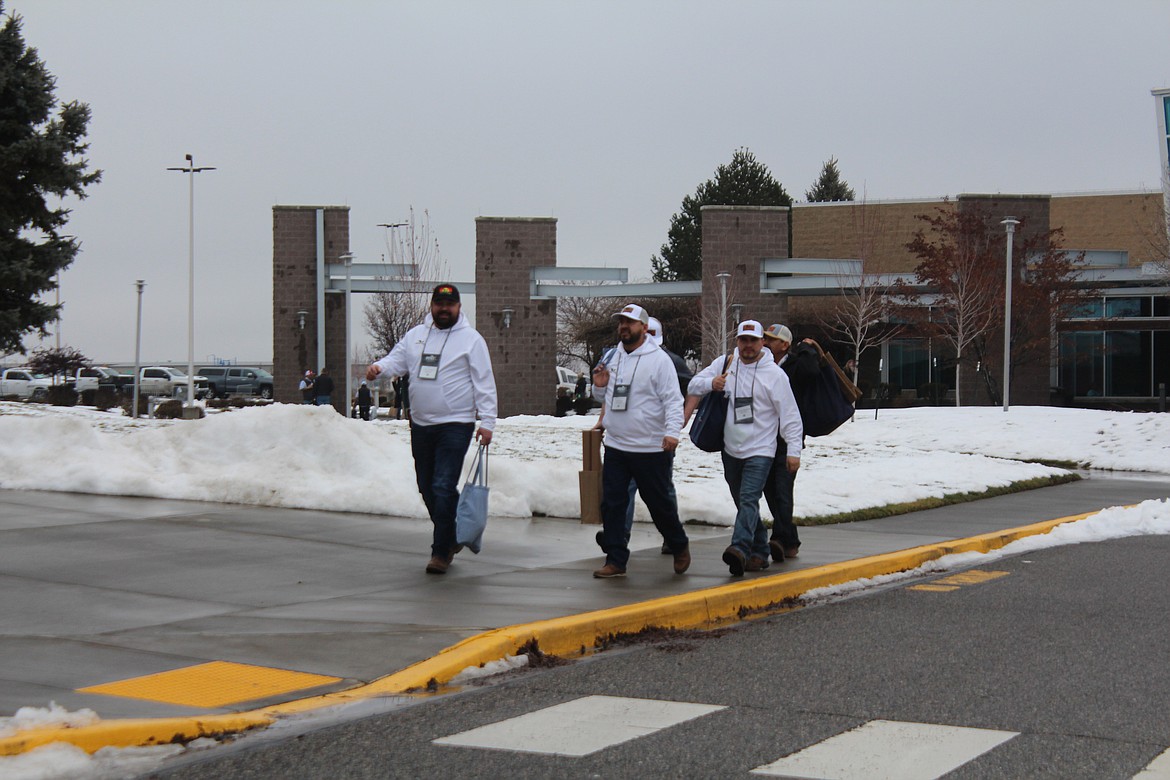
Bags of swag in hand, Washington-Oregon potato conference attendees take a lunch break
Senior Reporter Cheryl Schweizer is a journalist with more than 30 years of experience serving small communities in the Pacific Northwest. She began her post-high-school education at Treasure Valley Community College and enerned her journalism degree at Oregon State University. After working for multiple publications, she has settled down at the Columbia Basin Herald and has been a staple of the newsroom for more than a decade. Schweizer’s dedication to her communities and profession has earned her the nickname “The Baroness of Bylines.” She covers a variety of beats including health, business and various municipalities. | January 30, 2024 1:20 AM
KENNEWICK — Look at the pictures, and farming seems timeless: tractors and dramatic sunsets and all that. But like all other industries, farming is subject to change — and in the last half-century those changes have been big ones. Potato farmers, like farmers and growers in every other agriculture sector, have had to adapt and change with the times.
There are visible signs of changing times. Rob Wagstaff’s family has operated a farm near Nyssa, Ore., for generations. Wagstaff, a member of the Oregon Potato Commission, keeps track of his acreage, and the map is dotted with the names of the people who used to farm that land.
“We go to our acreage map, and we have about 53 that we have got from different people,” he said. “You’ve got 50 families that used to be there that aren’t there anymore.”
Where there were once 150 farms, now there are three or four, he said.
Consolidation is driven in part by the cost of farming. Wagstaff cited equipment costs as an example.
“One tractor that used to cost $35,000 to $40,000 now costs $250,000, literally,” he said. “So that tractor has to cover so many acres. So you have to have so much volume for that one tractor to make it pay.”
The annual Washington-Oregon Potato Conference, held last week, featured classes and seminars addressing issues facing farmers, from research into disease to new work rules. It’s sponsored by the Washington and Oregon potato commissions, and Washington Potato Commission Executive Director Chris Voigt said it’s one of the services the potato commissions provide to farmers.
“The biggest (service) is research,” Voigt said, something Wagstaff said they had in common with the Oregon Potato Commission.
“A high percentage of our budget is research,” Wagstaff said. “Right now we have the three-state consortium, and so we put money toward that.”
The consortium allows researchers at Washington State University, Oregon State University and Idaho State University to work together, Wagstaff said. Among other things, that avoids duplication of effort.
Voigt estimated the WSPC spends about $1 million per year on research.
“(Funded research projects) are all really focused on growing more, better quality potatoes using less resources,” he said.
Researchers also are looking to improve nutritional quality in potatoes and increase resistance to disease and pests, Voigt said.
The WSPC devotes attention and money to educating people who don’t farm about how farms work. It’s crucial for people to understand how their food is produced, he said.
“Every grower is afraid we’ll get regulated out of business by people who have no idea what it takes to make food,” he said.
Getting the word out has taken the WSPC to some unusual places.
“We’re in a lot of gyms, where people are on treadmills or the elliptical, and the TVs up there are playing our 15- or 30-second commercials, geared towards nutrition,” he said. “Reminding athletes how incredibly nutritious potatoes are, and how you need carbs to rebuild muscle.”
The charging stations for electric vehicles also offer an opportunity.
“There are charging stations that actually play videos. So we are playing videos there about the environmental friendliness of the potato and how sustainable a crop it is,” he said.
The WSPC has three areas of concentration, he said, the third being what he called governmental affairs.
“We’re kind of the official voice for the potato growers,” Voigt said. “We’re in Olympia, we’re in Washington D.C., kind of educating the legislature on the things that are important to us.”
Cheryl Schweizer can be reached via email at [email protected].
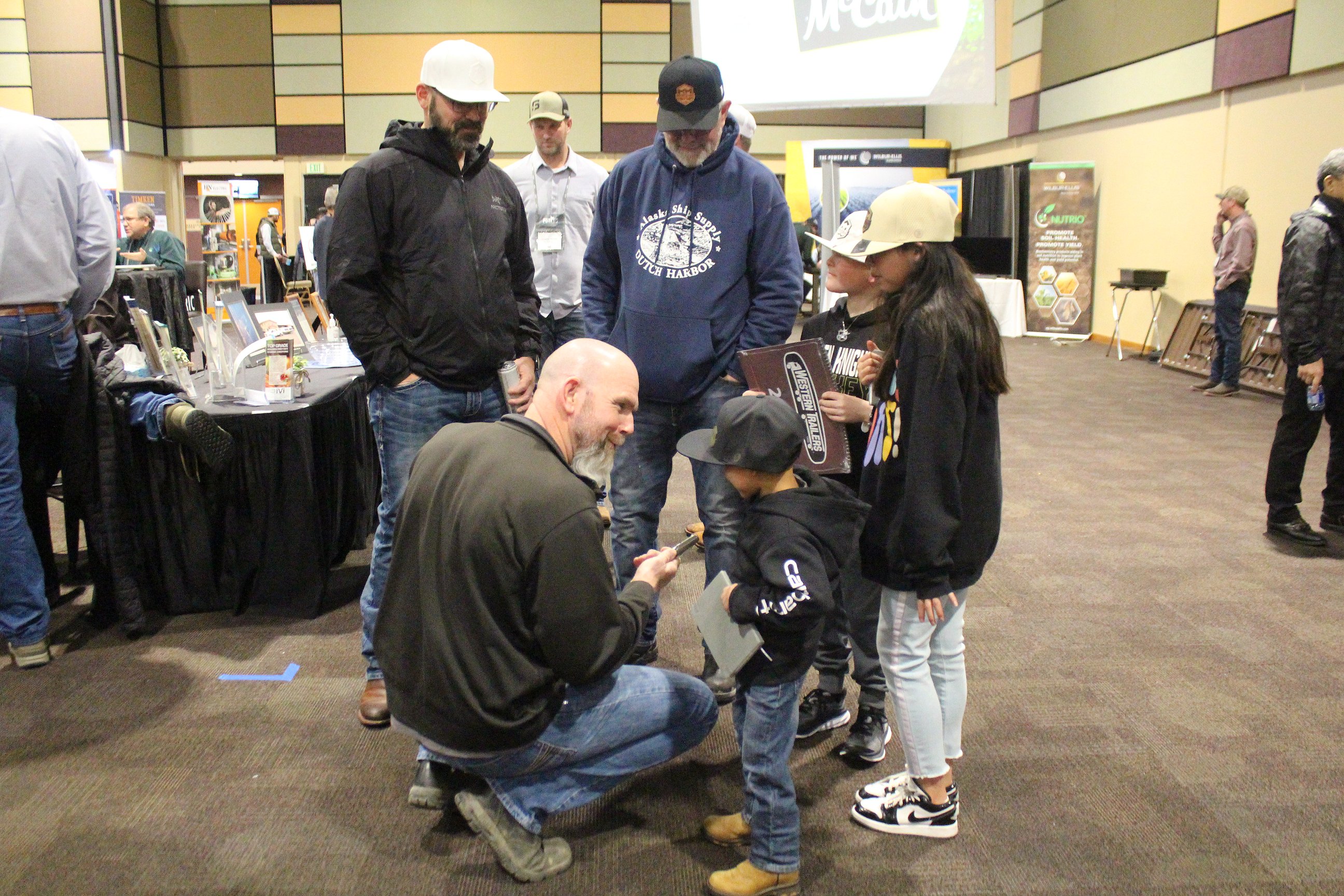 Potential future farmers show off some of the goodies from the Washington-Oregon Potato Conference last week in Kennewick.
 A vendor chats with a customer at the potato conference, sponsored by the potato commissions from Washington and Oregon.
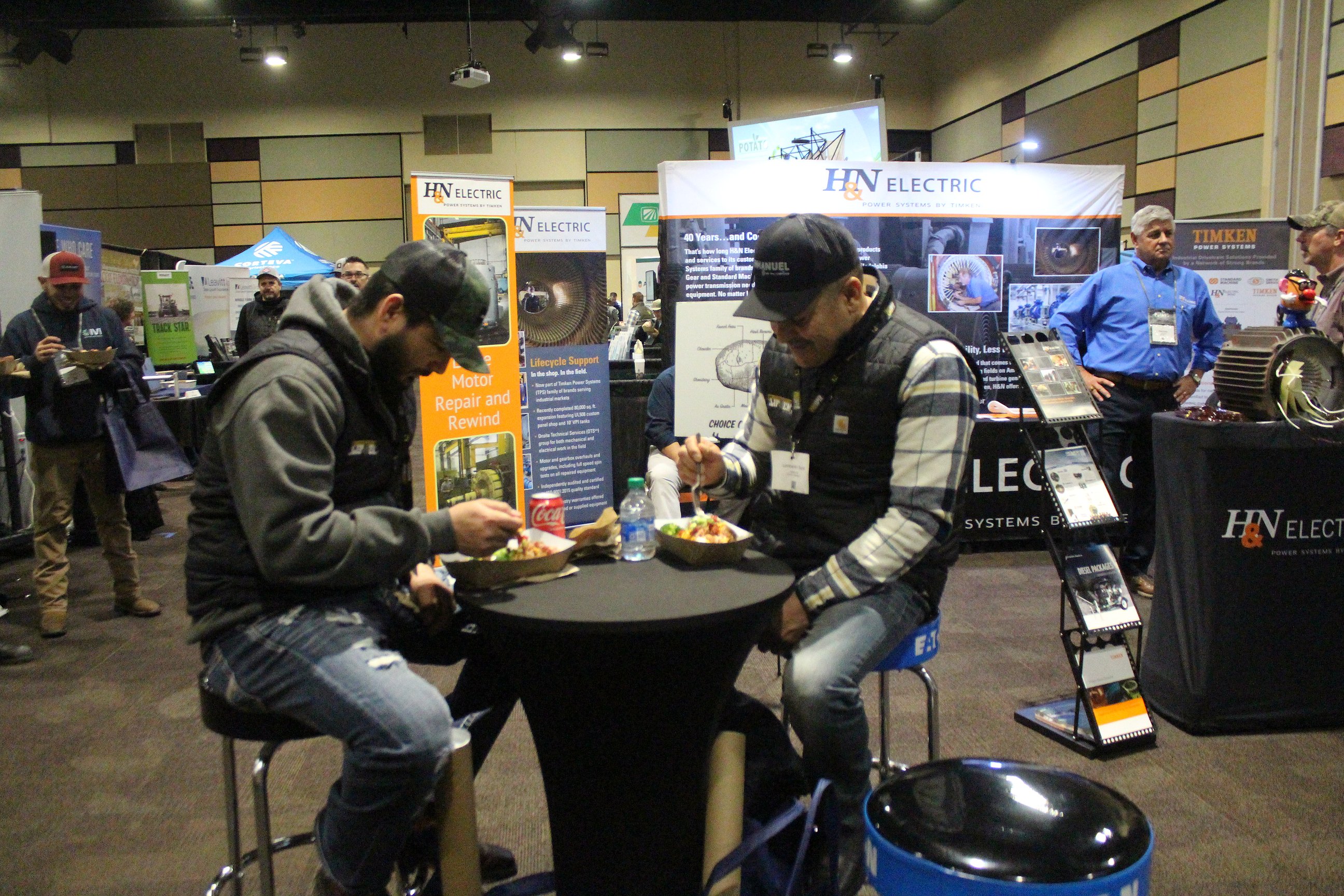 Attendees at the potato conference dig into the baked potatoes served by Washington, Oregon and Idaho potato commissioners.
 Bags of swag in hand, Washington-Oregon potato conference attendees take a lunch break
ARTICLES BY CHERYL SCHWEIZER
Road projects on hold for Labor Day weekend
MOSES LAKE — With Labor Day weekend dead ahead, drivers will be able to move freely about the state. Most road projects are on hold for the holiday weekend. Nobody will be working on the Hansen Road overpass on Interstate 90, but the lane restrictions that are in effect will continue through the end of the project.
Cost estimates for water source alternatives given to Moses Lake City Council
Protected under the U.S. Endangered Species Act, efforts are ongoing to keep it self-sufficient
MOSES LAKE — It’s going to cost a lot of money to provide alternative water sources for the city of Moses Lake, but some of the possible alternatives will cost more than others. City officials provided the Moses Lake City Council with costs for various alternatives Tuesday.

Dryer vent cleaning is important -- but often overlooked
MOSES LAKE — Not all the maintenance a house needs is visible. Sometimes a potential problem just goes unnoticed until it causes trouble, sometimes serious trouble. But a lot of potential problems give off warning signs. Clothes dryers often do when they need a good cleaning.