
Groups claim Glacier Park’s bull trout project violates federal law
TAYLOR INMAN | Hagadone News Network | UPDATED 1 year, 8 months AGO
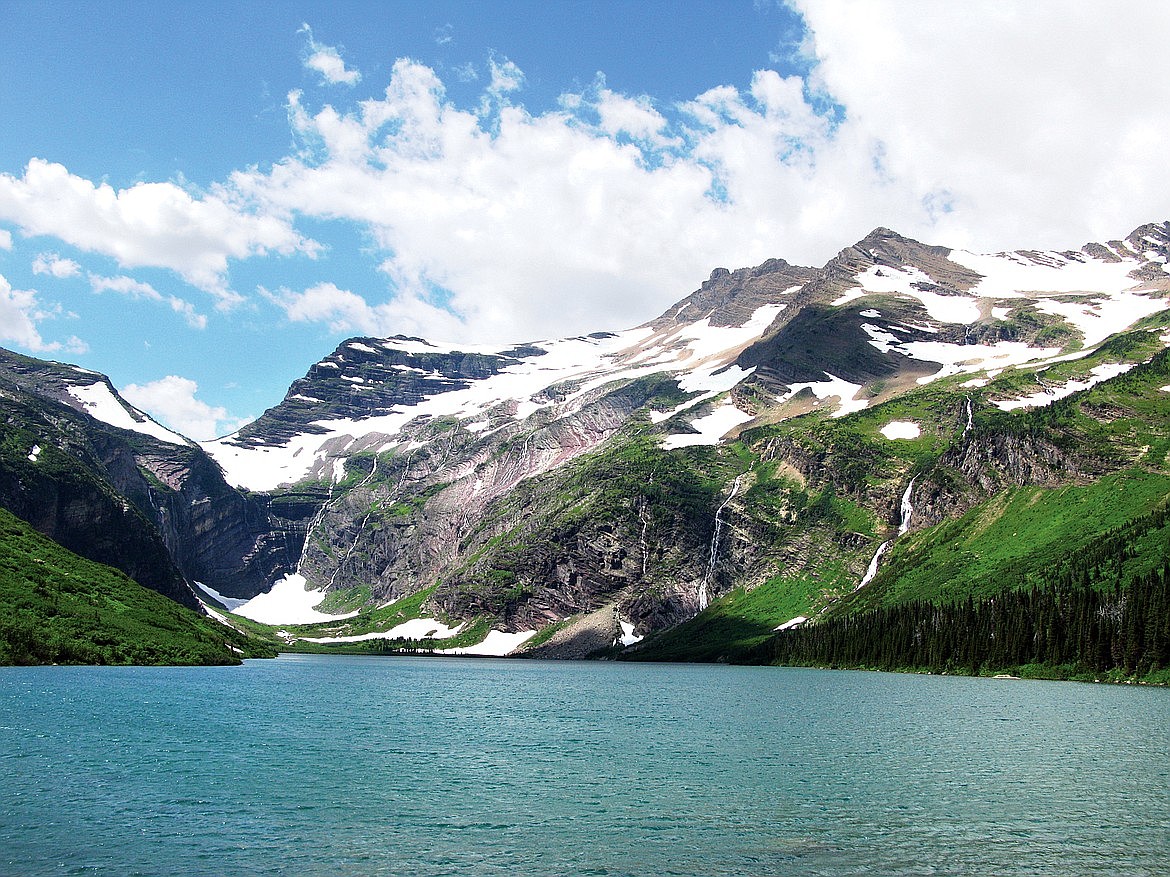
Gunsight Lake in Glacier National Park. (Daily Inter Lake FILE)
REPORTER AND PODCAST HOST Taylor Inman covers Bigfork and the north shore of Flathead Lake for the Bigfork Eagle and the Daily Inter Lake. Her reporting focuses on local government, community issues and the people who shape life in Northwest Montana. Inman began her journalism career at Murray State University’s public radio newsroom and later reported for WKMS, where her work aired on National Public Radio. In addition to reporting, she hosts and contributes to Daily Inter Lake podcasts including News Now. Her work connects listeners and readers with the stories shaping communities across the Flathead Valley. IMPACT: Taylor’s work expands local journalism through both traditional reporting and digital storytelling. | July 5, 2024 12:00 AM
Friends of the Wild Swan and the Council on Wildlife and Fish claim the National Park Service is violating the Endangered Species Act by moving populations of protected bull trout, according to a notice sent by the environmental groups last week.
Glacier National Park biologists have undertaken an effort to stock mountain whitefish, west slope cutthroat trout and bull trout to Gunsight Lake, a high alpine lake near Jackson Glacier and Sperry Chalet in Glacier National Park. The project went out for public comment last summer, with park officials announcing in August that the agency would move forward.
Katharine Hammond, the regional director for National Park Service Interior Regions 6, 7 and 8, last year signed off on findings that there were no significant adverse effects from the project. According to the project’s environmental assessment, park officials believe Gunsight Lake presents an opportunity to establish native fish habitat secure against hybridization, particularly as climate change continues.
Because Gunsight Lake is at a high elevation, there is high likelihood that it will maintain cold enough temperatures "necessary for the westslope cutthroat and bull trout to persist in a changing climate,” according to the park.
Friends of the Wild Swan and the Council on Wildlife and Fish wrote in the notice, also sent to the U.S. Fish and Wildlife Service, that the act prohibits creating experimental populations of endangered and threatened species outside their current range except by regulation. The project involves moving bull trout from other lakes in the park to Gunsight Lake.
"In fact, until either Glacier Park or the Fish and Wildlife Service put non-native rainbow trout in Gunsight in the early 1900s, the lake had been fishless. St. Mary Falls blocks fish from swimming upstream. Introducing bull trout there is experimental because it creates a population outside the current range of bull trout, and outside any overlap with already existing populations,” the notice said.
Program Director for Friends of the Wild Swan Arlene Montgomery claims park officials did not go through the proper channels to designate the bull trout being moved as an experimental population.
She said the groups want to set a precedence for future similar projects.
“These translocations can only be done in the current or historic range of bull trout. The park has plans to do this more and other agencies are too. So, it's kind of our feeling like, ‘wow, this is something that the Fish and Wildlife Service needs to be treating in the appropriate legal manner,’” Montgomery said.
The groups' notice says that only the U.S. Fish and Wildlife Service has the authority to designate an experimental population by developing regulations identifying the experimental population, the area where the regulations apply, and which specific management restrictions apply. In addition, the groups claim the park service did not properly determine whether moving the bull trout population was essential to the species' continued existence.
Requests for comment from Glacier National Park were not returned by press time.
The park last fall began the project by removing non-native rainbow trout from the lake using an Environmental Protection Agency registered and approved fish toxicant, rotenone.
“Ongoing hybridization with non-native rainbow and Yellowstone cutthroat trout is occurring in almost every westslope cutthroat population in the St. Mary River drainage, but some still contain genetically pure individuals. Such populations are of high conservation value,” the project’s assessment said.
Glacier National Park has 60 days to correct the alleged violation, or the groups say they will take legal action. The Endangered Species Act requires notice be given before filing lawsuits against the federal government.
Friends of the Wild Swan and other environmental groups raised concerns about the project during public comment period last year in June. In addition to calls to drop the project entirely, the groups also protested the use of helicopters and other motorized equipment for the undertaking, according to a letter sent to the park service.
Reporter Taylor Inman can be reached at 406-758-4433 or by emailing [email protected].
ARTICLES BY TAYLOR INMAN

Plant Land helps customers spring into the gardening season
Heated greenhouses at the Evergreen garden center are filled with pottery, annuals, houseplants and some early season vegetables like onions, lettuces and herbs.
Despite Barnhart objections, county OK’s gravity septics
Flathead County homeowners can now apply to install a gravity septic system for the first time since 2004.

Logan Health physicians raise awareness about colorectal cancer
It’s more important than ever to get screened for colorectal cancer, according to Logan Health gastroenterologist Dr. Kate Wisser, who said catching the disease early saves lives.