
Disappearing America
JOEL MARTIN | Hagadone News Network | UPDATED 2 years, 3 months AGO
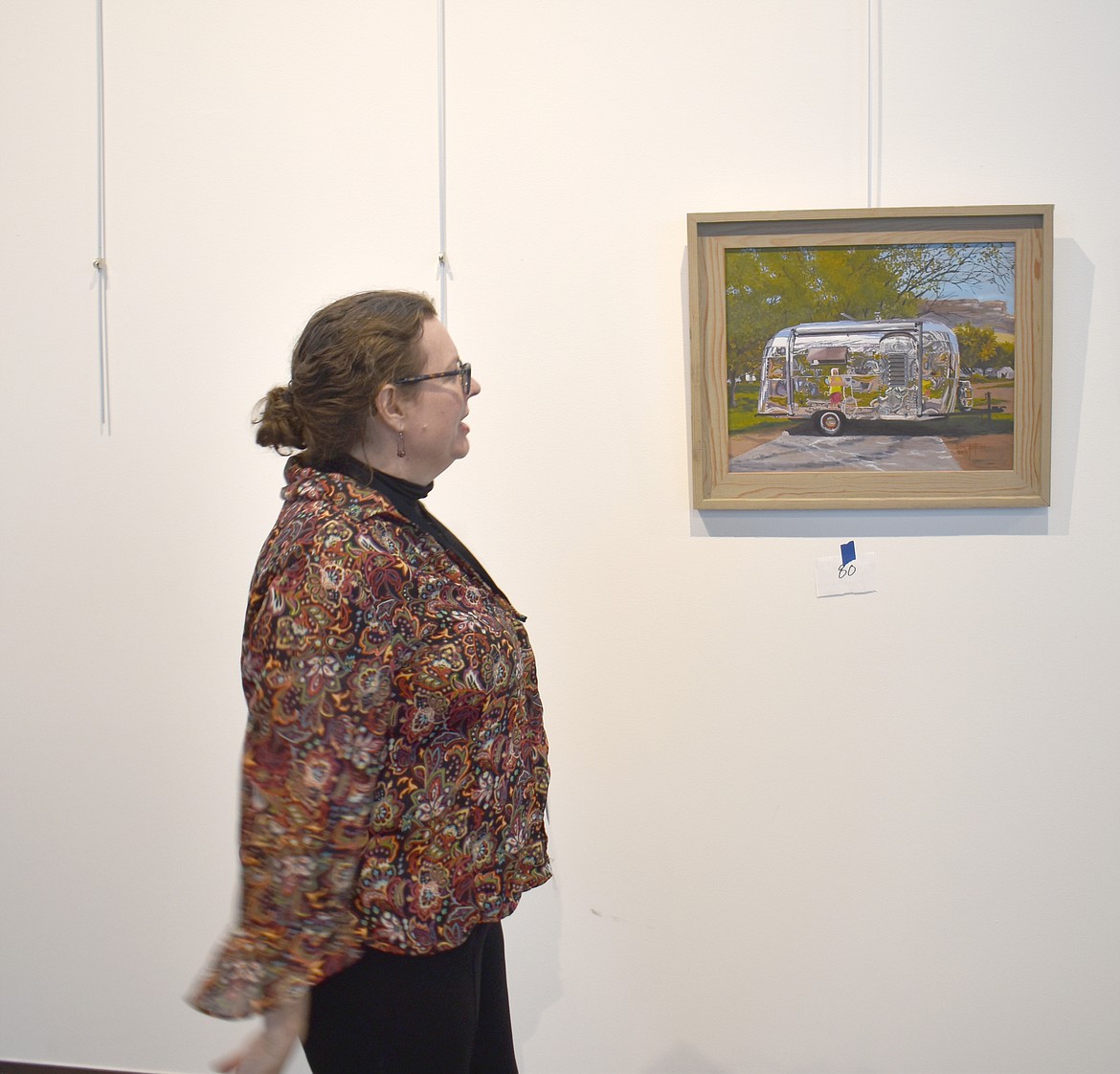
Moses Lake Museum & Art Center Director Dollie Boyd shows her favorite painting in Deon Matzen’s “Vanishing Rural America” exhibit, a self-portrait the artist did of her reflection in the side of a Silver Streak Trailer.
JOEL MARTIN/COLUMBIA BASIN HERALD
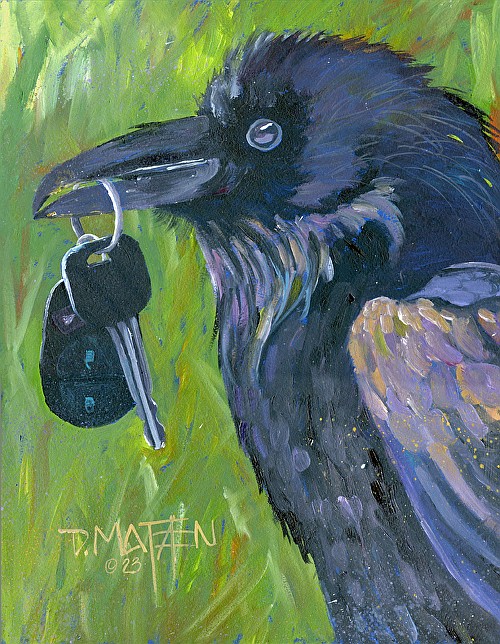
“Now Where Did I Park the Car?” is one of what artist Deon Matzen calls her “varmint paintings,” and will be on display starting Friday at the Moses Lake Museum & Art Center.
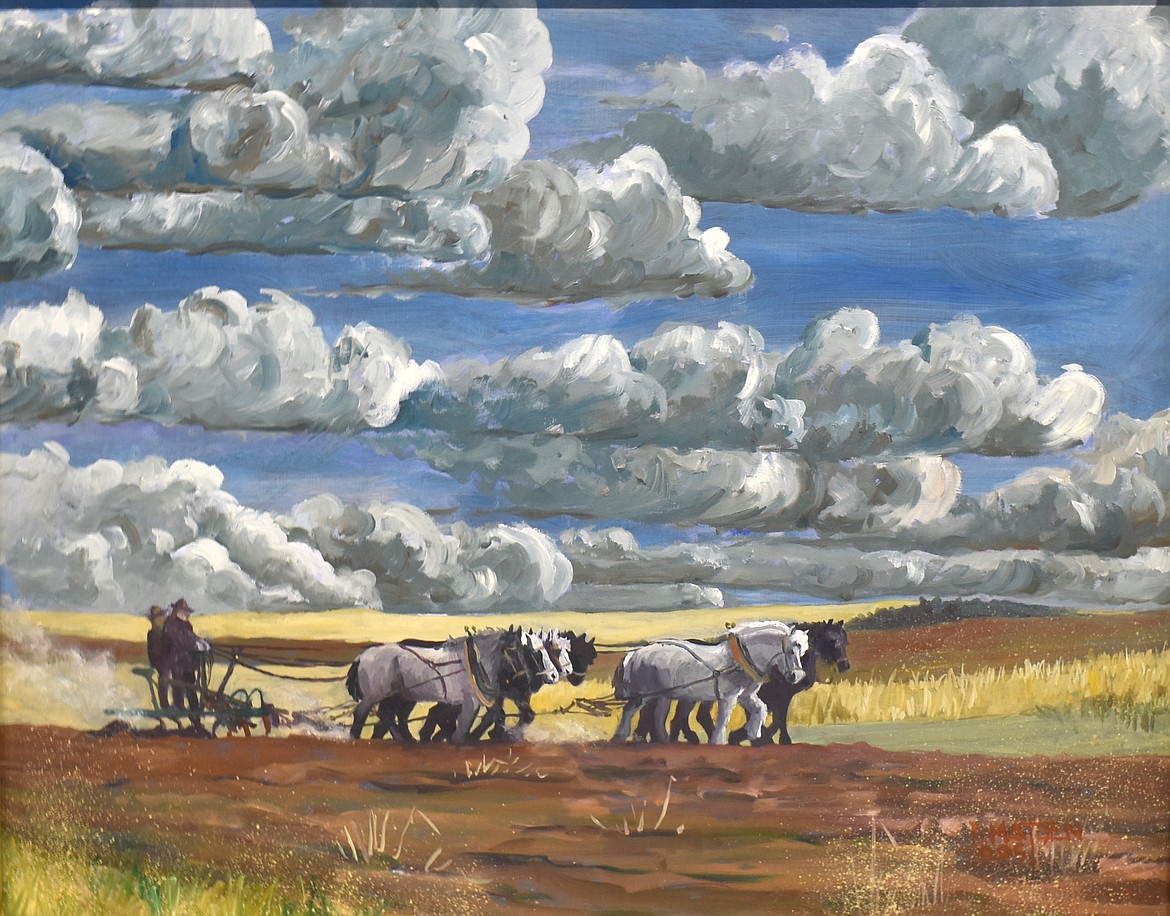
This painting of farmers plowing behind a team of horses evokes the starkness of the eastern Washington landscape.
Joel Martin has been with the Columbia Basin Herald for more than 25 years in a variety of roles and is the most-tenured employee in the building. Martin is a married father of eight and enjoys spending time with his children and his wife, Christina. He is passionate about the paper’s mission of informing the people of the Columbia Basin because he knows it is important to record the history of the communities the publication serves. | July 12, 2024 1:20 AM
MOSES LAKE — Artist Deon Matzen will make an appearance at the Moses Lake Museum & Art Center Friday to open her new exhibit.
“My theme for this show … is “Vanishing Rural America,” Matzen said from her home on Whidbey Island. “I work on old barns that are falling down — the old-style barns, not the contemporary metal loafing shed-style barn — trucks, barns, any kind of old detritus. Most of what you’ll see is that, although there are a number of wildlife paintings too. I call them ‘varmint paintings.’”
The exhibit will kick off with a reception at 4 p.m. Friday where patrons can meet Matzen and nibble on refreshments while checking out the artwork.
Matzen paints in oils, but she came to that medium fairly late in life. She had been into fiber art, she said hand-spinning and hand-dyeing yarn and creating one-of-a-kind clothing. Then her husband got tired of carrying her equipment to shows, she said, and he and her sister signed her up for a painting class.
She also taught painting for about 25 years, which she said she sort of fell into. She had briefly taken a class at Skagit Valley College, then dropped it and thought that was the end of it.
“About a month and a half later, I got a call from the director of the center, and she says, ‘I see you have a degree in art.’” Matzen said. “I said yes. She says, ‘Could you teach art at Skagit Valley College?’ And I said, ‘Well, I don't know. What does it entail?’ She says, ‘Well, it entails starting in three days.’”
The COVID-19 pandemic gave her a chance to retire from the teaching side, but she still paints full-time. The show at the Moses Lake Museum & Art Center represents years of her work, she said.
Matzen’s favorite subjects are the relics of rural America: the rusted truck overgrown with weeds, the barn festooned with now-faded tobacco ads, the country store with signs crowded all over the façade and an antique gas pump in front.
“It takes an artist’s eye to find beauty in these sort of ramshackle places,” said Dollie Boyd, director of the museum.
“I am a representational artist,” Matzen said. “I tend to try to recreate reality rather than abstracting it. And color is really important to me, so most of my pieces are really colorful. We live in a climate here (on Whidbey Island) that’s normally very gray … So I have a tendency to pop things up a little brighter than what they actually are. Otherwise I stick pretty close to the realism that you see in most of the paintings.”
The reception Friday will also include a chance for attendees to make some art of their own at Art After Hours, which will involve barn wood painting. There’s no charge for Art After Hours, which Boyd said is a popular part of the exhibit openings.
“We do a lot of things for kids, and we do a lot of things for families,” Boyd said. “So it's a chance to give adults space to sit and do something artistic. We make it really simple, put all the supplies out and everything and very simple instructions.”
Joel Martin may be reached via email at [email protected].
 “Now Where Did I Park the Car?” is one of what artist Deon Matzen calls her “varmint paintings,” and will be on display starting Friday at the Moses Lake Museum & Art Center.
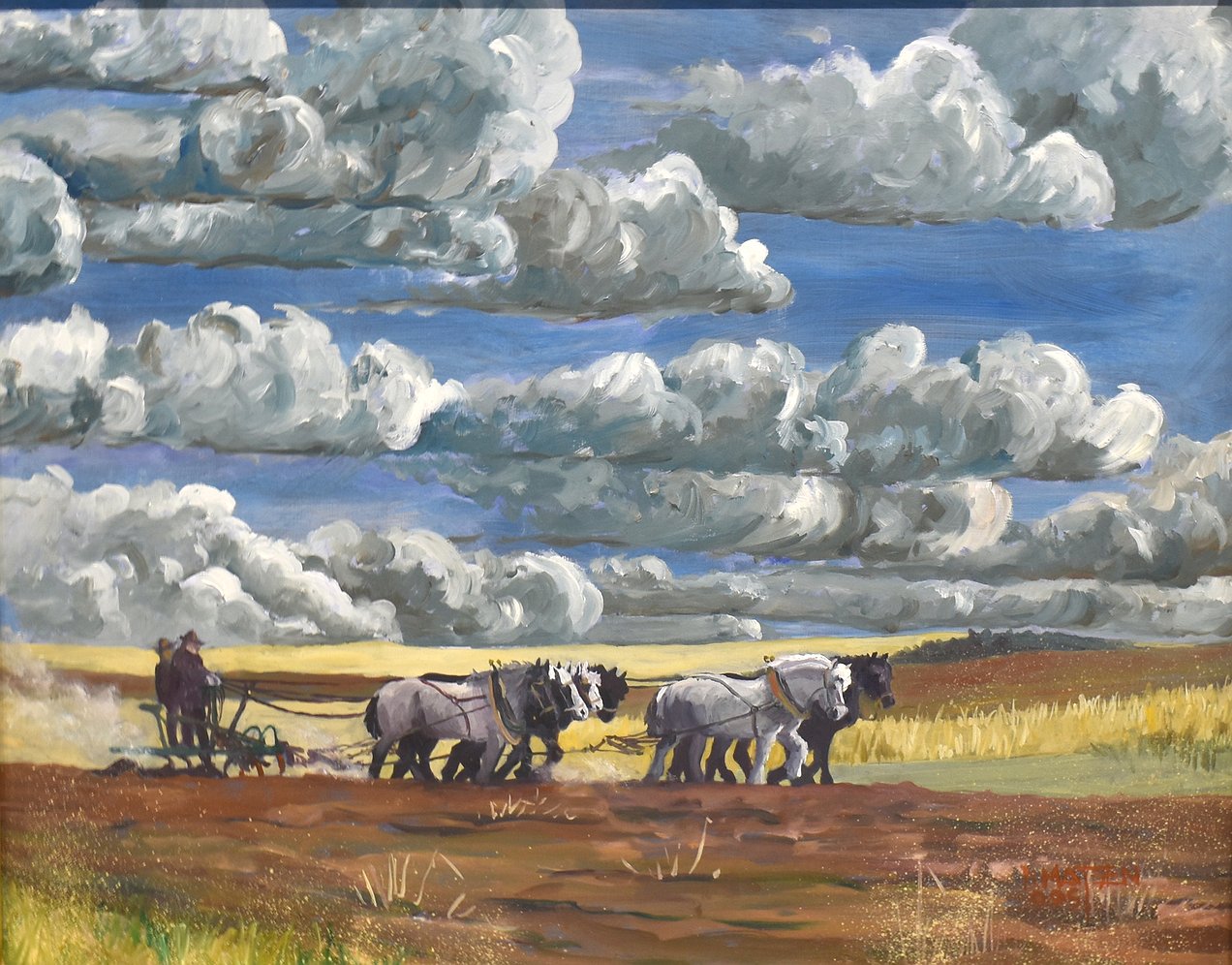 This painting of farmers plowing behind a team of horses evokes the starkness of the eastern Washington landscape.
ARTICLES BY JOEL MARTIN

Endless battle
Noxious Weed Control Board works to keep invasive plants under control
MOSES LAKE — Some of the nastiest plants in Grant County were the topic of a class led by Jay Johnson, a consultant with the Grant County Noxious Weed Control Board, Tuesday. The Noxious Weed Control Board, as its name would suggest, is tasked with keeping weeds under control in Grant County. That’s not a small job; the board’s website lists 129 species of noxious weeds that are found around Grant County. A noxious weed is defined as an invasive, non-native plant that threatens agricultural crops, local ecosystems or fish and wildlife habitat, according to the Noxious Weed Control Board. Washington state law requires that these weeds be identified and their spread kept to a minimum, if not completely eradicated. “We’re one of those agencies a lot of people don’t really understand,” Johnson said. “We’re a county office and … our funding is tax-based assessment. When you get your tax bill and you look down at all the expenses that you pay for, there we are.”

BASIN EVENTS: Oct. 16-24
COLUMBIA BASIN — Whether you feel like shopping, crafting, learning or seeing a show, there’s something happening for you this week in the Basin. Oct. 16 ‘My Family (Mi Familia)’ screening Spanning three generations, “My Family (Mi Familia)” is a heartfelt drama that follows the Sánchez family as they build their lives in East Los Angeles. Through love, hardship, triumph, and sacrifice, the film explores the immigrant experience, the strength of family bonds, and the traditions that connect one generation to the next. Lowrider show and taco truck before the screening. Sponsored by Columbia Basin Allied Arts, EDUBS C/S and the Moses Lake Creative District. $12 per person. Doors open at 6 p.m., film begins at 7 p.m. at the Moses Lake Civic Center Auditorium, 401 S. Balsam St. Tickets and info: www.cba-arts.org.

Moses Lake author encourages women to look beyond church culture norms
MOSES LAKE — A Moses Lake author’s book, “A Christian Woman Striving to Live Her Faith in a Man-Controlled World,” takes aim at the role to which many churches relegate the female half of their congregations. “It’s to encourage women in the faith,” Linda Curran said. “A lot of churches say, ‘Teach Sunday school, do this, do that, but don’t (evangelize.)’" In her book, Curran recounts a time when she moved to a new community and joined a church there. She was surprised to learn that, as a new female member, she had been automatically assigned church cleaning duties. When she questioned it, she wrote, she was met with condescension and her objections were brushed aside. In other churches, she said, women who were capable of teaching were relegated to “women’s ministry.”