
Seed prices rise with research costs
JOEL MARTIN | Hagadone News Network | UPDATED 2 years, 2 months AGO
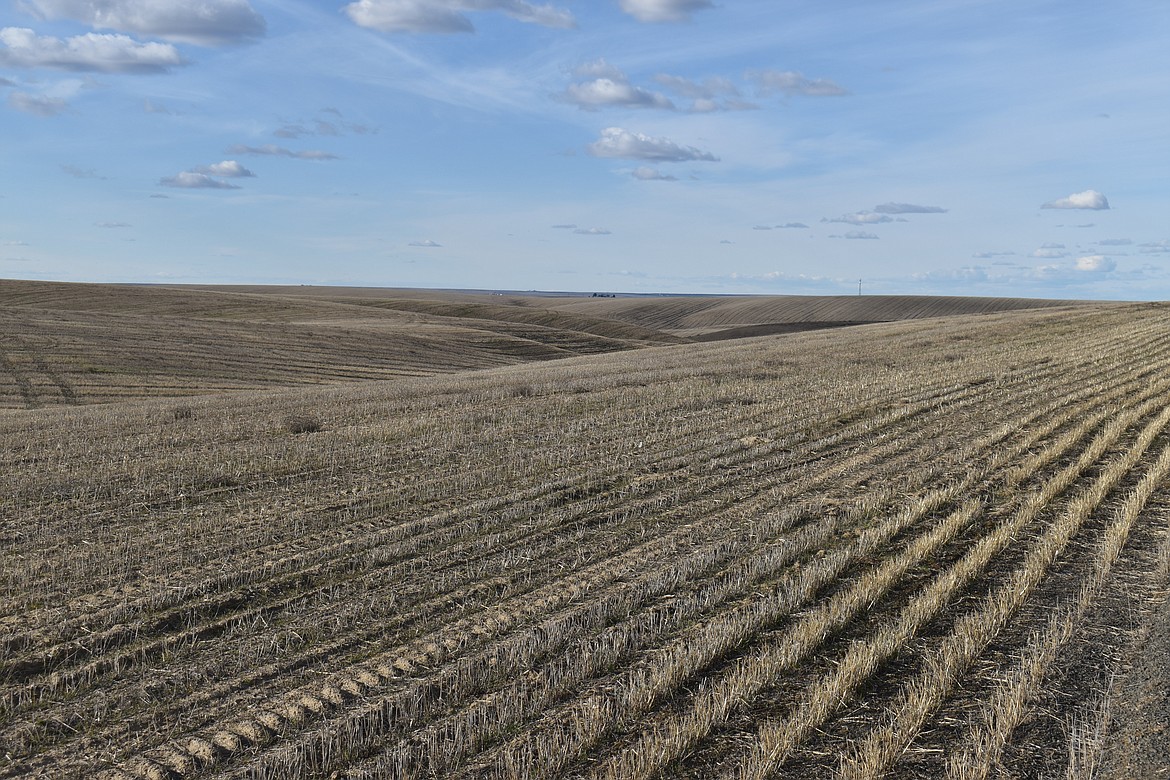
A wheat field in southeastern Adams County in March. The cost of seed wheat, like many other crops, is strongly affected by the cost of breeding and research.
Joel Martin/Basin Business Journal
Joel Martin has been with the Columbia Basin Herald for more than 25 years in a variety of roles and is the most-tenured employee in the building. Martin is a married father of eight and enjoys spending time with his children and his wife, Christina. He is passionate about the paper’s mission of informing the people of the Columbia Basin because he knows it is important to record the history of the communities the publication serves. | July 31, 2024 1:00 AM
MOSES LAKE — Farmers are seeing an increased cost when it comes to seed and seed development is becoming more complex over time. As agriculture integrates technology and sees trends in breeding change, costs are going up to keep things rolling forward.
“One of the things that producers used to do to save money was we could, once upon a time, save our own seed,” said Andy Juris, former president of the Washington Association of Wheat Growers. “We could go buy seed from a seed dealer, and then turn around and save a field of it if it was clean enough, and use it ourselves, which was pretty significant.”
That’s still possible, Juris said, but it causes genetic drift, in which seeds reused over generations undergo random changes until the plant is wildly different from the original breed. Saving seed also doesn’t work with hybrid varieties, according to information from Ohio State University, because hybrid varieties don’t breed true and offspring of a hybrid plant is more likely to have the characteristics of one or another of the original plants the hybrid was made from.
So growers find themselves in the position of purchasing seed every year, and like everything else, the cost is rising. Part of the cost of the seed is overhead, but research and development add a good deal to it as well.
“There are companies now bringing wheat to market that have various natural traits, whether it be disease resistance, or even in some cases herbicide resistant,” Juris said. “And in all of those cases, you’re paying a pretty healthy technology fee for that kind of thing. In some cases, we may be talking as much as dollars a bushel extra on top of the regular price.”
The seed companies aren’t trying to gouge anyone, Juris explained; they just need to recoup their costs. Since farmers can’t grow crops without seed, the companies have a lot of leeway when it comes to prices.
“That’s probably, I’d say, the biggest area of contention with growers versus seed companies,” Juris said. “All of the varieties that are now coming to market within the last 10 years are only available in certified so you’re going to a seed dealer and paying those top prices every year.”
The seed dealers aren’t the only ones collecting money. For the last 10 years, Washington State University’s public breeding program has charged a small royalty, two cents per pound, on its intellectual property, according to its website. That money is put back into the university’s breeding programs to continue the process, including funding a $15 million Plant Growth Facility that was opened in 2015 and paid off completely last year.
“If we don’t have a viable breeding program at WSU, we’re then at the mercy of the private companies that can charge anything they want,” Juris said.
The future may be in genetically modified seed, whether people like it or not. The South American breeder Bioceres last year gained approval from Brazil and Argentina to cultivate HB4 wheat, which outperformed nonmodified wheat by 43% in drought conditions, according to the company’s website.
Most countries have either zero tolerance or very restrictive policies on importing genetically modified food, Juris said, but that’s not necessarily going to stay the same.
“One day, somebody is going to blink,” he said. “One day, somebody that imports a lot of wheat is going to say, ‘OK, we’ve decided it’s not a big deal. Starving people tend to be grumpy, and when that happens, the government has issues, so we’re fine with it.’”
ARTICLES BY JOEL MARTIN
Endless battle
Noxious Weed Control Board works to keep invasive plants under control
MOSES LAKE — Some of the nastiest plants in Grant County were the topic of a class led by Jay Johnson, a consultant with the Grant County Noxious Weed Control Board, Tuesday. The Noxious Weed Control Board, as its name would suggest, is tasked with keeping weeds under control in Grant County. That’s not a small job; the board’s website lists 129 species of noxious weeds that are found around Grant County. A noxious weed is defined as an invasive, non-native plant that threatens agricultural crops, local ecosystems or fish and wildlife habitat, according to the Noxious Weed Control Board. Washington state law requires that these weeds be identified and their spread kept to a minimum, if not completely eradicated. “We’re one of those agencies a lot of people don’t really understand,” Johnson said. “We’re a county office and … our funding is tax-based assessment. When you get your tax bill and you look down at all the expenses that you pay for, there we are.”
BASIN EVENTS: Oct. 16-24
COLUMBIA BASIN — Whether you feel like shopping, crafting, learning or seeing a show, there’s something happening for you this week in the Basin. Oct. 16 ‘My Family (Mi Familia)’ screening Spanning three generations, “My Family (Mi Familia)” is a heartfelt drama that follows the Sánchez family as they build their lives in East Los Angeles. Through love, hardship, triumph, and sacrifice, the film explores the immigrant experience, the strength of family bonds, and the traditions that connect one generation to the next. Lowrider show and taco truck before the screening. Sponsored by Columbia Basin Allied Arts, EDUBS C/S and the Moses Lake Creative District. $12 per person. Doors open at 6 p.m., film begins at 7 p.m. at the Moses Lake Civic Center Auditorium, 401 S. Balsam St. Tickets and info: www.cba-arts.org.

Moses Lake author encourages women to look beyond church culture norms
MOSES LAKE — A Moses Lake author’s book, “A Christian Woman Striving to Live Her Faith in a Man-Controlled World,” takes aim at the role to which many churches relegate the female half of their congregations. “It’s to encourage women in the faith,” Linda Curran said. “A lot of churches say, ‘Teach Sunday school, do this, do that, but don’t (evangelize.)’" In her book, Curran recounts a time when she moved to a new community and joined a church there. She was surprised to learn that, as a new female member, she had been automatically assigned church cleaning duties. When she questioned it, she wrote, she was met with condescension and her objections were brushed aside. In other churches, she said, women who were capable of teaching were relegated to “women’s ministry.”