
Pesticides a necessary but increasing expense in ag
JOEL MARTIN | Hagadone News Network | UPDATED 2 years, 4 months AGO
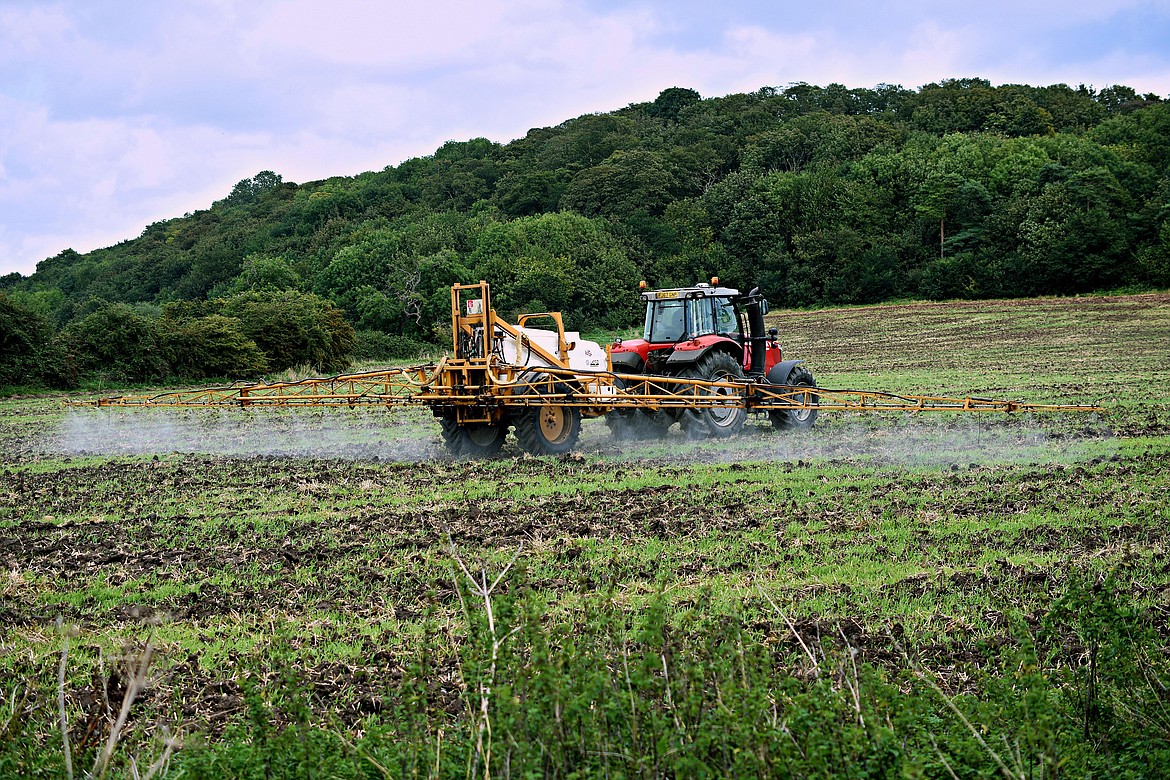
Protecting crops from pests cost Washington farmers $7.5 billion in 2022, an increase of almost 45% over the previous year. Pesticides help prevent devastating losses to crops which could have crippled a working farm.
COURTESY PHOTO/PIXABAY
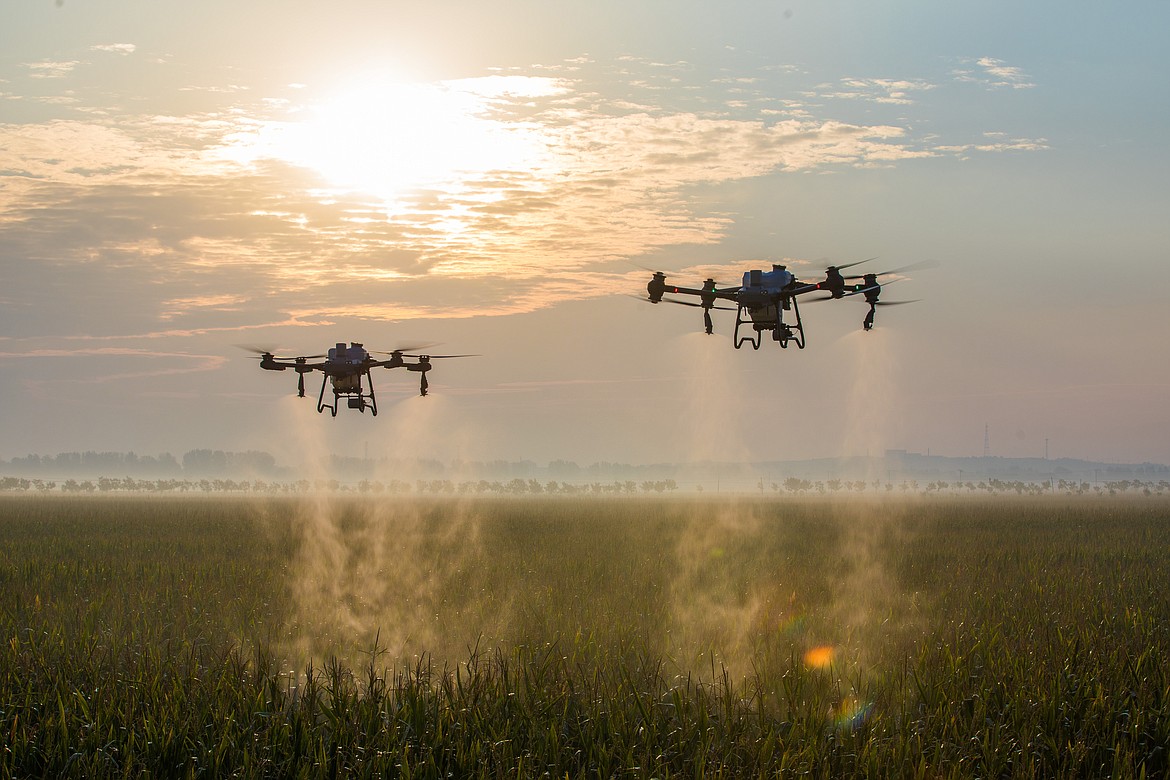
Drones apply pesticides from the air. As costs increase and standards shift, growers are finding more creative ways to protect their crops.
Joel Martin has been with the Columbia Basin Herald for more than 25 years in a variety of roles and is the most-tenured employee in the building. Martin is a married father of eight and enjoys spending time with his children and his wife, Christina. He is passionate about the paper’s mission of informing the people of the Columbia Basin because he knows it is important to record the history of the communities the publication serves. | June 4, 2024 3:00 AM
MOSES LAKE — Where there’s a crop, there are critters trying to eat that crop and it’s up to the grower to ensure that doesn’t happen before it gets to market. That means using a variety of tools, including pesticides, to protect crops and keep them profitable.
“Just about all farmers have to use some products to control pests,” said Jon DeVaney, director of the Washington Tree Fruit Growers Association. “(With) any kind of fresh product that doesn't have a processing step, generally, there's more consumer attention to the issue. But all agricultural producers have to do something to keep pests and diseases off of their crops.”
The average farmer in Washington spent about $21,000 on chemicals in 2022, the most recent year for which figures were available, according to the U.S. Department of Agriculture’s National Agricultural Statistics Service. That’s a roughly 45% increase over the 2021 figure of just less than $15,000. Overall, Washington farmers spent $7.5 billion on chemicals such as pesticides and disease control. Using appropriate chemicals in the right amounts and at the right time is vital to ensuring a profitable season. Getting the most for the money spent on a pesticide or other pest control method is important in an industry that sees ever-tightening profit margins.
Which chemicals to use and how much can involve very complicated calculus, DeVaney said.
“There's a lot of data collection that goes on and research with our research partners at … WSU and others that generate information on when is the optimal time to apply product when it's needed and when is it less needed. When is there an indication of increasing pest pressure or when do weather conditions mean that the pest pressure is lower and you don't need to do that?”
Growers that operate orchards set traps for pests and monitor them to identify when treatment might be needed, he said. Keeping it minimal saves the farmer money and keeps pesticide use to a minimum.
The chemicals themselves aren’t the end of the expense. There’s still the matter of getting the stuff onto the plants. Not just anybody can work with the often dangerous chemicals required to keep pests and diseases at bay. That means growers must either obtain the necessary licenses or hire specially-trained personnel.
Organic growers aren’t exempt, DeVaney said.
“Organic requires control of pests too,” he said. “So while you might be reducing the use of manufactured man-made and developed pesticides, you're still having to use a product which will control those pests that is certified for organic use. That might be less potent but might require more applications. So the exact cost can vary widely between individual orchard blocks and how you're farming.”
The difference between conventional and organic farming has narrowed in recent years due to improved methods.
Not all pest control methods involve artificial chemicals, DeVaney said, leading growers to find some creative workarounds.
“One of the big pests of apples, for example, is codling moth,” he said. “And for the last 20 years, one of the commonly adopted practices has been to use mating disruption. So you have pheromone dispensers put out an orchard, little pheromone-soaked ties that you can put in your tree or even misters that dispense pheromones that will confuse the insects, the coddling moths, so they're not able to reproduce, and then not able to lay eggs in fruit. It substantially reduces the amount of reproducing insects because you can get multiple generations in one growing year. And so the less able to reproduce they are, the more you keep that pest pressure down and the less pesticide product you have to apply.”
One more variable is the product’s destination. About 90% of Washington wheat is exported, according to the Washington State Department of Agriculture, as are 70% of potatoes and 30% of apples. Safety standards can vary widely from country to country. That is a primary concern for developers trying to find improved pest control methods, DeVaney said.
“If you've got a constant stream of new products coming onto the market to replace older ones, and constant improvement, then you have to be making sure that all the foreign markets where we send product are aware of those and have them approved for use there,” he said. “Even if they're not growing our products, they have to have the chemical approved so that we can send our product there. Because the ability to detect infinitesimal amounts of residue, well below the threshold of affecting humans, but still they can detect it in parts per billion, means that they will be subject to enforcement if you're using a product not approved for use in that market.”
The cost of pesticides and fungicides and such may not be the biggest part of a grower’s budget, but in a low-margin industry like agriculture, every little bit can either help or hurt. Additionally, not managing pests correctly can reduce the saleability of crops and can decrease what little profit farmers attain.
“Growers across the country have been seeing their production costs increasing faster than the growth and what they're achieving for the sale of their products … (which is) just going to put growers out of business because they can't necessarily pass on all of those costs as what that's showing.” DeVaney said. “There continues to be the loss of farms, and more and more growers are having to sell when maybe they didn't want to.”
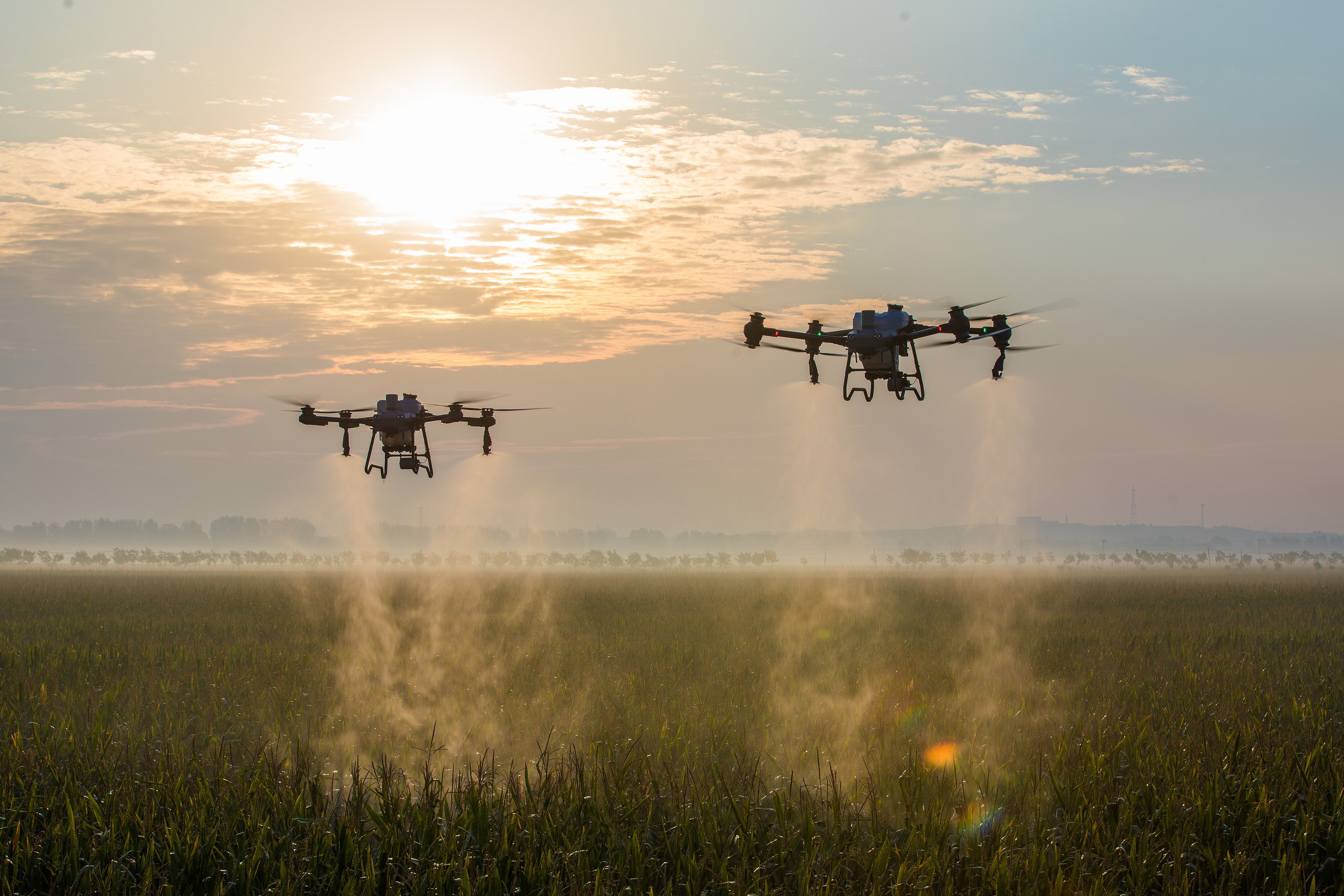 Drones apply pesticides from the air. As costs increase and standards shift, growers are finding more creative ways to protect their crops.
ARTICLES BY JOEL MARTIN
Endless battle
Noxious Weed Control Board works to keep invasive plants under control
MOSES LAKE — Some of the nastiest plants in Grant County were the topic of a class led by Jay Johnson, a consultant with the Grant County Noxious Weed Control Board, Tuesday. The Noxious Weed Control Board, as its name would suggest, is tasked with keeping weeds under control in Grant County. That’s not a small job; the board’s website lists 129 species of noxious weeds that are found around Grant County. A noxious weed is defined as an invasive, non-native plant that threatens agricultural crops, local ecosystems or fish and wildlife habitat, according to the Noxious Weed Control Board. Washington state law requires that these weeds be identified and their spread kept to a minimum, if not completely eradicated. “We’re one of those agencies a lot of people don’t really understand,” Johnson said. “We’re a county office and … our funding is tax-based assessment. When you get your tax bill and you look down at all the expenses that you pay for, there we are.”

BASIN EVENTS: Oct. 16-24
COLUMBIA BASIN — Whether you feel like shopping, crafting, learning or seeing a show, there’s something happening for you this week in the Basin. Oct. 16 ‘My Family (Mi Familia)’ screening Spanning three generations, “My Family (Mi Familia)” is a heartfelt drama that follows the Sánchez family as they build their lives in East Los Angeles. Through love, hardship, triumph, and sacrifice, the film explores the immigrant experience, the strength of family bonds, and the traditions that connect one generation to the next. Lowrider show and taco truck before the screening. Sponsored by Columbia Basin Allied Arts, EDUBS C/S and the Moses Lake Creative District. $12 per person. Doors open at 6 p.m., film begins at 7 p.m. at the Moses Lake Civic Center Auditorium, 401 S. Balsam St. Tickets and info: www.cba-arts.org.

Moses Lake author encourages women to look beyond church culture norms
MOSES LAKE — A Moses Lake author’s book, “A Christian Woman Striving to Live Her Faith in a Man-Controlled World,” takes aim at the role to which many churches relegate the female half of their congregations. “It’s to encourage women in the faith,” Linda Curran said. “A lot of churches say, ‘Teach Sunday school, do this, do that, but don’t (evangelize.)’" In her book, Curran recounts a time when she moved to a new community and joined a church there. She was surprised to learn that, as a new female member, she had been automatically assigned church cleaning duties. When she questioned it, she wrote, she was met with condescension and her objections were brushed aside. In other churches, she said, women who were capable of teaching were relegated to “women’s ministry.”