
Cherry harvest prospects looking up
JOEL MARTIN | Hagadone News Network | UPDATED 2 years, 3 months AGO
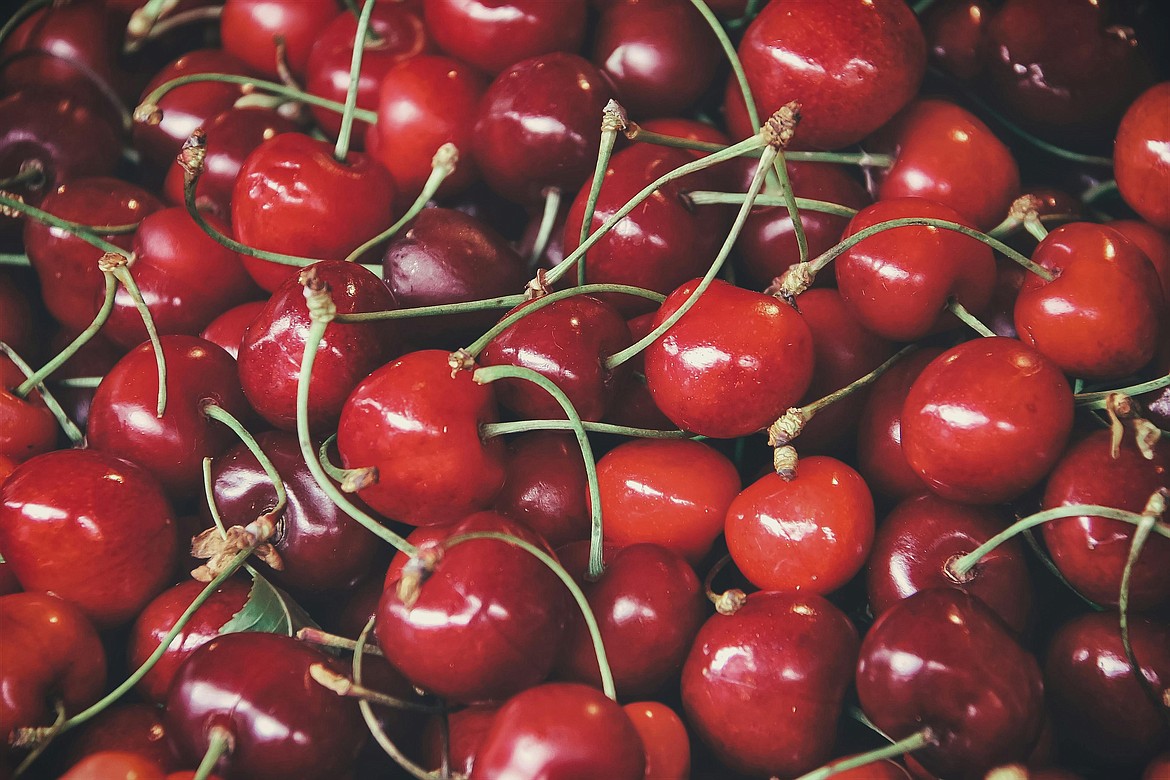
The Northwest cherry harvest is looking good this year, a welcome change for growers.
Simon Berger/Pixabay/Courtesy photo
Joel Martin has been with the Columbia Basin Herald for more than 25 years in a variety of roles and is the most-tenured employee in the building. Martin is a married father of eight and enjoys spending time with his children and his wife, Christina. He is passionate about the paper’s mission of informing the people of the Columbia Basin because he knows it is important to record the history of the communities the publication serves. | June 30, 2024 1:00 AM
COLUMBIA BASIN — Things are looking up this year for Washington cherry growers.
The forecast is that the Northwest cherry crop – including Washington, Oregon, Idaho, Montana and Utah – will come in between 17 million and 18 million boxes, according to Jon DeVaney, executive director of the Washington Tree Fruit Growers Association.
Last year’s crop faced challenges with timing and weather, he said, but this year is looking more promising as spring and summer has had kinder weather for cherries. Those growing conditions will help fix timing issues and help the process move forward.
“Everyone is figuring it couldn’t possibly be a more difficult year than last year,” DeVaney said. “We had beautiful fruit last year, but the marketing window was so narrow because of that warm spring weather that led to our compressed crop. And it overlapped with California. That created a real marketing disaster.”
Rough 2023
Fully half of Washington’s cherry crop was lost to challenging weather in 2023, according to a letter sent to U.S. Secretary of Agriculture Tom Vilsack in February and signed by Washington’s senators and 10 Congressional representatives. 2023 had an unusually cold spring, followed by an abrupt swing into 90-plus-degree temperatures in April.
Cherries normally mature over a 120-day period, the letter pointed out, but 70% of Washington’s crop was ready to pick in the 30 days between June 20 and July 20.
“You plant cherries at different altitudes because cherries go directly to market as they’re harvested,” DeVaney said. “So you try to have them maturing at different times … We still had a good-sized crop, but less time in which to pick it and sell it.”
The tight time frame meant Washington growers had to leave about 35% of fruit unharvested on the tree. The USDA declared the harvest a natural disaster in March.
The market was also hit by the weather, DeVaney said.
“It created some really low prices for growers,” he said. “If you try to sell the same amount of fruit in a shorter time consumers have less opportunities to buy it and it becomes a real challenge … This year we’re hoping for more normal timing along with a crop that is expected to be slightly smaller than average.
Optimistic 2024
The industry isn’t out of the woods, so to speak, just yet. Cautious optimism is sometimes the best a cherry grower can hope for.
“All it takes is one rainstorm to cause a lot of cherries to split and what looks like a good crop can go away or be substantially reduced, so no grower likes to tempt fate,” DeVaney said. “But right now the growing conditions have been really excellent. The fruit is shaping up to be a good size. There’s consistent patterns of fruit on the tree, which means that you can get good sizing and not have the fruit rubbing up against other branches and other pieces of fruit so that it will have a chance to grow and develop, to be very attractive, get good quality for getting the best, best possible pricing.”
That’s heartening news for overseas markets. About 33% of last year’s crop was exported, according to Northwest Horticultural Council data.
The biggest markets are Canada and East Asia, Devaney said.
“Consumers in Asia, in particular, will pay a premium for Northwest cherries, because of our quality and our sizing,” he said. “So their retailers are always excited for the start of cherry season.”
Joel Martin may be reached via email at [email protected].
ARTICLES BY JOEL MARTIN

Endless battle
Noxious Weed Control Board works to keep invasive plants under control
MOSES LAKE — Some of the nastiest plants in Grant County were the topic of a class led by Jay Johnson, a consultant with the Grant County Noxious Weed Control Board, Tuesday. The Noxious Weed Control Board, as its name would suggest, is tasked with keeping weeds under control in Grant County. That’s not a small job; the board’s website lists 129 species of noxious weeds that are found around Grant County. A noxious weed is defined as an invasive, non-native plant that threatens agricultural crops, local ecosystems or fish and wildlife habitat, according to the Noxious Weed Control Board. Washington state law requires that these weeds be identified and their spread kept to a minimum, if not completely eradicated. “We’re one of those agencies a lot of people don’t really understand,” Johnson said. “We’re a county office and … our funding is tax-based assessment. When you get your tax bill and you look down at all the expenses that you pay for, there we are.”

BASIN EVENTS: Oct. 16-24
COLUMBIA BASIN — Whether you feel like shopping, crafting, learning or seeing a show, there’s something happening for you this week in the Basin. Oct. 16 ‘My Family (Mi Familia)’ screening Spanning three generations, “My Family (Mi Familia)” is a heartfelt drama that follows the Sánchez family as they build their lives in East Los Angeles. Through love, hardship, triumph, and sacrifice, the film explores the immigrant experience, the strength of family bonds, and the traditions that connect one generation to the next. Lowrider show and taco truck before the screening. Sponsored by Columbia Basin Allied Arts, EDUBS C/S and the Moses Lake Creative District. $12 per person. Doors open at 6 p.m., film begins at 7 p.m. at the Moses Lake Civic Center Auditorium, 401 S. Balsam St. Tickets and info: www.cba-arts.org.

Moses Lake author encourages women to look beyond church culture norms
MOSES LAKE — A Moses Lake author’s book, “A Christian Woman Striving to Live Her Faith in a Man-Controlled World,” takes aim at the role to which many churches relegate the female half of their congregations. “It’s to encourage women in the faith,” Linda Curran said. “A lot of churches say, ‘Teach Sunday school, do this, do that, but don’t (evangelize.)’" In her book, Curran recounts a time when she moved to a new community and joined a church there. She was surprised to learn that, as a new female member, she had been automatically assigned church cleaning duties. When she questioned it, she wrote, she was met with condescension and her objections were brushed aside. In other churches, she said, women who were capable of teaching were relegated to “women’s ministry.”