
Farming on display: Spokane Ag Show brings in businesses of all kinds
JOEL MARTIN | Hagadone News Network | UPDATED 2 years, 7 months AGO
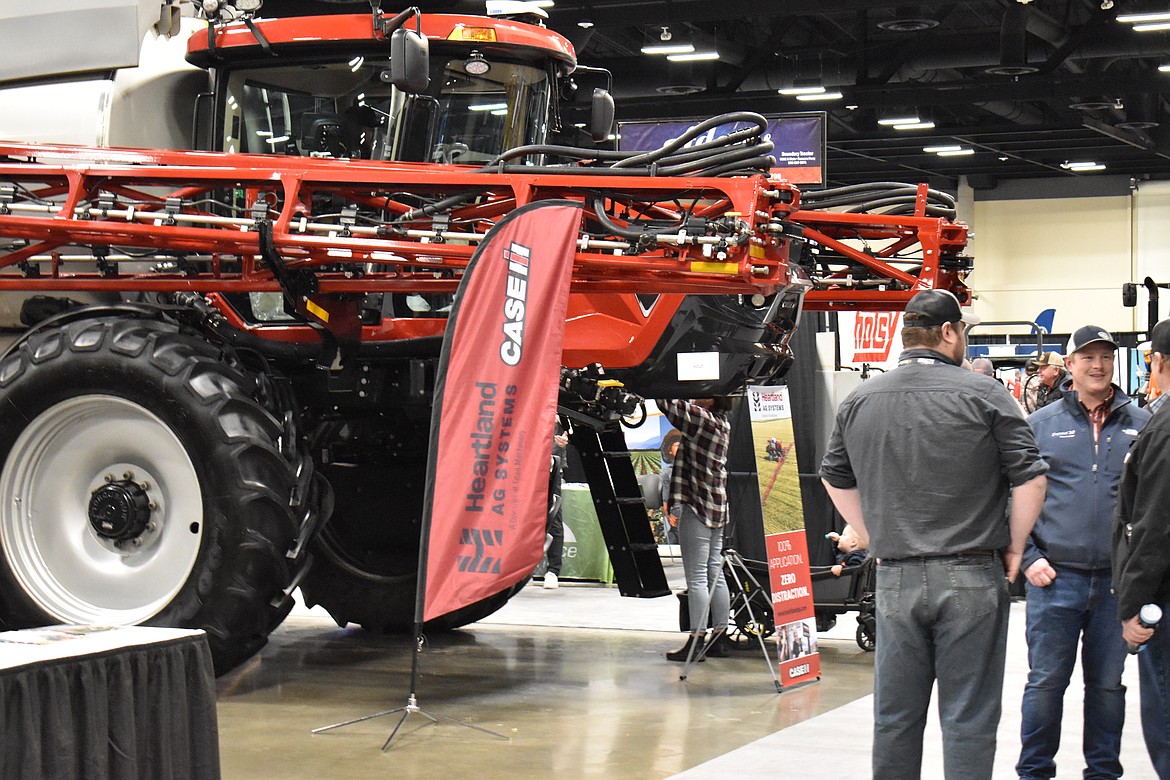
The Spokane Ag Show, which ran Feb. 6-8, featured the cutting edge, so to speak, in farm equipment.
Joel Martin/Basin Business Journal

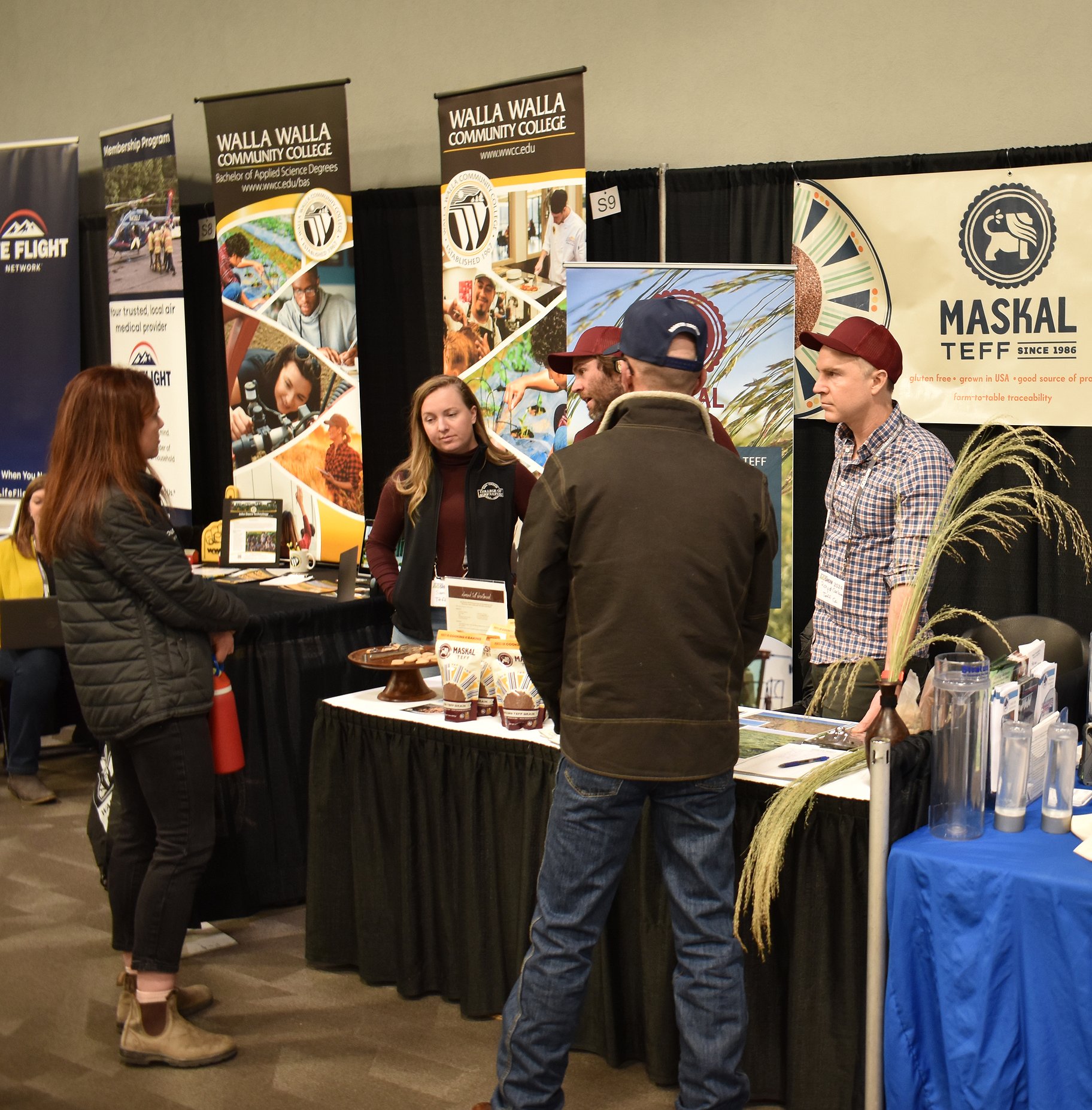
Representatives from The Teff Company discuss the Ethiopian grain with attendees at the Spokane Ag Show Feb. 7.
Joel Martin/Basin Business Journal
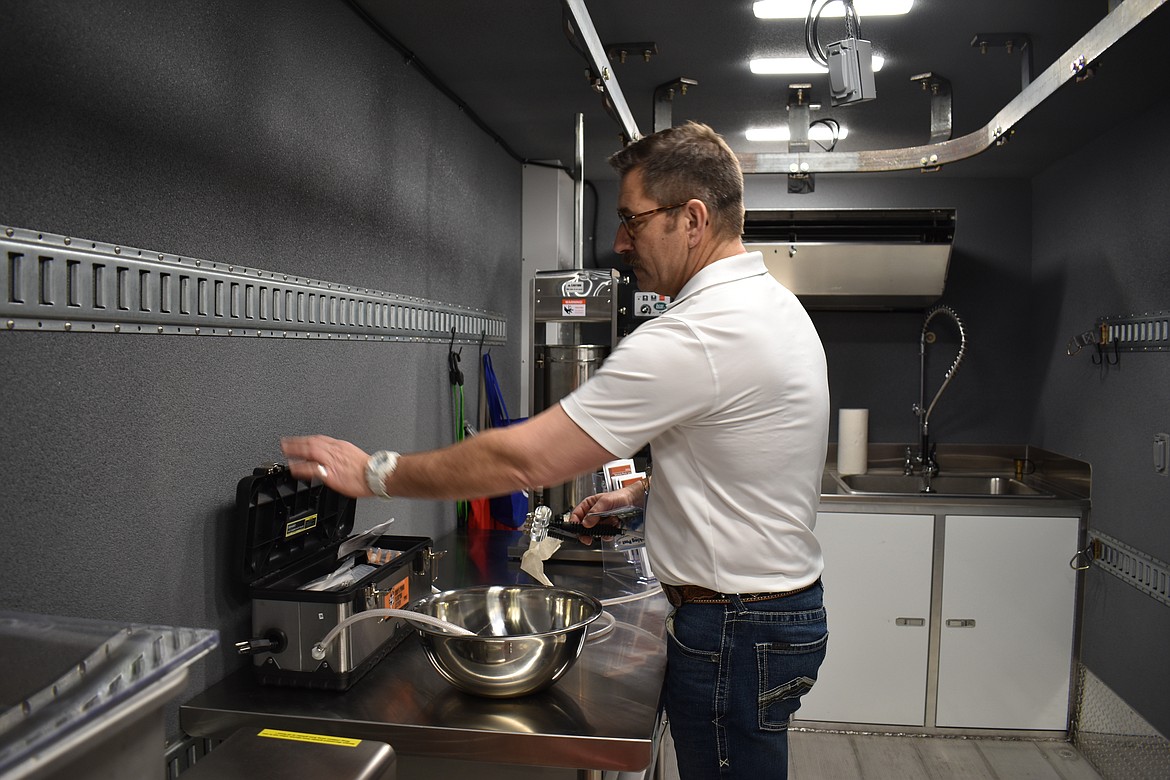
Paul Kuber, with Washington State University, shows a sausage stuffer that’s part of the WA Meat-Up mobile education unit.
Joel Martin/Basin Business Journal
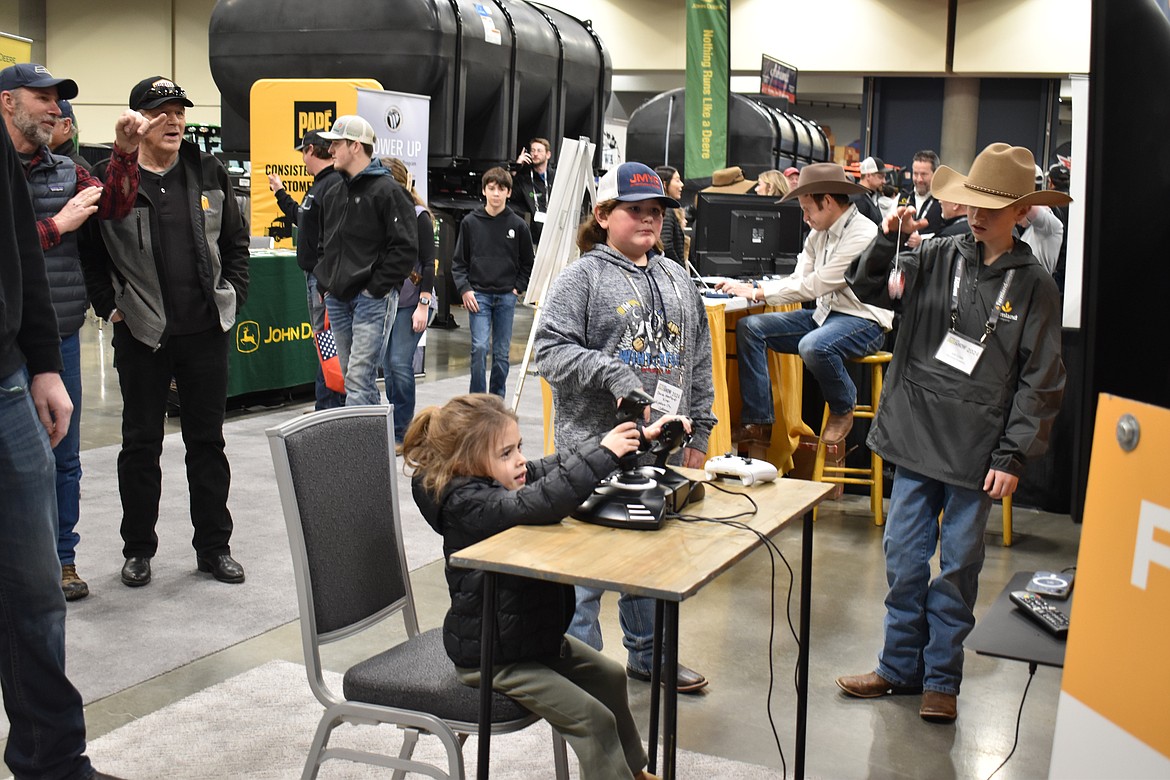
Kamryn Schroeder, 4, from Wilbur, Washington attempts to land a crop duster in a video game-style simulator at the Spokane Ag Show Feb. 7.
Joel Martin/Basin Business Journal
Joel Martin has been with the Columbia Basin Herald for more than 25 years in a variety of roles and is the most-tenured employee in the building. Martin is a married father of eight and enjoys spending time with his children and his wife, Christina. He is passionate about the paper’s mission of informing the people of the Columbia Basin because he knows it is important to record the history of the communities the publication serves. | March 5, 2024 1:00 AM
SPOKANE — The Inland Northwest agricultural community showed off at the Spokane Ag Show, held at the Spokane Convention Center Feb. 6-8. The 120,000-square-foot exhibition hall hosted 208 exhibitors.
High-powered farm equipment stood cheek-by-jowl with seed, pesticide and fertilizer vendors, insurance agents, banks, high-tech innovators and growers’ associations.
WA Meat-Up, a collaboration between the Washington State University Extension and the Washington Department of Agriculture, had its mobile education unit set up, a small meat-processing set up in the back of a truck. WA Meat-Up aims to improve the meat supply chain in Washington by connecting with and educating the public in safe meat handling techniques, selection of meat, efficient processing and other areas.
“We try to get out there to work with small processors and small producers too,” said Paul Kuber, a regional extension specialist with WSU. “Educate them on efficiencies, and maybe some new techniques, and build the knowledge base there, and also see what other things we might be able to produce that will be beneficial to them.”
The mobile education unit has three educational trips planned for this spring: Mobile Pork 300, March 21-23 in Burlington; Mobile Lamb 300, April 5-7 in Spokane; and Mobile Beef 300, May 8-10 in Moses Lake. Attendees will learn things like selection, marketing, harvest, carcass evaluation and processing techniques.
“Basically from the farm all the way to the plate,” Kuber said. “Selection talks about consumer preferences. We talk about the harvest process, we talk about the fabrication process, further processing. We encourage them to think about things like, what’s the chef’s perspective, what’s the consumer’s perspective, everybody along that food chain.”
Tim Cobb, owner of the Farmland Company, had set up a crop duster flight simulator, where the user attempts to fly a small plane and – more tellingly – to land it. Touching down in a stubble field earned the player a certain number of points, Cobb said; landing on a county road earned more.
The Farmland Company acts as a property manager for farms, Cobb explained.
“Let’s say your family or you owned a piece of land, and you didn’t farm it,” Cobb said. “You’d want to have some expertise as to how to manage the land, even if you had a tenant farming it for you … Think about an apartment complex. The property manager there collects the rent, leases the property, takes care of maintenance, takes care of repairs, takes care of all of the financial (stuff), the collecting of rent, and then also anything that has to do with the money that’s generated. We do that for farms.”
Not far away, Labor Consultants International offered its expertise, in navigating the legal labyrinth of bringing in foreign temporary workers to the U.S.
“It is an elaborate process trying to navigate the rules, regulations, everything like that,” said LCI Client Manager Monica Thode. “So that’s where we come in … We really just help on the employer side to get started with the certification process. Employers, businesses, they have to get approved to bring over the visa, so we help with all of that work. We don’t do any recruiting, we just help get the visa issued to the businesses and then they can pick who they want to bring. Either we can pair them with recruiters to help find workers in that country or they know people they want to bring.”
The Teff Company, based in Boise, Idaho, had samples and information about what’s been called the new supergrain. Teff is beginning to catch on in America, particularly in southern Idaho and parts of Washington and Oregon, said Charlie Fereday, who was manning the Teff Company’s booth.
“It’s a grain originally from Ethiopia,” Fereday said. “It’s their cultural grain and it’s actually the smallest cereal grain in the world … (We’re here to) expose people to a gluten-free, high-nutrient grain, potentially outside of the traditional Ethiopian use.”
The Washington Future Farmers of America Foundation booth was staffed with bright-eyed young people hoping to encourage businesses to take an interest in the next generation of growers.
“(We’re) really kind of promoting Washington FFA and letting people know about the opportunities to get involved,” said Washington FFA State Treasurer Michael Johnson, who was over from Sedro-Woolley for the event.
“We’re looking for sponsorships for the foundation,” said State President Andrew Schulz, of Reardan. “Sponsors are a big way that we get our funding. So being able to reach out to a lot of these ag businesses and companies, getting support from that, it’s very important for us to be able to run a lot of (programs) that we run, and have opportunities that we would like to have for our members.”
Joel Martin may be reached via email at [email protected].
 Representatives from The Teff Company discuss the Ethiopian grain with attendees at the Spokane Ag Show Feb. 7.
Joel Martin/Basin Business Journal
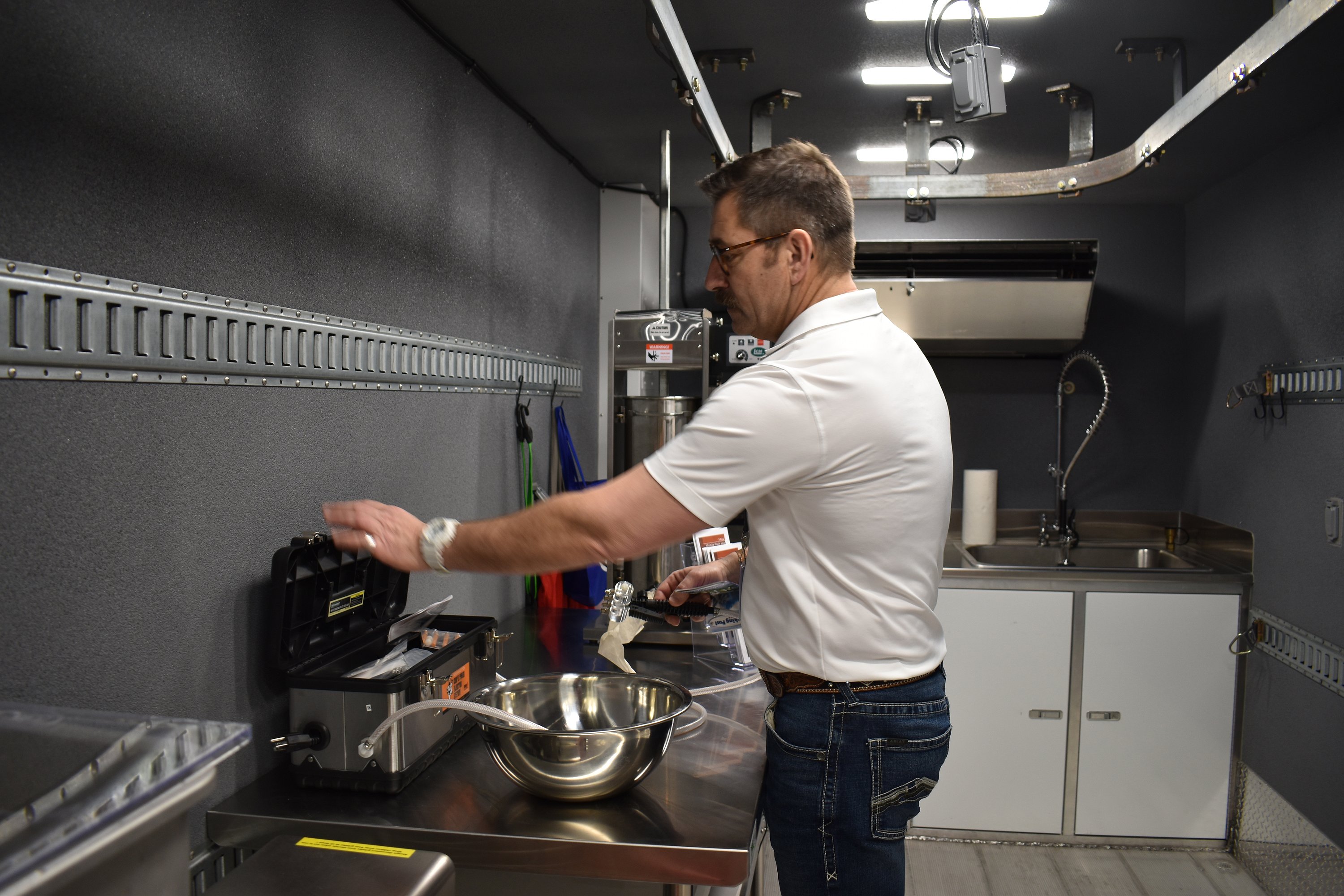 Paul Kuber, with Washington State University, shows a sausage stuffer that’s part of the WA Meat-Up mobile education unit.
Joel Martin/Basin Business Journal
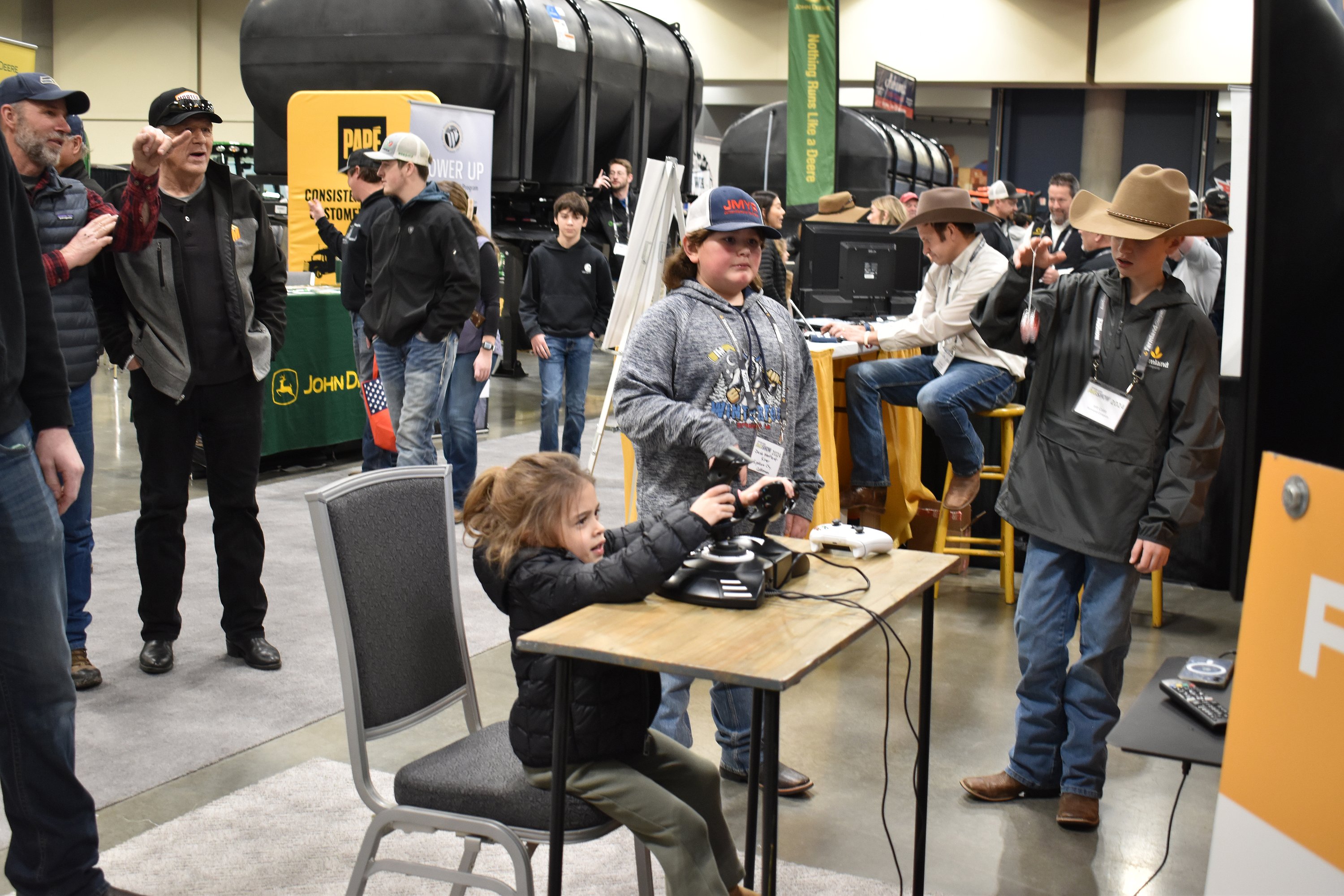 Kamryn Schroeder, 4, from Wilbur, Washington attempts to land a crop duster in a video game-style simulator at the Spokane Ag Show Feb. 7.
Joel Martin/Basin Business Journal
ARTICLES BY JOEL MARTIN

Endless battle
Noxious Weed Control Board works to keep invasive plants under control
MOSES LAKE — Some of the nastiest plants in Grant County were the topic of a class led by Jay Johnson, a consultant with the Grant County Noxious Weed Control Board, Tuesday. The Noxious Weed Control Board, as its name would suggest, is tasked with keeping weeds under control in Grant County. That’s not a small job; the board’s website lists 129 species of noxious weeds that are found around Grant County. A noxious weed is defined as an invasive, non-native plant that threatens agricultural crops, local ecosystems or fish and wildlife habitat, according to the Noxious Weed Control Board. Washington state law requires that these weeds be identified and their spread kept to a minimum, if not completely eradicated. “We’re one of those agencies a lot of people don’t really understand,” Johnson said. “We’re a county office and … our funding is tax-based assessment. When you get your tax bill and you look down at all the expenses that you pay for, there we are.”

BASIN EVENTS: Oct. 16-24
COLUMBIA BASIN — Whether you feel like shopping, crafting, learning or seeing a show, there’s something happening for you this week in the Basin. Oct. 16 ‘My Family (Mi Familia)’ screening Spanning three generations, “My Family (Mi Familia)” is a heartfelt drama that follows the Sánchez family as they build their lives in East Los Angeles. Through love, hardship, triumph, and sacrifice, the film explores the immigrant experience, the strength of family bonds, and the traditions that connect one generation to the next. Lowrider show and taco truck before the screening. Sponsored by Columbia Basin Allied Arts, EDUBS C/S and the Moses Lake Creative District. $12 per person. Doors open at 6 p.m., film begins at 7 p.m. at the Moses Lake Civic Center Auditorium, 401 S. Balsam St. Tickets and info: www.cba-arts.org.

Moses Lake author encourages women to look beyond church culture norms
MOSES LAKE — A Moses Lake author’s book, “A Christian Woman Striving to Live Her Faith in a Man-Controlled World,” takes aim at the role to which many churches relegate the female half of their congregations. “It’s to encourage women in the faith,” Linda Curran said. “A lot of churches say, ‘Teach Sunday school, do this, do that, but don’t (evangelize.)’" In her book, Curran recounts a time when she moved to a new community and joined a church there. She was surprised to learn that, as a new female member, she had been automatically assigned church cleaning duties. When she questioned it, she wrote, she was met with condescension and her objections were brushed aside. In other churches, she said, women who were capable of teaching were relegated to “women’s ministry.”