
Warden updates payment agreement with ACPR
GABRIEL DAVIS | Hagadone News Network | UPDATED 1 year, 9 months AGO

A loose dog stands in the street outside the Warden Police Station after a February Warden City Council meeting. The council unanimously approved Tuesday an increase in the city’s payment per dog for dogs sent to Adams County Pet Rescue from $50 to $150.
GABRIEL DAVIS/COLUMBIA BASIN HERALD
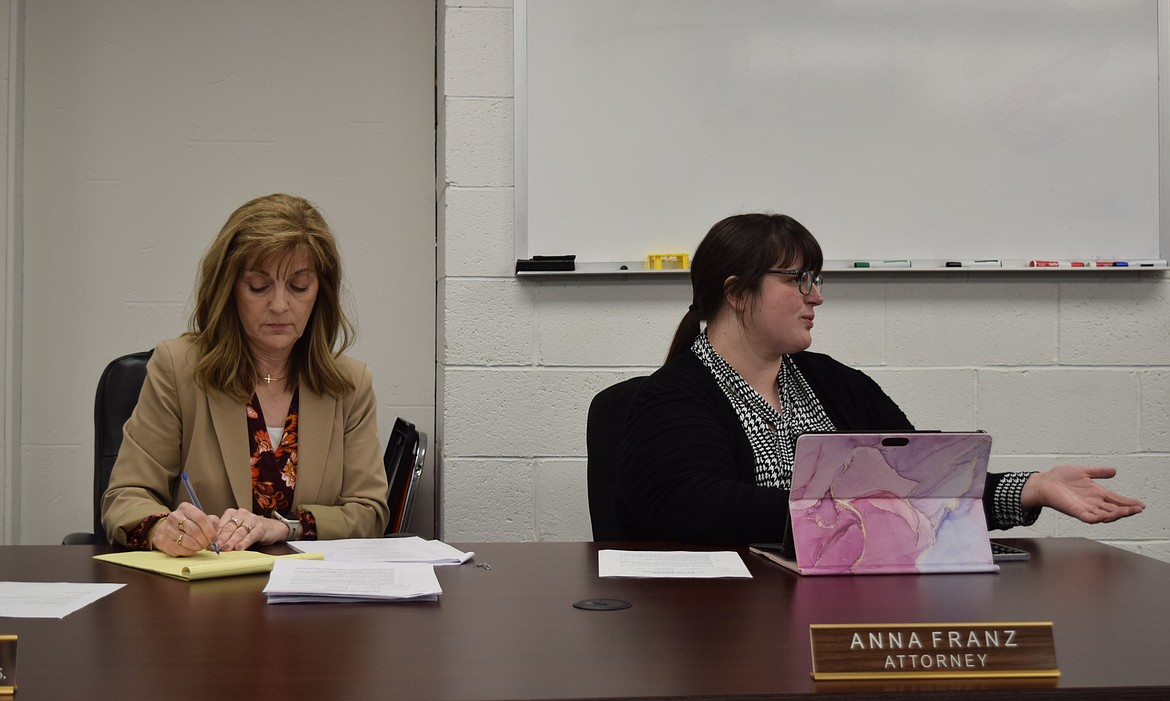
Warden City Administrator Kriss Schuler, left, and City Attorney Anna Franz, right, participate in council discussion during Tuesday evening’s Warden City Council meeting at Warden Police Station.
Gabriel Davis is a resident of Othello who enjoys the connections with his sources. Davis is a graduate of Northwest Nazarene University where he studied English and creative writing. During his free time, he enjoys reading, TV, movies and games – anything with a good story, though he has a preference for science fiction and crime. He covers the communities on the south end of Grant County and in Adams County. | March 13, 2024 4:02 PM
WARDEN — Warden City Council members voted unanimously Tuesday to increase the payment per animal for dogs sent to Adams County Pet Rescue from $50 to $150, updating the city’s five-year-old agreement with the shelter and potentially helping the city pick up more strays.
Warden City Administrator Kriss Schuler said she met with ACPR officials to talk about the contract.
“We've had a lot of problems getting our animals over to Adams County; they haven't been accepting. They’re kind of realigning how they're operating. They have dropped their agreement with the city of Othello, so they're not accepting any animals from the city of Othello at all, so they're telling me, ‘Okay, we're going to have some more openings,’” Schuler said.
The animal shelter, based in Othello, has had to ask for increased funding from community partners after an unnamed benefactor passed away and funding from that source stopped.
The ACPR has been declining to accept most of Warden’s dogs for a while, Schuler said.
“Currently we are not sending any of them,” she said. “I would say in the last three or four months we’ve sent one.”
Schuler said ACPR asked for the increased fee.
“Our agreement with Adams County (Pet Rescue) is five years old and they do believe that they need to have more funds for our transfer of animals to them because they do vaccinate them and spay and neuter them and take care of them until they are adopted out. Some stay over a year,” Schuler said. “What we currently pay them and have paid them is $50 an animal, and they are requesting $150 an animal to cover some of these costs that they are putting up for the animals.”
Schuler outlined how the city could potentially benefit from the new arrangement.
“If we can move one to two animals a week with (ACPR), that would give us room to be picking up more animals.”
The city’s kennel can only hold about three dogs, Schuler said, limiting how many animals the animal control officer can pick up.
“As you drive around you kind of know where dogs belong, so (Animal Control) has been able to pick up and return dogs,” she said. “(With ACPR), those that we don’t know who they belong to, they have a place to go.”
Sending dogs to ACPR more frequently may clear enough space in the city’s kennel to reduce the number of stray dogs in town.
“It's necessary and it’s something the community is really pushing for, as is everybody,” Schuler said.
There is still another factor that may limit how many dogs ACPR can accept, Schuler said.
“For them to adopt out an animal, they do vaccinations and spay and neutering for those animals. They have been using (Washington State University’s) veterinary school plus Sage Hills Veterinary and one other veterinarian,” Schuler said. “WSU used to be there on a monthly basis doing animals for them. WSU has changed its process; they have gone a different avenue, so now they're only coming maybe twice a year. Now (ACPR is) going to be holding animals longer until they can get them through the veterinaries to get those animals spayed and neutered. There’s still not going to be a big opening there, but they may have more openings.”
Council member Jesus Martinez commented on the contract amendment.
“It sounds like it's not negotiable. Which is fair,” he said.
Schuler responded.
“Costs are costs,” she said. “I have to say we are trying to work with other avenues to foster out some dogs. We do have a couple of leads. They have to make agreements as well and those are at no cost at this point, but right now, this is what we have.”
Council member Emily Campos asked if Grant County Animal Outreach is an alternative for the city.
“We have talked to them,” Schuler said. “They are working on a new facility and they're going to have more room, so maybe in the future they will work with us.”
City Attorney Anna Franz also commented on GCAO.
“With our other jurisdictions, we’ve found they often don't have the ability to accept animals, so it's not really a usable alternative at this point,” she said.
Gabriel Davis may be reached at [email protected].
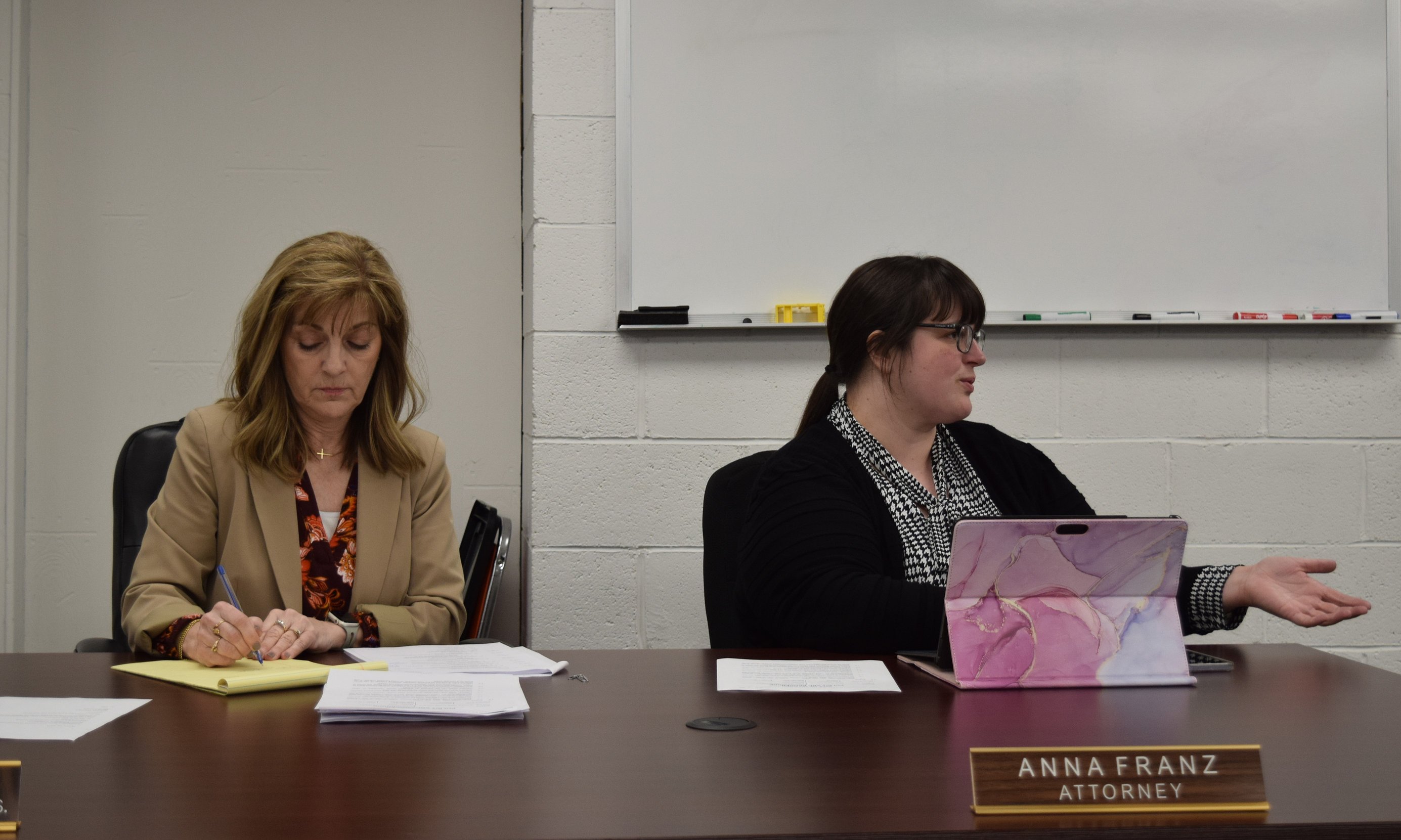 Warden City Administrator Kriss Schuler, left, and City Attorney Anna Franz, right, participate in council discussion during Tuesday evening’s Warden City Council meeting at Warden Police Station.
ARTICLES BY GABRIEL DAVIS

Work-based learning lets students build their own futures
MOSES LAKE — Work-based learning provides education opportunities for the workforce to receive hands-on training and technical education and prepare themselves to enter various industries. Educators and workforce development professionals from Eastern Washington discussed some the training they offer and the benefits of their programs. Next Generation Zone, an affiliate of WorkSource based in Spokane, provides job training opportunities for youth and young adults ages 16 to 24. Program Coordinator Kate Martin said there are multiple benefits to the program. “One of them is a paid work experience, and that’s where we reach out to area employers who are willing to take a young person and train them,” she said. “This is a short-term learning experience, so it’s typically about 240 hours; sometimes it could be longer or shorter. We’re the actual employer; we cover all of their wages, taxes, the L&I, and the employer just agrees to give them the experience and train them in whatever field it is that they’re wanting to go into.”

Serving schools: ESD superintendents reflect on operations, priorities
MOSES LAKE — Educational service districts are government-mandated agencies put in place to provide services to school districts across the state. ESD Superintendents discussed what they do and their priorities in operating their districts. ESD 105, led by Superintendent Kevin Chase, serves four counties, including Kittitas, Yakima and portions of Klickitat and Grant counties and provides support for 25 school districts – including Royal School District and Wahluke School District – and more than 66,000 students. “We help them collaborate with each other as well or collaborate with other partners,” Chase said. “(It’s) a lot of advocacy work, either regionally or across the state, or even federally, working on different issues that impact our education. And we provide very specialized services in certain situations in order to meet the needs of our students in our region and of our school districts.”

Columbia Basin Project making headway through Odessa Groundwater program
CASHMERE — The Columbia Basin Project is making gradual progress toward completion with particularly significant accomplishments for the Odessa Groundwater Replacement Program in the last six months or so, according to Columbia Basin Development League Executive Director Sara Higgins. “When we’re dealing with a project of this size, advancement is kind of like watching paint dry, but yes, there have been (developments),” she said. “There are a lot of exciting things happening right now.” There are more than 300 miles of main canals, about 2,000 miles of lateral canals and 3,500 miles of drains and wasteways in the irrigation project, according to the U.S. Bureau of Reclamation website. The CBDL advocates for the operation of those waterways and for the project to continue “build-out.”