
Water managers host meeting on water supply outlook
KRISTI NIEMEYER | Hagadone News Network | UPDATED 2 years, 7 months AGO
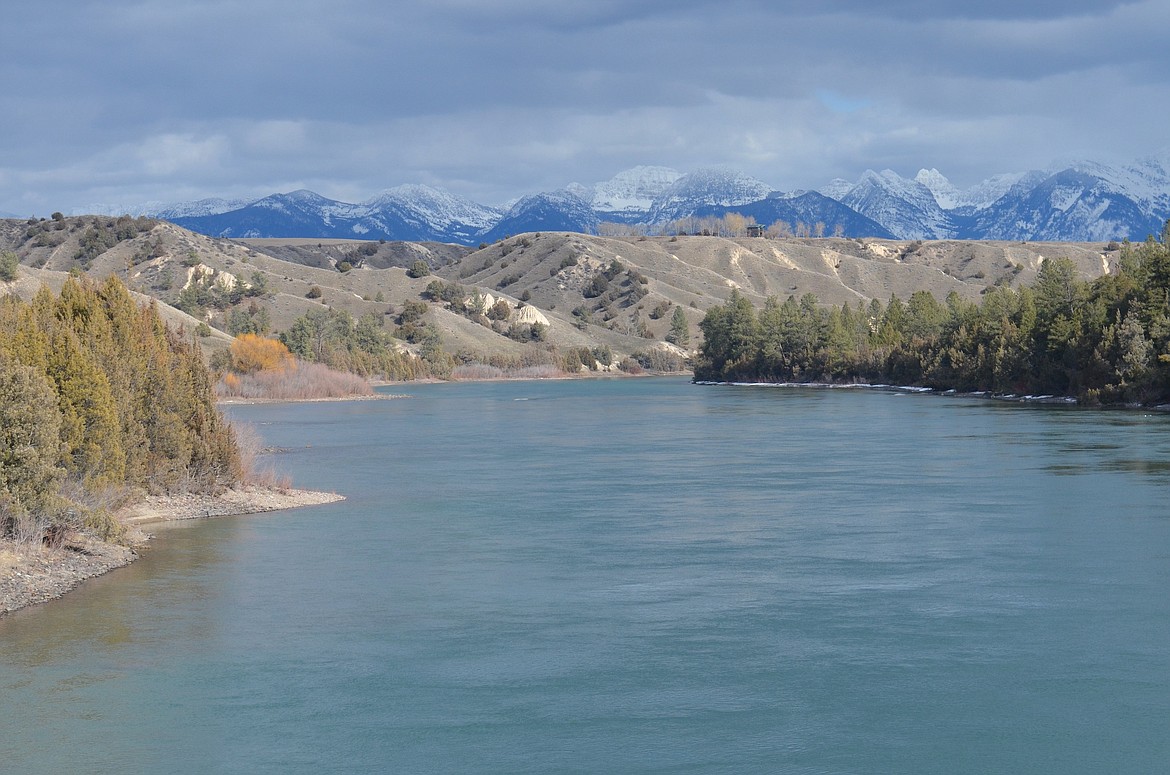
The Flathead River heads south below Sloan Bridge. (Kristi Niemeyer/Leader)
Kristi Niemeyer learned her newspaper licks at weekly newspapers, beginning at the Mission Valley News in 1981, then at the helm of the Ronan Pioneer and, eventually, as co-editor of the Lake County Leader until 1993. She launched and co-published Lively Times, a statewide arts and entertainment monthly, before returning to the Leader in 2022, and serving as its editor until July 2026. Reach her at [email protected] | March 14, 2024 12:00 AM
With the official first day of spring less than a week away, farmers, ranchers and recreationists are paying close attention to weather forecasts and snowpack measurements – as are the region’s water managers.
Energy Keepers, which operates the Confederated Salish and Kootenai Tribes’ Seli’š Ksanka Qlispe’ Dam, joins the Bureau of Reclamation, U.S. Army Corps of Engineers, and NOAA Weather Service in a virtual informational meeting 4-6 p.m. Thursday, March 14.
Representatives will provide overviews of Hungry Horse and SKQ dams, basin conditions and reservoir operations for water years 2022 and 2023, and the current water-supply outlook and snowpack conditions.
The meeting is intended to be informational with no opportunity for questions and answers. To participate in the virtual meeting via Zoom visit: us02web.zoom.us/j/83737320218. A recording will also be available on the Bureau of Reclamation’s website, www.usbr.gov/pn/.
According to the monthly snow report from the USDA Natural Resources Conservation Service (NRCS), February delivered some much-needed precipitation across Montana, bringing storage levels for Lake Koocanusa, Hungry Horse and Flathead Lake to 110% of normal for this time of year.
However, even with precipitation in the Flathead Basin at 116% normal last month, the seasonal accumulation (October-February) is 83% of median, and snowpack in the Flathead – which replenishes rivers and reservoirs – remains well below normal at 72% of median, compared to 94% at this time last year.
Given the below-normal snowpack on March 1, the NRCS predicts April-July streamflows will be about 60%-80% of normal in Montana. With one or two months remaining in the normal snowpack accumulation season, continued active weather would be needed to make up for the deficit.
“March, April and May can be a very active time of the year for winter weather in Montana, which is good because winter weather needs to continue for a couple more months,” said NRCS Water Supply Specialist Eric Larson.
Two Mission Range Snotel sites – North Fork of the Jocko, east of St. Ignatius, and Moss Peak, east of Polson – posted some of the highest accumulations of precipitation in February. However, by March 11, the Snotel site at Moss Peak was at 77% normal snowpack with 74 inches of snow, and the North Fork of the Jocko was at 72% with a 71-inch snowpack.
“A normal amount of precipitation over the next couple months would be helpful, but above normal precipitation would be better,” Larson said. “A return of the warm and sunny weather experienced earlier this winter would result in a well below normal snowpack when it matters most. Hopefully the recent snowy weather is a sign of what is ahead.”
According to the NRCS, since last month, soil-moisture percentiles in the top 20 centimeters of soil across Montana have improved.
The recent U.S. Drought Monitor map, released Feb. 29, classifies 95% of Montana as D0 (abnormally dry conditions) to D3 (extreme drought), with Lake County showing moderate to severe drought conditions.
With all but about 5% of the state currently in drought status, Larson warns that continued precipitation will be necessary to improve conditions statewide.
Another component is temperature, and the thermometer in February across most of the state was 1-5 °F above normal. Still, snowpack at higher elevations hadn’t suffered from widespread melting as of March 1.
For real-time snow survey data visit nrcs.usda.gov/montana/snow-survey.
ARTICLES BY KRISTI NIEMEYER

Polson Farmers Market takes break after productive season
“My body’s ready for a break, but it’s been a good year,” said Eric Gedenk between sales at the Ploughshare Farm stand. The organic farm in Moiese is a regular vendor at the Polson Farmers Market, which wrapped up for the season last Friday morning.

The Ripple Effect: Poolside party raises more than $20,000 for aquatic center
The Ripple Effect, a fundraiser for Mission Valley Aquatics and Fitness in Polson, drew nearly 200 supporters to the poolside Saturday night for games, drinks, appetizers and auctions.

Incumbent Shelly Fyant faces Republican Charles Headley in HD 91 race
Incumbent Democrat Shelly Fyant is running for a second term in the House of Representatives against Charles Headley.