
A pot of yum
JOEL MARTIN | Hagadone News Network | UPDATED 2 years, 6 months AGO
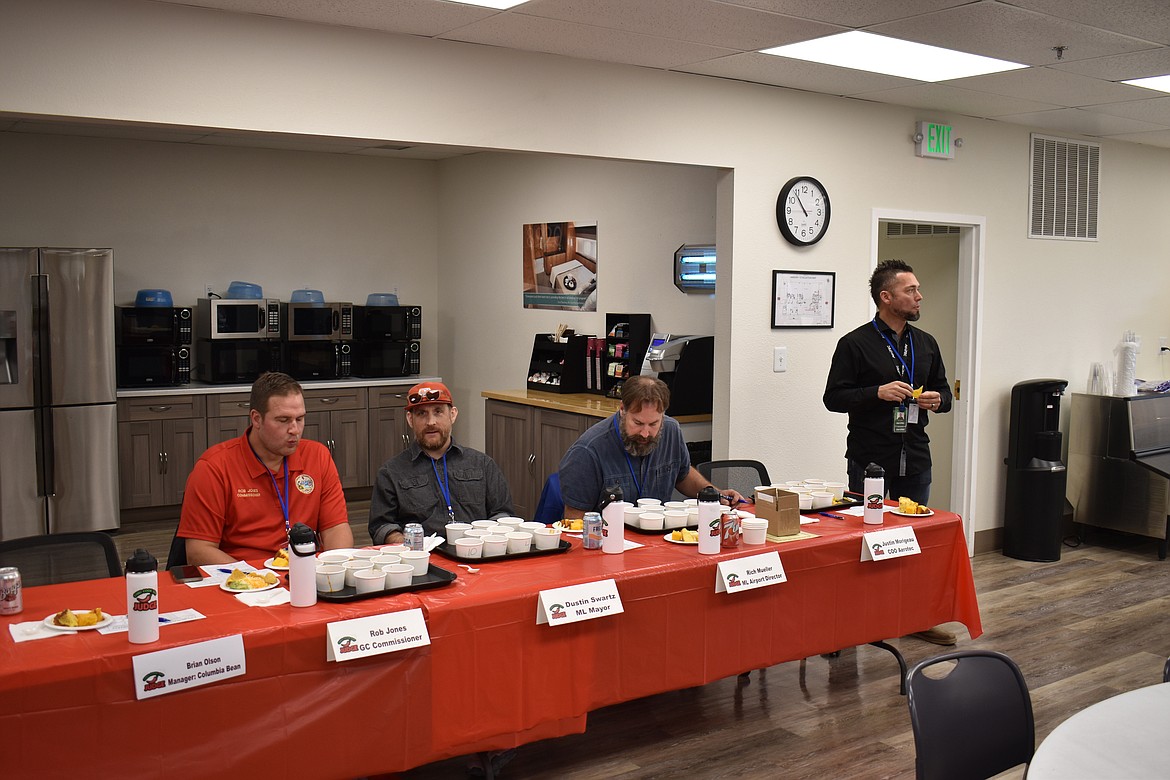
Judges savor the samples at Greenpoint Technologies’ chili cookoff Thursday. From left: Grant County Commissioner Rob Jones, Moses Lake Mayor Dustin Swartz, Moses Lake Airport Director Rich Mueller and AeroTec Chief Operating Officer Justin Morigeau.
JOEL MARTIN/COLUMBIA BASIN HERALD
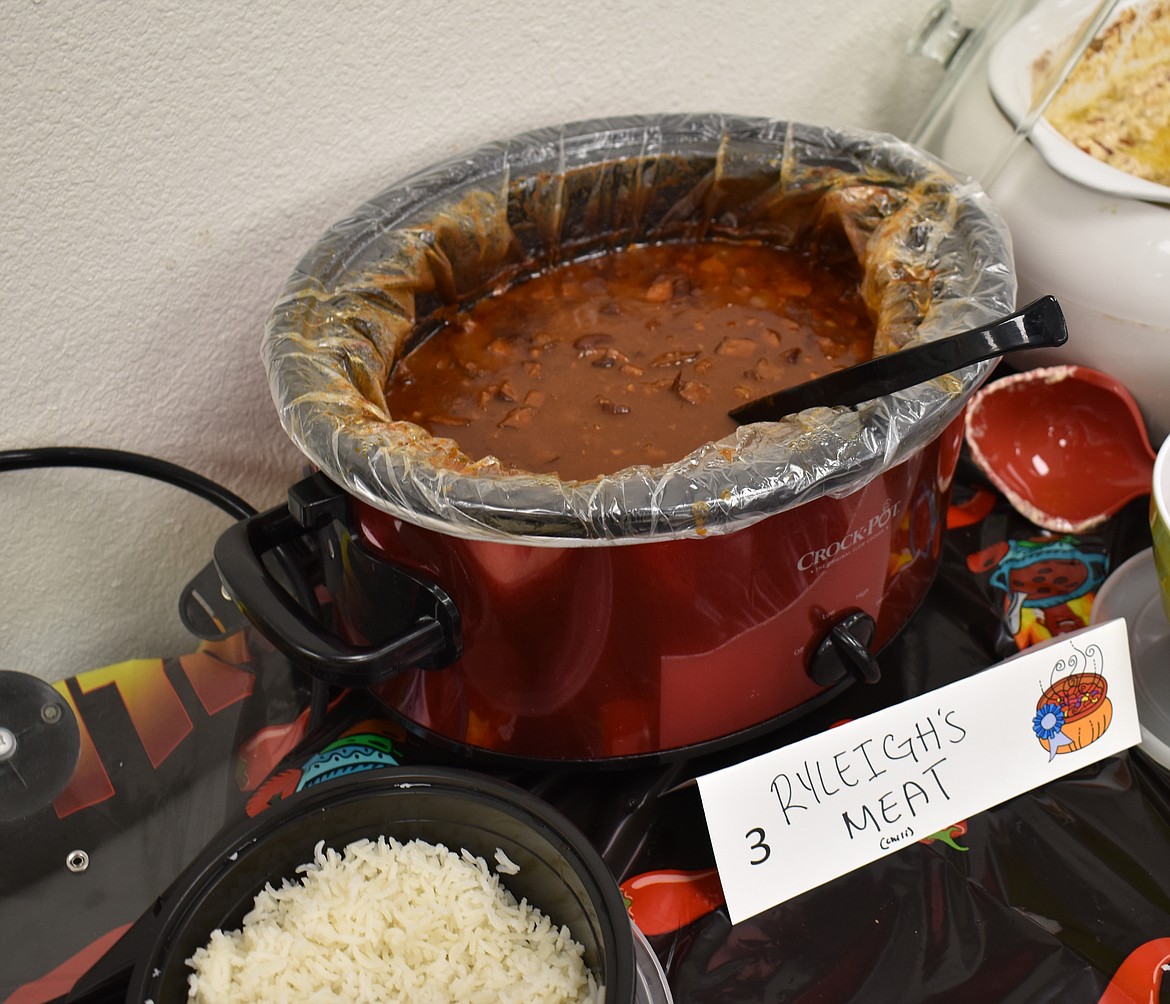
Ryleigh Lindfors’ chili included ground beef, breakfast sausage, steak and two kinds of kielbasa. Oh, yes, and some beans and spices.
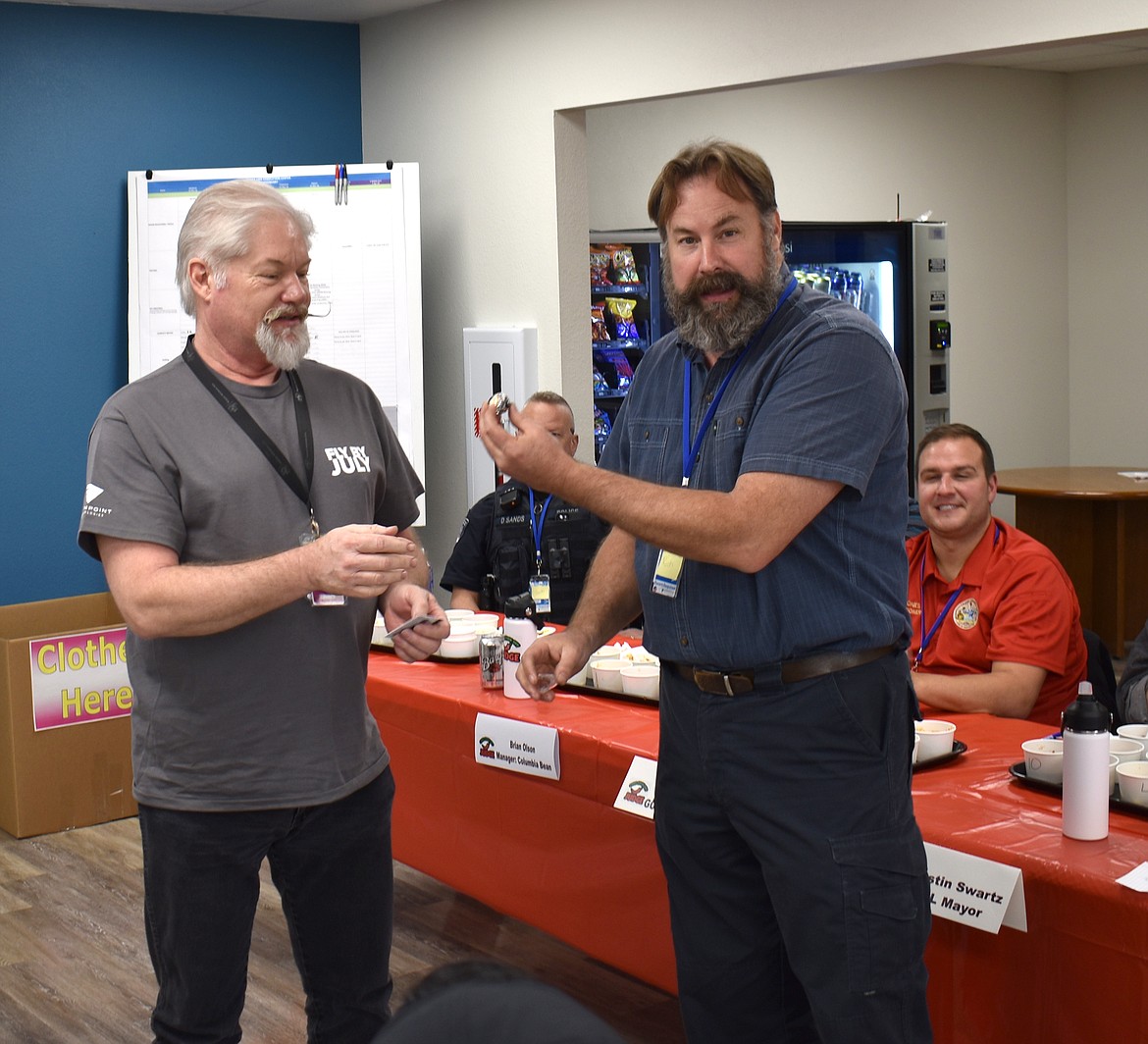
Moses Lake Airport Director Rich Mueller presents Greenpoint Principal Engineer – and Chili Master – Gary Neu with the first-place ring at Greenpoint’s chili cookoff Thursday.
Joel Martin has been with the Columbia Basin Herald for more than 25 years in a variety of roles and is the most-tenured employee in the building. Martin is a married father of eight and enjoys spending time with his children and his wife, Christina. He is passionate about the paper’s mission of informing the people of the Columbia Basin because he knows it is important to record the history of the communities the publication serves. | March 26, 2024 1:30 AM
MOSES LAKE — “What doesn’t kill you can turn your kidneys into a cinder brick.”
That’s how Gary Neu, principal engineer at Greenpoint Technologies, summed up the tasty, yet sometimes powerful, dish known as chili.
There were 10 examples of chili on offer at Greenpoint’s second publicly-judged chili cookoff Thursday, lined up in a row of slow cookers. Some were immediately recognizable as the traditional pot of red, but there were a couple of white dishes and one green one.
There were six judges brought in for the purpose: Moses Lake Police Chief Dave Sands, Columbia Bean Plant Manager Brian Olson, Grant County Commissioner Rob Jones, Moses Lake Mayor Dustin Swartz, Moses Lake Airport Director Rich Mueller and AeroTec Chief Operating Officer Justin Morigeau, formerly vice president of production at Greenpoint.
“They take their job very seriously,” said Greenpoint Administrative Assistant Amy Ward. “They taste all of the chilies, they have guidelines to go through in order to judge the different chilies. Then they go and deliberate and they come back with the first, second and third-place chili winners.”
All the chili chefs were Greenpoint employees, and some of them put a lot of work into their creations.
“That is my dad's famous recipe, and I did my own take on it,” said Ryleigh Lindfors. “I did a bunch of onions, two different kinds of kielbasa, ground beef, breakfast sausage. And then really thin-cut steak and a bunch of beans.”
Kris Fetch’s Three-Meat Chili wasn’t just meaty, it was also home-grown.
“I used chuck roast, hamburger and bacon, cheek meat from our own cows and pigs,” Fetch said.
Lee Thompson, who took home first prize last year with a chili that took him two days, took the easy route with a concoction he called “Half-Assed Chili.”
“It’s just chicken, corn, beans and some Rotel (sauce),” he said.
The judges first sampled four kinds of cornbread, then filled up to paper cups each and went to town on the samples. While they repaired to another room to deliberate, Greenpoint team members filled their bowls as well, topping their chilies with onions, cheese, rice, corn chips and — for the very brave — jalapeños. Then the judges returned to bestow the Super Bowl-style rings that were the trophies.
Third place went to Carla Rocker for her White Chicken Chili, which she said was made from chicken breast, green chilies and enchilada sauce. Taking second was another white chili, Ward’s Award-Winning Chili.
First place went to Neu for his A-Bomb-ination Chili.
“I’d describe it as a blind date chili,” Neu said. “It’s got a great personality but it’s not much to look at.”
Neu used taco meat from Ernie’s Meats in Moses Lake, ground beef and what he described as an excessive amount of bacon.
“That’s one of those things I keep saying, but I've never found what that limit really is,” he added.
Joel Martin may be reached via email at [email protected].
An earlier version of this story misspelled Gary Neu's name. It has been corrected above.
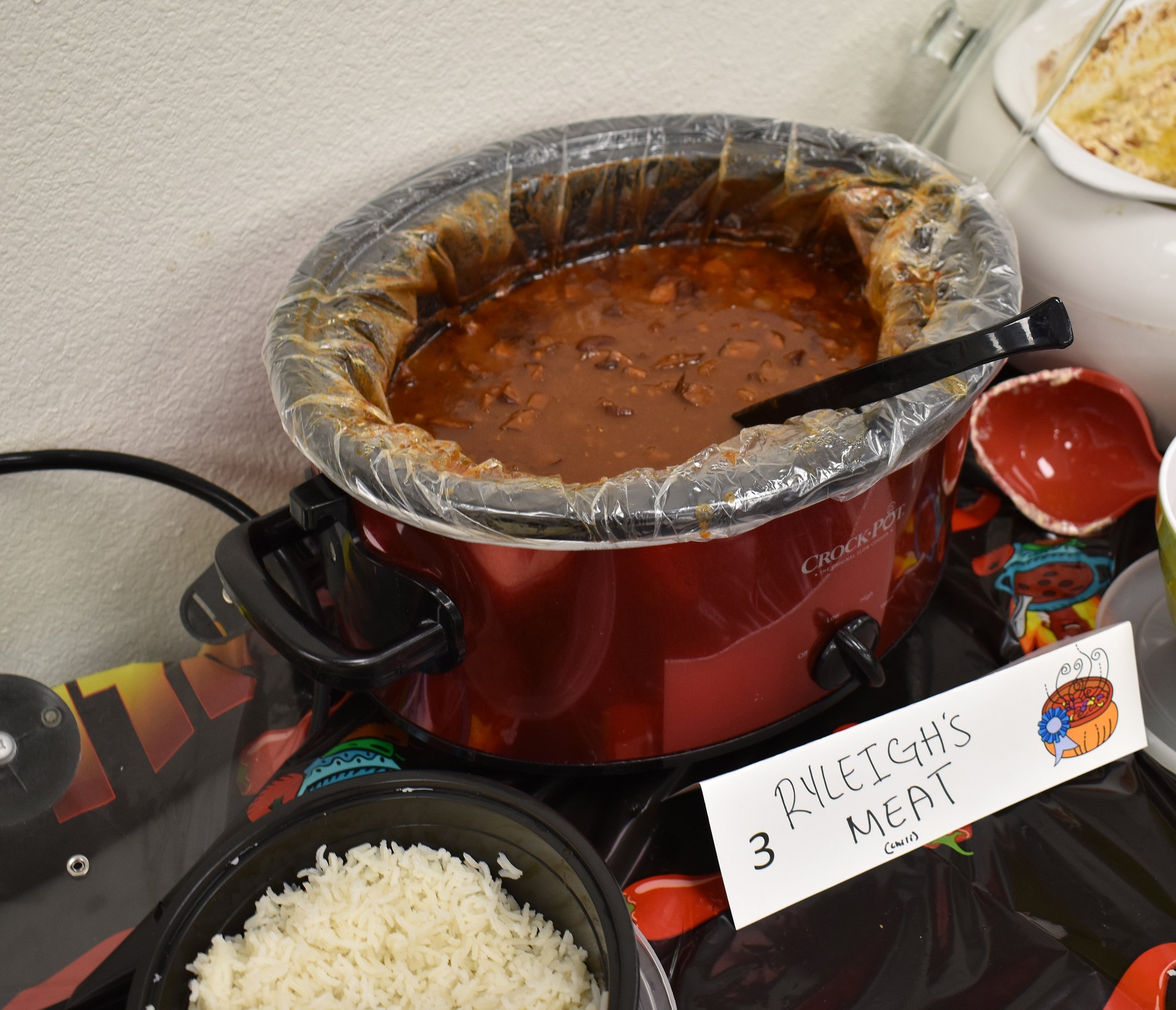 Ryleigh Lindfors’ chili included ground beef, breakfast sausage, steak and two kinds of kielbasa. Oh, yes, and some beans and spices.
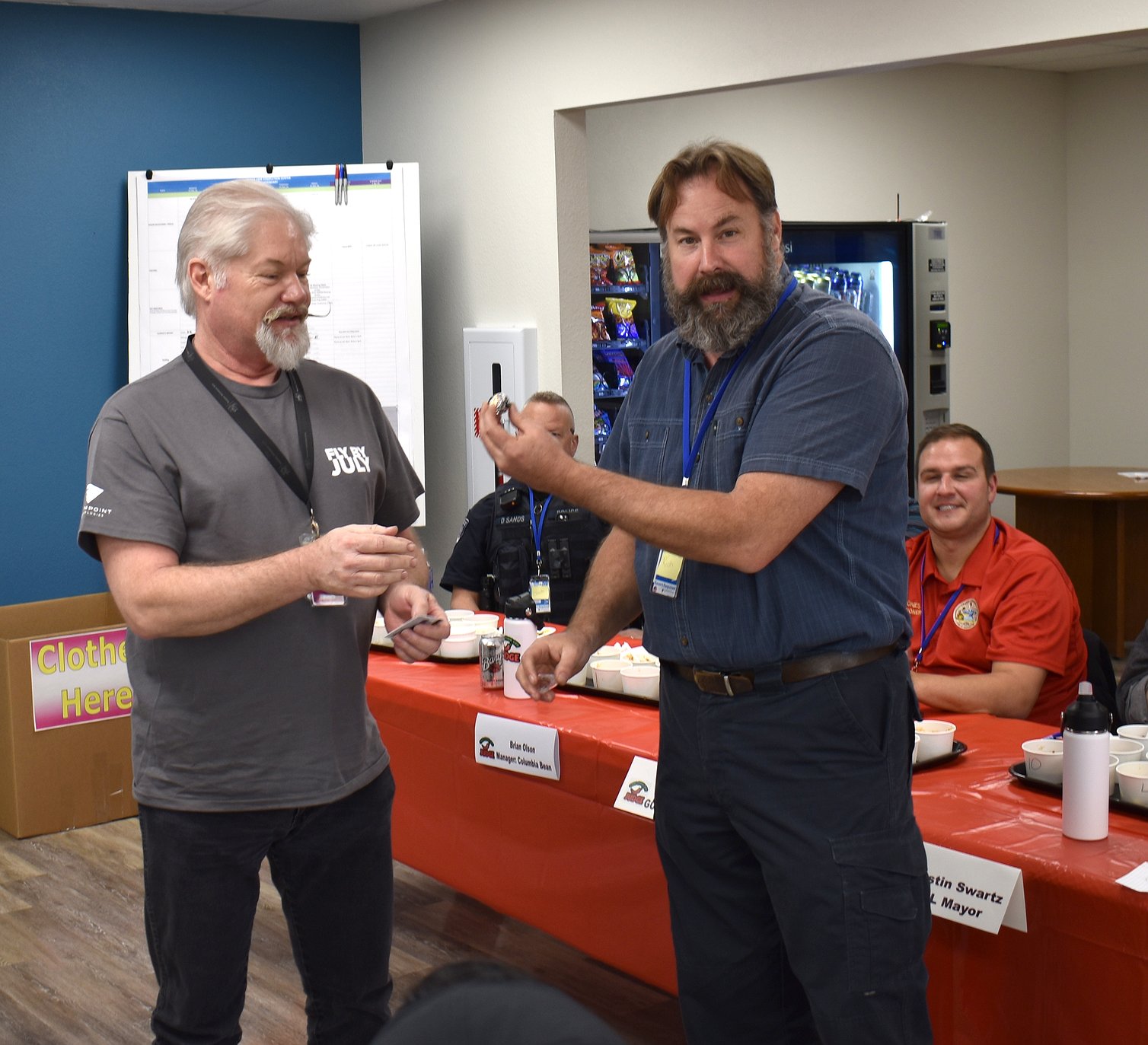 Moses Lake Airport Director Rich Mueller presents Greenpoint Principal Engineer – and Chili Master – Gary Neu with the first-place ring at Greenpoint’s chili cookoff Thursday.
ARTICLES BY JOEL MARTIN

Endless battle
Noxious Weed Control Board works to keep invasive plants under control
MOSES LAKE — Some of the nastiest plants in Grant County were the topic of a class led by Jay Johnson, a consultant with the Grant County Noxious Weed Control Board, Tuesday. The Noxious Weed Control Board, as its name would suggest, is tasked with keeping weeds under control in Grant County. That’s not a small job; the board’s website lists 129 species of noxious weeds that are found around Grant County. A noxious weed is defined as an invasive, non-native plant that threatens agricultural crops, local ecosystems or fish and wildlife habitat, according to the Noxious Weed Control Board. Washington state law requires that these weeds be identified and their spread kept to a minimum, if not completely eradicated. “We’re one of those agencies a lot of people don’t really understand,” Johnson said. “We’re a county office and … our funding is tax-based assessment. When you get your tax bill and you look down at all the expenses that you pay for, there we are.”

BASIN EVENTS: Oct. 16-24
COLUMBIA BASIN — Whether you feel like shopping, crafting, learning or seeing a show, there’s something happening for you this week in the Basin. Oct. 16 ‘My Family (Mi Familia)’ screening Spanning three generations, “My Family (Mi Familia)” is a heartfelt drama that follows the Sánchez family as they build their lives in East Los Angeles. Through love, hardship, triumph, and sacrifice, the film explores the immigrant experience, the strength of family bonds, and the traditions that connect one generation to the next. Lowrider show and taco truck before the screening. Sponsored by Columbia Basin Allied Arts, EDUBS C/S and the Moses Lake Creative District. $12 per person. Doors open at 6 p.m., film begins at 7 p.m. at the Moses Lake Civic Center Auditorium, 401 S. Balsam St. Tickets and info: www.cba-arts.org.

Moses Lake author encourages women to look beyond church culture norms
MOSES LAKE — A Moses Lake author’s book, “A Christian Woman Striving to Live Her Faith in a Man-Controlled World,” takes aim at the role to which many churches relegate the female half of their congregations. “It’s to encourage women in the faith,” Linda Curran said. “A lot of churches say, ‘Teach Sunday school, do this, do that, but don’t (evangelize.)’" In her book, Curran recounts a time when she moved to a new community and joined a church there. She was surprised to learn that, as a new female member, she had been automatically assigned church cleaning duties. When she questioned it, she wrote, she was met with condescension and her objections were brushed aside. In other churches, she said, women who were capable of teaching were relegated to “women’s ministry.”