
WA economy slowing but in relatively good condition, state economists say
CHERYL SCHWEIZER | Hagadone News Network | UPDATED 2 years, 4 months AGO
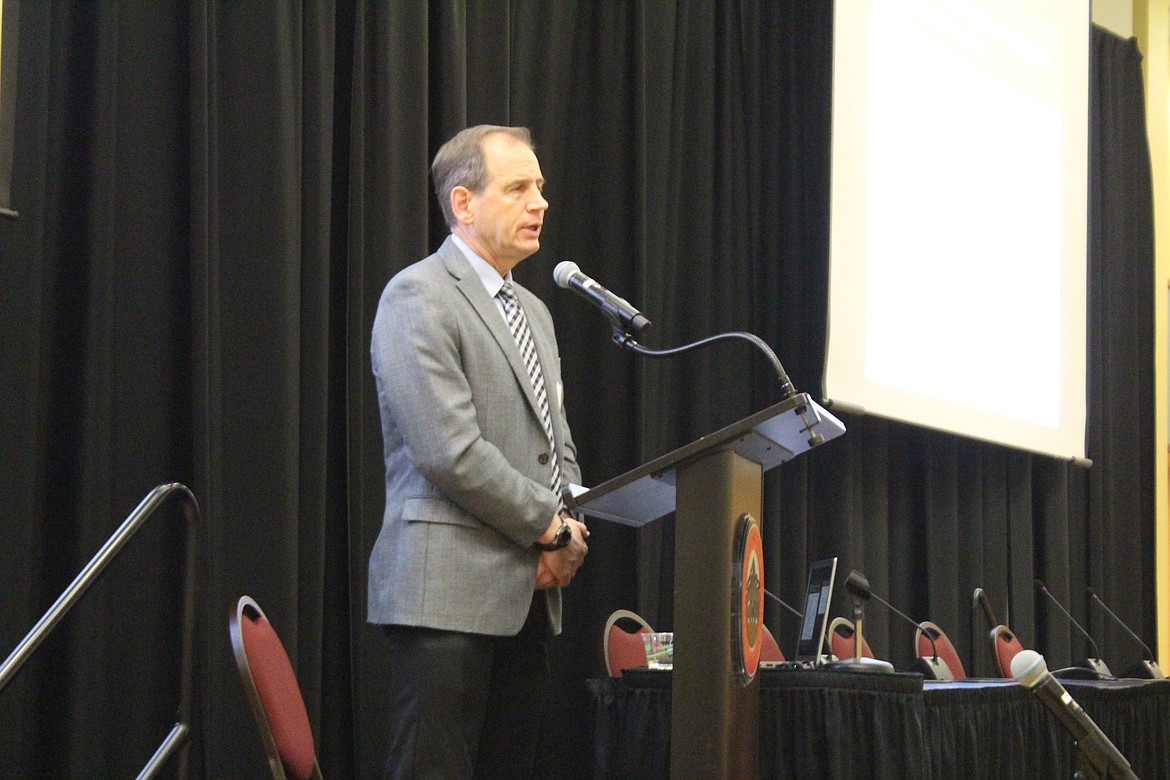
Dave Reich reviews the state’s economy during the Economic Outlook Conference at Central Washington University Monday. Reich is the executive director and chief economist for the Washington State Economic and Revenue Forecast Council.
CHERYL SCHWEIZER/COLUMBIA BASIN HERALD
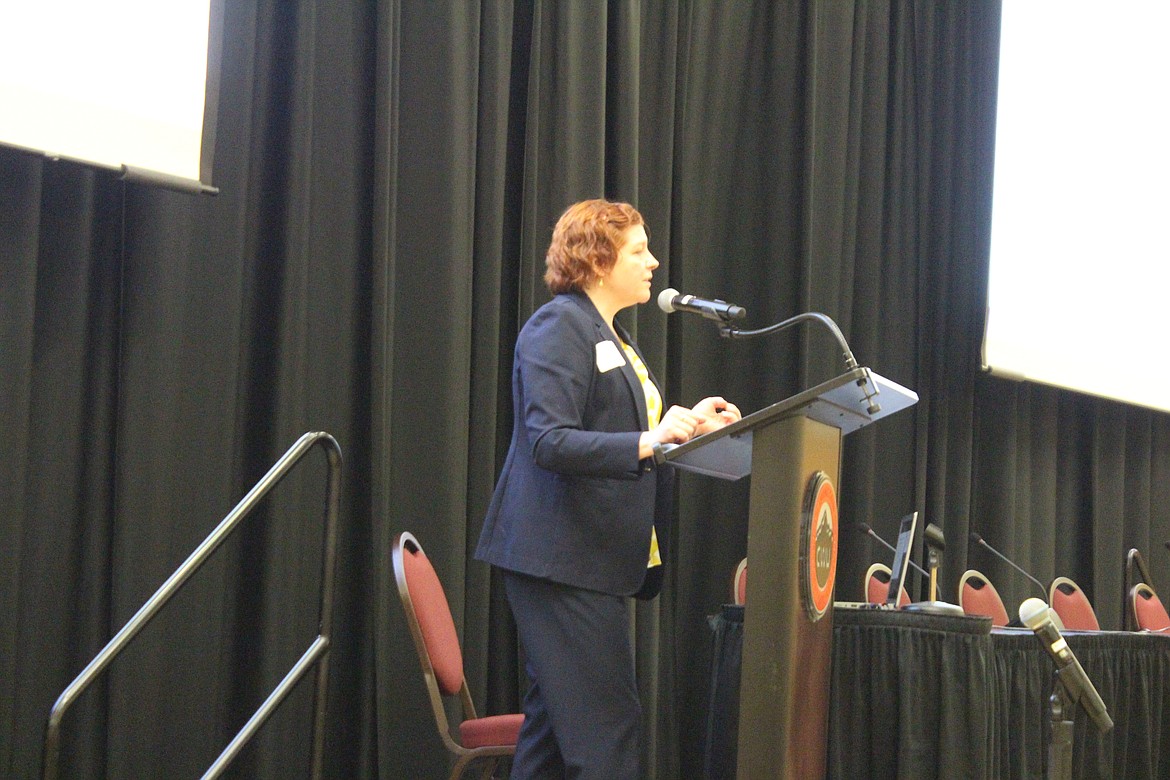
Anneliese Vance-Sherman, chief labor economist for Washington Employment Security, reviews unemployment data at the Economic Outlook Conference.
Senior Reporter Cheryl Schweizer is a journalist with more than 30 years of experience serving small communities in the Pacific Northwest. She began her post-high-school education at Treasure Valley Community College and enerned her journalism degree at Oregon State University. After working for multiple publications, she has settled down at the Columbia Basin Herald and has been a staple of the newsroom for more than a decade. Schweizer’s dedication to her communities and profession has earned her the nickname “The Baroness of Bylines.” She covers a variety of beats including health, business and various municipalities. | May 6, 2024 5:39 PM
ELLENSBURG — Washington’s economy, its job market and unemployment were topics of discussion at the annual Economic Outlook Conference on Monday at Central Washington University.
Dave Reich, executive director of the Washington State Economic and Revenue Forecast Council, said the state is still dealing with the aftereffects of 2020.
“I would say, economically, COVID is still with us,” he said.
Reich said he’s broken down the coronavirus pandemic into three phases. As a public health issue the COVID-19 pandemic has subsided, Reich said, but it’s still an economic challenge.
“I think we’re kind of in the middle-term impacts of COVID. We’re still dealing with high inflation that happened as a response to COVID, the supply chain, all that. And then, at some point, there will probably be some long-term effects of COVID that show up later.”
Anneliese Vance-Sherman, chief labor economist for Washington Employment Security, said the pandemic affected employment and unemployment in unusual ways.
Some long-term trends in unemployment remain pretty consistent, she said, with it rising and falling as the economy goes through cycles of recession. The onset of the pandemic sent most workers and students home, and that showed up in the unemployment statistics, she said. Statewide Washington lost about 430,000 jobs.
“Just for a little bit of scale, that drop that we saw — over the course of two months, mind you, not a long period of time like we normally have - in two months we lost about 12% of all our jobs in Washington state,” she said. “That took us back to where we were in 2014 when we were just coming out of (a major recession). That’s six years' worth of job growth that just went poof.”
The recovery didn’t match the typical pattern either, Vance-Sherman said.
“We looked at this and said, “Oh, my gosh, this (job growth) is going to take years to get back.” And it bounced back really quickly,” she said. “Just in terms of numbers, it took us two years. We lost 430,000 jobs and we have that same number back, if you can call that recovery, by the middle of 2022.”
The pandemic caused the acceleration of another trend, this one in the labor force participation rate. Vance-Sherman said that includes all youth and adults 16 years of age and older actively looking for work. Typically, even if people don’t have a job, they don’t necessarily leave the workforce, she said.
“What we see is that during times of economic weakness, people might be in that unemployed (category) of that total, as opposed to the employed. But they’re still sticking around - they’re not going anywhere. Until we get to 2020,” she said.
The number of people either employed or looking for work dropped substantially, she said.
“We actually saw a gouging out of the labor force,” she said.
There were a lot of different reasons, she said — people faced health issues, parents had to stay home with children, and some people were close to retirement age. But in addition, the lower number of people in the workforce reflected a longer-term trend. Labor force participation rates in Washington have been dropping for about 20 years, she said.
Reich said Washington’s economy has been slowing as the U.S. Federal Reserve raises interest rates, hoping to slow down inflation. Vance-Sherman said job growth has followed suit.
Reich said the goal is less inflation, but in a way that doesn’t cause a recession and substantial unemployment.
“Washington state and U.S. unemployment are really quite low,” he said.
The state unemployment rate was about 3.9%, he said, which historically is pretty low.
“Overall, it sort of looks like things are going in the right direction,” he said.
Reich is also the chief economist for his agency, and part of their job is to provide a revenue forecast for state officials. There are four each year, with the latest one in February.
There have been some changes since the forecast, he said, chiefly that state officials expected the Federal Reserve to reduce interest rates sometime this spring. But inflation has continued to be a problem, so any rate cuts have been postponed. Higher interest rates contribute to lower rates of economic growth, he said.
Nevertheless, Washington is in pretty good economic shape.
“Overall, we expect to see continued GDP growth, just at a slower rate,” he said.
Cheryl Schweizer can be reached via email at [email protected].
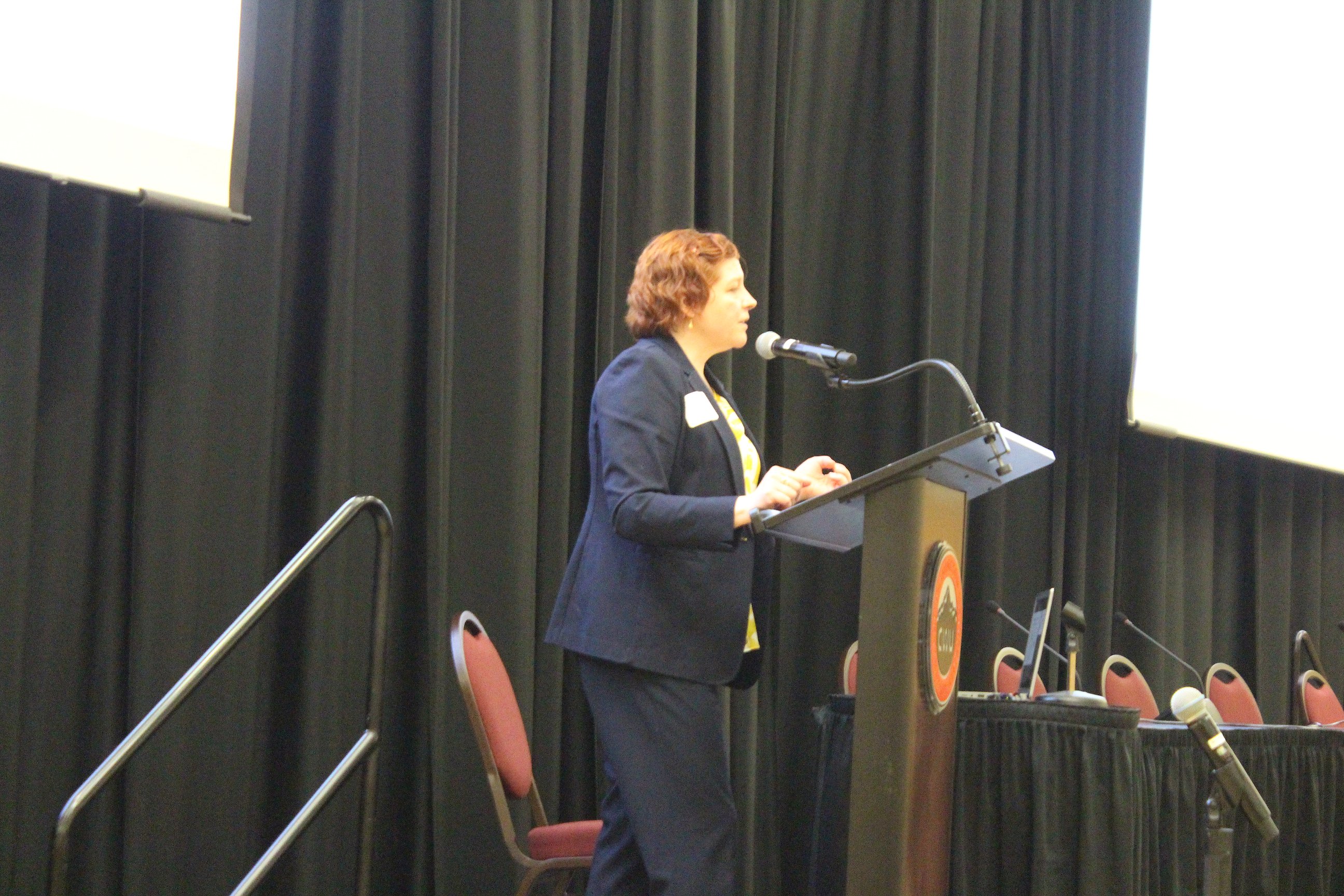 Anneliese Vance-Sherman, chief labor economist for Washington Employment Security, reviews unemployment data at the Economic Outlook Conference.
ARTICLES BY CHERYL SCHWEIZER
Road projects on hold for Labor Day weekend
MOSES LAKE — With Labor Day weekend dead ahead, drivers will be able to move freely about the state. Most road projects are on hold for the holiday weekend. Nobody will be working on the Hansen Road overpass on Interstate 90, but the lane restrictions that are in effect will continue through the end of the project.
Cost estimates for water source alternatives given to Moses Lake City Council
Protected under the U.S. Endangered Species Act, efforts are ongoing to keep it self-sufficient
MOSES LAKE — It’s going to cost a lot of money to provide alternative water sources for the city of Moses Lake, but some of the possible alternatives will cost more than others. City officials provided the Moses Lake City Council with costs for various alternatives Tuesday.

Dryer vent cleaning is important -- but often overlooked
MOSES LAKE — Not all the maintenance a house needs is visible. Sometimes a potential problem just goes unnoticed until it causes trouble, sometimes serious trouble. But a lot of potential problems give off warning signs. Clothes dryers often do when they need a good cleaning.