
Educational Service District 123 Superintendent discusses priorities, services
GABRIEL DAVIS | Hagadone News Network | UPDATED 1 year, 6 months AGO
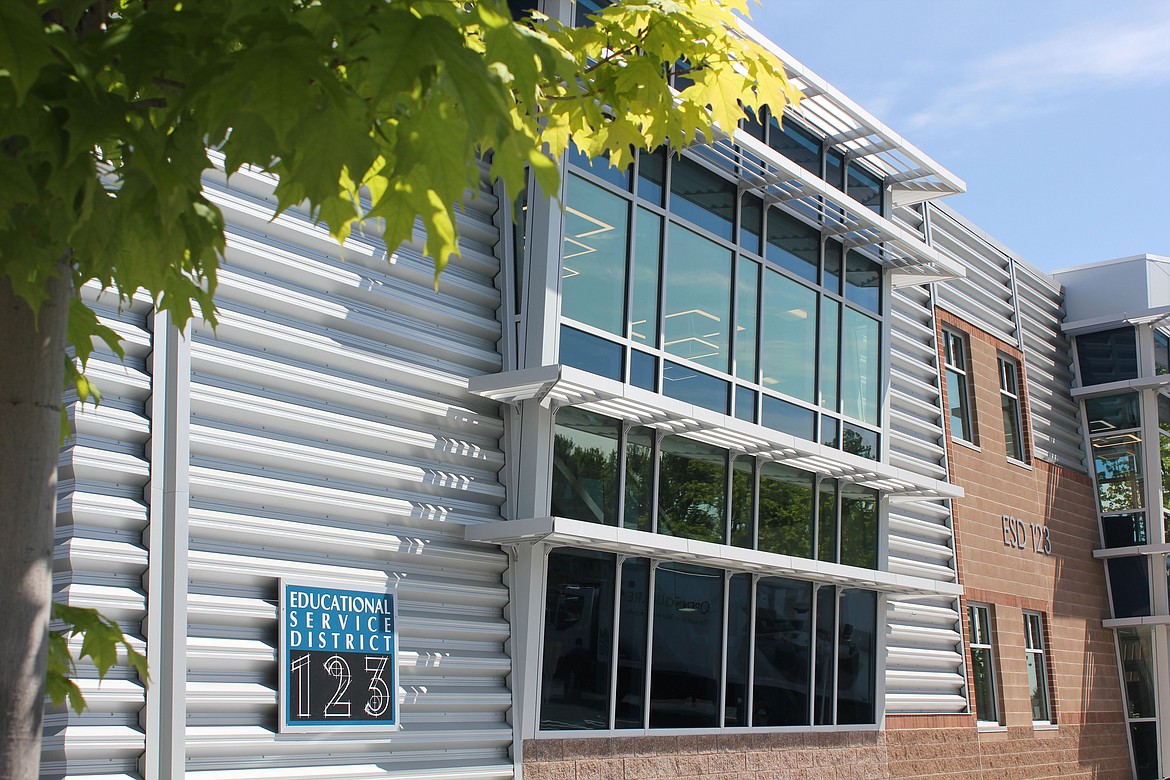
Exterior of Washington Educational Service District 123’s main headquarters in Pasco. ESD 123 is one of nine ESDs in Washington, which are legislatively mandated organizations that exist to provide assistance to school districts across the state.
FILE PHOTO
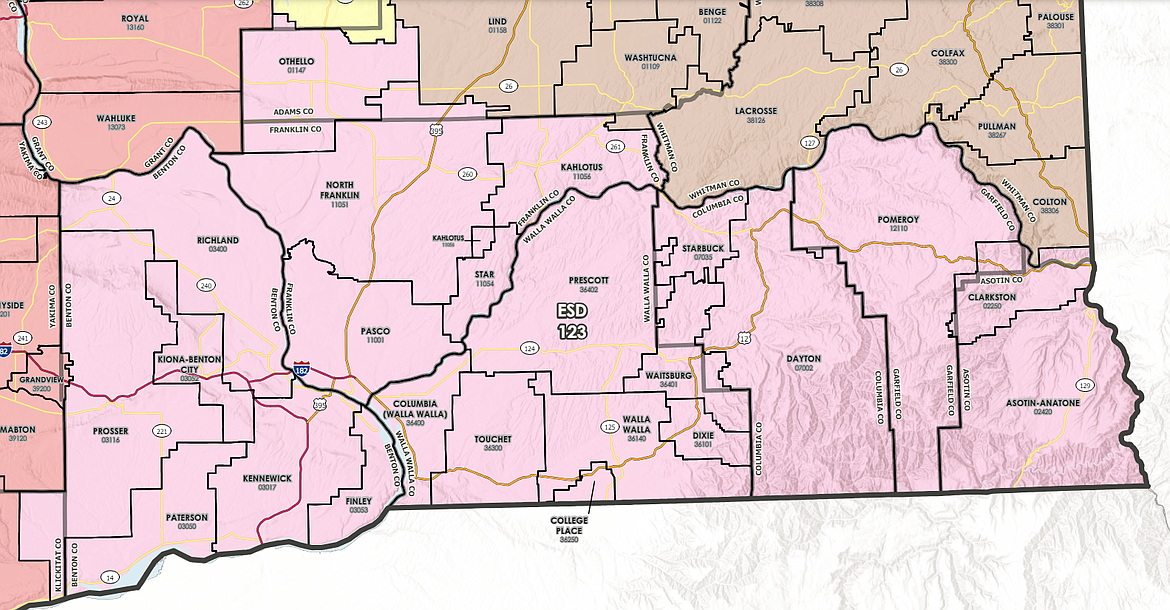
Highlighted in pink is the region that Washington Educational Service District 123 services; outlined within this region are all the 23 individual school districts ESD 123 serves, accounting for more than 70,000 students.
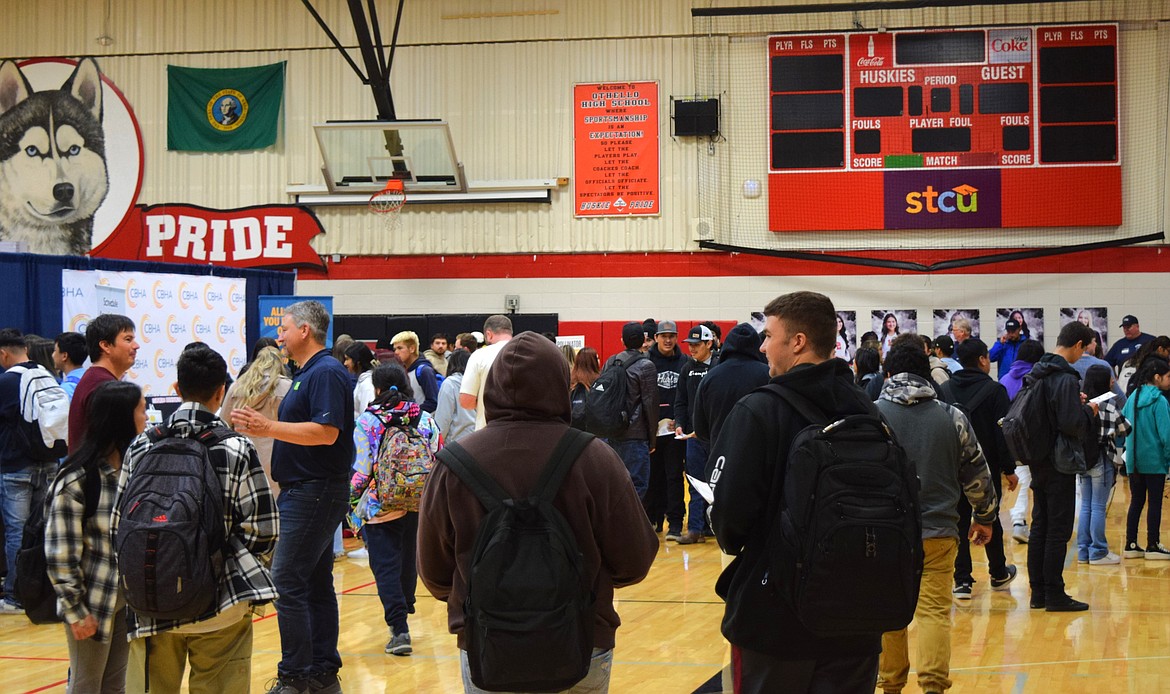
Othello High School students attend the 2023 Othello Career Fair in October of 2023. The Othello School District is among the districts served by Educational Service District 123
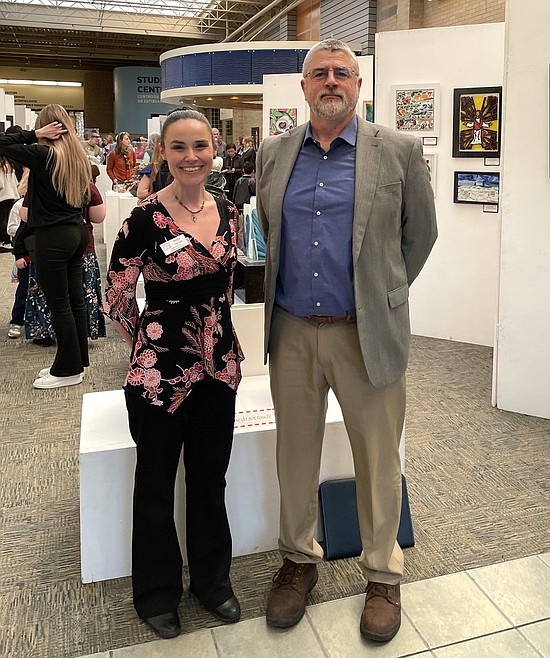
Educational Service District 123 Director of Communications Molly Curtiss, left, and Superintendent Steve McCullough, right, attend a regional art exhibit in the Tri-Cities in March.
Gabriel Davis is a resident of Othello who enjoys the connections with his sources. Davis is a graduate of Northwest Nazarene University where he studied English and creative writing. During his free time, he enjoys reading, TV, movies and games – anything with a good story, though he has a preference for science fiction and crime. He covers the communities on the south end of Grant County and in Adams County. | May 21, 2024 1:20 AM
PASCO — Washington Educational Service District 123, based out of Pasco, serves 23 school districts in seven counties of Southeastern Washington — including Othello School District — with more than 70,000 students, according to ESD 123’s website.
Superintendent Steve McCullough discussed some of the district’s priorities and focuses in the near future.
“Our mission is about helping all students realize their dreams and aspirations,” McCullough said. “So, number one, we're about enhancing student learning in our region and across the state. Number two, we do that through supporting our local school districts. So we're trying to help them be more efficient and effective.”
According to the website, McCullough works under a board of directors to manage ESD 123, which is a legislatively mandated, not-for-profit educational organization for helping school districts.
“We help them collaborate with each other as well or collaborate with other partners,” he said. “(It’s) a lot of advocacy work, either regionally or across the state, or even federally, working on different issues that impact our education. And we provide very specialized services in certain situations in order to meet the needs of our students in our region and of our school districts.”
Services
School districts under ESD 123’s purview range from smaller, rural districts to the larger and more complex districts in the Tri-Cities area.
“For the more rural and smaller districts, the range of different types of services that they might need from us is probably a lot broader. We support them maybe with communications, we might provide a specialist like a school psychologist or somebody who's a behavior specialist,” he said. “There are programs we (offer to) every district … For example, (the state) provided funding for each ESD to support the health program, to be a liaison with our Department of Health to help all districts in the region navigate through the COVID rules and regulations.”
McCullough said more specific programs are sometimes necessary.
“We started up something called Candy Mountain Academy, several years ago, and it's a school designed to support high-needs behavior students, and we have students from our Tri-Cities region and we have students from outlying regions that access that service,” he said. “So we're always looking for what is that area that a district is not able to do, or maybe we can do more efficiently.”
McCullough said each service district varies in some regard in the services that it offers.
“Probably (about) 75% of them are consistent across all ESDs … So there are like 25% that might be really unique to our region, or maybe to a couple of regions,” he said. “An example is (Early Childhood Education and Assistance Program). We run early childhood programs in quite a few districts in our region or even outside of our region. Whereas (ESD) 105, they provide more headstart programs.”
ESD 123 is part of the Washington Association of Educational Service Districts.
“All nine ESDs work together, so we have programs that we share and we roll out together,” he said. “But then, based on the needs of our region, we do different things.”
McCullough elaborated on how the ESD is funded.
“About 1% of our funding comes directly from the state of Washington, and then the rest of it is either through grants or fees for service or maybe a proviso that comes through (The Office of Superintendent of Public Instruction) for specific purposes,” he said.
Priorities
McCullough also discussed some of the district’s focuses in running its operations.
“One of the areas that districts are focused on and we're looking to make sure that we provide sufficient help for is just helping with student mental health,” he said, “and how do we make sure we meet the needs of students in that area … That is probably one of the ones that is talked about the most right now.”
Student Assistance Professionals operate through ESDs in many districts in the state, McCullough said, positions that were funded through COVID relief funds and emergency funding.
“Those weren't funded this last legislative session, but they were highly effective, with a lot of data to back up their effectiveness in the school,” he said. “So all the ESDs will be, along with OSPI, bringing those issues back to the legislature next year, as a way to say, ‘Hey, this is a need of our school districts. This is what we did and how successful it was, please fund it moving forward.’”
McCullough said he sees school districts’ need for ESD 123’s services only growing.
“Another area that we're looking at, (that) all of us are looking at growing, is our fiscal support,” he said. “We get some direct funding from the state of Washington, but there are a lot more districts out there that are struggling financially … That's an area we're going to be asking the state potentially for more funding to help support that.”
McCullough said community members can always contact the district, which can at least point them in the right direction if they need assistance or are looking for a specific service.
“We do youth mental health and adult mental health first aid training. That’s something we provide, something that’s definitely good for people to know they can access,’ McCullough said. “We provide a service called TC-Futures that reaches out and works with students who are no longer in school and still need to get a diploma, and works with them to get a GED and provide a lot of support in the process.”
The district’s services are not just for students.
“We do a lot of training for teachers, so that's another area we really do a lot of work with,” he said. “We have developed quite a large migrant program that works in our school communities supporting our migrant population, so that's another one that's very active in our community.”
Overall, ESD 123 both assists and advocates for its school districts in many different ways and regarding many different topics.
“If one school is suffering or struggling with an issue, there are others that are probably having some similar problems as well. So as a superintendent, I keep up on all the different educational trends,” he said. “All the ESD superintendents, we meet consistently to talk about what's happening in our regions, so we've been on top of those different trends. We are meeting with legislators, we're talking at both the federal and state level to keep up on what's going on, so that we can make sure that we're staying ahead of some of those trends.”
For more information, visit www.esd123.org.
School Districts serviced by ESD 123
Asotin-Anatone
Clarkston
College Place
Columbia
Dayton
Dixie
Finley
Kahlotus
Kennewick
Kiona-Benton
North Franklin
Othello
Pasco
Paterson
Pomeroy
Prescott
Prosser
Richland
Star
Starbuck
Touchet
Waitsburg
Walla Walla
Gabriel Davis may be reached at [email protected].
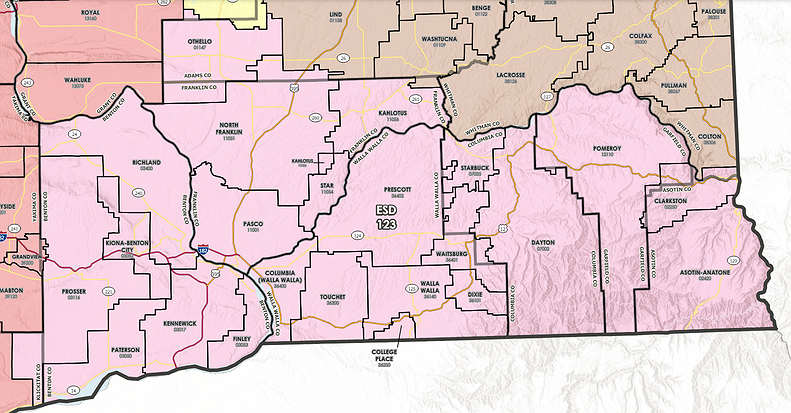 Highlighted in pink is the region that Washington Educational Service District 123 services; outlined within this region are all the 23 individual school districts ESD 123 serves, accounting for more than 70,000 students.
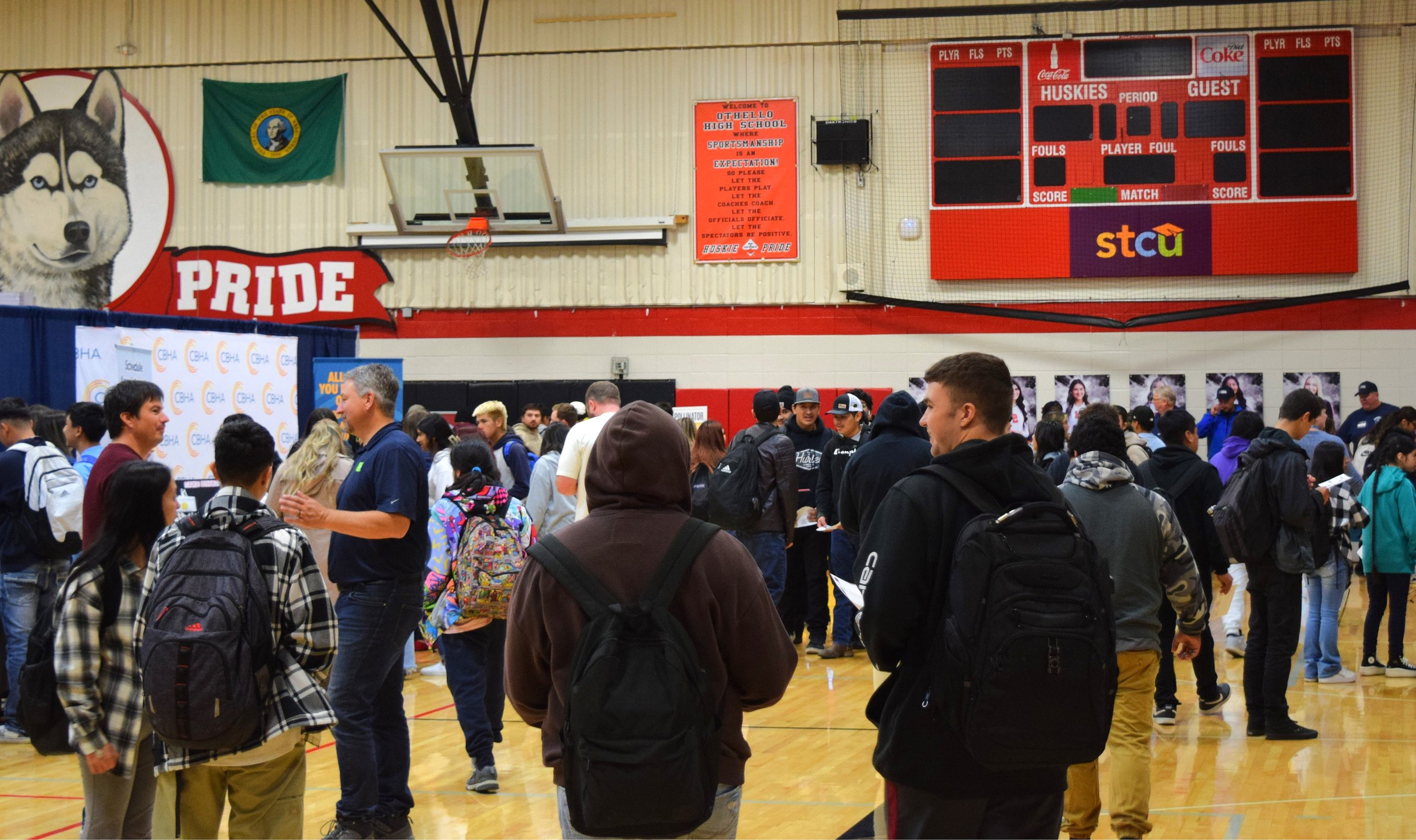 Othello High School students attend the 2023 Othello Career Fair in October of 2023. The Othello School District is among the districts served by Educational Service District 123
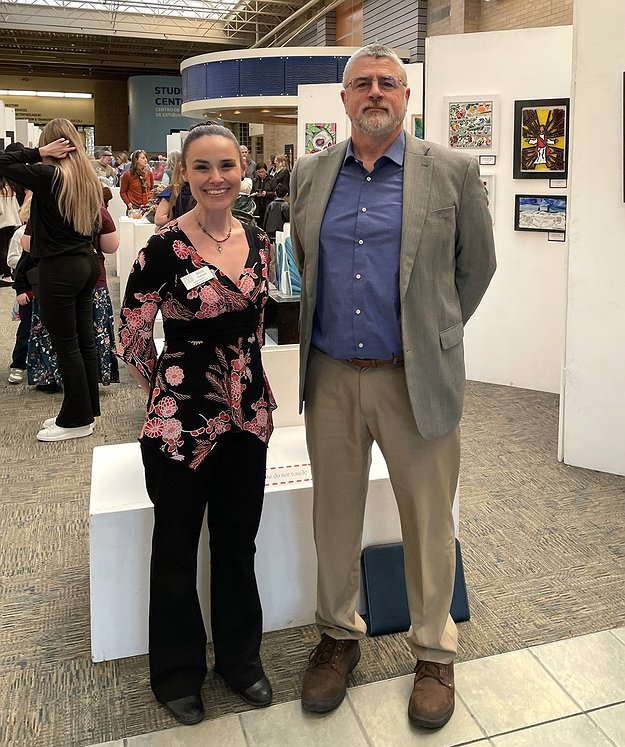 Educational Service District 123 Director of Communications Molly Curtiss, left, and Superintendent Steve McCullough, right, attend a regional art exhibit in the Tri-Cities in March.
ARTICLES BY GABRIEL DAVIS

Work-based learning lets students build their own futures
MOSES LAKE — Work-based learning provides education opportunities for the workforce to receive hands-on training and technical education and prepare themselves to enter various industries. Educators and workforce development professionals from Eastern Washington discussed some the training they offer and the benefits of their programs. Next Generation Zone, an affiliate of WorkSource based in Spokane, provides job training opportunities for youth and young adults ages 16 to 24. Program Coordinator Kate Martin said there are multiple benefits to the program. “One of them is a paid work experience, and that’s where we reach out to area employers who are willing to take a young person and train them,” she said. “This is a short-term learning experience, so it’s typically about 240 hours; sometimes it could be longer or shorter. We’re the actual employer; we cover all of their wages, taxes, the L&I, and the employer just agrees to give them the experience and train them in whatever field it is that they’re wanting to go into.”

Serving schools: ESD superintendents reflect on operations, priorities
MOSES LAKE — Educational service districts are government-mandated agencies put in place to provide services to school districts across the state. ESD Superintendents discussed what they do and their priorities in operating their districts. ESD 105, led by Superintendent Kevin Chase, serves four counties, including Kittitas, Yakima and portions of Klickitat and Grant counties and provides support for 25 school districts – including Royal School District and Wahluke School District – and more than 66,000 students. “We help them collaborate with each other as well or collaborate with other partners,” Chase said. “(It’s) a lot of advocacy work, either regionally or across the state, or even federally, working on different issues that impact our education. And we provide very specialized services in certain situations in order to meet the needs of our students in our region and of our school districts.”

Columbia Basin Project making headway through Odessa Groundwater program
CASHMERE — The Columbia Basin Project is making gradual progress toward completion with particularly significant accomplishments for the Odessa Groundwater Replacement Program in the last six months or so, according to Columbia Basin Development League Executive Director Sara Higgins. “When we’re dealing with a project of this size, advancement is kind of like watching paint dry, but yes, there have been (developments),” she said. “There are a lot of exciting things happening right now.” There are more than 300 miles of main canals, about 2,000 miles of lateral canals and 3,500 miles of drains and wasteways in the irrigation project, according to the U.S. Bureau of Reclamation website. The CBDL advocates for the operation of those waterways and for the project to continue “build-out.”