
ESD 105 Superintendent reflects on service district’s operations, goals
GABRIEL DAVIS | Hagadone News Network | UPDATED 1 year, 6 months AGO
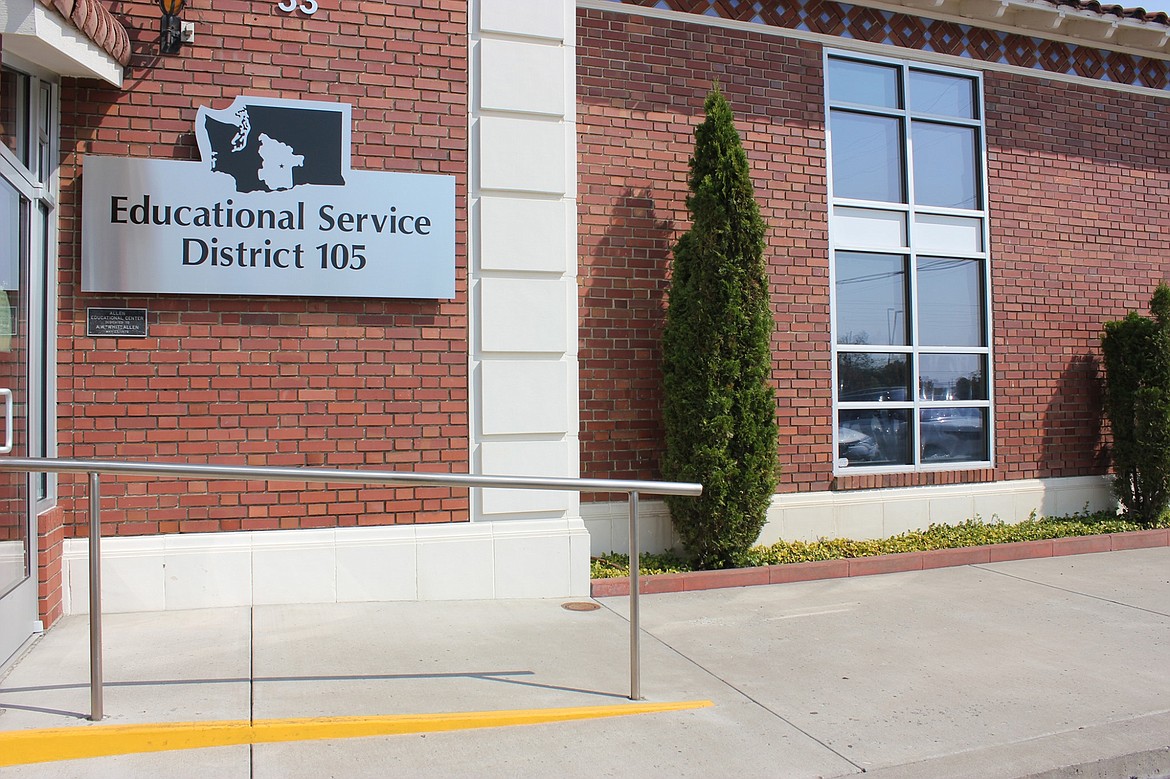
Exterior of Educational Service District 105’s headquarters in Yakima, located at 33 S. 2nd Ave. ESD 105 services 25 school districts in four counties.
COURTESY PHOTO/EDUCATION SERVICE DISTRICT 105
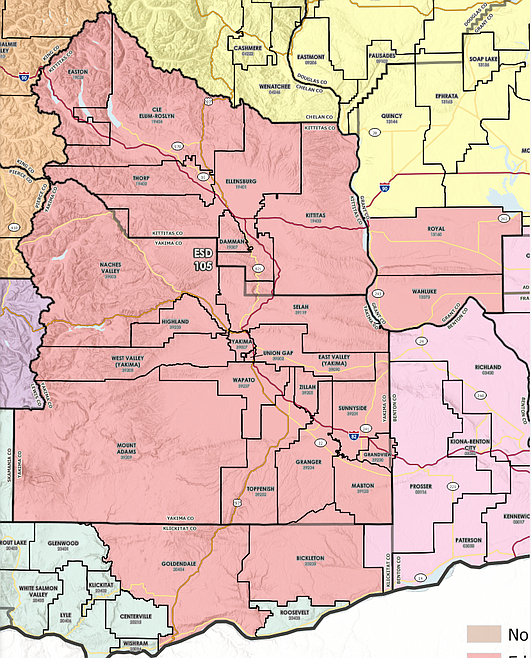
Highlighted in red is the region Educational Service District 105 services, including Kittitas, Yakima and portions of Klickitat and Grant County and the 25 school districts ESD 105 supports.
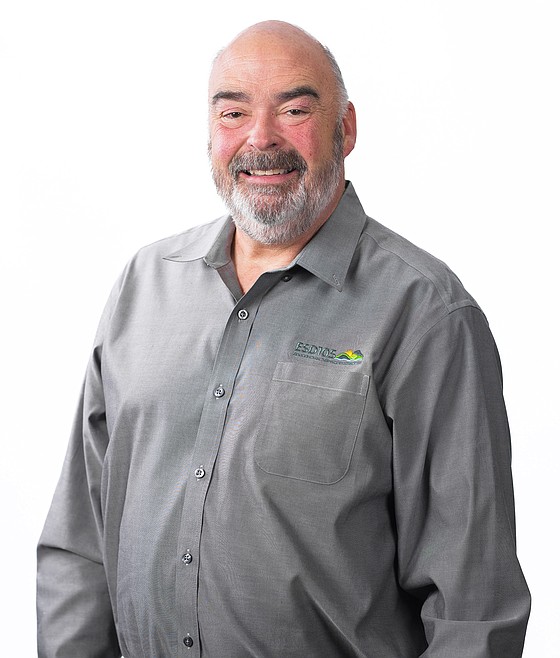
Educational Service District 105 Superintendent Kevin Chase, pictured, who has served as the district’s superintendent for eight years, recently announced his retirement at the end of June after more than 40 years of working in education.
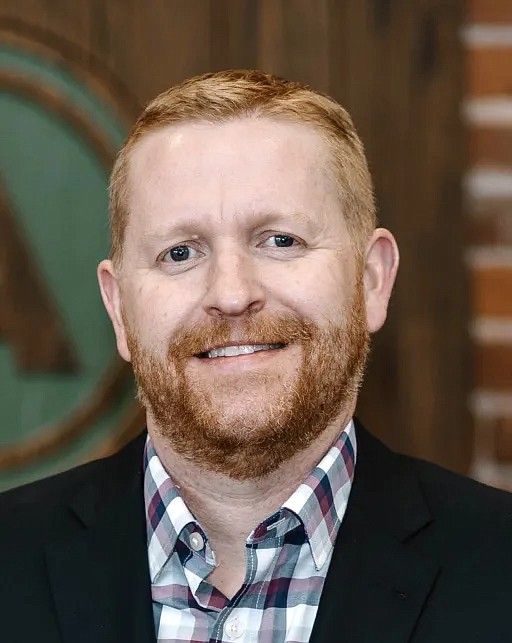
Educational Service District 105 Deputy Superintendent Shane Backlund, pictured, will begin serving as ESD 105’s Superintendent in July, according to the district’s website.
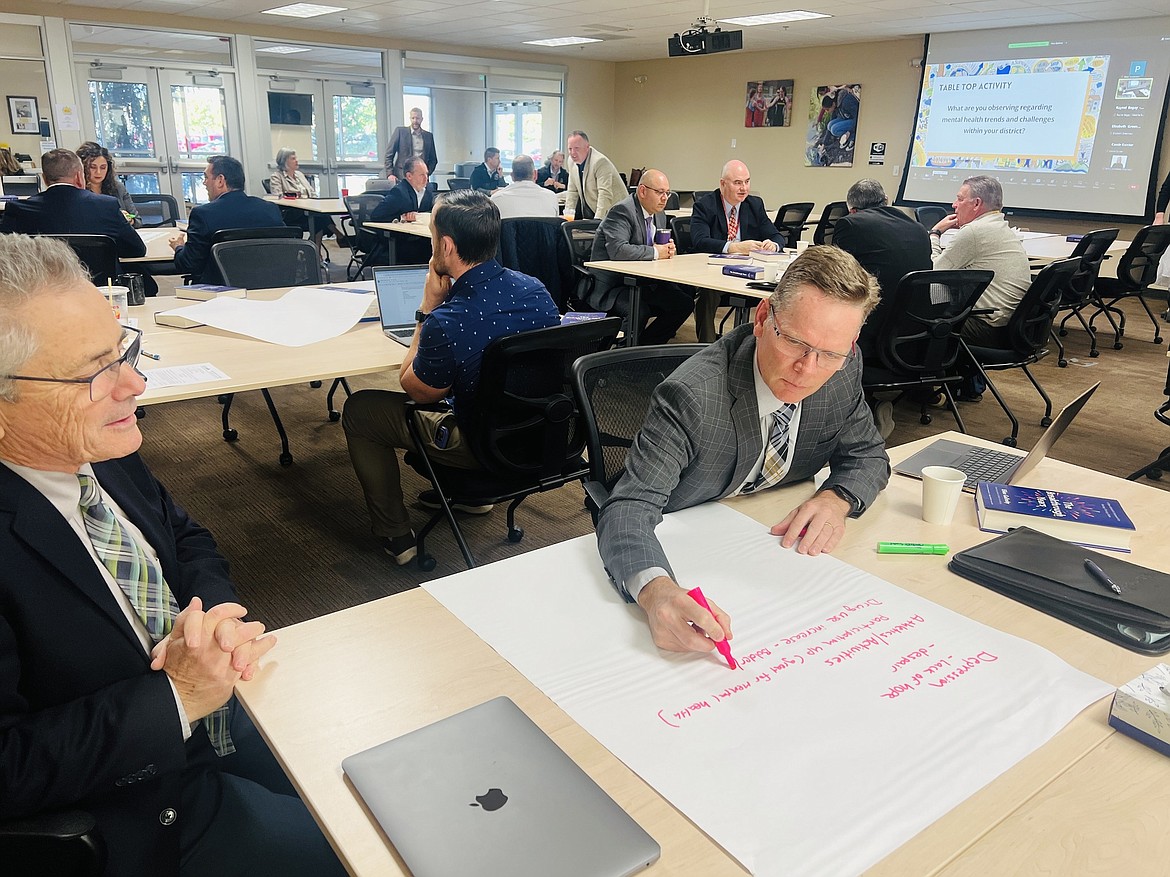
Royal School District Superintendent Roger Trail, right, participates in a recent monthly meeting between superintendents in Educational Service District 105’s region of central Washington.
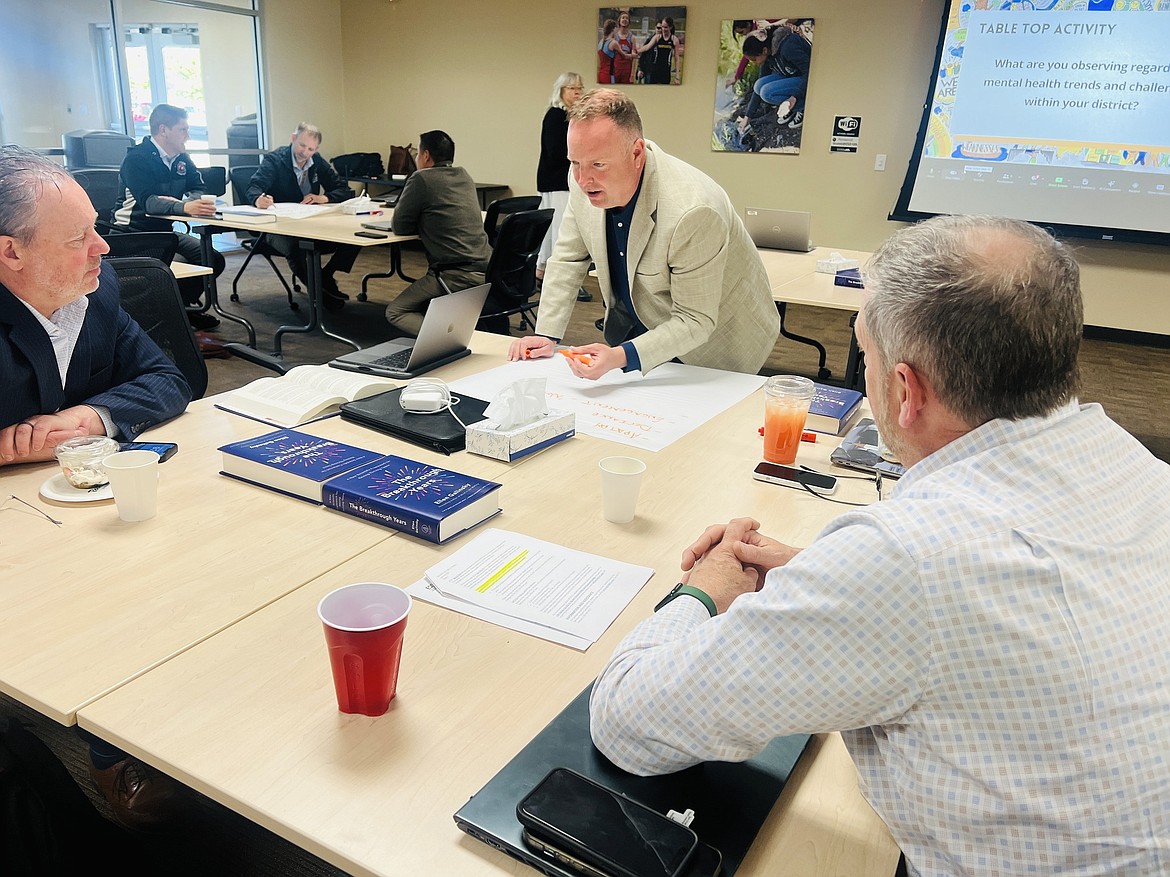
Wahluke School District Superintendent Andy Harlow, center, at a meeting last month hosted by Educational Service District 105.
Gabriel Davis is a resident of Othello who enjoys the connections with his sources. Davis is a graduate of Northwest Nazarene University where he studied English and creative writing. During his free time, he enjoys reading, TV, movies and games – anything with a good story, though he has a preference for science fiction and crime. He covers the communities on the south end of Grant County and in Adams County. | May 24, 2024 1:20 AM
YAKIMA — Serving four counties, including Kittitas, Yakima and portions of Klickitat and Grant County, Washington’s Educational Service District 105 provides support for 25 school districts – including Royal School District and Wahluke School District – and more than 66,000 students.
ESD 105 Superintendent Kevin Chase explained his perspective on the basic purpose of an ESD.
“My take on that is our overarching mission is to help school districts, families and students do better. In all kinds of things,” Chase said. “For us specifically, we want those kids to do well academically, but we also want them to do well personally and as individuals too. So our job is to provide services to help everybody else get better at what they do.”
Services
“All districts are completely different,” he said. “It's really interesting to see their location, the makeup of the student body, the area of need, in terms of size. Our smallest district probably has 40 kids and our largest district is running at 16,000, and then we have everything in between.”
Like most ESDs, a small percentage of funds come from the state, with the rest coming from a combination of federal grants, state grants and service fees with its school districts, Chase said.
“Our largest district is Yakima, and they have a lot of in-house people,” he said. “They have a much larger central office, they can do a lot of things on their own. But there are some niche things that we do for them. And then in other cases, we're doing some of the bedrock work that those districts need, whether we provide them some IT services, or we provide business management services. So we have a much (more) hands-on, active role in smaller school districts that need extra help. “
ESD 105 is there to support districts, not provide oversight or regulation.
“One thing that's good about ESDs is we're kind of an aggregator in some ways,” Chase said. “So let's say I have four small districts that all can't afford … a school psychologist. They can't afford a full time one, and they don't need a full time one, but together, four of them can have a full time school psychologist. And then we hire the psychologist.”
Chase gave an example of one of the services ESD 105 provides with its science materials cooperative.
“We actually have 24 school districts that are a member of that and three private schools,” he said. “So what we do is we purchase all of these science kits … we maintain them, we refurbish all of them and then we ship them out to the school buildings.”
Chase said dealing with school districts’ needs is a balance between offering programs to multiple districts across the region and working with specific needs within the service district.
“There are some (services) that are in reaction to trends or issues that are going on statewide or nationally or regionally. And then there are others that have just been in place for years,” he said. “One of those being the science cooperative, right? There was a need for science curriculum in our region; the districts came together, formed a cooperative board, they selected the materials. So there's a lot that goes into that.”
ESD 105 regularly connects with school districts to keep up on their needs.
“We meet every week on Zoom with superintendents … just to talk about what's going on regionally, what are their needs, what are they hearing?” Chase said.
Moving forward
Chase elaborated on how ESD 105 is doing right now.
“I think we're doing well currently, I think I'm pretty happy with where we are,” he said. “Fiscally we're doing well. We're growing; we have been growing for the last five or six years, and I'm happy about that. Mostly, that’s been through writing large federal grants that have allowed us to be financially secure. And those grants are normally three to five years, so we have a number of those three to five year grants we're in the middle of.”
Some school districts are facing financial difficulties, such as Wahluke School District, which was unable to pass its most recent capital levy or Royal School District, which is currently having to go through a reduction of staff positions through attrition.
“Anytime there's an economic downturn and school districts are on a tight budget, that always can affect our budget, because they are doing business with us. They're our main customers,” Chase said. “For example, Yakima … most of their previous contracts with us have been canceled. They can't afford it.”
Chase said one goal moving forward for ESD 105 is getting more funding for behavioral and mental health support.
“While we got a lot of money from (Office of Superintendent of Public Instruction) to start some of this work through (Elementary and Secondary School Emergency Relief) funding, and we were hoping that the legislature would backfill that funding, not just here but statewide … which didn't happen,” he said. “So we're going to continually ask the legislature, ‘Hey, let's take a look at the needs,’ and show them the success that the initial investment had, which was pretty incredible.”
Another change going forward at ESD 105 is Chase’s retirement. Chase said he has been ESD 105’s superintendent for eight years and working in education for more than 40 years. The website stated Chase will be retiring from his position as superintendent at the end of June. Current Deputy Superintendent Shane Backlund will take over his position beginning in July.
Overall, Chase said the district can also answer questions and requests from the various communities they service.
“If anybody has a need for a service, they can always call us and we can find it,” Chase said. “Sometimes we have programs that districts don't have.”
Gabriel Davis may be reached at [email protected].
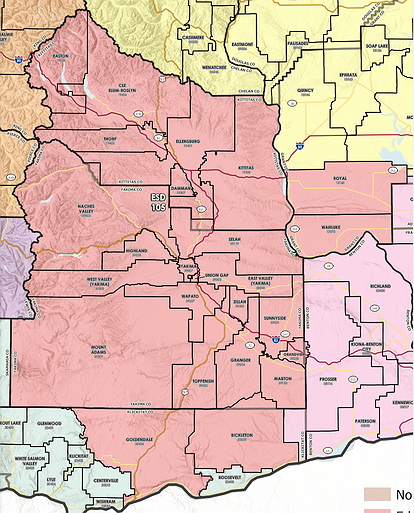 Highlighted in red is the region Educational Service District 105 services, including Kittitas, Yakima and portions of Klickitat and Grant County and the 25 school districts ESD 105 supports.
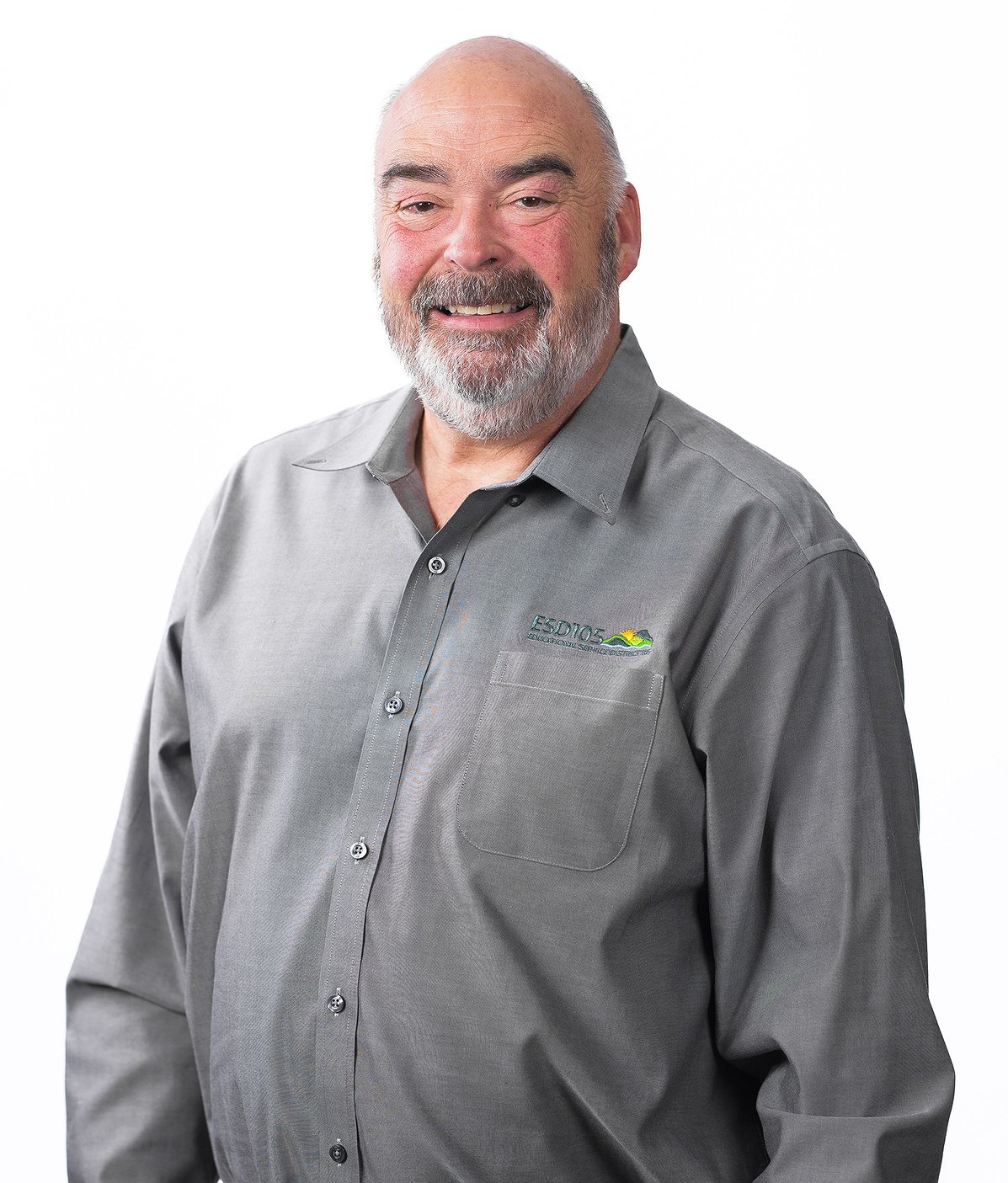 Educational Service District 105 Superintendent Kevin Chase, pictured, who has served as the district’s superintendent for eight years, recently announced his retirement at the end of June after more than 40 years of working in education.
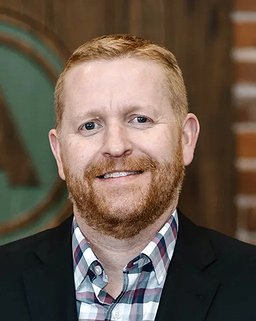 Educational Service District 105 Deputy Superintendent Shane Backlund, pictured, will begin serving as ESD 105’s Superintendent in July, according to the district’s website.
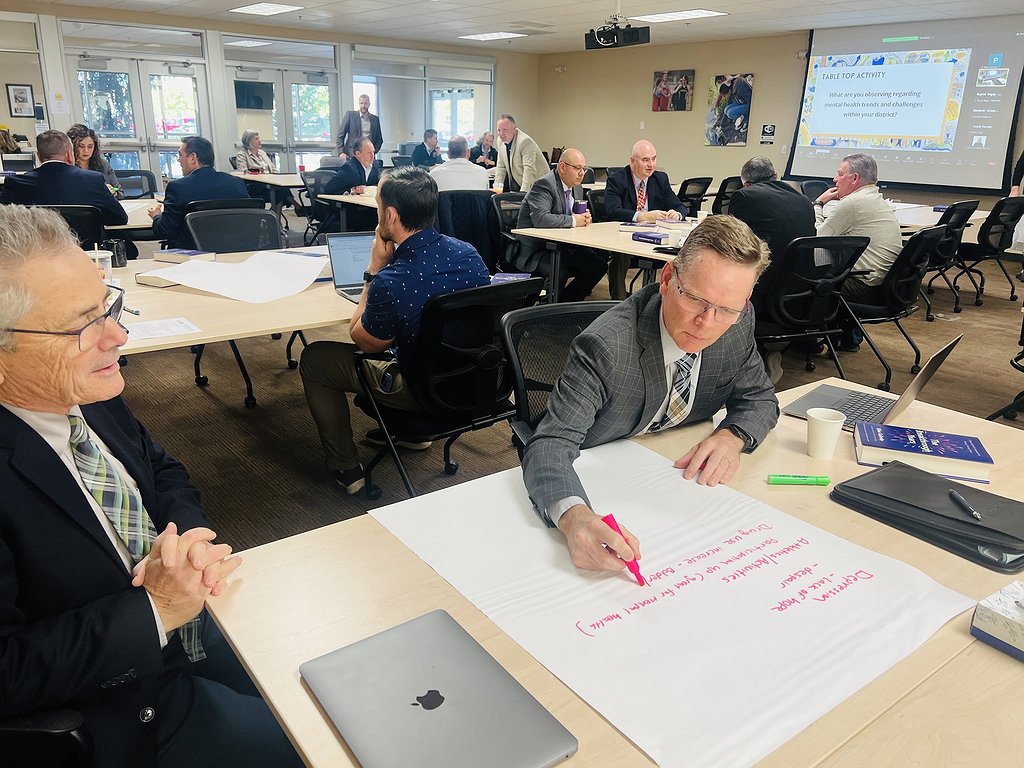 Royal School District Superintendent Roger Trail, right, participates in a recent monthly meeting between superintendents in Educational Service District 105’s region of central Washington.
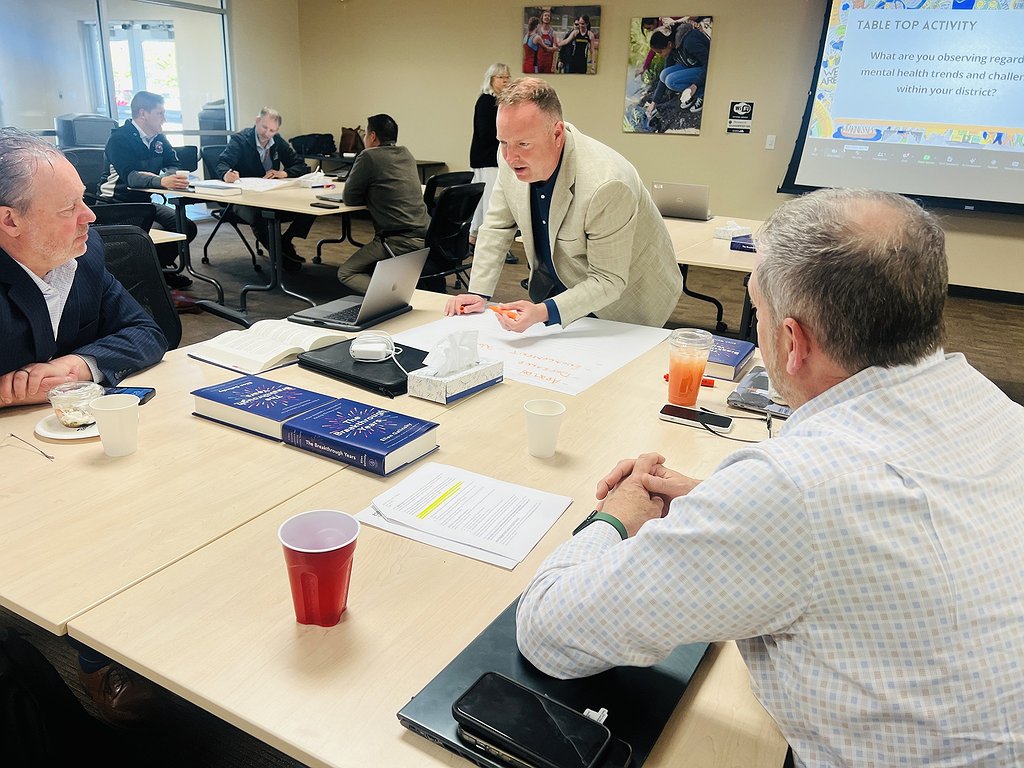 Wahluke School District Superintendent Andy Harlow, center, at a meeting last month hosted by Educational Service District 105.
ARTICLES BY GABRIEL DAVIS

Work-based learning lets students build their own futures
MOSES LAKE — Work-based learning provides education opportunities for the workforce to receive hands-on training and technical education and prepare themselves to enter various industries. Educators and workforce development professionals from Eastern Washington discussed some the training they offer and the benefits of their programs. Next Generation Zone, an affiliate of WorkSource based in Spokane, provides job training opportunities for youth and young adults ages 16 to 24. Program Coordinator Kate Martin said there are multiple benefits to the program. “One of them is a paid work experience, and that’s where we reach out to area employers who are willing to take a young person and train them,” she said. “This is a short-term learning experience, so it’s typically about 240 hours; sometimes it could be longer or shorter. We’re the actual employer; we cover all of their wages, taxes, the L&I, and the employer just agrees to give them the experience and train them in whatever field it is that they’re wanting to go into.”

Serving schools: ESD superintendents reflect on operations, priorities
MOSES LAKE — Educational service districts are government-mandated agencies put in place to provide services to school districts across the state. ESD Superintendents discussed what they do and their priorities in operating their districts. ESD 105, led by Superintendent Kevin Chase, serves four counties, including Kittitas, Yakima and portions of Klickitat and Grant counties and provides support for 25 school districts – including Royal School District and Wahluke School District – and more than 66,000 students. “We help them collaborate with each other as well or collaborate with other partners,” Chase said. “(It’s) a lot of advocacy work, either regionally or across the state, or even federally, working on different issues that impact our education. And we provide very specialized services in certain situations in order to meet the needs of our students in our region and of our school districts.”

Columbia Basin Project making headway through Odessa Groundwater program
CASHMERE — The Columbia Basin Project is making gradual progress toward completion with particularly significant accomplishments for the Odessa Groundwater Replacement Program in the last six months or so, according to Columbia Basin Development League Executive Director Sara Higgins. “When we’re dealing with a project of this size, advancement is kind of like watching paint dry, but yes, there have been (developments),” she said. “There are a lot of exciting things happening right now.” There are more than 300 miles of main canals, about 2,000 miles of lateral canals and 3,500 miles of drains and wasteways in the irrigation project, according to the U.S. Bureau of Reclamation website. The CBDL advocates for the operation of those waterways and for the project to continue “build-out.”