
Seniors save on fishing in Washington
JOEL MARTIN | Hagadone News Network | UPDATED 1 year, 11 months AGO
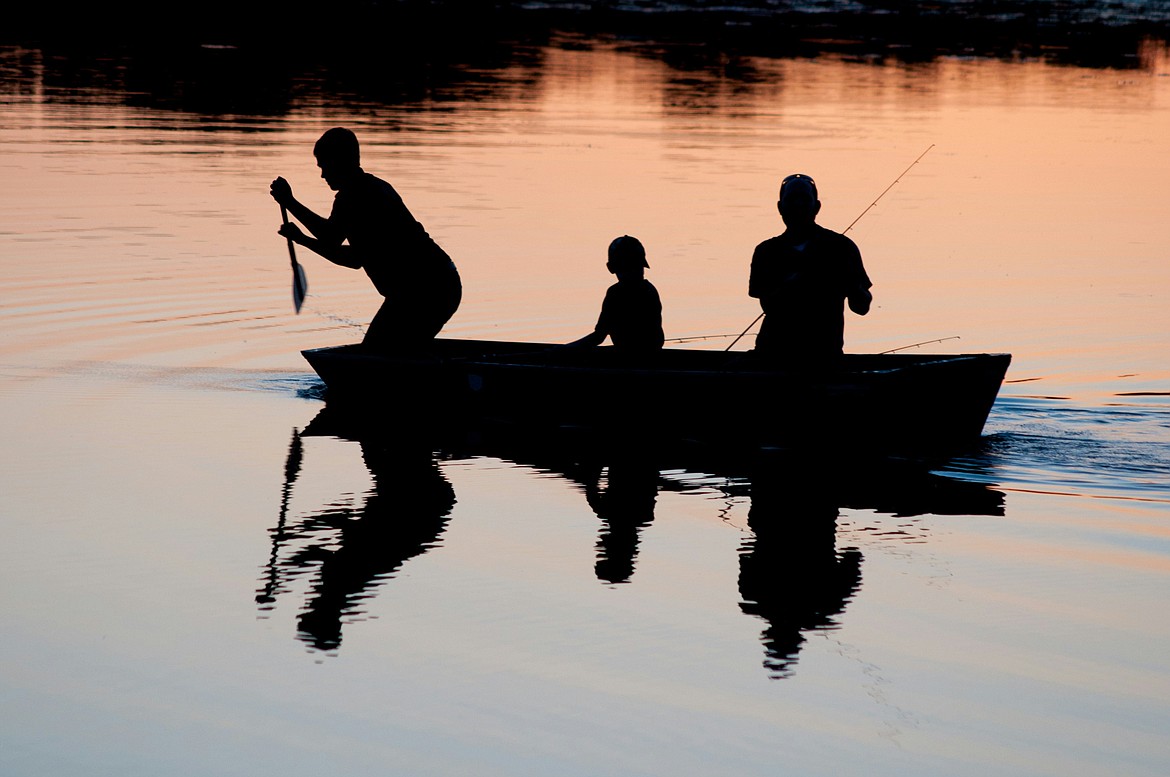
A day on the water fishing costs a lot less when you’re over 70, and can be good for both your mental health and your dinner table.
COURTESY PHOTO/JED OWEN/UNSPLASH
Joel Martin has been with the Columbia Basin Herald for more than 25 years in a variety of roles and is the most-tenured employee in the building. Martin is a married father of eight and enjoys spending time with his children and his wife, Christina. He is passionate about the paper’s mission of informing the people of the Columbia Basin because he knows it is important to record the history of the communities the publication serves. | November 6, 2024 2:55 AM
COLUMBIA BASIN — A day on the water with a pole and peace and quiet may just be what the doctor ordered, even if you have to wear some mittens as temps decline.
Seniors wanting to cast a line in Washington are in luck; licenses are significantly discounted for people over the age of 70. Washington offers several license options, according to the Department of Fish and Wildlife. The Annual Freshwater License is the most useful here in the Columbia Basin, where the nearest salt water is more than 100 miles away. This license covers all inland waters, including the Columbia River and its tributaries.
For folks who can get to the west side easily, the Annual Saltwater License is for anglers who love the challenge of coastal and Puget Sound fishing, according to the WSFW. This includes fishing in marine areas and for salmon and steelhead in saltwater. For those who like to spend their time at the beach, the Shellfish/Seaweed license covers clams, mussels, oysters, and seaweed collection. And then there’s an Annual Combination License, which covers all three.
This is where the savings come in, according to the WDFW. For most Washington residents, the Annual Freshwater License is $29.50 per year. For seniors 70 and up, it’s only $7.50. The other licenses are similarly affordable for seniors. The Annual Saltwater License is $8.05 for seniors compared to $30.05 for everyone else, and the Combination License is only $19.05 for seniors versus the standard adult fee of $55.35.
Acquiring a senior license is easy. They’re available online at fishhunt.dfw.wa.gov, by phone at 360-902-2464 or at any business that sells licenses. Ordering online or by phone can mean a delay of up to 10 days, the WDFW wrote, but they’ll email a temporary license to use until the regular one arrives.
The WDFW offers some tips for seniors to get the most out of their fishing trip:
• Explore new waters: Use the money saved on your license to visit different fishing spots across the state. Washington boasts over 7,000 lakes and 70,000 miles of rivers and streams, offering endless exploration opportunities.
• Invest in quality gear: Put the savings towards that high-end rod or reel you’ve always wanted. Many tackle shops offer senior discounts, so be sure to ask.
• Attend fishing clinics: WDFW regularly hosts fishing clinics, some specifically designed for seniors. These events can help you brush up on skills or learn new techniques.
• Consider guided trips: With the money saved on licenses, treat yourself to a guided fishing trip. Many guides offer senior discounts and can provide access to prime fishing spots you might not discover on your own.
• Fish during off-peak times: As a senior, you likely have more flexible schedules. Take advantage of this by fishing during weekdays or off-seasons when the waters are less crowded.
More information can be found at wdfw.wa.gov.
ARTICLES BY JOEL MARTIN

Endless battle
Noxious Weed Control Board works to keep invasive plants under control
MOSES LAKE — Some of the nastiest plants in Grant County were the topic of a class led by Jay Johnson, a consultant with the Grant County Noxious Weed Control Board, Tuesday. The Noxious Weed Control Board, as its name would suggest, is tasked with keeping weeds under control in Grant County. That’s not a small job; the board’s website lists 129 species of noxious weeds that are found around Grant County. A noxious weed is defined as an invasive, non-native plant that threatens agricultural crops, local ecosystems or fish and wildlife habitat, according to the Noxious Weed Control Board. Washington state law requires that these weeds be identified and their spread kept to a minimum, if not completely eradicated. “We’re one of those agencies a lot of people don’t really understand,” Johnson said. “We’re a county office and … our funding is tax-based assessment. When you get your tax bill and you look down at all the expenses that you pay for, there we are.”

BASIN EVENTS: Oct. 16-24
COLUMBIA BASIN — Whether you feel like shopping, crafting, learning or seeing a show, there’s something happening for you this week in the Basin. Oct. 16 ‘My Family (Mi Familia)’ screening Spanning three generations, “My Family (Mi Familia)” is a heartfelt drama that follows the Sánchez family as they build their lives in East Los Angeles. Through love, hardship, triumph, and sacrifice, the film explores the immigrant experience, the strength of family bonds, and the traditions that connect one generation to the next. Lowrider show and taco truck before the screening. Sponsored by Columbia Basin Allied Arts, EDUBS C/S and the Moses Lake Creative District. $12 per person. Doors open at 6 p.m., film begins at 7 p.m. at the Moses Lake Civic Center Auditorium, 401 S. Balsam St. Tickets and info: www.cba-arts.org.

Moses Lake author encourages women to look beyond church culture norms
MOSES LAKE — A Moses Lake author’s book, “A Christian Woman Striving to Live Her Faith in a Man-Controlled World,” takes aim at the role to which many churches relegate the female half of their congregations. “It’s to encourage women in the faith,” Linda Curran said. “A lot of churches say, ‘Teach Sunday school, do this, do that, but don’t (evangelize.)’" In her book, Curran recounts a time when she moved to a new community and joined a church there. She was surprised to learn that, as a new female member, she had been automatically assigned church cleaning duties. When she questioned it, she wrote, she was met with condescension and her objections were brushed aside. In other churches, she said, women who were capable of teaching were relegated to “women’s ministry.”