
‘Moments of sheer terror’
JOEL MARTIN | Hagadone News Network | UPDATED 1 year, 11 months AGO
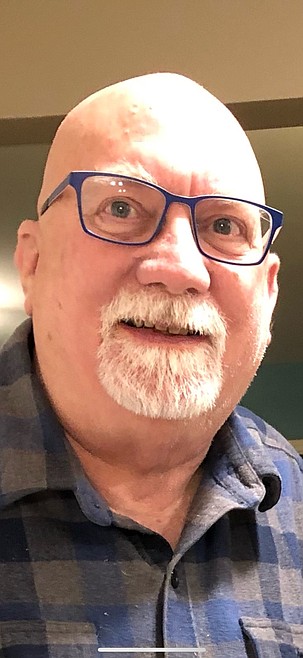
Glenn Knight of Soap Lake is one of the veterans of Operation Dustoff recently honored with the Congressional Gold Medal.
COURTESY PHOTO/LISA KNIGHT
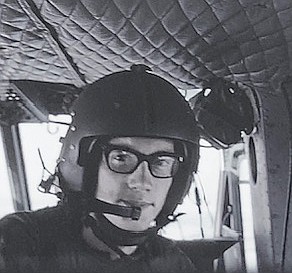
A young Glenn Knight serving as a medic aboard an Operation Dustoff helicopter. Knight flew about 600 missions over Vietnam, rescuing wounded soldiers.
Joel Martin has been with the Columbia Basin Herald for more than 25 years in a variety of roles and is the most-tenured employee in the building. Martin is a married father of eight and enjoys spending time with his children and his wife, Christina. He is passionate about the paper’s mission of informing the people of the Columbia Basin because he knows it is important to record the history of the communities the publication serves. | November 11, 2024 1:15 AM
SOAP LAKE — War is hell, it’s often said, and soldiers who get hurt or killed in action are rightly honored for their courage and sacrifice. But recently the U.S. Congress honored another group whose courage sometimes goes unnoticed.
Operation Dustoff, the collective name for the medical teams who evacuated the wounded from the battlefields of Vietnam in helicopters, was honored in September with the Congressional Gold Medal. One of those men was Glenn Knight, who now lives in the Lakewood area of Soap Lake.
“A Dustoff crew was made up of two pilots, a crew chief and a medic,” Knight said. “I was a medic.”
When he was called up, Knight said, his father, who had been a medic in World War II, had some sage advice for him.
“Son, in this man’s army, there’s one thing you don’t want to be, and that’s a medic,” Knight’s dad told him.
“Well, when you’re drafted, you don’t get to choose,” Knight went on. “They give you a battery of tests and say ‘This is what you’re gong to be.’”
Knight trained in North Carolina for about three months, he said, and then he and five other young men were picked out of a line and sent off to Vietnam.
“Our commanding officer had been a Dustoff pilot in Vietnam before,” Knight said. “When he described our work, he said it would be hours and hours of routine flying with moments of sheer terror. And that was not a bad description.”
Knight was stationed from 1968 to 1969 at Chu Lai, on the Vietnamese coast just south of Da Nang.
“Our detachment had six helicopters, and they require so much maintenance that usually there were only four that were flyable,” Knight said. “So we would get a call, and we would fly out to pick up the wounded. Sometimes there was no more combat going on and sometimes there was obvious combat going on. But our philosophy was, if men on the ground were willing to get up and help load the helicopter, we were willing to fly in.”
The Dustoff crews’ danger was nothing to sneeze at. Helicopter evacuation was a fairly new thing during the Vietnam War, according to the Congressional resolution awarding the medal. Dustoff crews had about an hour in which to get a patient from the field into surgery, so they had to get in, land, load up and get out fast. Many battles in Vietnam were fought at night, and in mountainous terrain, so the pilots had to find a landing spot in total darkness on uneven ground, all while being shot at. Dustoff aircraft were shot down more than three times as often as other military craft, and a member of a Dustoff crew had a one-in-three chance of being wounded or killed.
“I was one of the fortunate ones,” Knight said. “The Huey helicopter was an incredible thing. It could fly when people would say there’s no way you should be flying. We would occasionally come back from a mission and find the helicopter so shot up that it couldn’t be flown any longer and had to go down for maintenance.”
Knight estimated that he flew about 600 missions in the 10 1/2 months he was in Vietnam. All told, Dustoff crews evacuated over 900,000 wounded American and Allied soldiers, civilians and the occasional enemy soldier.
The Congressional Gold Medal is the highest civilian honor Congress can give, according to the House of Representatives Archives. Congress is honoring the Dustoff crews with it rather than a military medal because all the former Dustoff soldiers are civilians now, Knight explained. The medal dates back to the American Revolution, according to the archive; its first recipient was George Washington. To date, 186 Congressional Gold Medals have been awarded. As honorees, Knight and his fellow Dustoff soldiers join such august company as John Paul Jones, Ulysses S. Grant, Charles Lindbergh, St. Theresa of Calcutta and the officers and men of the Byrd Antarctic expedition.
One gold medal will be cast and put on display at Fort Sam Houston, which is the home of medic training for the Army, Knight said. It’s still in the design phase and should be ready in 12-15 months, he said. Additional bronze copies will be available for the Dustoff veterans to purchase.
After he got out of the Army, Knight went to work as an orderly in an operating room, then trained as a surgical technician, and finally became a physician’s assistant. He retired after 20 years as a PA, a much less harrowing career than the one he started with in 1968.
“(Operation Dustoff) was the most dangerous, and most fulfilling, job I ever had,” he said.
 A young Glenn Knight serving as a medic aboard an Operation Dustoff helicopter. Knight flew about 600 missions over Vietnam, rescuing wounded soldiers.
ARTICLES BY JOEL MARTIN
Endless battle
Noxious Weed Control Board works to keep invasive plants under control
MOSES LAKE — Some of the nastiest plants in Grant County were the topic of a class led by Jay Johnson, a consultant with the Grant County Noxious Weed Control Board, Tuesday. The Noxious Weed Control Board, as its name would suggest, is tasked with keeping weeds under control in Grant County. That’s not a small job; the board’s website lists 129 species of noxious weeds that are found around Grant County. A noxious weed is defined as an invasive, non-native plant that threatens agricultural crops, local ecosystems or fish and wildlife habitat, according to the Noxious Weed Control Board. Washington state law requires that these weeds be identified and their spread kept to a minimum, if not completely eradicated. “We’re one of those agencies a lot of people don’t really understand,” Johnson said. “We’re a county office and … our funding is tax-based assessment. When you get your tax bill and you look down at all the expenses that you pay for, there we are.”

BASIN EVENTS: Oct. 16-24
COLUMBIA BASIN — Whether you feel like shopping, crafting, learning or seeing a show, there’s something happening for you this week in the Basin. Oct. 16 ‘My Family (Mi Familia)’ screening Spanning three generations, “My Family (Mi Familia)” is a heartfelt drama that follows the Sánchez family as they build their lives in East Los Angeles. Through love, hardship, triumph, and sacrifice, the film explores the immigrant experience, the strength of family bonds, and the traditions that connect one generation to the next. Lowrider show and taco truck before the screening. Sponsored by Columbia Basin Allied Arts, EDUBS C/S and the Moses Lake Creative District. $12 per person. Doors open at 6 p.m., film begins at 7 p.m. at the Moses Lake Civic Center Auditorium, 401 S. Balsam St. Tickets and info: www.cba-arts.org.
Moses Lake author encourages women to look beyond church culture norms
MOSES LAKE — A Moses Lake author’s book, “A Christian Woman Striving to Live Her Faith in a Man-Controlled World,” takes aim at the role to which many churches relegate the female half of their congregations. “It’s to encourage women in the faith,” Linda Curran said. “A lot of churches say, ‘Teach Sunday school, do this, do that, but don’t (evangelize.)’" In her book, Curran recounts a time when she moved to a new community and joined a church there. She was surprised to learn that, as a new female member, she had been automatically assigned church cleaning duties. When she questioned it, she wrote, she was met with condescension and her objections were brushed aside. In other churches, she said, women who were capable of teaching were relegated to “women’s ministry.”