
Vets honored at Ephrata parade
JOEL MARTIN | Hagadone News Network | UPDATED 1 year, 11 months AGO
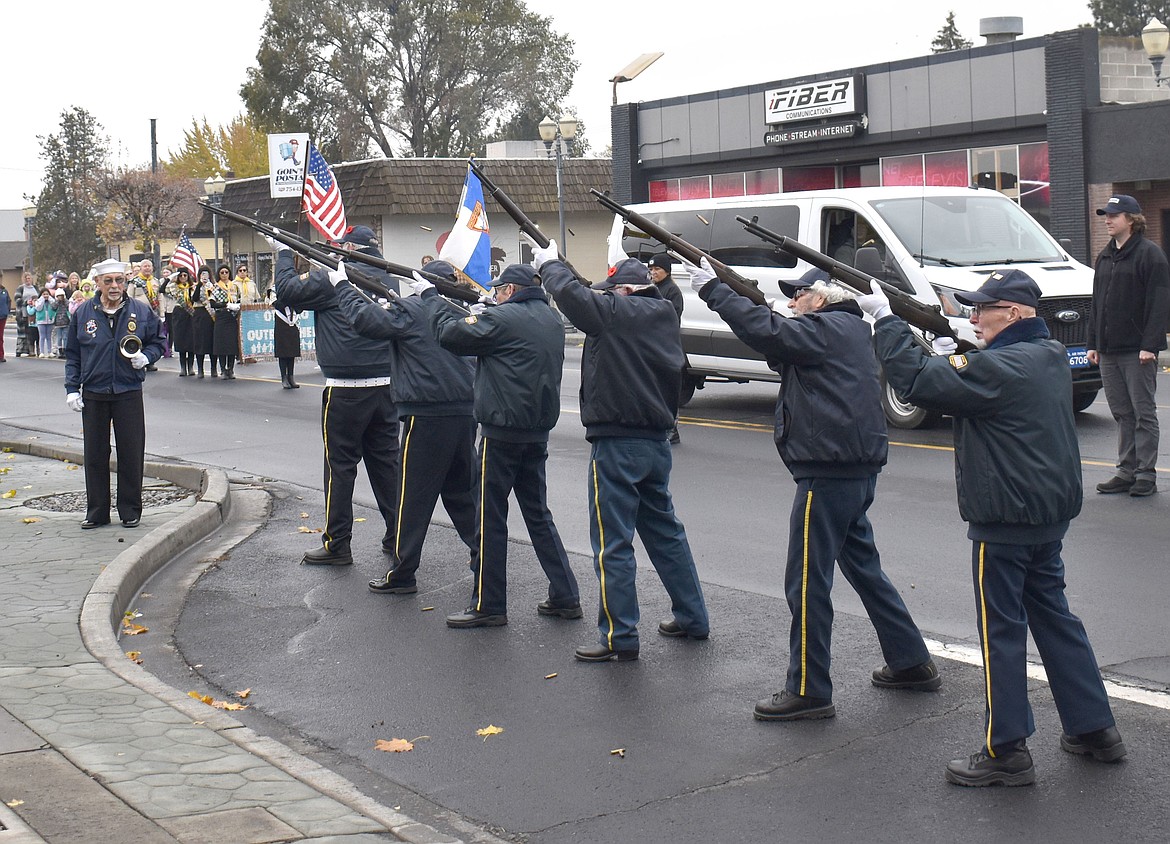
Veterans from American Legion Post 28 in Ephrata fire a 21-gun salute – three volleys of seven shots – outside the Ephrata Recreation Center Monday morning as part of the Veterans Day parade. The shots rang out at precisely 11:11 a.m., to commemorate the moment in 1918 when the guns of World War I fell silent.
JOEL MARTIN/COLUMBIA BASIN HERALD
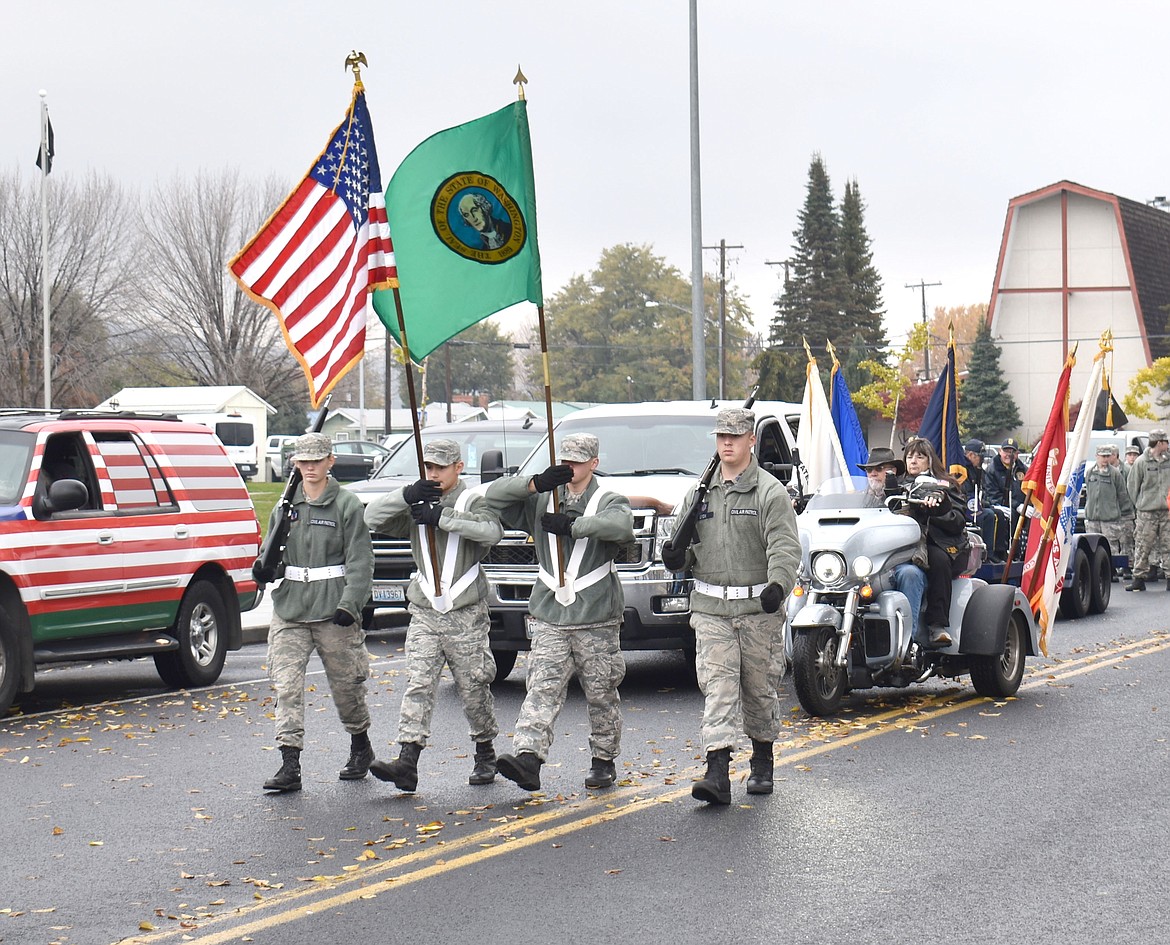
Cadets from the Civil Air Patrol form the color guard leading the Veterans Day parade in Ephrata Monday. From left: Teagan Baysinger, Austin Miller, Jackson Fortner and David Lyon.
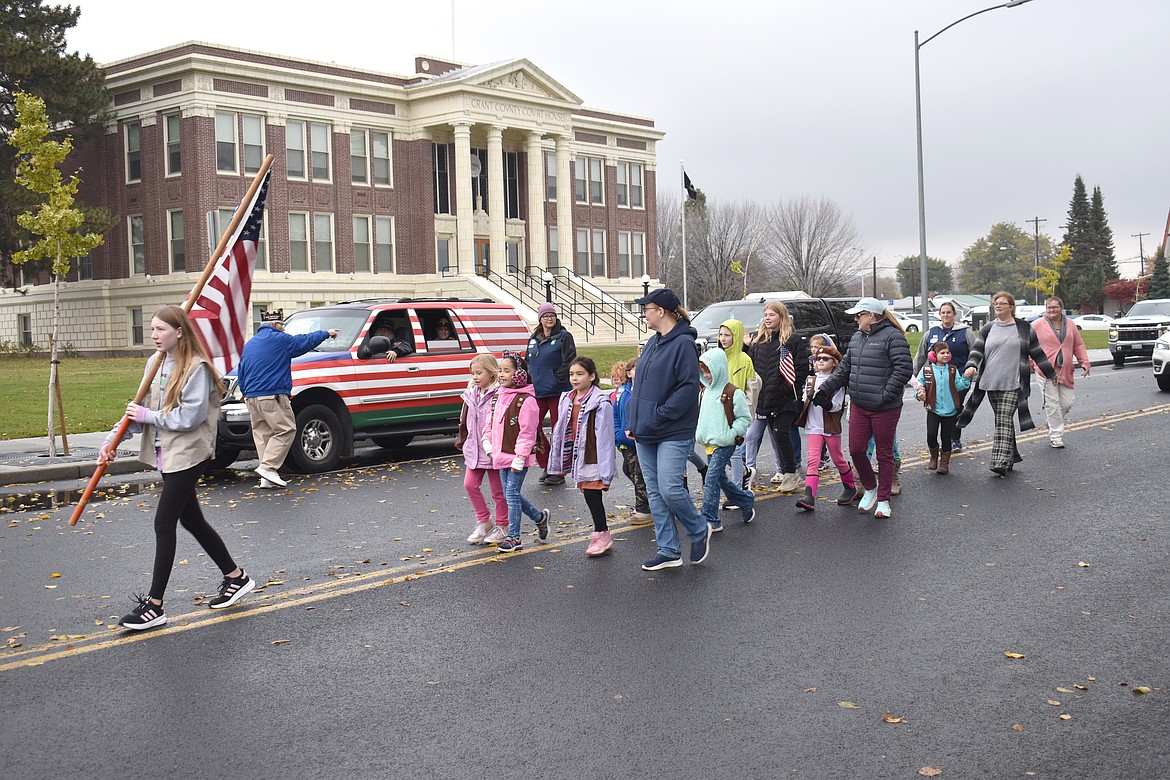
Marchers in the Veterans Day parade set out from the Grant County Courthouse Monday morning. The veterans who participated were mostly older, but there were many young people in the parade marching alongside to honor them.
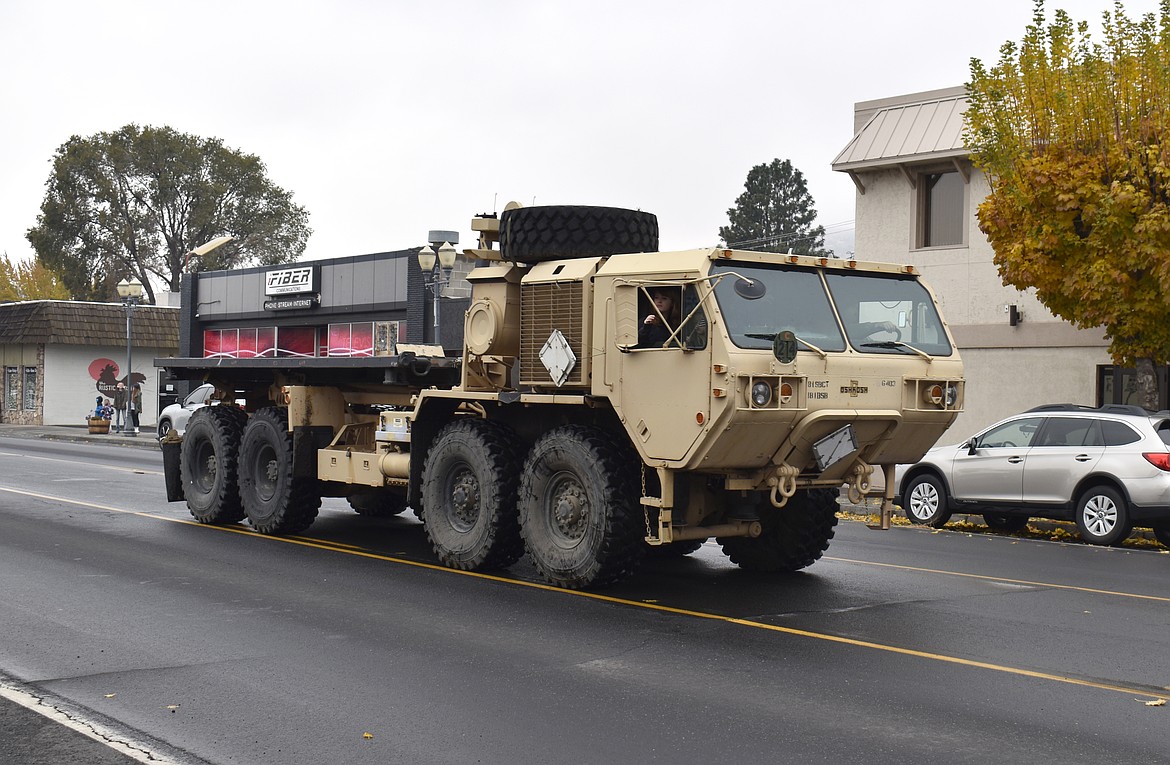
An army Heavy Expanded Mobility Tactical Truck - also known as a HEMTT (pronounced hemmut) - rumbles up Basin Street in Ephrata Monday as part of the Veterans Day parade. The vehicle can be equipped with a variety of configurations that allow soldiers to haul heavy loads. A crane-equipped model even allows technicians to change out engines and other heavy parts in a field setting.
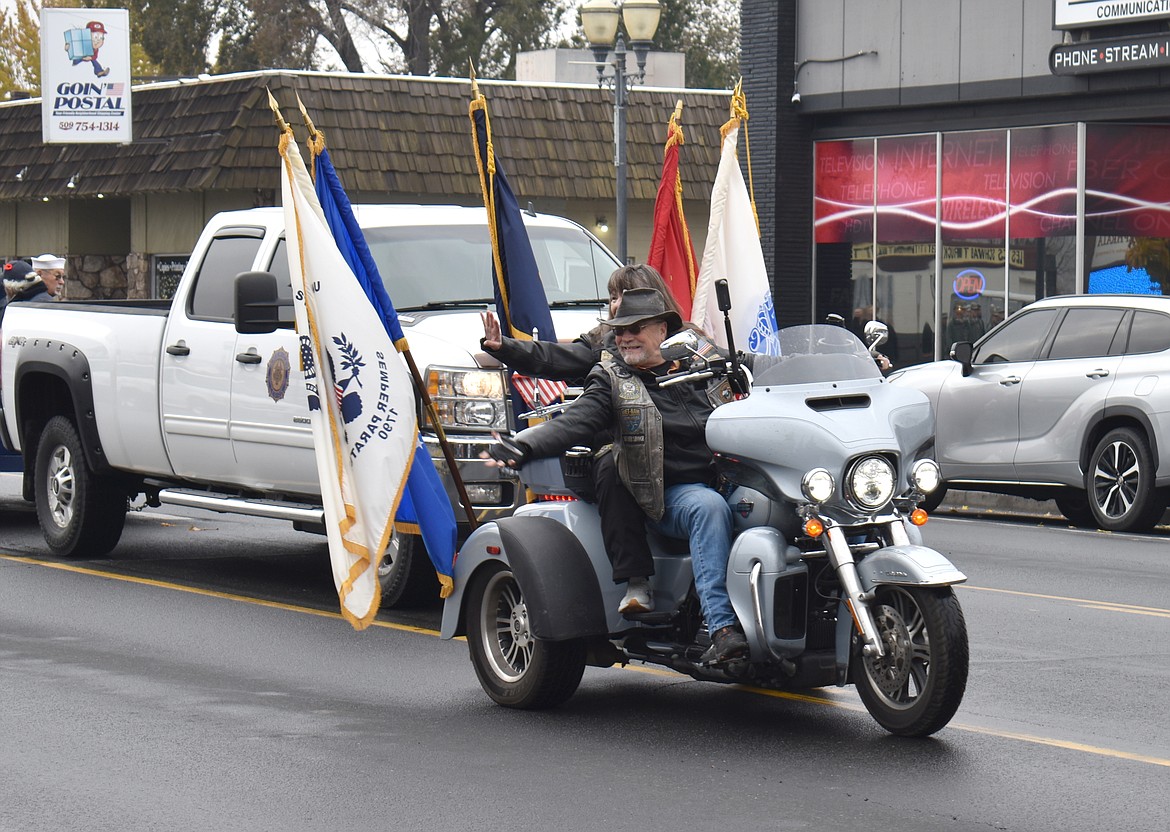
Motorcycle-mounted veterans toss candy to bystanders at the Ephrata Veterans Day parade Monday.
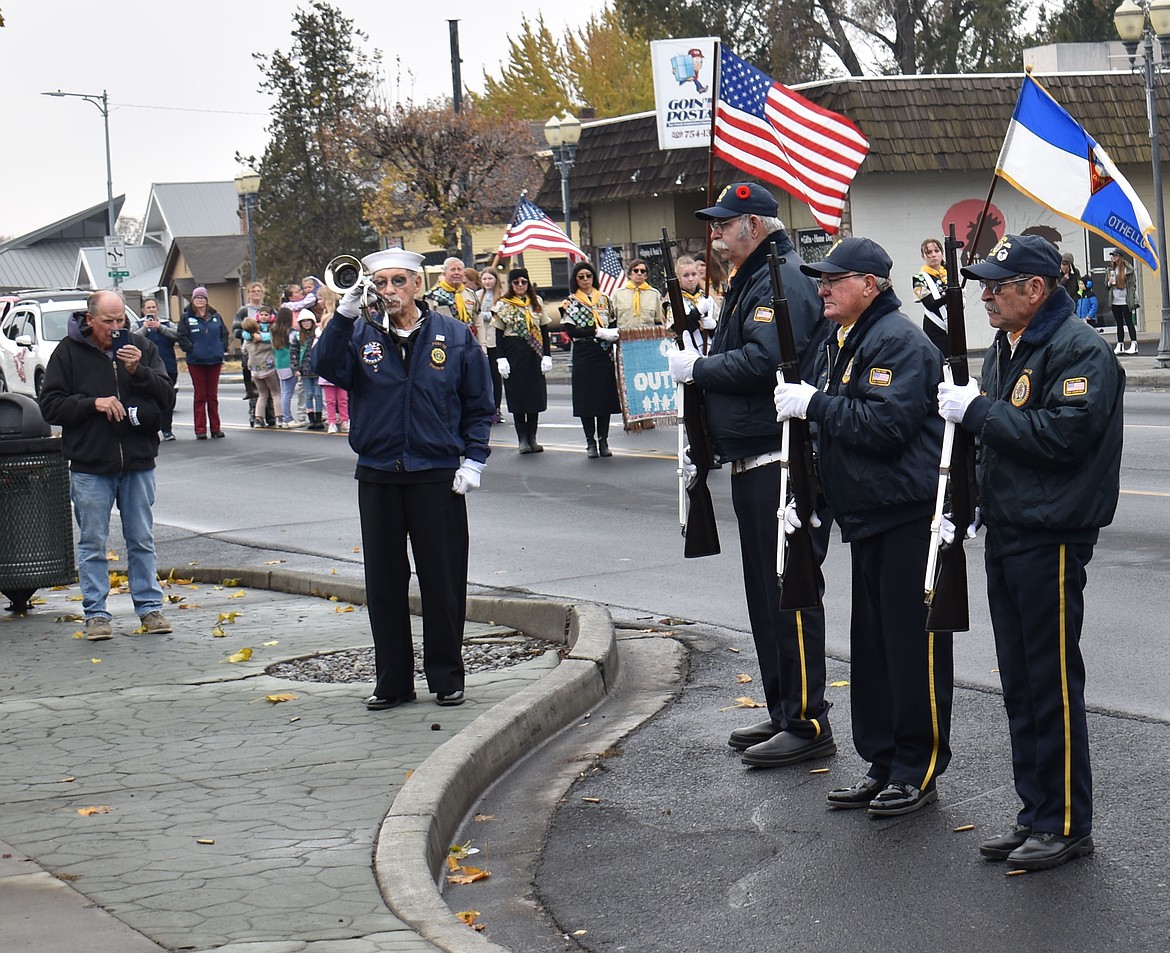
Veterans and spectators alike grow reverent as veteran Larry McCarty blows taps at the end of the Veterans Day parade Monday.
Joel Martin has been with the Columbia Basin Herald for more than 25 years in a variety of roles and is the most-tenured employee in the building. Martin is a married father of eight and enjoys spending time with his children and his wife, Christina. He is passionate about the paper’s mission of informing the people of the Columbia Basin because he knows it is important to record the history of the communities the publication serves. | November 13, 2024 3:30 AM
EPHRATA — It wasn’t a huge crowd that turned out for the Veterans Day parade in Ephrata, but it was a reverent one.
About 100 people mustered outside the Grant County Courthouse on Monday morning to pay tribute to the men and women who served their country in uniform. The parade has been going on in Ephrata since 1996, said Mike Montaney, a past president of American Legion Post 28, which organizes the parade.
“Before that, I used to go to Wenatchee and march in their parade,” Montaney said. “And I said ‘I don’t need to go to Wenatchee. We can have our own parade.’”
The parade started at the courthouse and led down C Street to Second Avenue Southwest, then hooked over a block and continued back up Basin Street. The timing was calculated to bring the marchers to the Ephrata Recreation Center at exactly 11:11 a.m. There seven veterans lined up and fired three volleys of blanks, followed by bugler Larry McCarty blowing taps.
The timing was no accident. Veterans Day originated as Armistice Day, to commemorate the truce that ended World War I in 1918. That truce went into effect at the 11th minute of the 11th hour of the 11th day of the 11th month, or 11:11 a.m. Nov. 11. The name was changed in 1954 to honor American veterans of all wars. In other countries, it’s called Remembrance Day and still marks the armistice.
Most of the veterans who attended rode in a variety of vehicles: motorcycles, a flatbed trailer, an SUV painted like Old Glory, an eight-wheeled behemoth used by the army to transport heavy vehicles. The Civil Air Patrol also supplied the color guard that led the parade.
“I’ve been in this program for two years, and each year I’ve been part of the color guard for this parade,” said Civil Air Patrol Cadet Austin Miller. “Most of my family were veterans, so it means a lot to me.”
The Othello Outreach branch of the Pathfinders, a Seventh-day Adventist youth organization similar to Scouting, also brought a contingent of marchers.
“We like to do things out in the community,” said Cindy Johnson, one of the adults leading the Pathfinders. “We just finished collecting canned foods to take to the food bank. Some of these kids have painted houses (and) done different things to help people. That's what we like to do.”
The veterans who turned out were mostly older, which has been the trend in recent years, Montaney said.
“We’re trying to get the younger vets involved, but it’s hard,” he said. “I don’t know why.”
That didn’t apply to the spectators on the sidewalk, many of whom were families with young children. Some parade marchers threw out candy for the children, others gave them flags to wave.
“The whole purpose of (the parade) is to get veterans the recognition that they deserve,” Montaney said. “Let's face it, if it wasn't for the veterans, we'd probably be speaking Japanese or German.”
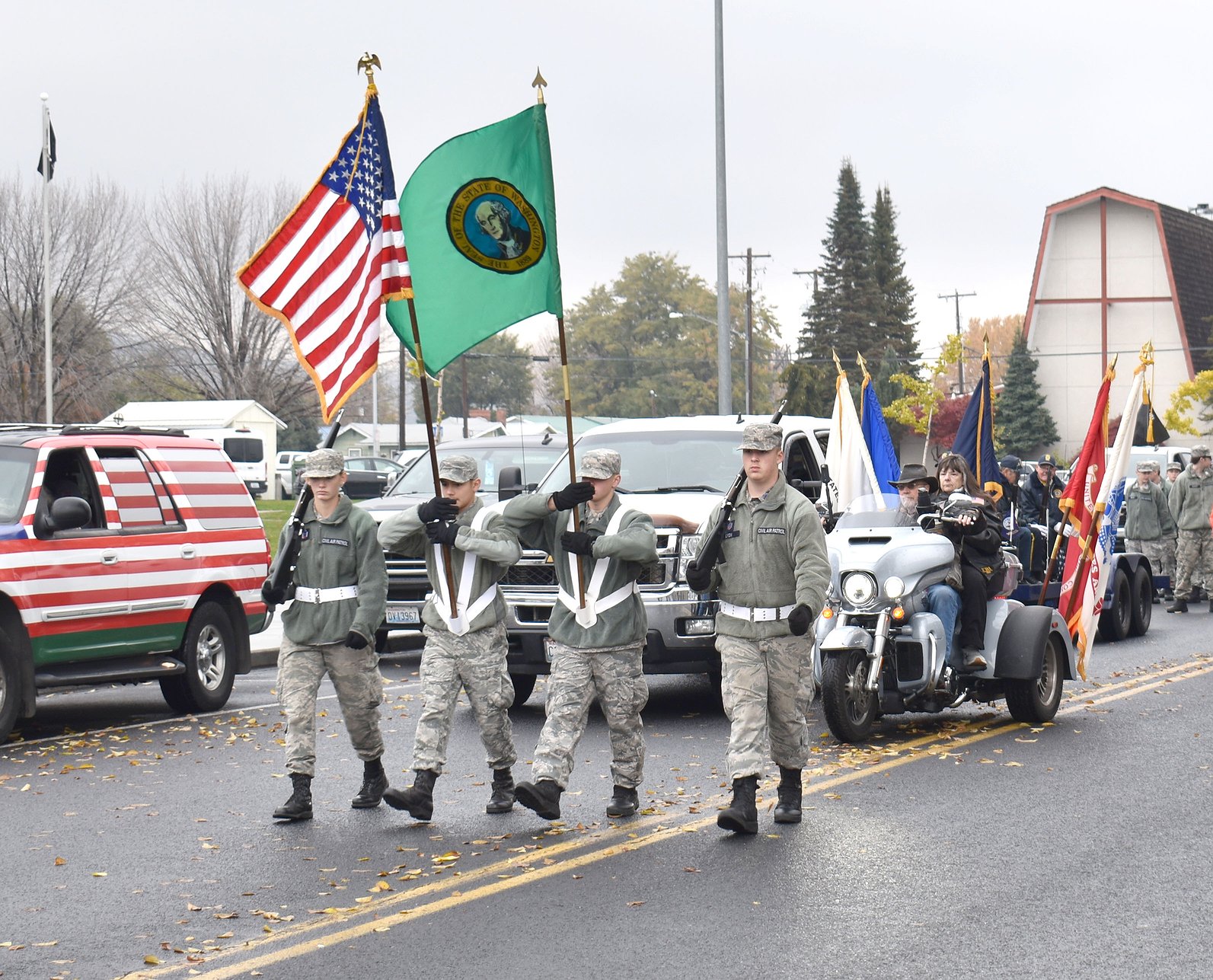 Cadets from the Civil Air Patrol form the color guard leading the Veterans Day parade in Ephrata Monday. From left: Teagan Baysinger, Austin Miller, Jackson Fortner and David Lyon.
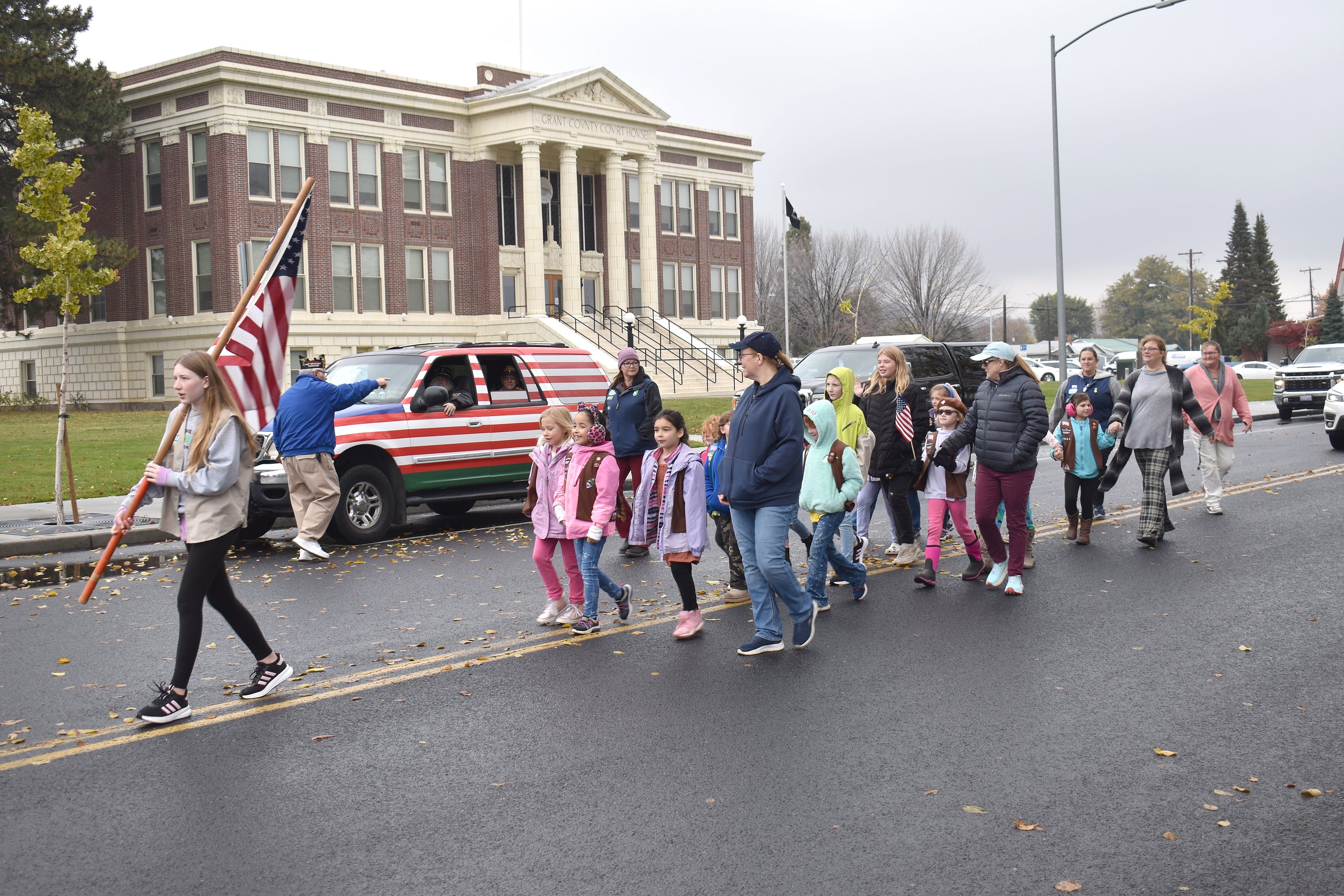 Marchers in the Veterans Day parade set out from the Grant County Courthouse Monday morning. The veterans who participated were mostly older, but there were many young people in the parade marching alongside to honor them.
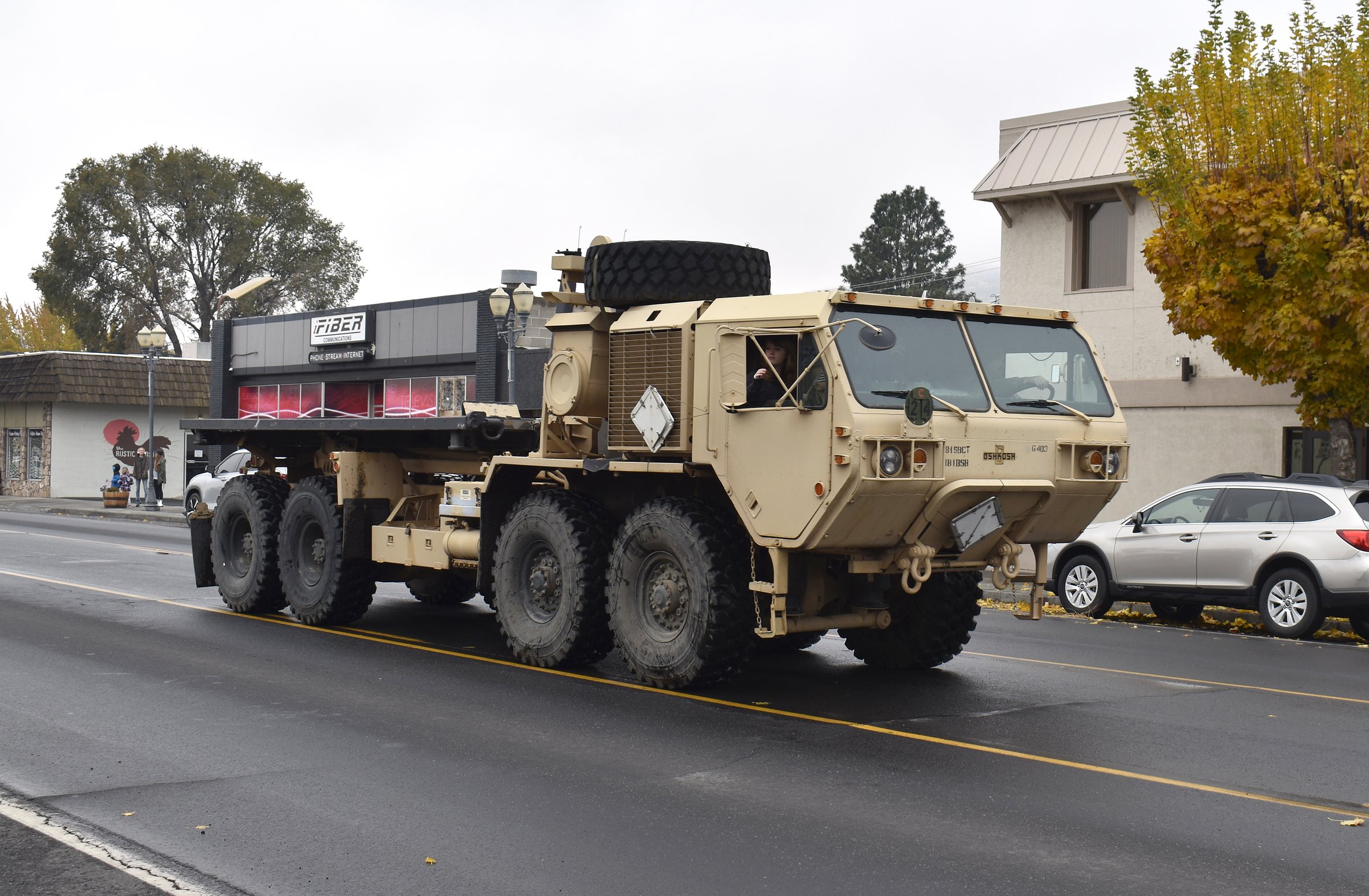 An army Heavy Expanded Mobility Tactical Truck - also known as a HEMTT (pronounced hemmut) - rumbles up Basin Street in Ephrata Monday as part of the Veterans Day parade. The vehicle can be equipped with a variety of configurations that allow soldiers to haul heavy loads. A crane-equipped model even allows technicians to change out engines and other heavy parts in a field setting.
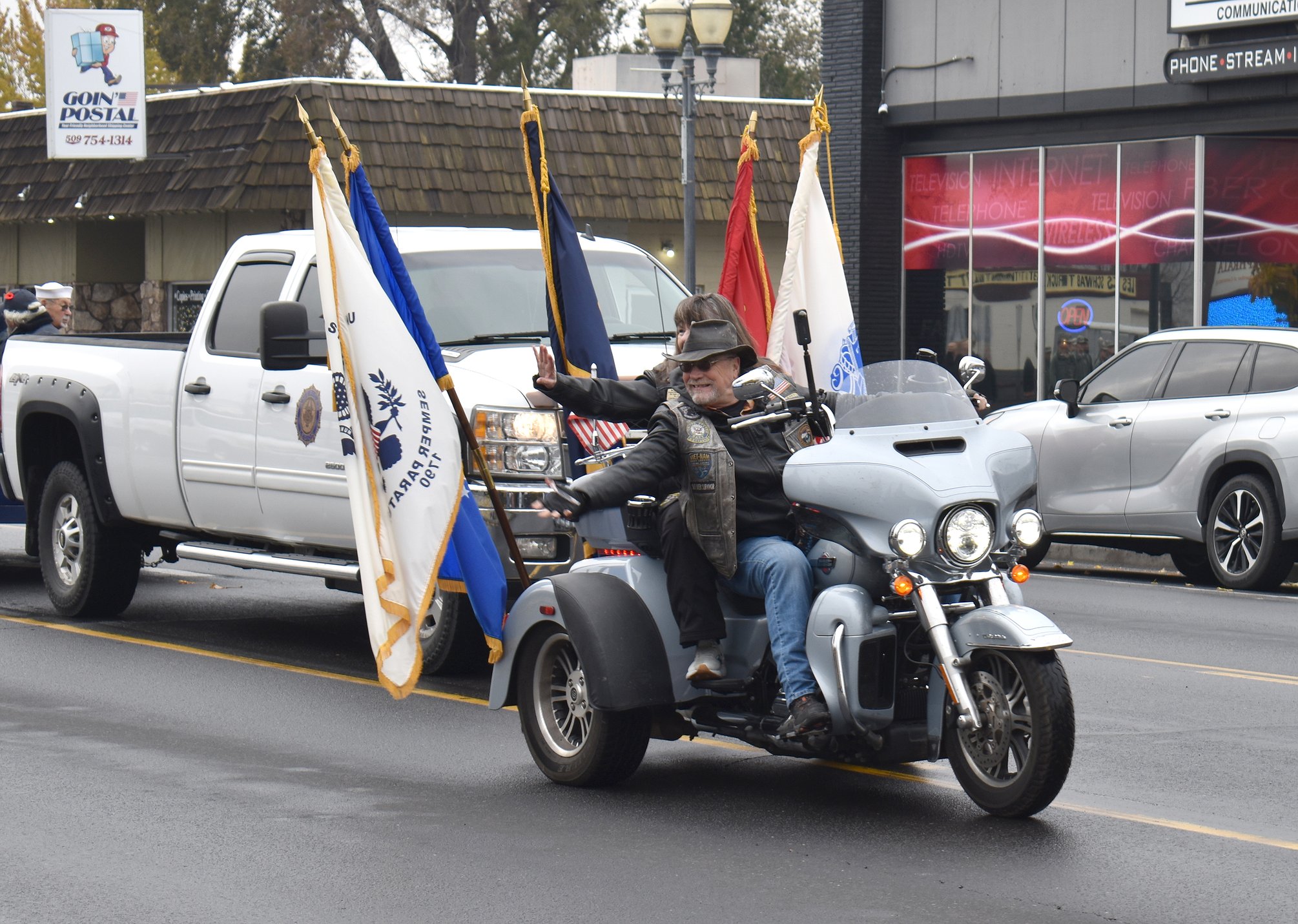 Motorcycle-mounted veterans toss candy to bystanders at the Ephrata Veterans Day parade Monday.
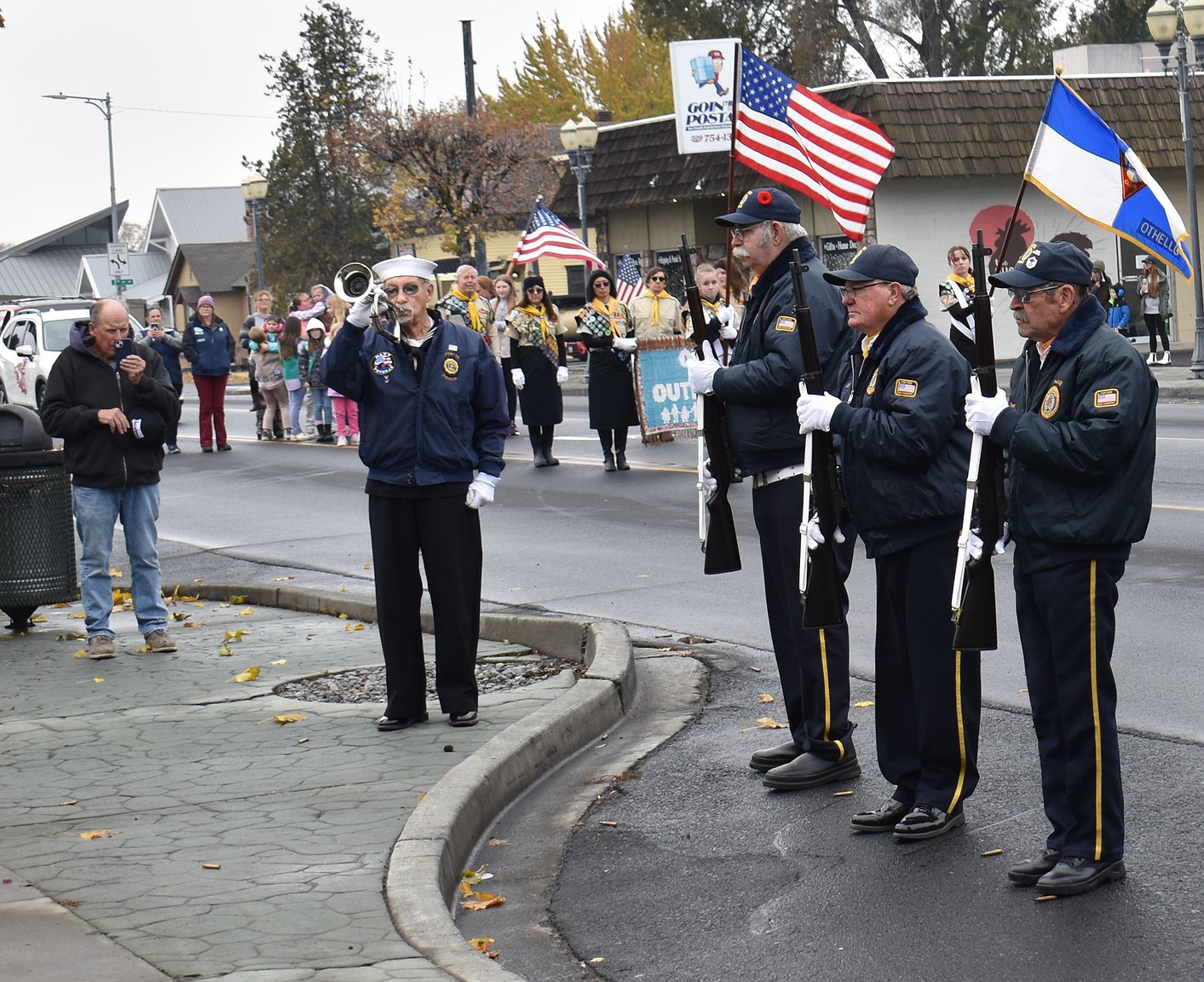 Veterans and spectators alike grow reverent as veteran Larry McCarty blows taps at the end of the Veterans Day parade Monday.
ARTICLES BY JOEL MARTIN

Endless battle
Noxious Weed Control Board works to keep invasive plants under control
MOSES LAKE — Some of the nastiest plants in Grant County were the topic of a class led by Jay Johnson, a consultant with the Grant County Noxious Weed Control Board, Tuesday. The Noxious Weed Control Board, as its name would suggest, is tasked with keeping weeds under control in Grant County. That’s not a small job; the board’s website lists 129 species of noxious weeds that are found around Grant County. A noxious weed is defined as an invasive, non-native plant that threatens agricultural crops, local ecosystems or fish and wildlife habitat, according to the Noxious Weed Control Board. Washington state law requires that these weeds be identified and their spread kept to a minimum, if not completely eradicated. “We’re one of those agencies a lot of people don’t really understand,” Johnson said. “We’re a county office and … our funding is tax-based assessment. When you get your tax bill and you look down at all the expenses that you pay for, there we are.”

BASIN EVENTS: Oct. 16-24
COLUMBIA BASIN — Whether you feel like shopping, crafting, learning or seeing a show, there’s something happening for you this week in the Basin. Oct. 16 ‘My Family (Mi Familia)’ screening Spanning three generations, “My Family (Mi Familia)” is a heartfelt drama that follows the Sánchez family as they build their lives in East Los Angeles. Through love, hardship, triumph, and sacrifice, the film explores the immigrant experience, the strength of family bonds, and the traditions that connect one generation to the next. Lowrider show and taco truck before the screening. Sponsored by Columbia Basin Allied Arts, EDUBS C/S and the Moses Lake Creative District. $12 per person. Doors open at 6 p.m., film begins at 7 p.m. at the Moses Lake Civic Center Auditorium, 401 S. Balsam St. Tickets and info: www.cba-arts.org.

Moses Lake author encourages women to look beyond church culture norms
MOSES LAKE — A Moses Lake author’s book, “A Christian Woman Striving to Live Her Faith in a Man-Controlled World,” takes aim at the role to which many churches relegate the female half of their congregations. “It’s to encourage women in the faith,” Linda Curran said. “A lot of churches say, ‘Teach Sunday school, do this, do that, but don’t (evangelize.)’" In her book, Curran recounts a time when she moved to a new community and joined a church there. She was surprised to learn that, as a new female member, she had been automatically assigned church cleaning duties. When she questioned it, she wrote, she was met with condescension and her objections were brushed aside. In other churches, she said, women who were capable of teaching were relegated to “women’s ministry.”