
New nut on the block: Hazelnut farming takes root in Eastern Washington
NANCE BESTON | Hagadone News Network | UPDATED 1 year, 8 months AGO
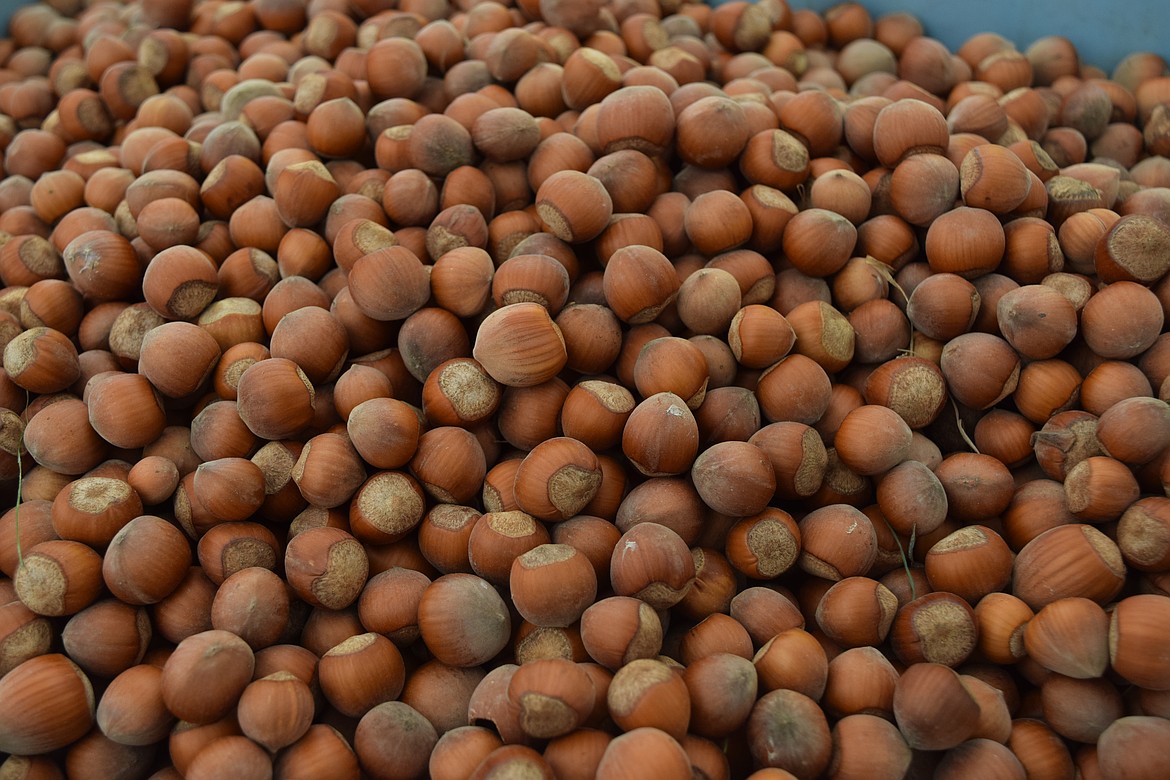
Hazelnuts fill a bin at the Moses Lake Farmers Market.
NANCE BESTON/BASIN BUSINESS JOURNAL
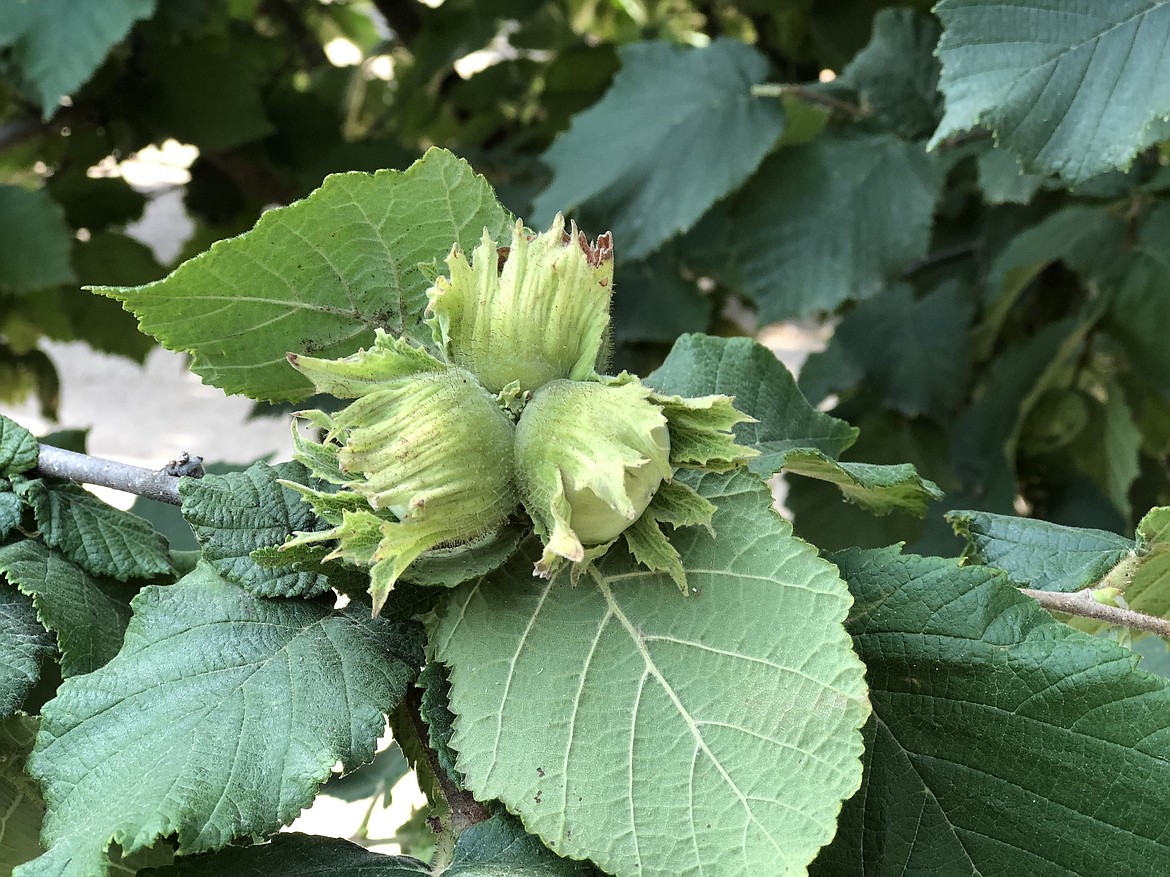
A photo of a blooming hazelnut plant.
COURTESY PHOTO/OREGON DEPARTMENT OF AGRICULTURE
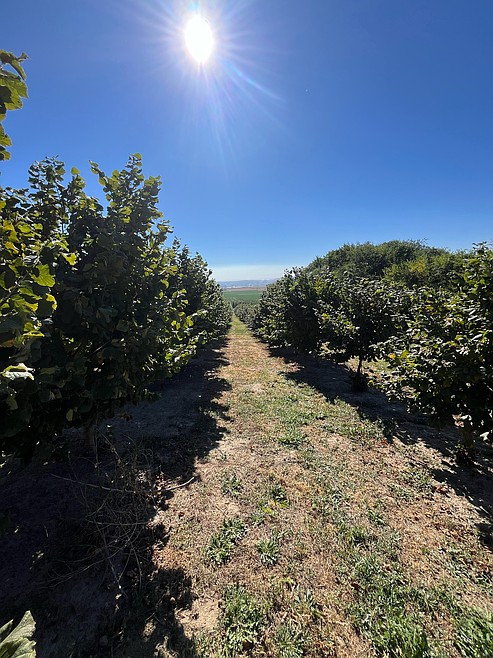
A photo of Eastern Washington Hazelnut Association Vice President Jim Canaday’s hazelnut trees. There are around 400 to 500 acres of hazelnuts grown in Eastern Washington this year, according to Canaday.
COURTESY PHOTO/JIM CANADAY
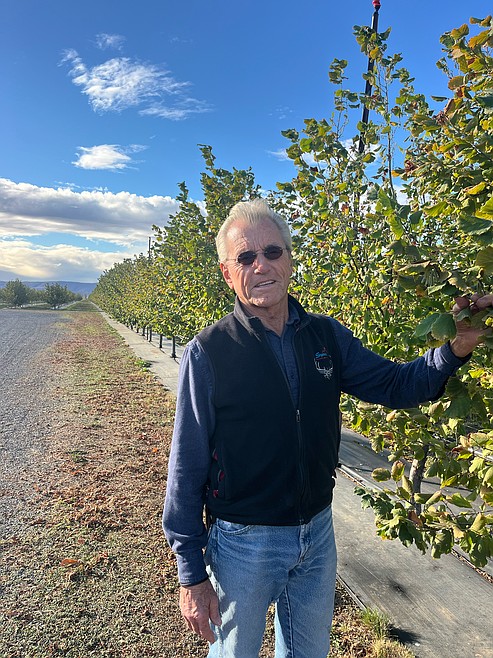
Eastern Washington Hazelnut Association Vice President Jim Canaday poses next to his hazelnut trees in Wapato. He started growing the trees over 10 years ago and helped start the Eastern Washington Hazelnut Association.
COURTESY PHOTO/JIM CANADAY
WAPATO — In a landscape dominated by apple orchards and grape vineyards, hazelnut farming is entering the light in Eastern Washington, thanks to the pioneering efforts of Eastern Washington Hazelnut Association Vice President Jim Canaday.
“It’s fun to work with the growers. We’re all just learning,” Canaday said. “But I don’t think it’s me in particular, it’s the people on the front end that got interested and we’re all working together. I mean it’s really the truth. I brought it up here and kind of got it started. That’s kind of a pain in the butt, because everybody wants to know what to do and all of that. I get a lot of phone calls and a lot of interested people, but I enjoy that.”
There are approximately 400 to 500 acres of hazelnut trees grown in Eastern Washington, most of which are just entering their production phase. Each acre produces around 1,500 to 2,000 pounds right now; however, as the trees age they could get up to 4,000 pounds, according to Canaday. The nuts are processed locally at Mount Adams Hazelnuts coming from around Grant, Franklin, Yakima and Chelan Counties.
“Our processing facility and nursery are based in the Wapato area. Most growers are bringing their nuts to us.” Canaday said. “We have a receiving station where we clean, wash and dry them.”
Originally from California, Canaday was inspired to grow hazelnuts after observing the almond boom in the Golden State. He had just retired and had 20 acres in Eastern Washington he wanted to use.
“I started with 20 acres up here as a test row, and I just kept meticulous records for three to four years. Despite what many people said, I found I was able to grow them here,” he said.
There was some initial skepticism from some Oregon growers in the Willamette Valley, he said, which produce 99.9% of the United States’ hazelnuts according to the Oregon Encyclopedia. However, Canaday persevered and tried anyway, eventually, forming an association. EWHA galvanized interest from other local farmers.
“The Oregon farmers didn’t really discourage me, they just said it couldn’t be done,” Canaday said. “I said, ‘You know what I’m going to give it a shot,’ and boy, were they wrong.”
Hazelnuts, traditionally grown in Oregon’s Willamette Valley, with its Mediterranean-type climate, can grow simply fine in Eastern Washington’s arid valleys, according to Canaday. Although he was told that they might struggle with the colder and hotter temperatures, he said he hasn’t had an issue.
Canaday also said the soil around the Basin can grow about anything, including hazelnuts.
Another advantage Canaday attributes to Eastern Washington’s climate is the small presence of Eastern Filbert Blight, a fungal disease that plagues hazelnut growers in Oregon. EFB is a fungal disease that affects hazelnuts and filberts, causing the trees to produce lower-quality nuts and eventually die from the disease.
“We don’t have Eastern Filbert blight here, and that’s a huge advantage for us,” he stated, emphasizing the importance of maintaining healthy trees.
The blight is notorious for devastating orchards, and its absence in the dry, eastern region could lead to more sustainable farming practices, according to Canaday.
The drive for hazelnut cultivation in Eastern Washington is not only about overcoming yield challenges; it also provides opportunities for organic farming. According to Canaday, the region’s unique climate significantly reduces pest problems, allowing growers to harvest higher-quality organic nuts.
“We have never seen any damage (in) the Filbert here, which is another positive factor for organic production,” he said.
This puts farmers like Canaday in a strong position as organic hazelnuts are priced at approximately $2 a pound — higher than non-organic hazelnuts, which hover around 90 cents a pound.
In the first few years since launching the hazelnut association in 2010, production has steadily increased, although the trees are still in their formative years.
Canaday believes the future looks promising for the hazelnut sector in Eastern Washington.
“I started to see that the things they said I couldn’t do, I was able to do,” Canaday said. “And so, people got interested. We formed an association, and people started to plant. Now we have like 40 farmers or so. With the right marketing and commitment, this industry could grow substantially.”
The logistical challenges, however, are not without merit. Unlike traditional hazelnut farming methods established in Oregon, which involve a flat ground strategy designed for mechanical harvesting, Canaday and other farmers are innovating their approaches.
“We’re working on assessing the best ways to harvest using the equipment typically found in grape vineyards,” Canaday said. “This adaptation has allowed us to exploit high-density planting while still keeping production efficient.”
Farmers also planted the trees closer together in Washington, which has prevented some equipment from being able to fit through the trees. However, Canaday discovered that high-density trees don’t have an issue and allowed him to tie nets around the trees to catch any fallen nuts. Hazelnuts, when ready, drop to the ground.
There are also farmers repurposing their grape-picking machines.
“We are so used to high-density everything here that we just decided that we were going to plant them high density and learn how to harvest and how to grow and how to do all those things with high density, with the idea that we would get into production earlier and we felt there was no reason really not to,” Canaday said. “We’ve been really successful with that.”
Canaday also works alongside Spencer Wiejohn at BlueSky Hazelnut Trees to provide trees to farmers and answer questions they may have. Anyone interested in buying hazelnut trees can contact [email protected].
The Weijohns also sell Sacajawea, Jefferson, Yamhill and Ennis hazelnuts on their website SoBattoFresh.com.
“I enjoy that we’re learning and we’re developing something that nobody has done here, and so that’s exciting,” Canaday said. “There’s a lot of reward in working in something that is not apple trees, they’re not grape vineyards, they’re hazelnuts and they’re beautiful. A hazelnut tree is just beautiful. They have big, fat leaves. They’re a nut tree, so they’re real pretty.”
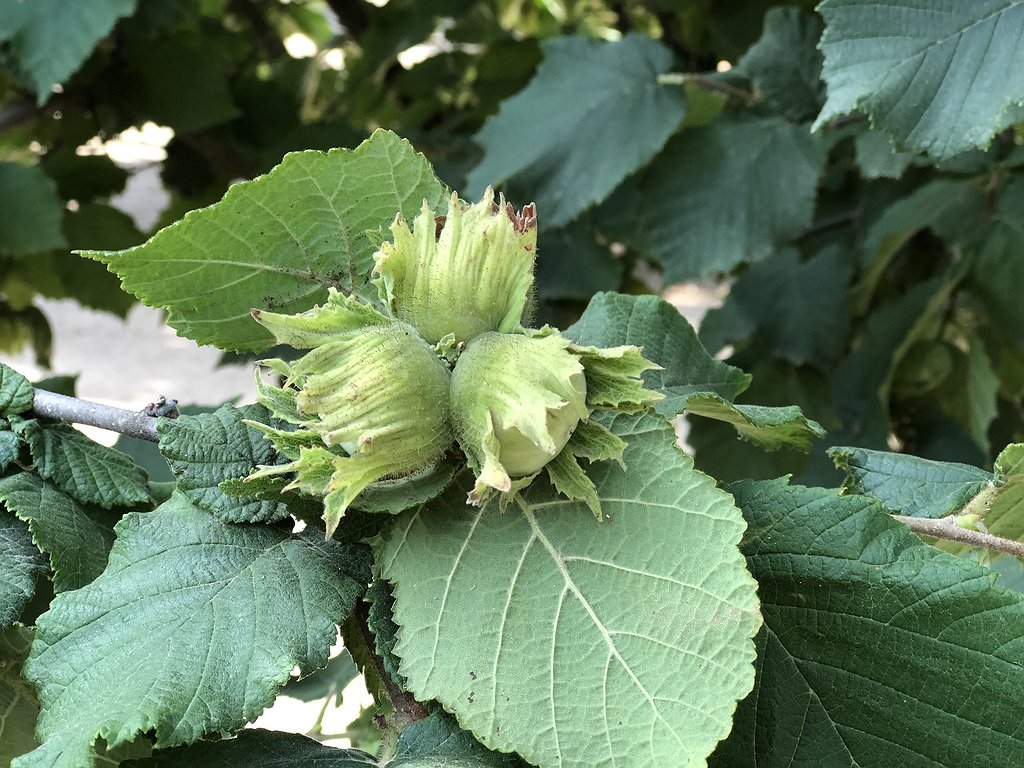 A photo of a blooming hazelnut plant.
COURTESY PHOTO/OREGON DEPARTMENT OF AGRICULTURE
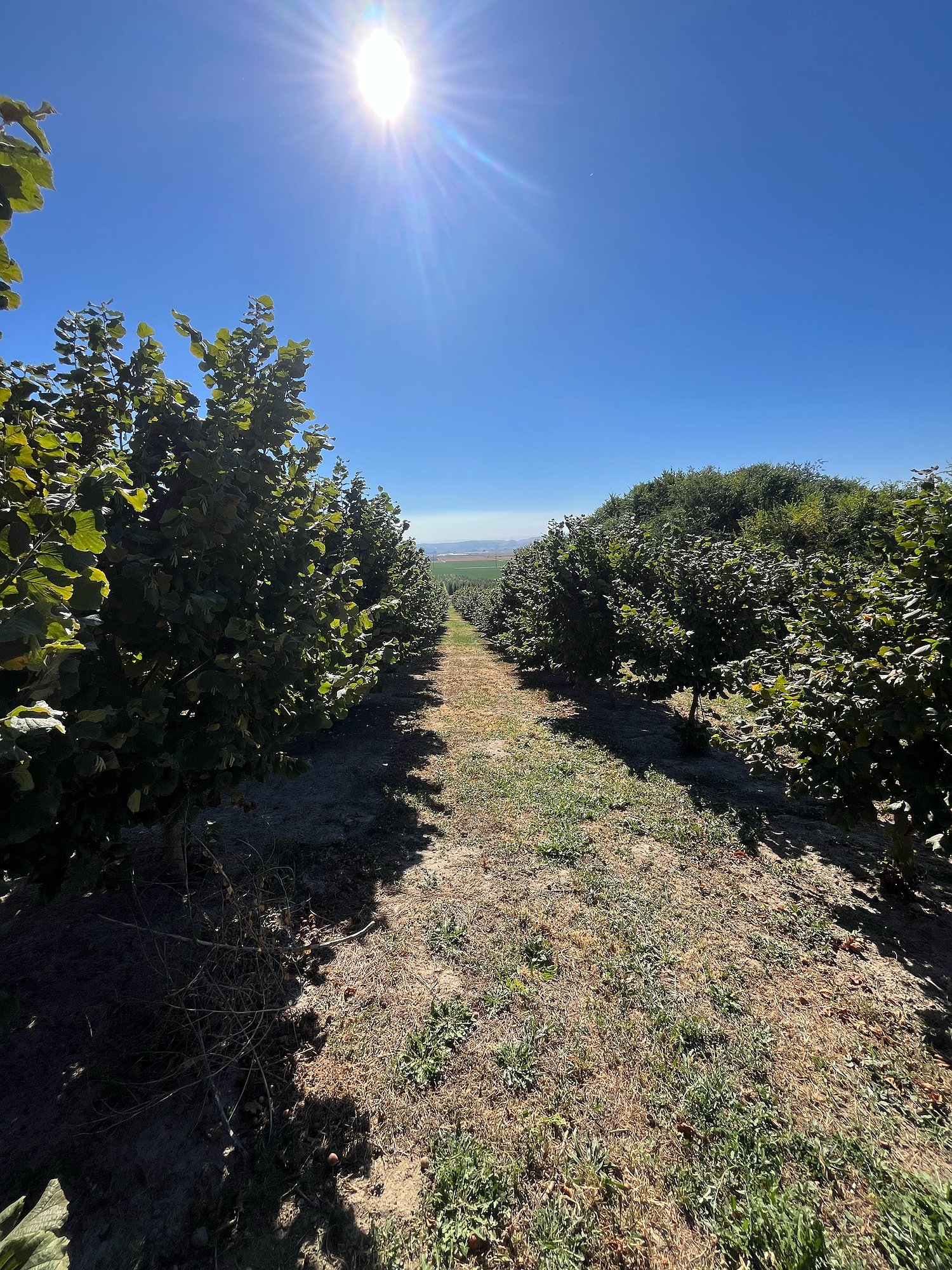 A photo of Eastern Washington Hazelnut Association Vice President Jim Canaday’s hazelnut trees. There are around 400 to 500 acres of hazelnuts grown in Eastern Washington this year, according to Canaday.
COURTESY PHOTO/JIM CANADAY
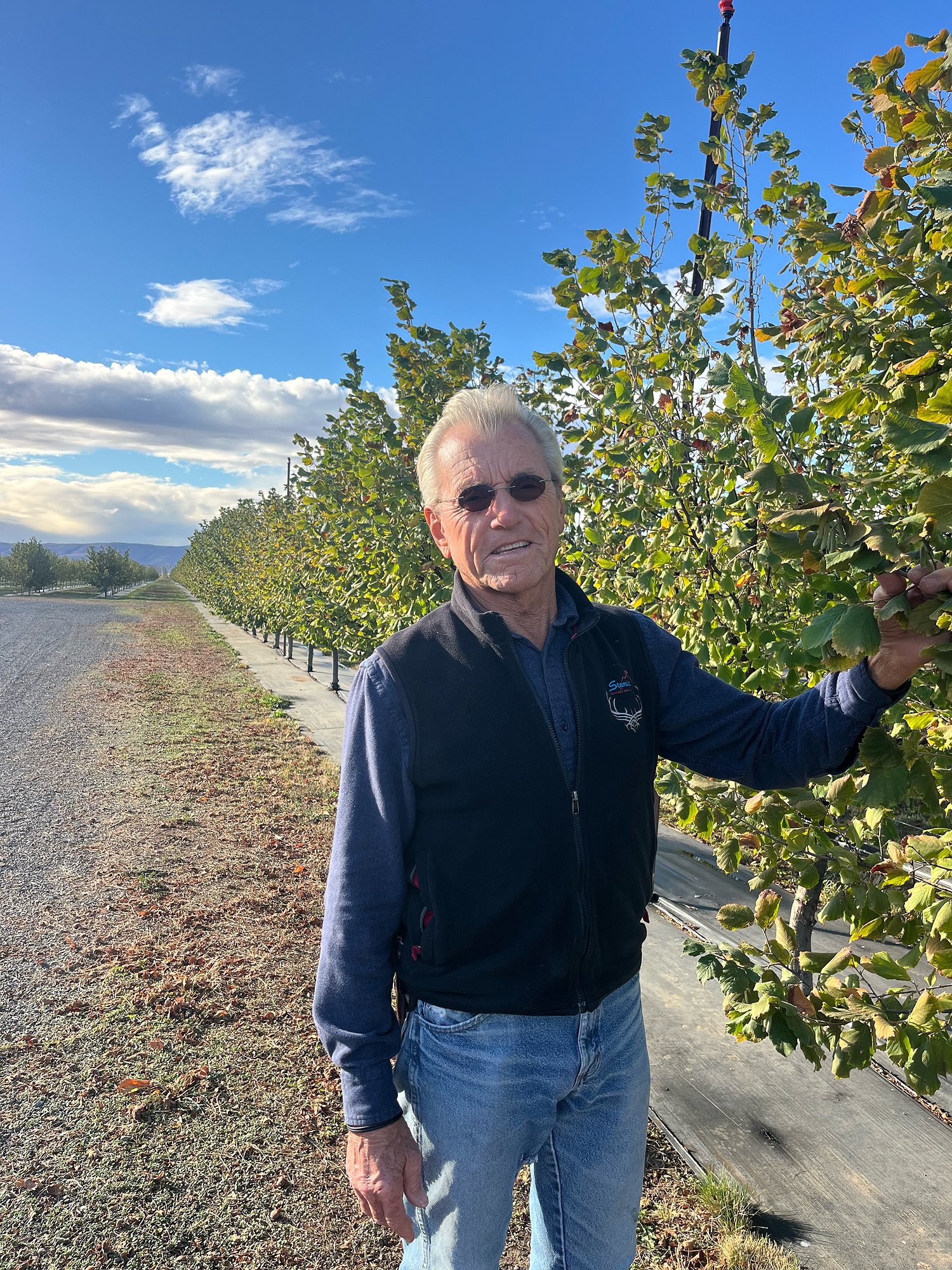 Eastern Washington Hazelnut Association Vice President Jim Canaday poses next to his hazelnut trees in Wapato. He started growing the trees over 10 years ago and helped start the Eastern Washington Hazelnut Association.
COURTESY PHOTO/JIM CANADAY
ARTICLES BY NANCE BESTON

Grant County Sheriff candidates discuss transparency, trust
EPHRATA — As Grant County voters prepare to submit their primary ballots, three candidates are vying for the position as Grant County Sheriff including incumbent Joey Kriete and challengers Josh Sainsbury and Darrick Gregg are competing in the upcoming primary election. To help readers compare the candidates' priorities, qualifications and plans for the office, each was asked the same question and given an equal opportunity to respond.

Grant County Commissioner candidates deliberate fiscal responsibility, budgeting
EPHRATA — Four Republicans are seeking election to Grant County Commissioner Position 3 in the upcoming primary: Shannon Durfee, Kelly Raap, Seth Weeks and Janice Flynn. To give voters a clear comparison of the candidates' positions and priorities, each was asked the same set of questions and provided the same deadline to respond. Durfee, Raap and Flynn submitted responses by the deadline; Weeks did not respond.

Sheriff candidates discuss staffing, retention
EPHRATA — As Grant County voters prepare to select their next sheriff, incumbent Joey Kriete and challengers Josh Sainsbury and Darrick Gregg are competing in the upcoming primary election. To help readers compare the candidates' priorities, qualifications and plans for the office, each was asked the same question and given an equal opportunity to respond. This installment focuses on one of the most pressing challenges facing law enforcement agencies: recruiting, retaining and supporting qualified staff within the Grant County Sheriff's Office.