
Washington voted to lift natural gas restrictions, but will the changes stick?
JOEL MARTIN | Hagadone News Network | UPDATED 1 year, 10 months AGO
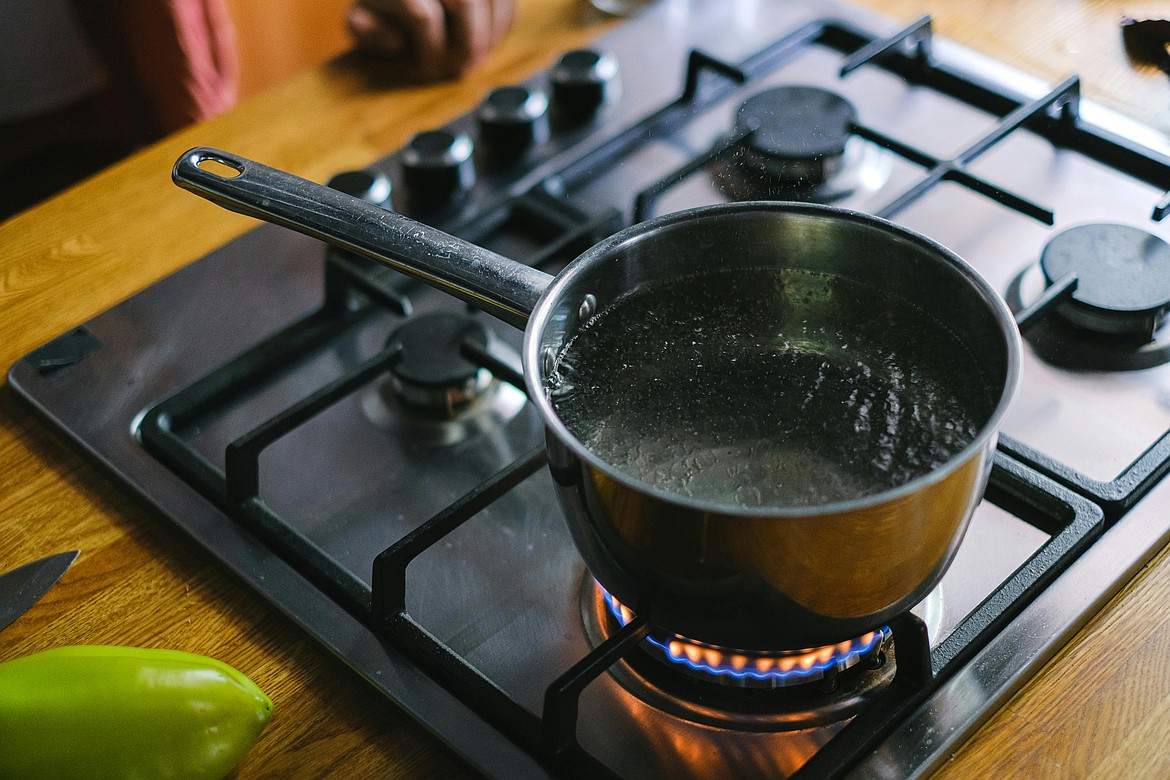
Natural gas, for cooking and heating, is the subject of a controversial ballot initiative passed this year.
ANNA SCHVETS/PEXELS
Joel Martin has been with the Columbia Basin Herald for more than 25 years in a variety of roles and is the most-tenured employee in the building. Martin is a married father of eight and enjoys spending time with his children and his wife, Christina. He is passionate about the paper’s mission of informing the people of the Columbia Basin because he knows it is important to record the history of the communities the publication serves. | November 22, 2024 3:30 AM
OLYMPIA — Of the four initiatives that were on the Washington ballot this year, only one passed, and it’s one that affects housing statewide, including in Grant and Adams counties.
Initiative 2066 reverses restrictions on natural gas for heating and cooking in new residential construction that the Washington Legislature passed in 2019. It removes requirements in the state building code for the use of electric heat pumps instead of natural gas, propane or electric resistance heating like baseboard heaters.
“All new construction in Central Washington would have been required to use electric heat pumps, which are often unreliable, especially under very cold temperatures,” said Greg Lane, executive director of the Building Industry Association of Washington. “And they also increase the cost of a home, with the infrastructure and everything, anywhere (from) $15,000 to $25,000 per home, depending on the size of the home.”
Under the current state building code, an air-source electric heat pump is the required heating option for a new home, although a gas- or propane-powered backup is permissible. At the same time, House Bill 1589, which passed in 2019, prohibits a natural gas provider from supplying natural gas to any building that didn’t already have it before June 30, 2023. The law specifies that only “large gas companies,” defined as companies that serve more than 500,000 natural gas customers, are subject to that restriction. Puget Sound Energy, which operates entirely on the west side, is the only provider of that size, which would suggest that Central Washington isn’t actually affected.
However, the version of HB 1519 that passed the legislature is markedly different from the originally submitted bill, which would have applied the restrictions to all combination utilities, meaning utilities that provide both electric and gas. Grant PUD does not fall under this category, but Avista, which serves Adams County, does. The amendment to the bill that limits the restriction to Puget Sound Energy was added at the last minute, and Lane said he believes the legislators who sponsored the original bill intend to broaden the restriction down the road.
However, Caitlin Krenn, climate and clean energy director for Washington Conservation Action, which opposed I-2066, said the initiative has wider effects than merely safeguarding the use of natural gas.
“It does a lot more than that, including trying to force changes to our statewide energy code, which affects all new buildings built across Washington state, and those the provisions that it seeks to change in the energy code are specifically provisions relating to energy efficiency,” Krenn said.
BIAW sent a letter recently to the State Building Code Council, which is responsible for building codes statewide, reminding the council of the requirements of the initiative and urging it to make the changes to the building code that would remove restriction on natural gas before Dec. 5. So far, the council has not been cooperative, he said.
“They’re very easy changes for them to make,” Lane said. “Either they can roll back to a previous energy code that was passed or looking forward, they could even adopt the … model energy code that the International Code Council has put forward for 2024 with some very minor changes to make sure that it does not disincentivize gas use.”
Krenn said the changes are further reaching than that though.
“(BIAW is) basically requesting that they roll back energy codes that were recently adopted this year to energy codes that were adopted all the way back in 2015,” she said. “Some independent analysis has shown that if the State Building Code Council were to do that, it would increase annual utility bills by over $200 and would really set us back in terms of energy efficiency.”
Washington has very strict energy efficiency laws, Krenn said, and builders can receive credits for meeting or exceeding those standards, like the use of electric heat pumps. Changing only a small part of the code could force builders to spend more money meeting other standards, she said.
“(There are) lots of unknowns, but we’re definitely concerned about the cost to new construction across the state,” Krenn said.
WCA and other opponents of I-2066 are considering legal action to have the initiative nullified under the state’s single-subject law, Krenn said. The Washington State Constitution, Article II, Section 19 reads: “No bill shall embrace more than one subject and that shall be expressed in the title.” The official title of I-2066 is “An act relating to promoting energy choice by protecting access to gas for Washington homes and businesses.”
This law has been used in the past to nullify a citizen initiative, notably 1999’s I-675, which would have lowered vehicle registration costs to $30 per year and would also have required a popular vote on any tax increase. The initiative passed but was struck down in court.
Krenn said opponents of the I-2066 hope to have it thrown out on similar grounds.
“It was written so broadly that it seeks to basically amend many areas of state law,” Krenn said. “There's HB 1589, that passed. There's several laws having to do with state building codes. It also makes amendments in terms of what local governments, what cities, towns and counties can do in terms of incentivizing higher-efficiency appliances, and it amends our state Clean Air Act. So, it does a lot of things.”
BIAW is also prepared to fight it out in court, in order to force the Building Code Council to make the changes to the code outlined in I-2066, Lane said.
“This is the law that people passed,” Lane said. “It goes into effect on Dec. 5, and they need to get the energy codes in compliance … I hate to do (take them to court). I don't want to do that. But … they are accountable to following the law, and we're going to make sure they do that.”
The full text of Initiative 2066 can be found at https://bit.ly/3OhuBrq. The full text of HB 1519 can be found at https://bit.ly/HB5189.
ARTICLES BY JOEL MARTIN
Endless battle
Noxious Weed Control Board works to keep invasive plants under control
MOSES LAKE — Some of the nastiest plants in Grant County were the topic of a class led by Jay Johnson, a consultant with the Grant County Noxious Weed Control Board, Tuesday. The Noxious Weed Control Board, as its name would suggest, is tasked with keeping weeds under control in Grant County. That’s not a small job; the board’s website lists 129 species of noxious weeds that are found around Grant County. A noxious weed is defined as an invasive, non-native plant that threatens agricultural crops, local ecosystems or fish and wildlife habitat, according to the Noxious Weed Control Board. Washington state law requires that these weeds be identified and their spread kept to a minimum, if not completely eradicated. “We’re one of those agencies a lot of people don’t really understand,” Johnson said. “We’re a county office and … our funding is tax-based assessment. When you get your tax bill and you look down at all the expenses that you pay for, there we are.”
BASIN EVENTS: Oct. 16-24
COLUMBIA BASIN — Whether you feel like shopping, crafting, learning or seeing a show, there’s something happening for you this week in the Basin. Oct. 16 ‘My Family (Mi Familia)’ screening Spanning three generations, “My Family (Mi Familia)” is a heartfelt drama that follows the Sánchez family as they build their lives in East Los Angeles. Through love, hardship, triumph, and sacrifice, the film explores the immigrant experience, the strength of family bonds, and the traditions that connect one generation to the next. Lowrider show and taco truck before the screening. Sponsored by Columbia Basin Allied Arts, EDUBS C/S and the Moses Lake Creative District. $12 per person. Doors open at 6 p.m., film begins at 7 p.m. at the Moses Lake Civic Center Auditorium, 401 S. Balsam St. Tickets and info: www.cba-arts.org.
Moses Lake author encourages women to look beyond church culture norms
MOSES LAKE — A Moses Lake author’s book, “A Christian Woman Striving to Live Her Faith in a Man-Controlled World,” takes aim at the role to which many churches relegate the female half of their congregations. “It’s to encourage women in the faith,” Linda Curran said. “A lot of churches say, ‘Teach Sunday school, do this, do that, but don’t (evangelize.)’" In her book, Curran recounts a time when she moved to a new community and joined a church there. She was surprised to learn that, as a new female member, she had been automatically assigned church cleaning duties. When she questioned it, she wrote, she was met with condescension and her objections were brushed aside. In other churches, she said, women who were capable of teaching were relegated to “women’s ministry.”