
Prescribed burns scheduled to mitigate wildfires, improve habitats
STAFF REPORT | Hagadone News Network | UPDATED 1 year, 11 months AGO

A burn team prepares for a prescribed burn at the Scatter Creek Unit near Rochester. The team was made up of representatives from Washington Department of Fish and Wildlife, Joint Base Lewis-McChord, the Washington Department of Natural Resources, the Chehalis Tribe and the Ecostudies Institute.
WDFW PHOTO
OLYMPIA — Across Washington, ecosystems ranging from the Western Washington prairies and meadows to the Columbia Basin wetlands and Eastern Washington's pine forests and shrub-steppe are showing positive effects of prescribed fire, according to a statement from the Washington Department of Fish and Wildlife. WDFW, along with its partners, utilizes this natural management tool to reduce wildfire fuel and severity, improve wildlife habitats and promote native species across the state.
“It’s the most natural tool we have,” said a WDFW statewide planner for the prescribed fire program, Fiona Edwards in a statement. “Plants and animals have adapted to it, and they need it. You can see the results almost immediately. It’s changing the molecular structure of the land in a good way.”
The team uses prescribed burns to enhance the regrowth of plant species that provide essential foraging opportunities for deer and elk.
“If you don’t burn an oak savanna or prairie regularly, it becomes too thick,” Edwards said in the WDFW release. “We’re opening the space for deer to browse, ground-nesting birds to build nests, and butterflies to reach the flowers they need to pollinate and eat. We’re also putting nutrients back into the soil with the carbon released during our prescribed burns. It’s a huge, interconnected web.”
While the benefits of prescribed fire are clear in restoring habitats, according to WDFW and the Department of Natural Resources, it also plays a crucial role in wildfire management. In Eastern Washington, where dry forests and shrub-steppe areas are susceptible to wildfires, prescribed burns contribute to decreased fire risk.
“Many of the plant species in Eastern Washington need fire to improve development and regeneration,” Eberlein said in the WDFW release. “Heat opens seed pods, the excess burning material releases nutrients, and decaying plant parts drop off to allow for new growth. Deer and elk need the vegetation for winter forage and the nutrients it provides when other food is harder to find.”
DNR communication manager for forest resilience, health and federal lands programs Will Rubin said the prescribed burns, specifically in Eastern Washington are crucial because the area was historically fire-adapted with small, low-intensity fires going through forests every 10 to 15 years. Rubin explained those fires helped thin and clean out debris so worse fires would not go through the area.
“We want to go in and not only burn this excess fuel but also take fuels off the landscape that could help fuel a wildfire start, or help a wildfire grow more quickly and get up into the tree canopies,” Rubin said.
Rubin explained that the fires also benefit the forests by reimplements and recycling nutrients back into the soil which improves growing conditions.
“A lot of times there will be a burn on some landscapes that haven't seen fire for a long time,” Rubin said. “Then, the next year, you'll see flowers and other plant life that hasn't grown there in a long time because they're fire-adapted plants, and they haven't had fire so there's a number of ecologic habitats benefits as well.”
Rubin said DNR does not have any burns scheduled for Grand or Adams counties this year; however, other programs could have burns scheduled for this year.
WDFW recently conducted prescribed burns in various wildlife areas across the state, including Cowlitz, Johns River, Methow, Scatter Creek and Sherman Creek. WDFW said the first prescribed burn at the Johns River Wildlife Area, aimed at restoring habitat for the Oregon silverspot butterfly, a species listed as threatened under the federal Endangered Species Act.
As WDFW moves forward, seeding native grasses and planting wildflowers are the next steps in habitat restoration at the Johns River Wildlife Area, according to the WDFW statement, including hopes for reintroducing the Oregon silverspot butterfly after improving the ecosystem.
“Indigenous people have used fire to manage prairies since the last glacial recession,” Assistant Manager of Scatter Creek Wildlife Area Josh Cook said in the WDFW statement. “They would harvest camas and other food plants. It was much more a part of the landscape. Post-colonization, wildfire suppression became the management tactic, and cultural burning largely went away. That has changed ecosystems, especially for prairies and the oaks in the area.”
DNR recent prescribed burns:
Airport II: spring 2024, 450 acres, 3 miles east of Glenwood
Black Diamond – Aeneas II: spring 2024, 12 acres, 8 miles southeast of Tonasket
Cattle Point: fall 2024, 4 acres, 6 miles southeast of Friday Harbor
Red Mountain: fall 2024, 81 acres, 1.5 miles north of Maple Falls
Sinlahekin South Unit: spring 2024, 90 acres, three miles south of Loomis
DNR upcoming prescribed burns:
Black Diamond - Havilah: fall 2024, 8 miles northeast of Tonasket
Corkscrew: fall 2024, 17 miles northwest of Spokane
Camelback: fall 2024, 4 miles west of Conconully
Meloy Cooperative: fall 2024, 10 miles northwest of Naches
Rosy Owl Clover: fall 2024, 3 miles northeast of Glenwood
South Park: fall 2024, 3 miles west of Glenwood
Lacamas Prairie: fall 2024, 1 mile northwest of Camas
Plumback: spring 2025, 6 miles southeast of Cle Elum
SOURCE: Washington Department of Natural Resources
ARTICLES BY STAFF REPORT
Connell woman killed in Booker Road crash
CONNELL — Charges are pending against a Kennewick man following a collision about 12 miles south of Othello that killed a Connell woman and injured three other people Tuesday evening. A Washington State Patrol press memo said intoxicating substances were a factor. Jessica Zarate, 37, Connell, was pronounced dead at the scene of the crash near the intersection of SR 17 and South Booker Road, the WSP memo said. She was driving south on Booker Road approaching the intersection when her car was hit by a pickup driven by John Reiss, 62, Kennewick. Edgar Garcia Quirino, 28, Othello, was driving north on SR 17 and ran into Zarate's car, the WSP memo said. The crash occurred at about 6:40 p.m.
Wheeler Road closed because of traffic collision
UPDATE: The road was reopened as of noon, according to a GCSO media release. MOSES LAKE — Grant County Sheriff’s Office has announced there is a road closure between Road 3-NE and Road S-NE. There was a serious traffic collision. GCSO is asking for drivers to avoid the area and find alternative routes. This is a developing story and will be updated as more information becomes available.
Doors opening: The Currents will provide homeownership for more local workers
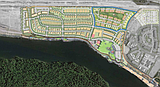
About 104 homes are planned at the former Atlas sawmill site
Teachers, nurses, firefighters and other workers who keep Coeur d’Alene running will soon have more places to buy a home in the community where they work. About 104 homes are being planned to be built at Atlas Waterfront, on roughly 10 acres that are part of a swath of land that was once home to the Atlas sawmill and is being redeveloped. Ignite CDA, the city of Coeur d’Alene’s urban renewal agency, is leading this effort.