
Grant PUD rate policy proposals get further review
CHERYL SCHWEIZER | Hagadone News Network | UPDATED 1 year, 11 months AGO
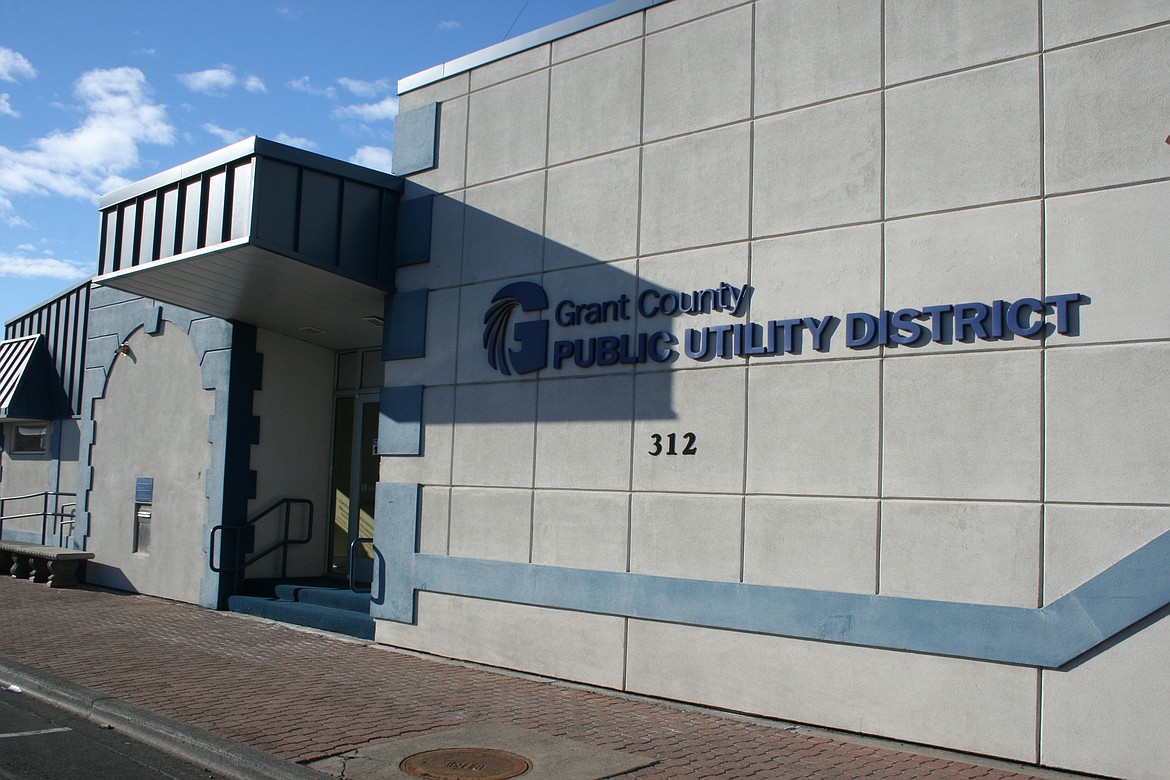
Residential and agriculture customers would be first to receive benefits from the Grant County Public Utility District’s lower-cost power under a revised rate proposal. The PUD Moses Lake office is pictured.
FILE PHOTO
Senior Reporter Cheryl Schweizer is a journalist with more than 30 years of experience serving small communities in the Pacific Northwest. She began her post-high-school education at Treasure Valley Community College and enerned her journalism degree at Oregon State University. After working for multiple publications, she has settled down at the Columbia Basin Herald and has been a staple of the newsroom for more than a decade. Schweizer’s dedication to her communities and profession has earned her the nickname “The Baroness of Bylines.” She covers a variety of beats including health, business and various municipalities. | October 1, 2024 1:00 AM
EPHRATA — Residential and agriculture customers would be the first customers to receive the benefits of lower-cost Grant County Public Utility District electricity, according to proposed revisions to PUD rate policy reviewed by commissioners last week.
A final draft of the revisions is scheduled to be submitted to commissioners in November, with approval by the end of the year.
Chief Customer Officer Ty Ehrman said the latest revisions reflect the direction given by commissioners after their review of previous drafts.
The PUD owns and operates Wanapum and Priest Rapids dams. Power from the two dams, called the Priest Rapids Project, is cheaper because the PUD owns and operates them.
Demand for PUD power has increased to the point where the utility will use up its allocation of electricity from the Priest Rapids Project before the end of the decade, possibly by 2026. When that happens utility district officials will be forced to find other – and probably more expensive – sources of electricity to meet the demand.
The existing rate policy gives the benefit from the cheaper Priest Rapids Project power to what are called core customers, which include residential, small and large commercial and agriculture rate classes. Under the revised policy residential and irrigation customers, along with a new rate category for general agriculture customers, will get the “largest revenue-cost benefit” among the core customers.
Some customers pay more than the actual cost of providing electricity to them; some pay less. Existing rate policy established guidelines, with customers paying a maximum and minimum above or below the actual cost of providing service. The revised policy continues that, but changes the guidelines.
“Assuming an average of 2% increase per year, no rate class should experience a compound increase of more than (approximately) 22% or less than 5% over a five-year period,” according to the revised rate proposal.
The existing rate policy puts all customers in customer classes; the revised policy would give the PUD options other than rate classes. In an earlier interview, Ehrman said that could mean customers contracting with the PUD instead.
Regardless of the method, any change in rates for non-core customers can’t have a negative impact on core customers, according to the draft.
Rates will be reassessed at least every other year; under current rate policy, they’re assessed every year, although they’re not always raised. The PUD would “make its best efforts to place each retail customer in the most advantageous schedule they qualify for,” the draft policy said.
Non-core customers, which include the industrial and large industrial classes, were eligible to receive up to a specified amount of Priest Rapids Project power, which was called preferential access. That provision was removed in the draft, although non-core customers can receive PRP electricity not being used by core customers.
Rates for individual customer classes can be revised, even if there’s no overall rate increase in a given year, according to the draft plan.
Julio Aguirre, PUD director of rates and pricing, said that would give the utility the ability to provide different options to customers, even in years when there’s not a change to rates.
The revised policy reiterates the PUD commitment to “small and predictable” rate increases but stipulates that how rates are increased is up to the commission.
The existing rate policy uses an analysis of the actual cost of providing electricity to customer classes, called the cost of service, and the new policy continues that. But the cost of service will be one of a number of factors used to determine rates, the draft said. The cost of service studies will use data specific to the Grant County PUD, and not rely on industry-wide results.
Since PUD officials anticipate the need to find or build additional sources of electricity, the revised rate proposal stipulates core customers would receive preferential access to the lowest-cost supply. That's regardless of how it’s generated, whether it’s power from Wanapum and Priest Rapids dams or other sources.
ARTICLES BY CHERYL SCHWEIZER

Road projects on hold for Labor Day weekend
MOSES LAKE — With Labor Day weekend dead ahead, drivers will be able to move freely about the state. Most road projects are on hold for the holiday weekend. Nobody will be working on the Hansen Road overpass on Interstate 90, but the lane restrictions that are in effect will continue through the end of the project.

Cost estimates for water source alternatives given to Moses Lake City Council
Protected under the U.S. Endangered Species Act, efforts are ongoing to keep it self-sufficient
MOSES LAKE — It’s going to cost a lot of money to provide alternative water sources for the city of Moses Lake, but some of the possible alternatives will cost more than others. City officials provided the Moses Lake City Council with costs for various alternatives Tuesday.

Dryer vent cleaning is important -- but often overlooked
MOSES LAKE — Not all the maintenance a house needs is visible. Sometimes a potential problem just goes unnoticed until it causes trouble, sometimes serious trouble. But a lot of potential problems give off warning signs. Clothes dryers often do when they need a good cleaning.