
Celebration of Quincy heritage at Quincy Valley Museum
CHERYL SCHWEIZER | Hagadone News Network | UPDATED 1 year, 11 months AGO

Volunteers carry flags from 40 different countries, representing the people who built the Quincy Valley, during the Celebration of Harvest and Culture Saturday at the Quincy Valley Historical Society and Museum.
CHERYL SCHWEIZER/COLUMBIA BASIN HERALD
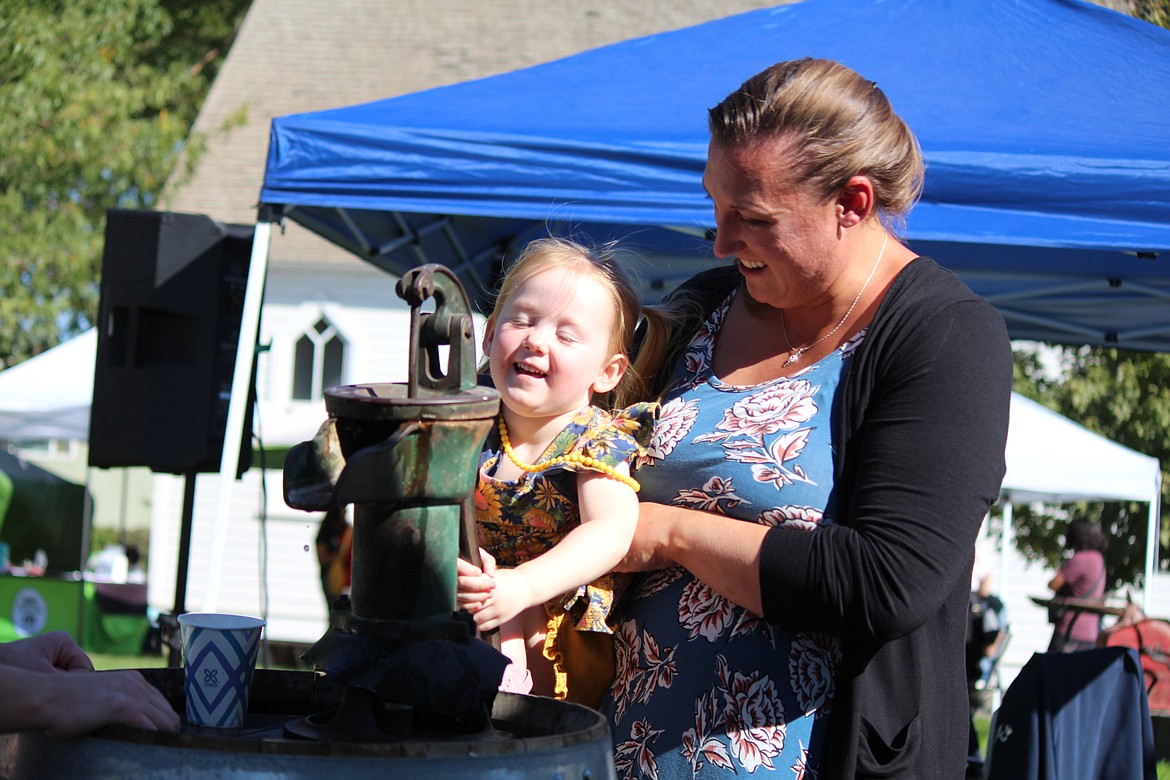
Lydia Boldman, in yellow, and her mom get water the old-school way during the harvest and culture festival sponsored by the Quincy Valley Historical Society and Museum.
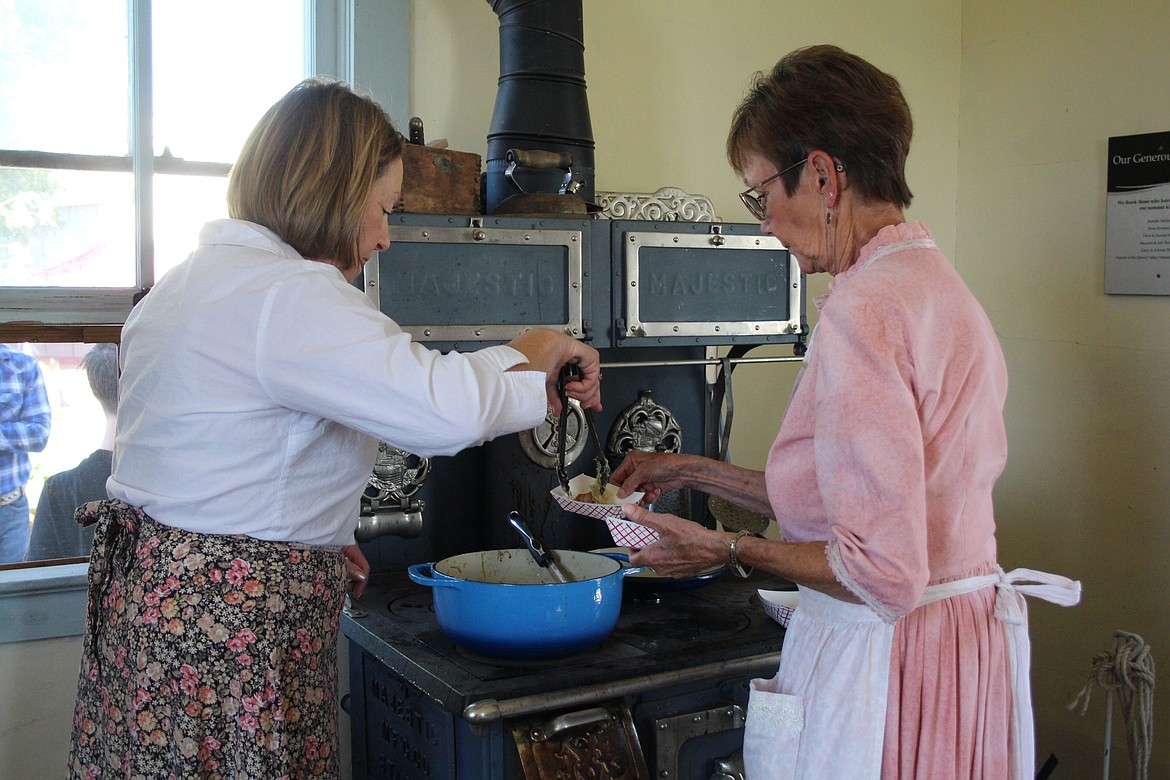
Pam Nutter, left, and Terri Wilson serve sauerkraut and sausage, a reflection of the people of German heritage who helped build Quincy.
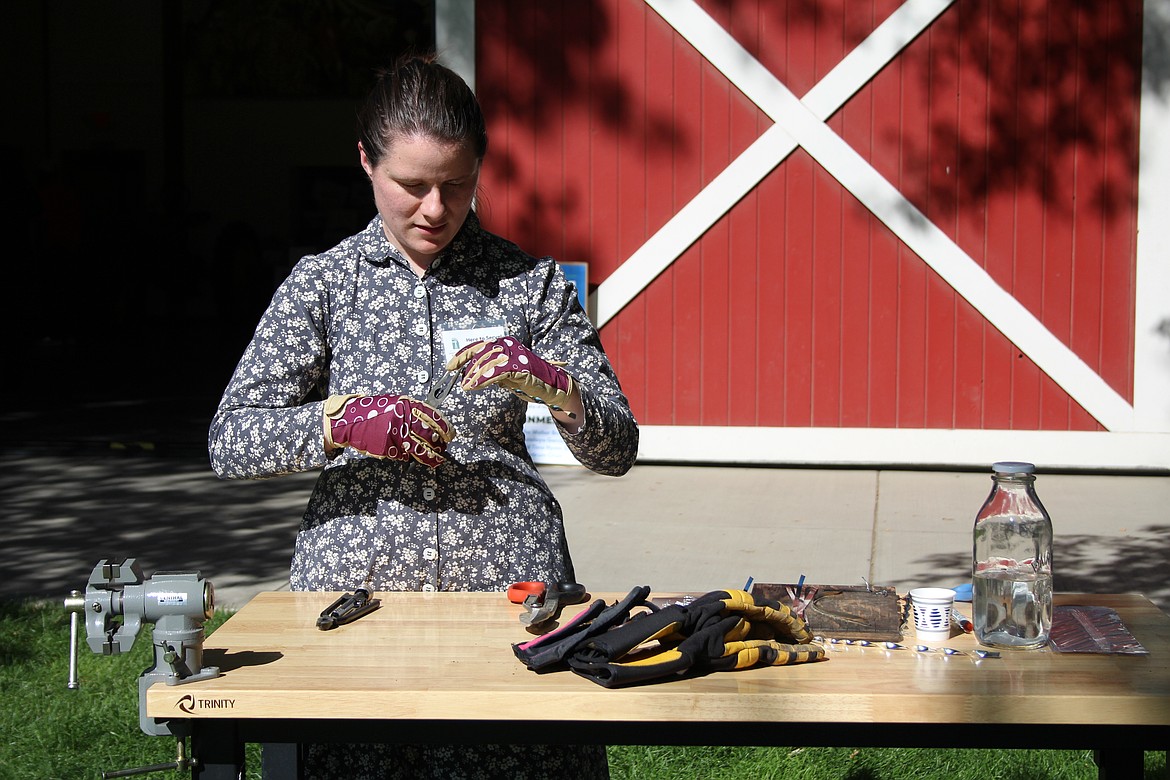
Megan Aldrich works on making tin “icicles” during the Celebration of Harvest and Culture at the Quincy Valley Historical Society and Museum.
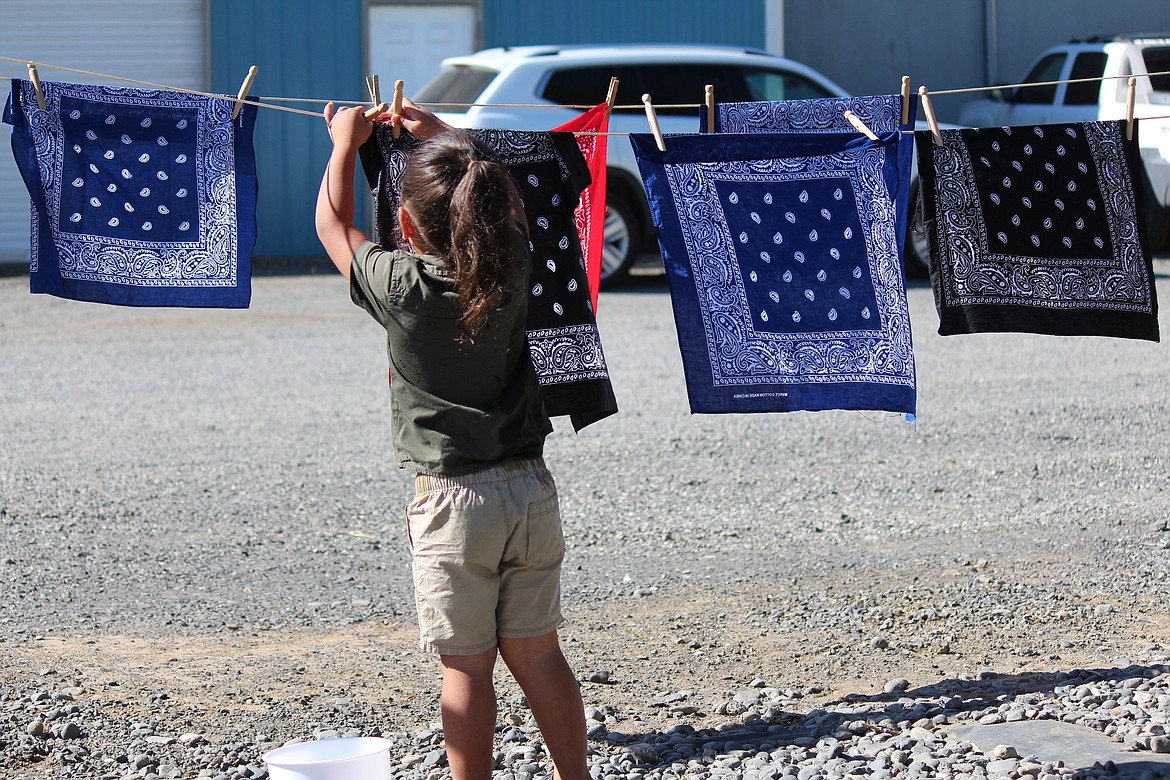
A girl attending the Celebration of Harvest and Culture dries the bandanna she washed in the washtub using the old-school way, hanging it on the clothesline.

Quincy native Alex Ybarra speaks during the harvest and culture celebration.
Senior Reporter Cheryl Schweizer is a journalist with more than 30 years of experience serving small communities in the Pacific Northwest. She began her post-high-school education at Treasure Valley Community College and enerned her journalism degree at Oregon State University. After working for multiple publications, she has settled down at the Columbia Basin Herald and has been a staple of the newsroom for more than a decade. Schweizer’s dedication to her communities and profession has earned her the nickname “The Baroness of Bylines.” She covers a variety of beats including health, business and various municipalities. | October 2, 2024 1:15 AM
QUINCY — It was a beautiful day, warm but not too hot – which was good news in the summer kitchen.
The Celebration of Harvest and Culture at the Quincy Valley Historical Society and Museum on Saturday highlighted the people that built Quincy and the way they built it. Quincy is more than a century old, and the day featured demonstrations of everyday life back in the day, from washing clothes to sharpening knives to cooking in the summer kitchen.
Volunteers Terri Wilson and Pam Nutter were cooking sausage and sauerkraut on the wood stove in the summer kitchen, the old-school way of cooking on hot days. A wood stove pumps out a lot of heat, so rather than make it even hotter in the house by cooking in the kitchen, pioneers built another kitchen in a separate building.
“This summer kitchen actually belonged to my great-grandparents,” Nutter said.
Christian and Katherine Amend were among the early pioneers in Quincy, she said. A mild day outside meant it was bearable inside. But Wilson said she had worked in the kitchen when it was a lot warmer outside. She had one word to describe the conditions.
“Hot,” she said.
“But so be it,” she added. “That’s what you did if you wanted to eat.”
Volunteers showed people how to sharpen knives, which was something new for 2024. So was the drop-spindle demonstration of spinning yarn. Children could try milking a cow facsimile and crank the old-school corn separator and apple cider press. Speaking of cranking, children could wash a bandana at the washtub and crank it through the wringer.
Volunteer Megan Aldrich had tin snips and a vise to demonstrate the principles of old-school recycling. She cut the tin into strips.
“They would take whatever scraps (of tin) they had left,” she explained, using a pair of pliers to twist them into a spiral.
The resulting “icicles” caught the sunlight hanging in a window, or the candlelight back when candles were used to light the Christmas tree. Of course, the candles were a fire hazard, she said, but the tree would be pretty.
Wilson and Nutter chose sausage and sauerkraut as a reflection of their German heritage. Other volunteers cooked samples from other cuisines, from sushi to aebleskivers (a Danish pancake ball) to ice cream.
Live musicians also performed during the day, featuring traditional folk music from the Welter Brothers, performances by Carol Golay and Albert Castro, and Quincy elementary school student Katelaya Garcia, who rode her pony while she sang.
Co-chair Harriet Weber said putting on the festival took more than 40 volunteers and donations from various businesses.
Volunteers have been doing research over the years, working to identify the people who have built Quincy over its history. To date they’ve identified about 40 countries, she said.
Flags from those countries are always featured in a procession across the museum grounds, ending at a flagpole where the U.S. flag was flying. The Quincy High School Spectrum Choir performed the national anthem.
State Representative Alex Ybarra told the crowd his family arrived in Quincy in the early 1960s, and in those days the town and surrounding farms were mostly populated by whites and Hispanics. And growing up, he thought Quincy was basically divided into those two ethnic groups, he said, but as he got older he learned that wasn’t the whole story.
“I don’t see color anymore. I see cultures,” he said. “No matter where you’re from, you’re important to Quincy.”
 Lydia Boldman, in yellow, and her mom get water the old-school way during the harvest and culture festival sponsored by the Quincy Valley Historical Society and Museum.
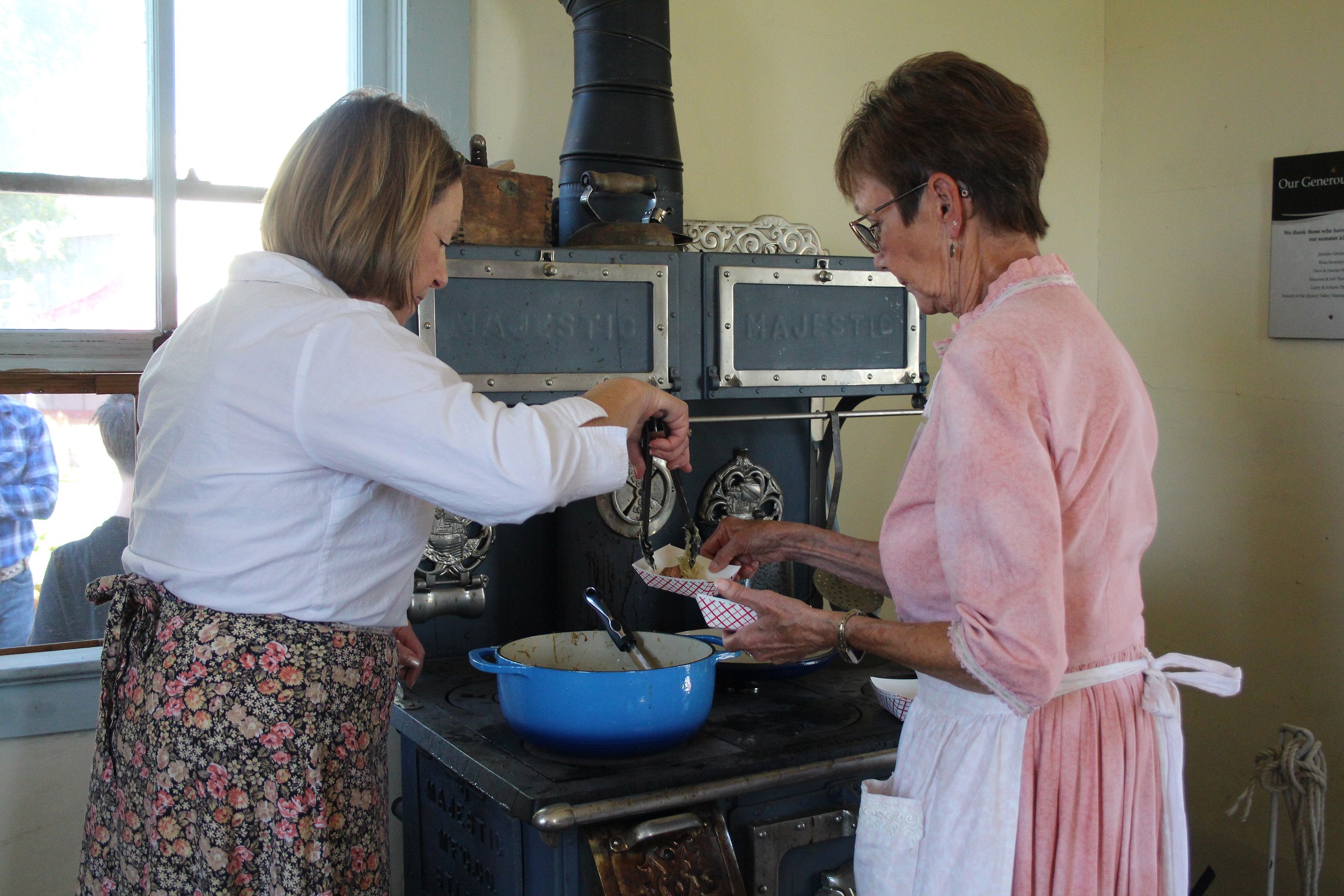 Pam Nutter, left, and Terri Wilson serve sauerkraut and sausage, a reflection of the people of German heritage who helped build Quincy.
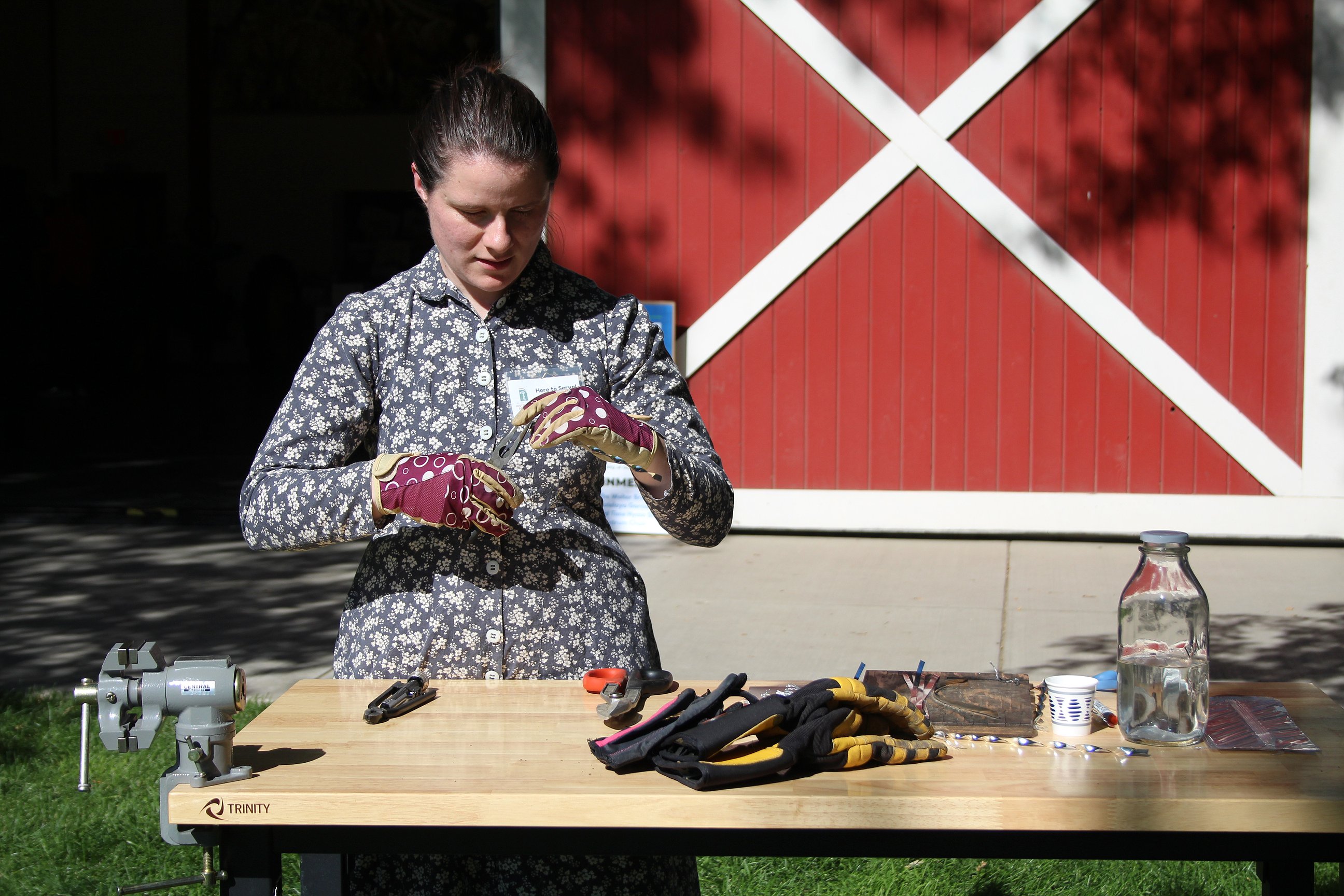 Megan Aldrich works on making tin “icicles” during the Celebration of Harvest and Culture at the Quincy Valley Historical Society and Museum.
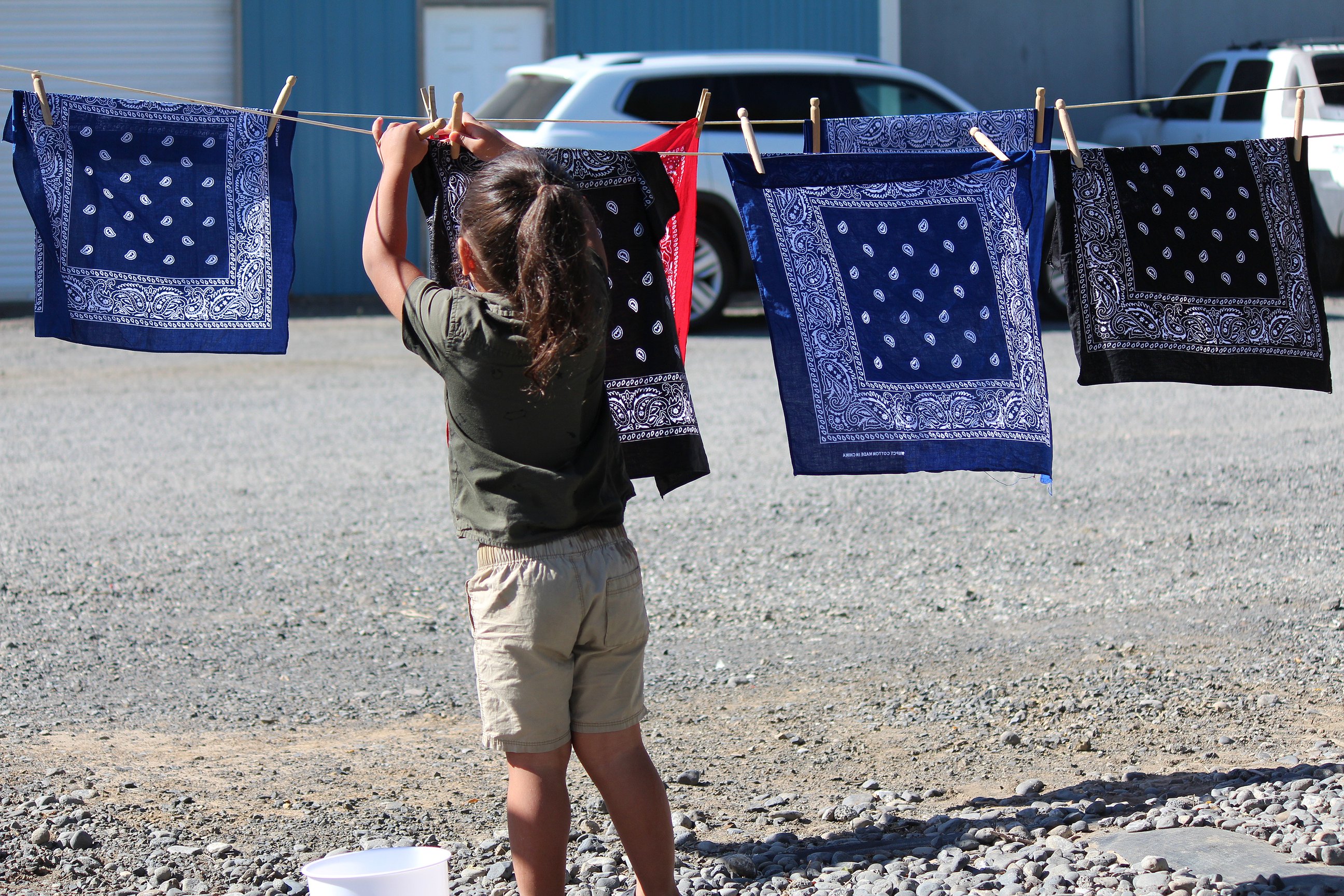 A girl attending the Celebration of Harvest and Culture dries the bandanna she washed in the washtub using the old-school way, hanging it on the clothesline.
 Quincy native Alex Ybarra speaks during the harvest and culture celebration.
ARTICLES BY CHERYL SCHWEIZER

Road projects on hold for Labor Day weekend
MOSES LAKE — With Labor Day weekend dead ahead, drivers will be able to move freely about the state. Most road projects are on hold for the holiday weekend. Nobody will be working on the Hansen Road overpass on Interstate 90, but the lane restrictions that are in effect will continue through the end of the project.
Cost estimates for water source alternatives given to Moses Lake City Council
Protected under the U.S. Endangered Species Act, efforts are ongoing to keep it self-sufficient
MOSES LAKE — It’s going to cost a lot of money to provide alternative water sources for the city of Moses Lake, but some of the possible alternatives will cost more than others. City officials provided the Moses Lake City Council with costs for various alternatives Tuesday.

Dryer vent cleaning is important -- but often overlooked
MOSES LAKE — Not all the maintenance a house needs is visible. Sometimes a potential problem just goes unnoticed until it causes trouble, sometimes serious trouble. But a lot of potential problems give off warning signs. Clothes dryers often do when they need a good cleaning.