
Gubernatorial candidates address crime, law enforcement
CHERYL SCHWEIZER | Hagadone News Network | UPDATED 1 year, 10 months AGO
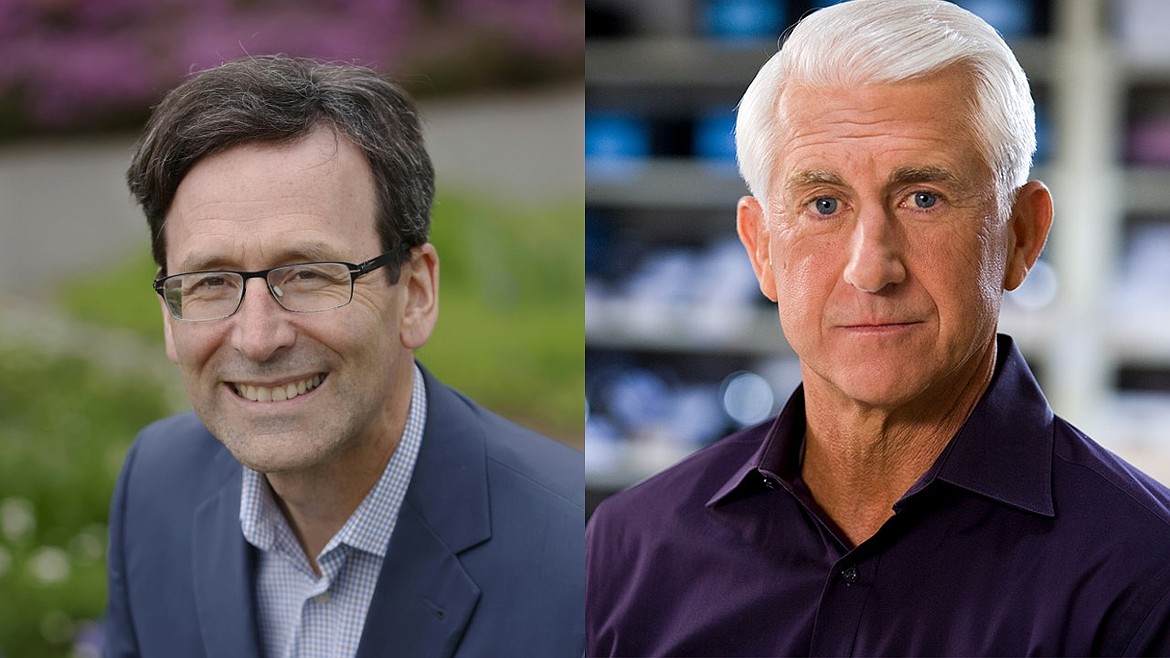
Democrat and current Washington Attorney General Bob Ferguson is facing off against Republican Candidate and former law enforcement officer Dave Reichert, who served as U.S. representative for the 8th Congressional District from 2005 to 2019, in the race for the Washington governor's seat.
Senior Reporter Cheryl Schweizer is a journalist with more than 30 years of experience serving small communities in the Pacific Northwest. She began her post-high-school education at Treasure Valley Community College and enerned her journalism degree at Oregon State University. After working for multiple publications, she has settled down at the Columbia Basin Herald and has been a staple of the newsroom for more than a decade. Schweizer’s dedication to her communities and profession has earned her the nickname “The Baroness of Bylines.” She covers a variety of beats including health, business and various municipalities. | October 18, 2024 3:00 AM
OLYMPIA — Whether law enforcement in Washington is where it should be, addressing juvenile crime and the role of the Washington Legislature in law enforcement were among the topics addressed by gubernatorial candidates Dave Reichert and Bob Ferguson in separate recorded interviews with the Washington Association of Sheriffs and Police Chiefs.
Reichert and Ferguson were asked the same questions by WASPC Executive Director Steve Strachan, who said the questions were sent to each candidate in advance.
Both Ferguson and Reichert said they didn’t think public safety in Washington was where it should be.
“I’ve been saying throughout the campaign the answer is ‘no,’” Ferguson said.
He would support increasing funding for law enforcement, Ferguson said, and has proposed allocating $100 million to pay for additional officers. He acknowledged that the Washington Legislature has been reluctant to add funding for law enforcement over the last couple of years. But Ferguson said he would include the $100 million in his first budget request.
Ferguson is Attorney General, and he said he has worked to establish divisions in the AG’s office to work on crimes like organized retail theft and look at cold cases. He cited that as evidence he could work with legislators to get more funding.
Reichert is a former King County Sheriff and said if he was still in law enforcement, he would apply for any money allocated, depending on the criteria. However, Reichert said, departments are offering bonuses for people who are hired, but not getting an adequate response.
“The real problem, in my opinion, is that cops are not supported,” Reichert said.
Reichert said he has heard from officers statewide about attempts in the Washington Legislature to change the statute that limits personal liability, called qualified immunity. Officers also are concerned about being charged for a crime if there’s an incident during an investigation.
“We need to support (law enforcement) and they need to know they have that kind of backup,” Reichert said.
Both also agreed more needs to be done to combat juvenile crime.
Reichert said, in his view, part of the problem is that juvenile offenders think there will be limited or no consequences for what they do. In part, he said, that’s because facilities are limited for young people convicted of serious crimes or for youths who need treatment for substance abuse or mental health problems.
State law allows people up to 25 years of age to be incarcerated in juvenile facilities, and Reichert said he would support changing that.
“I think the first thing that needs to happen is we need to move adults out of juvenile detention centers and put them in adult prisons,” Reichert said. “We need to have a place to incarcerate those violent youth offenders so they know there’s a consequence.”
Reichert said he would support experimenting with a program to use technology to perform some court functions while youth offenders are under home detention.
Ferguson said he believes there should be consequences for juveniles that engage in crime, but that non-violent juvenile criminal cases should be handled differently from violent crimes. The governor does have a role in setting expectations that there will be accountability and in providing justice for victims.
“For juvenile crimes, as a state we need to be making investments to prevent that crime from happening. You’ve got to have a multi-pronged approach when it comes to juveniles,” Ferguson said.
Ferguson said he feels sentences are insufficient in many criminal cases. State law requires the governor to appoint judges in the case of a vacancy, he said, and a potential judge’s view on criminal sentencing would be one of the areas he would examine.
Ferguson said juvenile facilities, and jails and prisons in general, need more resources.
Both were asked about working with the legislature.
Reichert said that from a law enforcement perspective, he wasn’t sure that legislators had sufficient understanding of the job, and cited encouraging lawmakers to learn more about law enforcement while he was King County Sheriff. He said he would support efforts to bring law enforcement, Republicans and Democrats together to hear each other’s views. However, rebuilding relationships and trust goes beyond the legislature, he said.
“I really like the idea of reengaging with the community,” he said.
He would support additional funding for school resource officers and other activities that introduce them to adults and youths in non-emergency situations.
Ferguson said he believes his work as attorney general has demonstrated a commitment to a bipartisan approach. The Democrats hold the majority in both the House and Senate, he said, and there would be sufficient votes to approve legislation he proposed. But he has tried to work with Republicans and in many cases had them as bill sponsors, he said.
When asked about listening to opinions from across the societal spectrum, Ferguson said he had demonstrated that he does respond to different opinions. He cited the establishment of new criminal divisions in the AG’s office as an example.
“The key job of an attorney general, or a governor, is to make sure you’re doing exactly that – making sure you’re working in a bipartisan fashion with the legislature,” Ferguson said.
Reichert said he would use the position as governor to work to depoliticize law enforcement issues.
“One of the basic things is just to have people of different opinions at the table, discussing the problem – respectfully, which we’ve not be able to do for a while,” he said.
ARTICLES BY CHERYL SCHWEIZER

Road projects on hold for Labor Day weekend
MOSES LAKE — With Labor Day weekend dead ahead, drivers will be able to move freely about the state. Most road projects are on hold for the holiday weekend. Nobody will be working on the Hansen Road overpass on Interstate 90, but the lane restrictions that are in effect will continue through the end of the project.

Cost estimates for water source alternatives given to Moses Lake City Council
Protected under the U.S. Endangered Species Act, efforts are ongoing to keep it self-sufficient
MOSES LAKE — It’s going to cost a lot of money to provide alternative water sources for the city of Moses Lake, but some of the possible alternatives will cost more than others. City officials provided the Moses Lake City Council with costs for various alternatives Tuesday.

Dryer vent cleaning is important -- but often overlooked
MOSES LAKE — Not all the maintenance a house needs is visible. Sometimes a potential problem just goes unnoticed until it causes trouble, sometimes serious trouble. But a lot of potential problems give off warning signs. Clothes dryers often do when they need a good cleaning.