
Small stores hold on, hold together tiny communities
JOEL MARTIN | Hagadone News Network | UPDATED 1 year, 12 months AGO
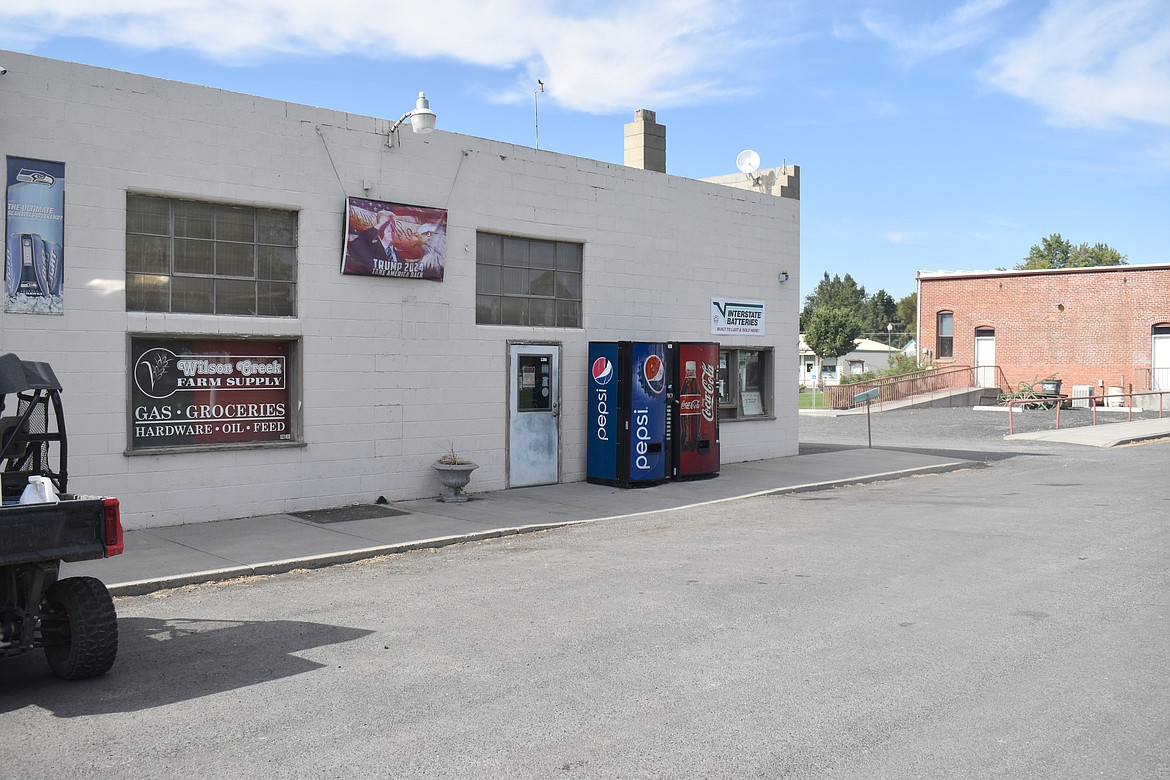
Wilson Creek Farm Supply is one of only three businesses operating in Wilson Creek, in northern Grant County.
Joel Martin/Basin Business Journal

Carter Foods in LaCrosse, has filled the community’s needs for about nine years. Before that, owner Jody Carter said, the town was completely without a store for 10 years.
Courtesy image/Google Maps
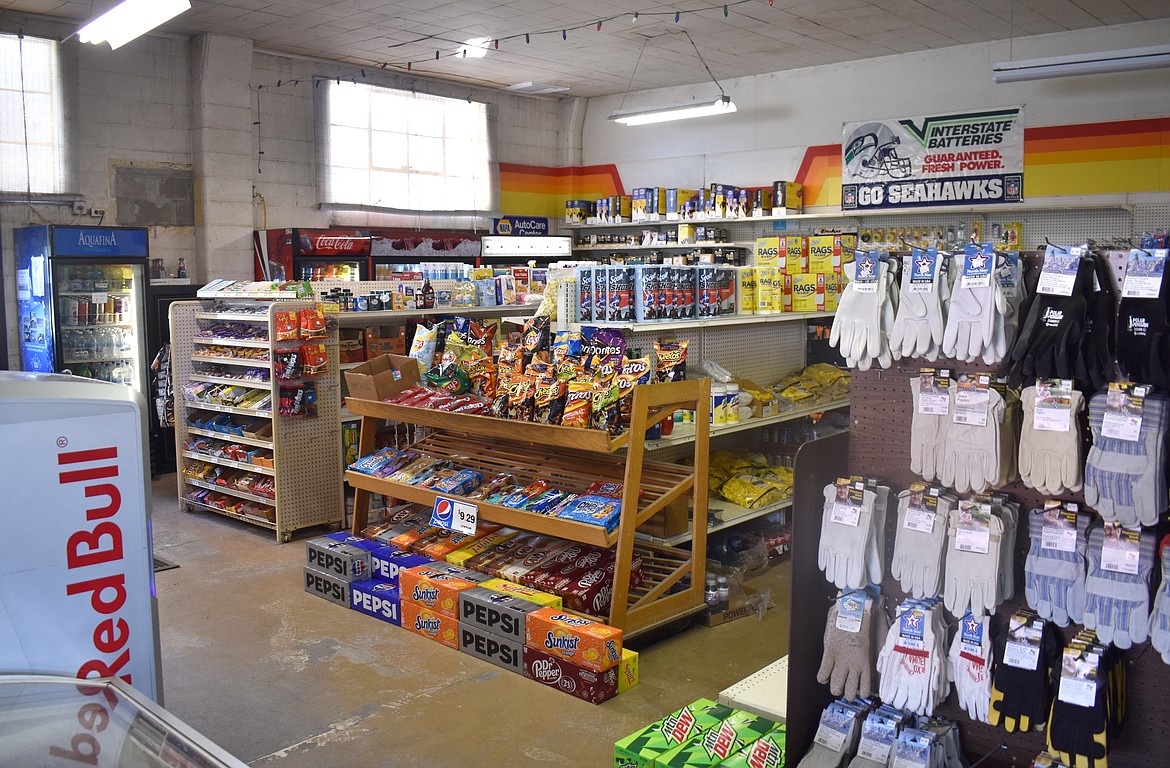
Besides fuel and feed, Wilson Creek Farm Supply is the town’s source for groceries and other household supplies.
Joel Martin/Basin Business Journal
Joel Martin has been with the Columbia Basin Herald for more than 25 years in a variety of roles and is the most-tenured employee in the building. Martin is a married father of eight and enjoys spending time with his children and his wife, Christina. He is passionate about the paper’s mission of informing the people of the Columbia Basin because he knows it is important to record the history of the communities the publication serves. | October 19, 2024 1:00 AM
MOSES LAKE — The small communities of eastern Washington have steadily gotten smaller in the last century as cars and trucks replaced railroads and people began ranging farther and farther away for their shopping needs. A small town that once boasted clothing stores, car dealerships and barber shops might now be reduced to a single mini-mart and cafe, if that. Low-income urban neighborhoods that lack grocery store access are referred to as “food deserts;” well, many small rural towns could easily be called shopping deserts.
“My husband and I, we’re going on our ninth year that we’ve owned (our store),” said Jody Carter, who with her husband Mel owns Carter Foods in LaCrosse in Whitman County. “The store has actually only been in business about 11 years, and we didn’t have a store for 10 years (before that) because the previous owners could not make it work, and so we ended up losing our store for about 10 years. It’s horrible on a small town.”
Shrinking communities
In 1931, the population of LaCrosse was about 470 people, and within a block of what’s now Carter foods, there were two banks, two barber shops, a hardware store, a drug store, two tobacco shops, two tailor shops, a bakery and butcher shop, a printshop, a doctor’s office and a movie theater, according to a contemporary map by Sanborn Fire Insurance Company. The building Carter Foods now occupies was a general store. Today, most of those are gone. The next nearest supermarket to Carter Foods is in Colfax, a good 30 miles away.
“When my husband and I got married in 1980 there was like 600-650 population here, and now in 2024 we have about 300 people,” Carter said. “A lot of our elderly farmers and elderly family members have passed away. We do have some people coming in, the retirement people like to come in because there’s a small community, but a lot of them don’t have children. It’s retirement-age people.”
People who can get to Colfax easily tend to shop there once a month or so and stock up, Carter said, leaving mostly the elderly folks who don’t drive much. Carter lets those folks order over the phone and then she delivers the groceries to the customer.
Wilson Creek, in northern Grant County, tells a similar story. In more prosperous times, the town had hotels, a bank, a drugstore and more. Today it has three businesses: a restaurant and tavern, a machine shop and Wilson Creek Farm Supply, which doubles as a general store.
“I’ve been here 30 years, (since) August of ’94,” said owner Claudia Pfeifer. “It was the grange supply for a long time, and then it went to the Coulee Co-op.”
Stocking the shelves
Wilson Creek Farm Supply, as the name would suggest, has hardware, fuel and feed, but it also has pop, chips, beer, cleaning supplies and grocery staples like cheese, eggs and milk. And of course, candy for the kids to scoop up on their way home from school.
Wilson Creek is on state Route 28 about halfway between Ephrata and Odessa, a good half-hour from almost any other store. Some of Pfeifer’s inventory is brought in by regular wholesale drivers, but for some things, she has to drive out of town and buy retail from another supermarket, usually in Moses Lake.
“I go to the cheapest place I can get it,” Pfeifer said. “I mean, I go all over. I go to WinCo, Grocery Outlet, Walmart, Safeway … I don’t have fresh produce or meat, stuff like that. I have stuff that goes in the microwave, frozen food and stuff like that.”
Carter doesn’t have to buy from another grocery store, but Lacrosse’s remoteness has necessitated some creativity when it comes to getting inventory, especially during and after the COVID-19 pandemic. When the pandemic hit in 2020, the store’s regular wholesaler based in Spokane dropped Carter Foods as a customer. The wholesaler came back when the pandemic subsided, Carter said, but by that time she had made other arrangements for some necessities.
“I couldn’t get milk or dairy products,” Carter said. “So, one of my townspeople did some research and they found a place called Terry’s Dairy. “I called the owner up and I explained, ‘I’m a small-town store and (the wholesaler) has dropped up because of COVID. Would you help us?’ He didn’t know anything about our store; he didn’t know if I paid bills on time or anything like that. And he said ‘Absolutely, we’ll pick you up.’”
Carter still buys all her dairy products from Terry’s Dairy, which has a warehouse in Spokane Valley, and an hour and 45 minutes from her store, rather than from the former supplier. The one thing she has trouble getting, she said, is bread.
“I do not want to order frozen bread from my customers, and so I go through Franz,” Carter said. “My daughter, who works in Colfax, she’ll pick it up for me Friday, but they’re not really good about filling my order because I’m so small. I probably only do $150 a week through them, so I’m nothing to them.”
A labor of love
Up in northern Ferry County about 120 miles from the Canadian border, the tiny town of Orient would be out of luck were it not for Essentials General Store. Ferry County is the most depressed county in Washington, said manager Jan Greve. Nearly a quarter of Orient’s population between the ages of 18 and 64 lives in poverty, according to the U.S. Census, and the median household income is less than a third of that of Washington as a whole.
Unlike Carter Foods and Wilson Creek Farm Supply, Essentials is operated by a local nonprofit, Kettle River Linc, and run by an all-volunteer staff.
“The gentleman who had the store was closing the store and selling, and we know the community needed the store, so we bought the store,” said Jan Greve, the secretary and treasurer for Kettle River Linc. “We were operating a food bank, so we decided to purchase it and take it over.”
The food bank is still there, although it and the store are two separate entities, Greve said. The store is just about the only business in town and must, as the saying goes, be all things to all people.
“We have a little aisle of camping, a little aisle of automotive, a little aisle of hardware, a little household aisle of kitchen health and beauty. We have a couple of aisles of food and a freezer and a cooler, and we have a little aisle where there’s cards and little gifts and toys and gift wrap and stationery.”
Besides that, Kettle River Linc has a second-hand store that sells used clothing, as well as a couple of public showers and washers and dryers.
“A lot of people in the area don’t have facilities in their homes,” Greve said.
Like Pfeifer, Essentials must buy much of its inventory at other stores. Every week a volunteer figures out what’s missing from the shelves and drives 31 miles to Colville and gets it from Walmart or Dollar Tree.
“We do (that) because the wholesaler that was providing for the store needed so much quantity that when we first started out, there was no way we could (buy it),” Greve said. “You have to buy in such large quantity that things would go out of date before you could sell them all, and it was not cost-effective for us. It wasn’t really any cheaper than going to Walmart.”
In a small community, the store is a social hub as well. Wilson Creek Farm Supply has a regular group that comes in to drink coffee most mornings, Pfeifer said, and sometimes they leave garden produce behind for anyone who wants it.
“We have a small business group here and I’m part of that,” Carter said. “Our librarian does a summer reading program, and if the kids finish their reading program, they get a free ice cream. So, Carter Foods will donate the ice cream to them. We have a chili feed in October for Halloween. And the business group is really good about ordering this stuff through the store. It kind of keeps me going and keeps them going.”
Most of Essentials’ volunteers are people of faith, Greve said, and a local church rents a chapel from the store, which helps cover the costs.
“We feel we want to be compassionate to those around that need help,” she said. “Those who serve regularly, we find the joy of being able to serve our community and interact with them; you get to know them on first name basis and their issues. We can pray with them, we can help them, we can encourage them. It’s just somebody that cares about them.”
 Carter Foods in LaCrosse, has filled the community’s needs for about nine years. Before that, owner Jody Carter said, the town was completely without a store for 10 years.
Courtesy image/Google Maps
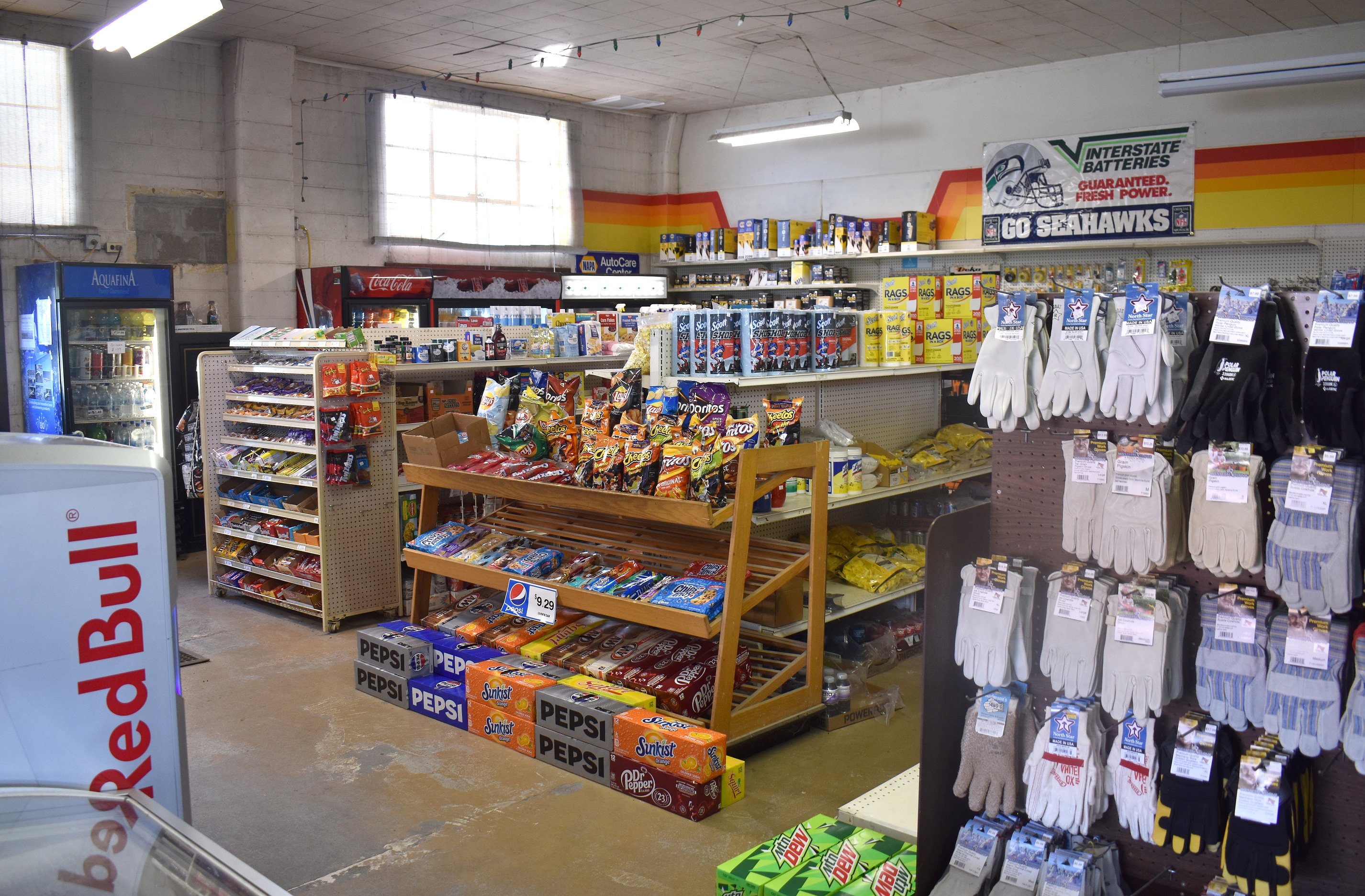 Besides fuel and feed, Wilson Creek Farm Supply is the town’s source for groceries and other household supplies.
Joel Martin/Basin Business Journal
ARTICLES BY JOEL MARTIN
Endless battle
Noxious Weed Control Board works to keep invasive plants under control
MOSES LAKE — Some of the nastiest plants in Grant County were the topic of a class led by Jay Johnson, a consultant with the Grant County Noxious Weed Control Board, Tuesday. The Noxious Weed Control Board, as its name would suggest, is tasked with keeping weeds under control in Grant County. That’s not a small job; the board’s website lists 129 species of noxious weeds that are found around Grant County. A noxious weed is defined as an invasive, non-native plant that threatens agricultural crops, local ecosystems or fish and wildlife habitat, according to the Noxious Weed Control Board. Washington state law requires that these weeds be identified and their spread kept to a minimum, if not completely eradicated. “We’re one of those agencies a lot of people don’t really understand,” Johnson said. “We’re a county office and … our funding is tax-based assessment. When you get your tax bill and you look down at all the expenses that you pay for, there we are.”

BASIN EVENTS: Oct. 16-24
COLUMBIA BASIN — Whether you feel like shopping, crafting, learning or seeing a show, there’s something happening for you this week in the Basin. Oct. 16 ‘My Family (Mi Familia)’ screening Spanning three generations, “My Family (Mi Familia)” is a heartfelt drama that follows the Sánchez family as they build their lives in East Los Angeles. Through love, hardship, triumph, and sacrifice, the film explores the immigrant experience, the strength of family bonds, and the traditions that connect one generation to the next. Lowrider show and taco truck before the screening. Sponsored by Columbia Basin Allied Arts, EDUBS C/S and the Moses Lake Creative District. $12 per person. Doors open at 6 p.m., film begins at 7 p.m. at the Moses Lake Civic Center Auditorium, 401 S. Balsam St. Tickets and info: www.cba-arts.org.

Moses Lake author encourages women to look beyond church culture norms
MOSES LAKE — A Moses Lake author’s book, “A Christian Woman Striving to Live Her Faith in a Man-Controlled World,” takes aim at the role to which many churches relegate the female half of their congregations. “It’s to encourage women in the faith,” Linda Curran said. “A lot of churches say, ‘Teach Sunday school, do this, do that, but don’t (evangelize.)’" In her book, Curran recounts a time when she moved to a new community and joined a church there. She was surprised to learn that, as a new female member, she had been automatically assigned church cleaning duties. When she questioned it, she wrote, she was met with condescension and her objections were brushed aside. In other churches, she said, women who were capable of teaching were relegated to “women’s ministry.”