
Localizing the park
JOEL MARTIN | Hagadone News Network | UPDATED 1 year, 11 months AGO
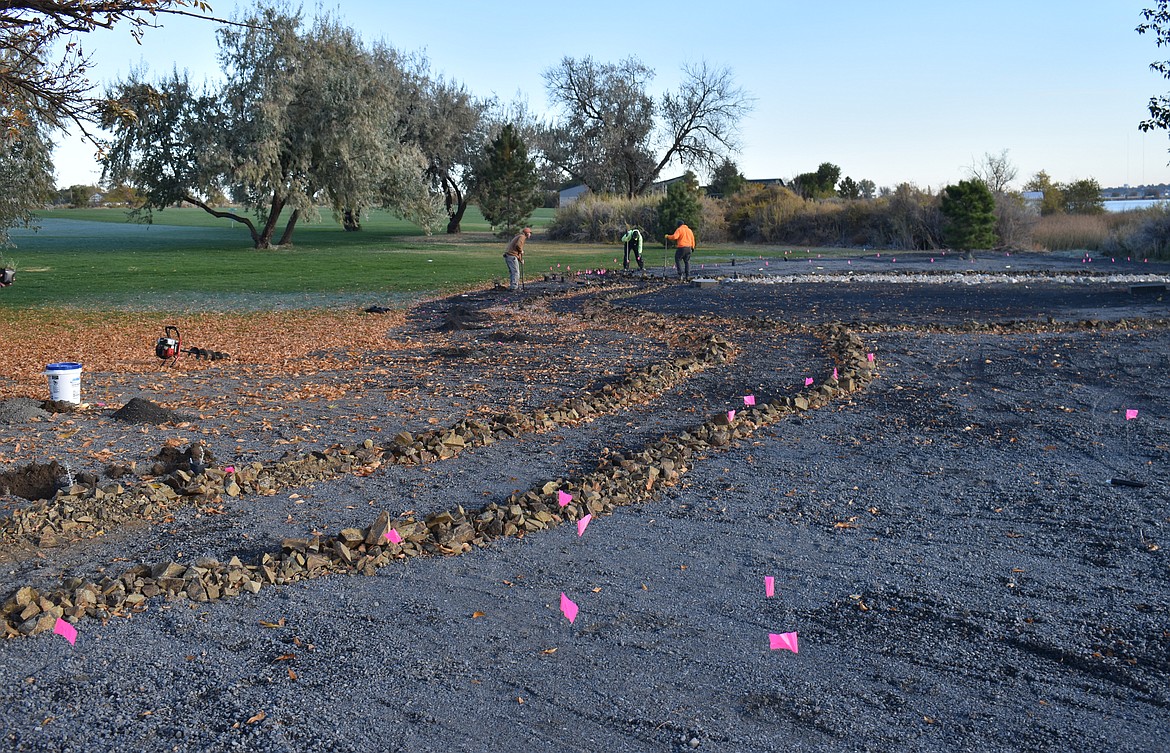
A crew from the city of Moses Lake digs holes to plant native flowers and shrubs in the demonstration garden at Lower Peninsula Park Wednesday morning. The color-coded flags indicate what plants will be situated where.
JOEL MARTIN/COLUMBIA BASIN HERALD
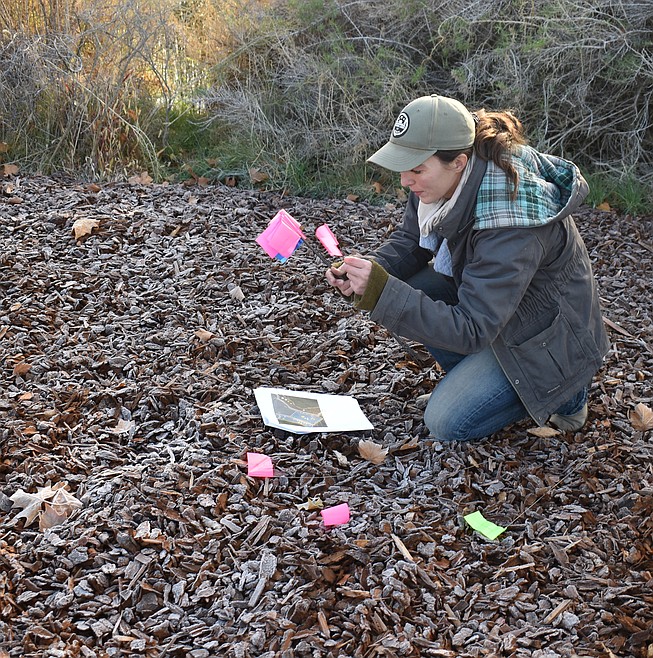
Columbia Basin Conservation District Conservation Biologist Kaley Wisher puts out flags to indicate where plants will go in the riparian section of the native plant garden at Lower Peninsula Park Wednesday morning. The plants in that section use a little more water than those in the desert area, Wisher said, but being native to our shrub-steppe climate, they’re still tough.
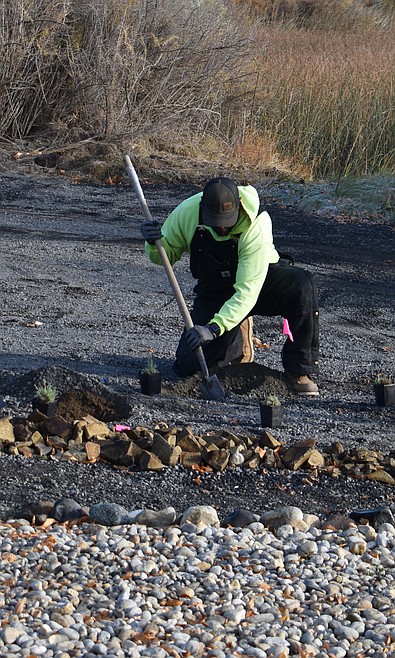
Park Foreman Berto Chavez digs a hole in the native plant garden at Lower Peninsula Park Wednesday morning.
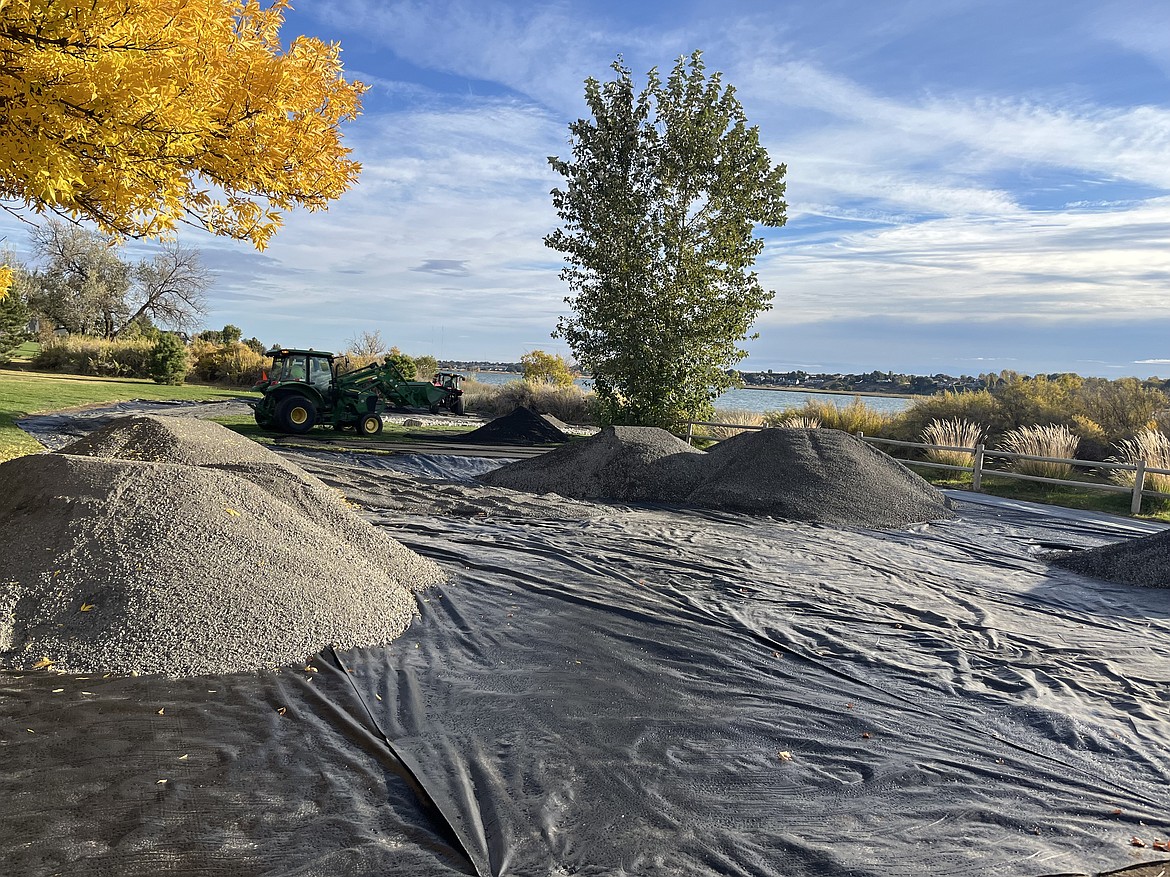
Fabric covers the ground at Lower Peninsula Park where the native plant garden is about to be installed. The garden used 10 truckloads of gravel and two truckloads of sand to replace the irrigated grass, said city Park Foreman Berto Chavez.
Joel Martin has been with the Columbia Basin Herald for more than 25 years in a variety of roles and is the most-tenured employee in the building. Martin is a married father of eight and enjoys spending time with his children and his wife, Christina. He is passionate about the paper’s mission of informing the people of the Columbia Basin because he knows it is important to record the history of the communities the publication serves. | October 25, 2024 3:00 AM
MOSES LAKE — Lower Peninsula Park is moving beyond the usual grassy fields, with some help from the Columbia Basin Conservation District and the city of Moses Lake.
Staff from both the city and CBCD were out Wednesday morning preparing a demonstration garden that will show how native, low-water plants thrive in the region.
“These are going to be the wildflowers you’d see out in the sagebrush steppe,” said CBCD Conservation Director Dinah Rouleau. “When people look out (around Moses Lake) and they see all the sagebrush, they don’t realize there’s a whole bunch of wildflowers intermixed through there.”
The desert flowers are one part of the garden, Rouleau explained. Another part near the lake is a riparian section that will showcase native shoreline plants.
The roughly 15,000-square-foot garden is a combined effort by the city, the CBCD, Tapteal Native Plants, BFI Native Seeds, Derby Canyon Natives, Basin Bark, Tommer Construction, Evans Contracting and Jon Morrical, Rouleau said. It’s paid for through a grant from the Washington State Department of Ecology to help agencies like the CBCD decrease the flow of pollutants into lake. The installation at Lower Peninsula Park serves as an example of ways shoreline property owners can both lower their water bills and keep things like fertilizer and chemicals from running off their land into the water, said Conservation Director Ron Sawyer.
“This is a demonstration so that there's a convenient place for the public to come see what's possible to do in their own backyard,” he said. “There are two aims. One is to save water, and the other is to provide buffer for nutrients not to reach the lake. Native plants do a better job of that, because the roots go deeper and establish more permanently.”
Some of the nutrients that the native plants filter out are ones that contribute to the growth of blue-green algae, which has posed a threat to the lake water in recent years, he added.
The decision to create the garden is the result of several years of work between the city and the Moses Lake Watershed Council, Sawyer said, and had to overcome some skepticism.
“This was not part of the culture here in Moses Lake,” he said. “People hadn't really thought about anything other than grass and grass. So maybe there's an alternative that wouldn't look like cheatgrass.”
“I didn't realize how many of our landowners, our shoreline folks, can't identify the weeds from the good stuff,” Rouleau said. “(This is a way) to see a good example of what plants to have along your shoreline to help stabilize the bank (and) filter out all those pollutants.”
Besides the desert and riparian sections, there’s a dry riverbed that winds through the garden and serves as a kind of path, and a round sandy area in the middle that will eventually have some benches and signs, Rouleau said.
While Rouleau is in charge of the desert plants, Conservation Biologist Kaley Wisher is taking care of the riparian part of the garden.
“I deliberately picked plants that like a little bit more moisture,” Wisher said. “But all of these are low-water plants because they're native. Even our riparian plants are pretty tough, and … do really well with low water.”
Wisher is planting western columbine and blanket flower, as well as bigger plants like ninebark, wax currant and shrubby cinquefoil, she said. The riparian section is separated from the lake by a hedge of greasewood.
“It's a native shrub, key forage for wildlife; it helps them get through winter,” she said. “And then it's very spiky, so if you're a small critter, this is a great spot to go seek shelter, to get away from predators.”
The city has done small-scale drought-resistant planters before, said Park Foreman Berto Chavez, but never one this big. The low-water plants will require some changes to the irrigation, he said.
“We still have our sprinklers set up for this area,” he said. “Once we're done, we'll end up doing drip lines from those sprinklers, take the sprinklers out, put in a drip line to each plant, so that that way we don't overwater this area.”
The garden will also demonstrate the adaptability of native plants to the area and contrast them with invasive species that are more commonly found.
“We want to be able to point out that the yellow flag iris that folks see along the lake is actually a weed,” Rouleau said.
“It’s a noxious weed, and we hate it,” Wisher shouted from across the garden.
“So we really want to highlight the blue iris, because it’s (similar) but it’s native to the lake,” Rouleau said.
The garden won’t look like much right away, Rouleau warned.
“I don't want people to look at it next spring and think, ‘What are all these dead things that are here? Why are they so ugly?’” Rouleau said. “The first year they sleep, then they creep the next year, and then they leap. So year two is when we're going to expect all these beautiful flowers and things to be really taking off.”
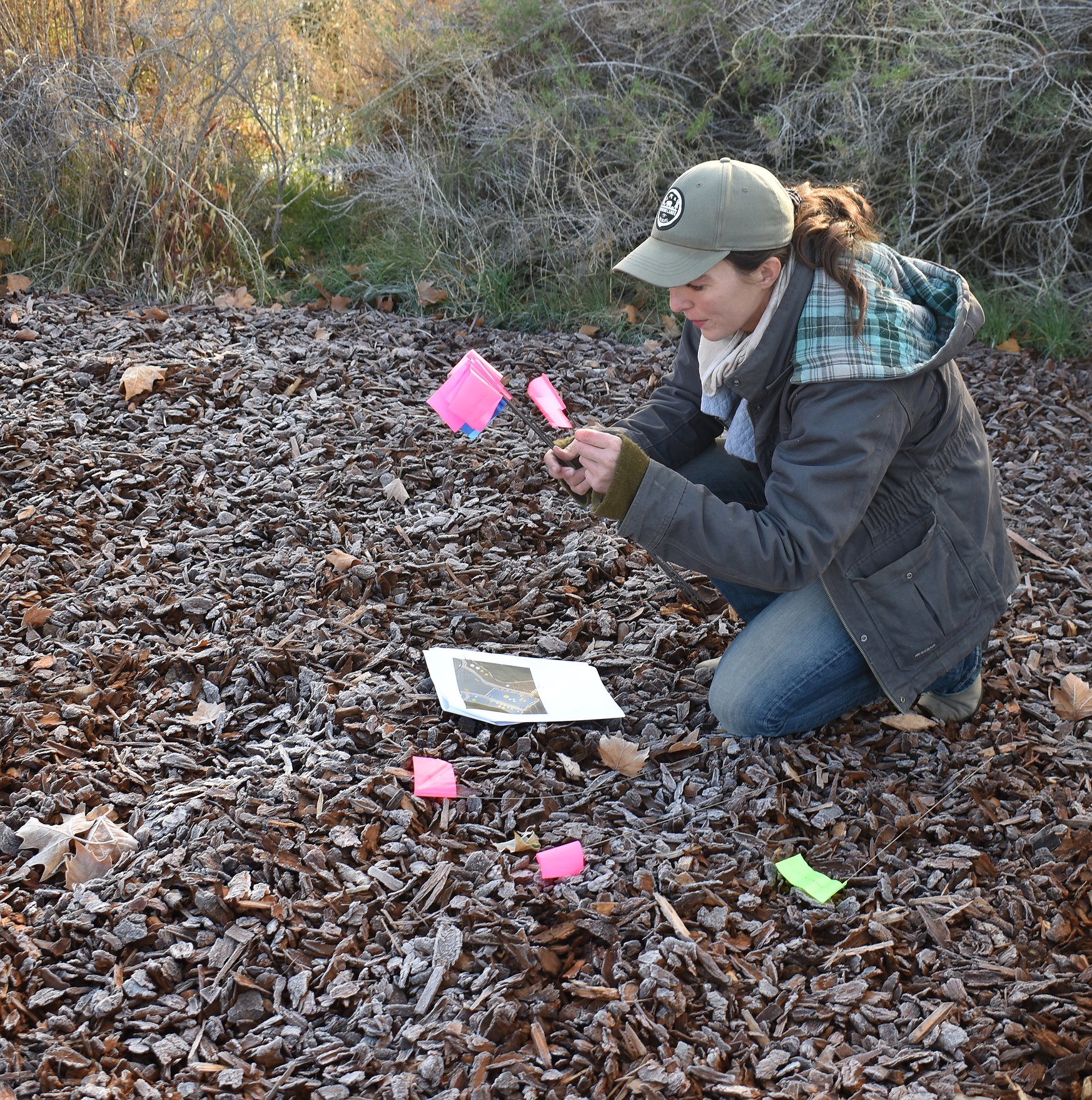 Columbia Basin Conservation District Conservation Biologist Kaley Wisher puts out flags to indicate where plants will go in the riparian section of the native plant garden at Lower Peninsula Park Wednesday morning. The plants in that section use a little more water than those in the desert area, Wisher said, but being native to our shrub-steppe climate, they’re still tough.
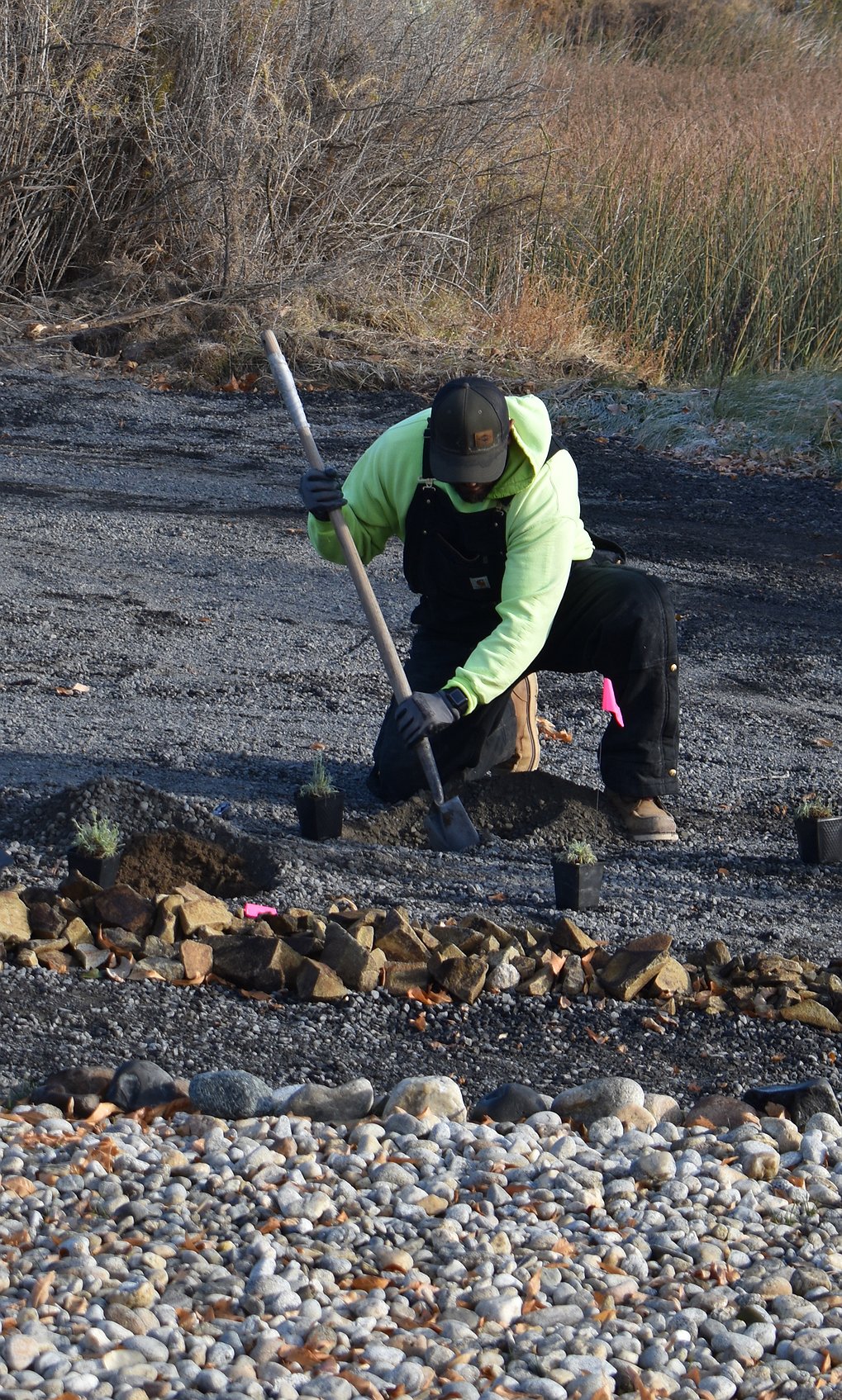 Park Foreman Berto Chavez digs a hole in the native plant garden at Lower Peninsula Park Wednesday morning.
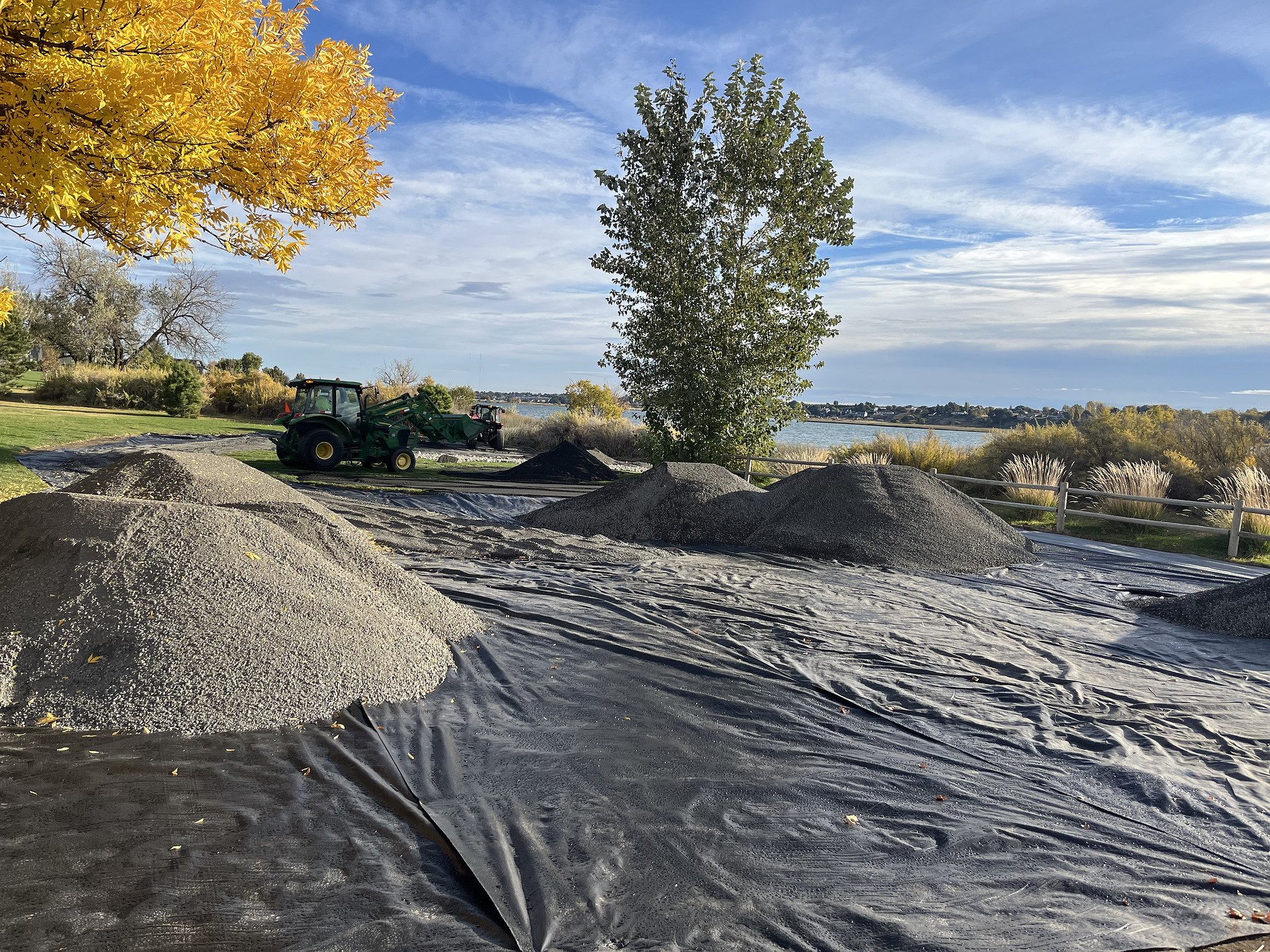 Fabric covers the ground at Lower Peninsula Park where the native plant garden is about to be installed. The garden used 10 truckloads of gravel and two truckloads of sand to replace the irrigated grass, said city Park Foreman Berto Chavez.
ARTICLES BY JOEL MARTIN
Endless battle
Noxious Weed Control Board works to keep invasive plants under control
MOSES LAKE — Some of the nastiest plants in Grant County were the topic of a class led by Jay Johnson, a consultant with the Grant County Noxious Weed Control Board, Tuesday. The Noxious Weed Control Board, as its name would suggest, is tasked with keeping weeds under control in Grant County. That’s not a small job; the board’s website lists 129 species of noxious weeds that are found around Grant County. A noxious weed is defined as an invasive, non-native plant that threatens agricultural crops, local ecosystems or fish and wildlife habitat, according to the Noxious Weed Control Board. Washington state law requires that these weeds be identified and their spread kept to a minimum, if not completely eradicated. “We’re one of those agencies a lot of people don’t really understand,” Johnson said. “We’re a county office and … our funding is tax-based assessment. When you get your tax bill and you look down at all the expenses that you pay for, there we are.”
BASIN EVENTS: Oct. 16-24
COLUMBIA BASIN — Whether you feel like shopping, crafting, learning or seeing a show, there’s something happening for you this week in the Basin. Oct. 16 ‘My Family (Mi Familia)’ screening Spanning three generations, “My Family (Mi Familia)” is a heartfelt drama that follows the Sánchez family as they build their lives in East Los Angeles. Through love, hardship, triumph, and sacrifice, the film explores the immigrant experience, the strength of family bonds, and the traditions that connect one generation to the next. Lowrider show and taco truck before the screening. Sponsored by Columbia Basin Allied Arts, EDUBS C/S and the Moses Lake Creative District. $12 per person. Doors open at 6 p.m., film begins at 7 p.m. at the Moses Lake Civic Center Auditorium, 401 S. Balsam St. Tickets and info: www.cba-arts.org.
Moses Lake author encourages women to look beyond church culture norms
MOSES LAKE — A Moses Lake author’s book, “A Christian Woman Striving to Live Her Faith in a Man-Controlled World,” takes aim at the role to which many churches relegate the female half of their congregations. “It’s to encourage women in the faith,” Linda Curran said. “A lot of churches say, ‘Teach Sunday school, do this, do that, but don’t (evangelize.)’" In her book, Curran recounts a time when she moved to a new community and joined a church there. She was surprised to learn that, as a new female member, she had been automatically assigned church cleaning duties. When she questioned it, she wrote, she was met with condescension and her objections were brushed aside. In other churches, she said, women who were capable of teaching were relegated to “women’s ministry.”