
OneD produces first batch of enhanced battery graphite
JOEL MARTIN | Hagadone News Network | UPDATED 2 years, 1 month AGO
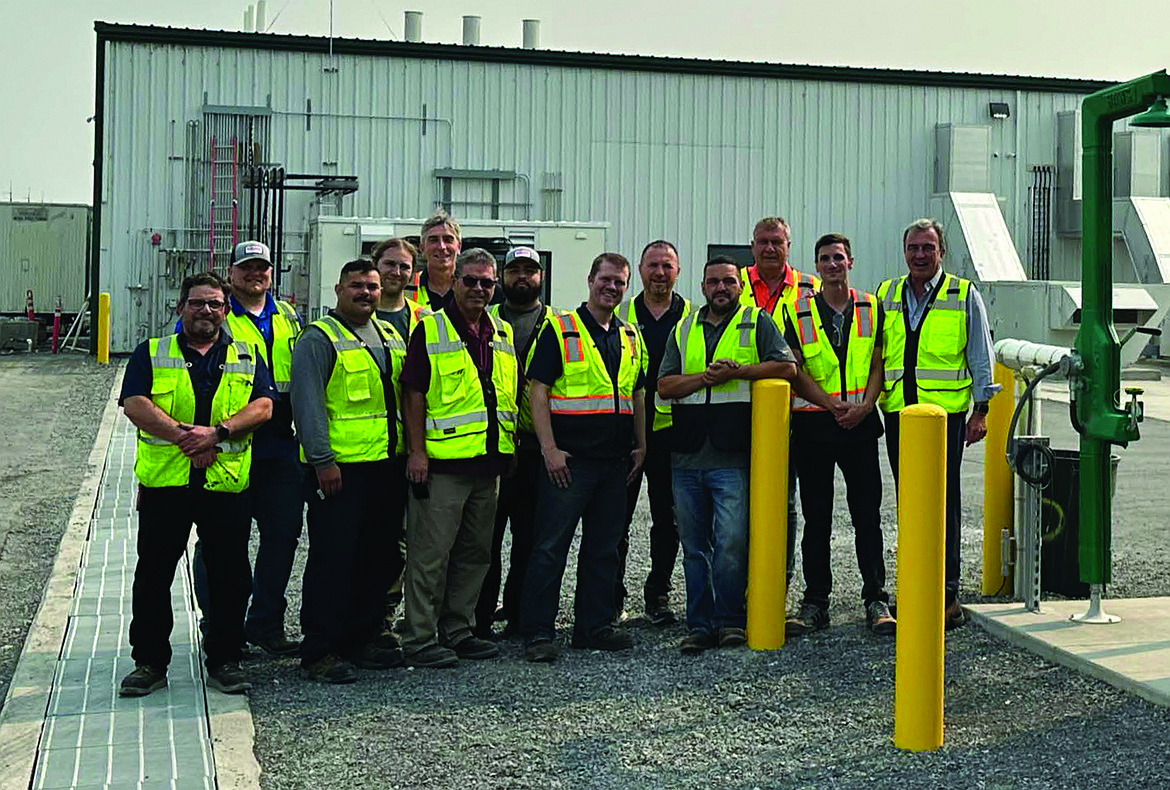
The OneD Battery Sciences team had a successful first run of SINANODE production in July. From left: Abel de la Ossa, Tyson Olson, Leo Martinez, Andy Kirk, Jan-Marc Luchies, Rufino Garza, Leo Rodriguez, Nick Kamerath ,Ioan Horvat, Mario Hernandez, Klaas Heres, Justin Weckerle, Vincent Pluvinage.
Courtesy photo/OneD Battery Sciences
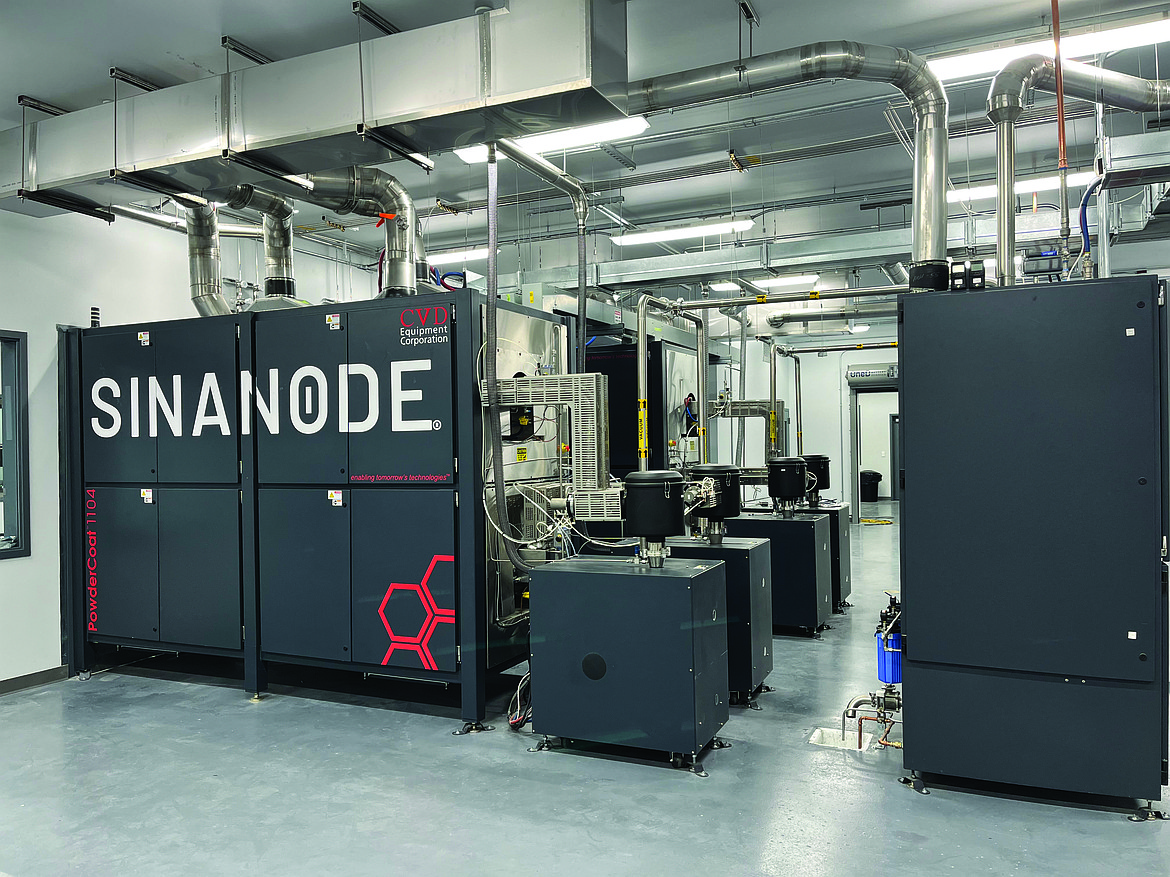
These proprietary chemical vapor deposition ovens are the heart of the SINANODE operation.
Courtesy photo/OneD Battery Sciences

The silane bottles used in OneD’s successful SINANODE test run in July 22.
Courtesy photo/OneD Battery Sciences
Joel Martin has been with the Columbia Basin Herald for more than 25 years in a variety of roles and is the most-tenured employee in the building. Martin is a married father of eight and enjoys spending time with his children and his wife, Christina. He is passionate about the paper’s mission of informing the people of the Columbia Basin because he knows it is important to record the history of the communities the publication serves. | September 6, 2024 1:00 AM
MOSES LAKE — The OneD plant in Moses Lake is up and running.
There’s still some construction going on and the facility is still a ways away from full production, but it did put about a kilogram of SINANODE into a batch of graphite on July 22, according to OneD CEO Vincent Pluvinage.
SINANODE is OneD’s creation, an enhanced graphite that enables lithium-ion electric vehicle batteries to hold a greater charge, which translates to faster charging and longer range. The Washington plant is what’s called a pilot scale production lab, explained Plant Manager Nick Kamerath.
“We’ve got our R&D facility in Palo Alto, California, where they’ve developed this processor the last 12 years,” Kamerath said. “And now we’re kind of taking that up to the next level, proving the scalability of that, working with the customers on their needs and standards.”
The amount of SINANODE actually produced was a long way short of the 100 tons per year OneD anticipates when it’s completely up and running, Kamerath said.
The process itself is proprietary, but the production of SINANODE involves treating the graphite with silane gas, acquired from REC Silicon down the road, and nitrogen, Pluvinage wrote in an email to the Basin Business Journal. The substances were combined in a specially designed chemical vapor deposition oven for less than an hour and emerges as SINANODE. The stuff was sent to Palo Alto for testing and proved to be viable.
“Both in Palo Alto and in Moses Lake, we have acquired synthetic EV-grade graphite and natural EV-grade graphite powders from several large suppliers, with headquarters in various countries and with large multi-year off-take agreements with carmakers and EV cell factories in each continent,” Pluvinage wrote. “For the first run, we used a natural graphite … This graphite is EV-grade, but we obtained it prior to the application of an external carbon coating (called pitch coating), so that we can grow the silicon nanowires inside the pores of each particle.”
EVs have faced a good deal of resistance in the marketplace due to the limitation on their range; the average gasoline vehicle gets 25.4 miles to a gallon of gas and the most efficient gets 39 miles, according to a study by Car and Driver magazine. With a 10-gallon fuel tank, that’s an outer limit of 400 miles. Another Car and Driver study showed that a few electric vehicles could match the 400-mile range, but most are somewhere in the 200-300 range. The distances are comparable, but the practicalities are not; gas stations are available in all but the most remote areas, whereas electric vehicle charging stations are much thinner on the ground outside cities and major highways. Charging an EV can take as much as eight hours, whereas a tank of gas takes about 10 minutes to pump. And if you misjudge your range, it’s awfully difficult to walk to the nearest charging station and bring back a gallon of electricity.
Adding 10% silicon into the graphite of an EV battery anode can double the storage capacity of the battery, OneD Chief Operating Officer Jan-Marc Luchies said.
The “nano” part of nanowire is no joke. That kilogram of SINANODE consisted of about 100 quadrillion silicon nanowires, Pluvinage wrote. Because the change happens on such a small scale, the difference in the graphite wasn’t really visible to the naked eye, Kamerath said.
The test run was certainly noticeable in other ways, Olson said.
“I heard from the landlord (Zip Trucking, from whom OneD leases the property), and he got a call,” Olson said. “He said the PUD called him and said, ‘We just noticed a huge uptick in power.’ And that just happened to be the time frame of our test run.”
The plant has been remarkably fast in its construction, said Construction Manager Tyson Olson. Design on the plant began in spring 2023, and permit applications were submitted in September of that year. The permits came back in January, and construction on the interior began Jan. 28.
The construction process was tricky because so much of what was being done was uncharted territory, Olson said. The CVD ovens were custom-made for the SINANODE process, and so changes had to be made around them. With a full slate of contractors working simultaneously, flexibility was kind of a necessity.
“It was a dance,” Kamerath said. “We learned a lot of lessons along the way. Like we had a lot of dead space that wasn’t necessary for the original plant, but then it’s like now we need room for this, we need room for that, and so we need to move things and shift things around, and then it moves all the utilities that support it.”
“A lot of which was the intent behind the design of the building,” Olson said. “This being a (privately funded) facility, there is a very good chance that things are going to have to change.”
There are other EV battery technology startups locating in central Washington, but OneD is different partly in that it uses existing materials so that vehicle manufacturers won’t have to retool to use its products, Kamerath said.
The lithium-ion battery technology that powers an EV is the same that has been powering laptops and cell phones for decades, Pluvinage said in an interview in April. OneD is betting that the large vehicle manufacturers will be more interested in enhancing that technology than in funding something new.
“Over the last five years, the lithium-ion battery supply chain has invested about $600 billion in big factories that are designed to make lithium-ion batteries with graphite anode,” Pluvinage said. “In the next five years, the industry is investing another trillion dollars. I think it’s very tempting for people to think that just because technology evolves, you’re suddenly going to see a shift in production. But the reality is not like that.”
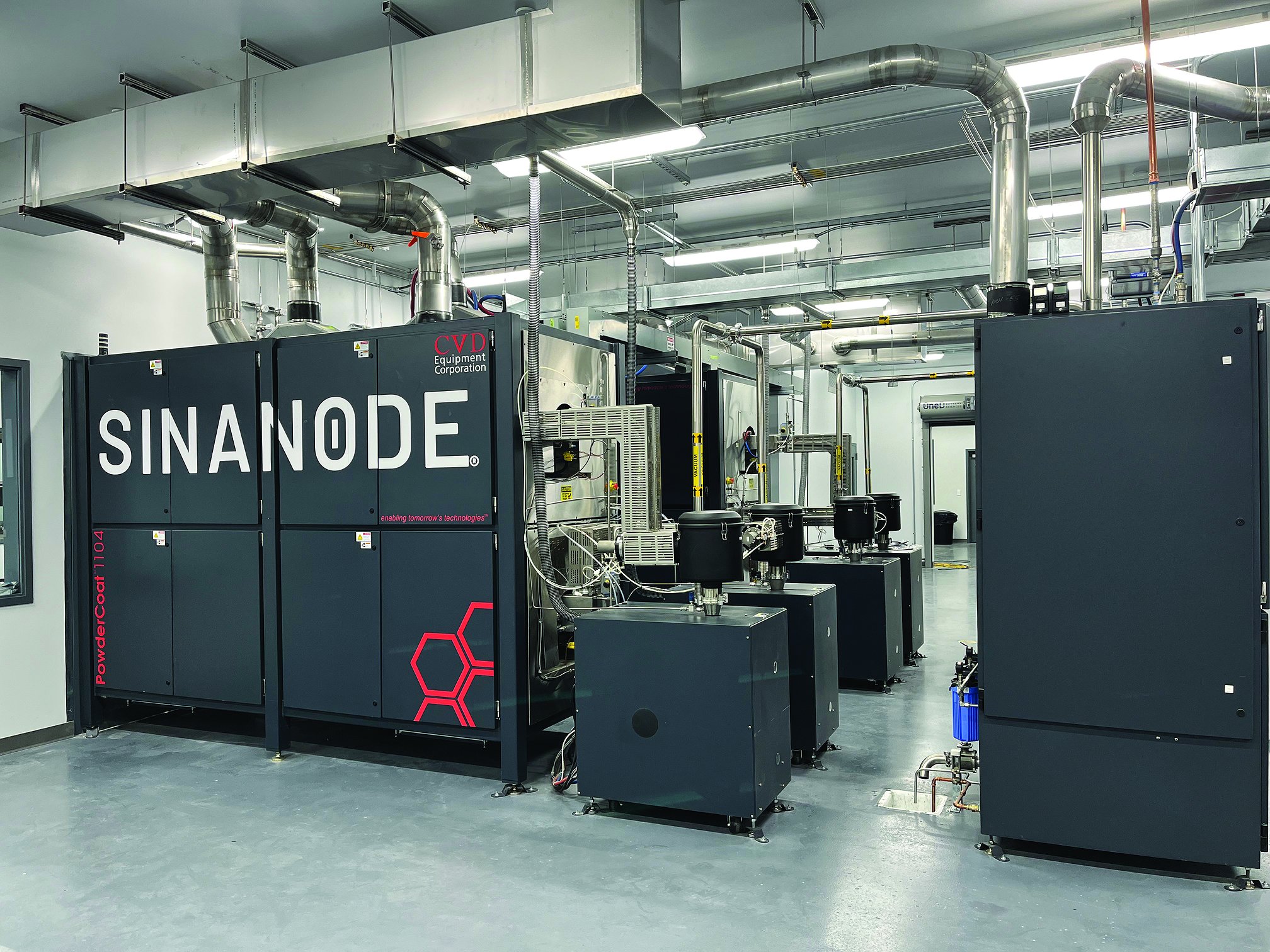 These proprietary chemical vapor deposition ovens are the heart of the SINANODE operation.
Courtesy photo/OneD Battery Sciences
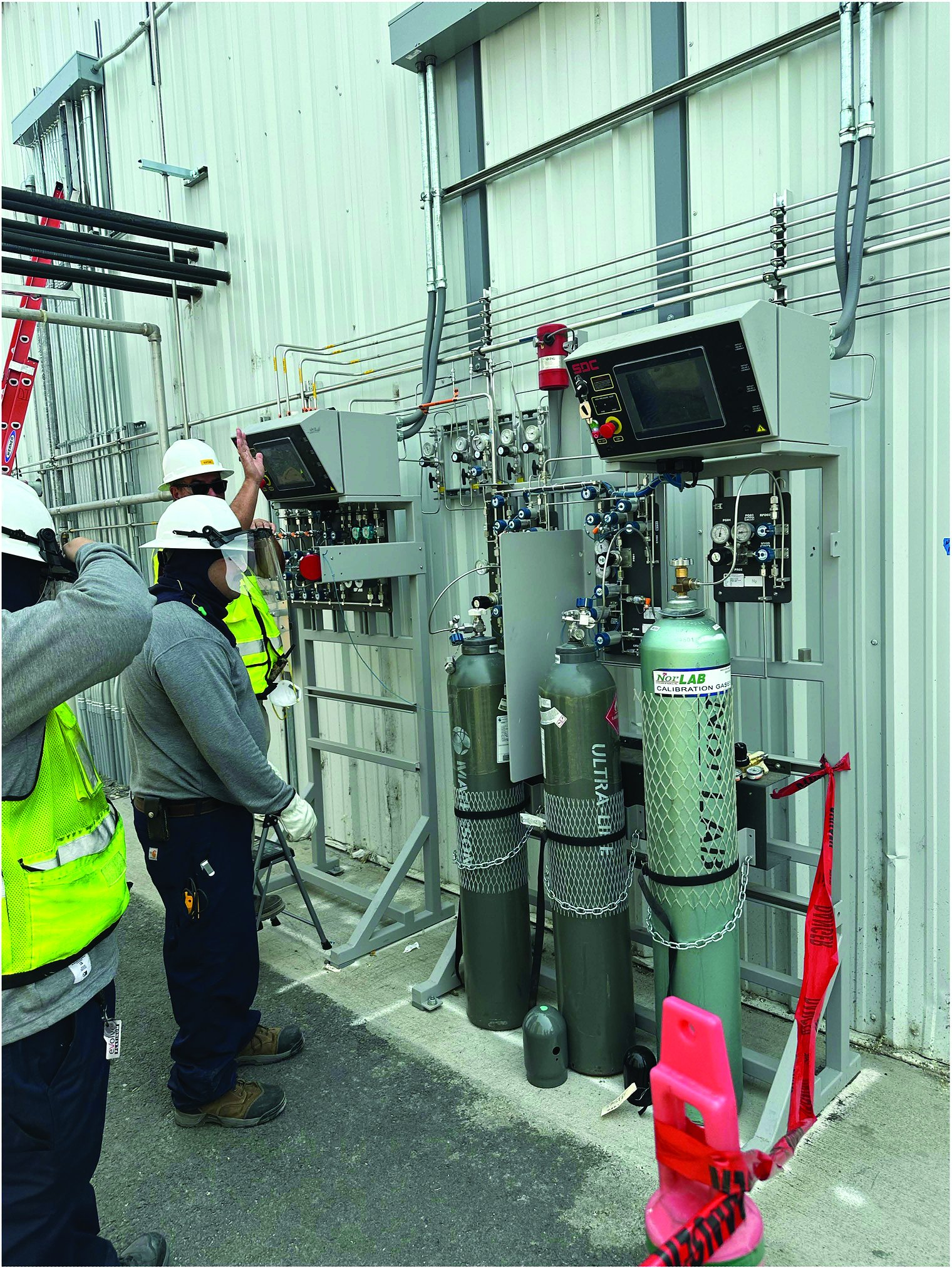 The silane bottles used in OneD’s successful SINANODE test run in July 22.
Courtesy photo/OneD Battery Sciences
ARTICLES BY JOEL MARTIN
Endless battle
Noxious Weed Control Board works to keep invasive plants under control
MOSES LAKE — Some of the nastiest plants in Grant County were the topic of a class led by Jay Johnson, a consultant with the Grant County Noxious Weed Control Board, Tuesday. The Noxious Weed Control Board, as its name would suggest, is tasked with keeping weeds under control in Grant County. That’s not a small job; the board’s website lists 129 species of noxious weeds that are found around Grant County. A noxious weed is defined as an invasive, non-native plant that threatens agricultural crops, local ecosystems or fish and wildlife habitat, according to the Noxious Weed Control Board. Washington state law requires that these weeds be identified and their spread kept to a minimum, if not completely eradicated. “We’re one of those agencies a lot of people don’t really understand,” Johnson said. “We’re a county office and … our funding is tax-based assessment. When you get your tax bill and you look down at all the expenses that you pay for, there we are.”

BASIN EVENTS: Oct. 16-24
COLUMBIA BASIN — Whether you feel like shopping, crafting, learning or seeing a show, there’s something happening for you this week in the Basin. Oct. 16 ‘My Family (Mi Familia)’ screening Spanning three generations, “My Family (Mi Familia)” is a heartfelt drama that follows the Sánchez family as they build their lives in East Los Angeles. Through love, hardship, triumph, and sacrifice, the film explores the immigrant experience, the strength of family bonds, and the traditions that connect one generation to the next. Lowrider show and taco truck before the screening. Sponsored by Columbia Basin Allied Arts, EDUBS C/S and the Moses Lake Creative District. $12 per person. Doors open at 6 p.m., film begins at 7 p.m. at the Moses Lake Civic Center Auditorium, 401 S. Balsam St. Tickets and info: www.cba-arts.org.

Moses Lake author encourages women to look beyond church culture norms
MOSES LAKE — A Moses Lake author’s book, “A Christian Woman Striving to Live Her Faith in a Man-Controlled World,” takes aim at the role to which many churches relegate the female half of their congregations. “It’s to encourage women in the faith,” Linda Curran said. “A lot of churches say, ‘Teach Sunday school, do this, do that, but don’t (evangelize.)’" In her book, Curran recounts a time when she moved to a new community and joined a church there. She was surprised to learn that, as a new female member, she had been automatically assigned church cleaning duties. When she questioned it, she wrote, she was met with condescension and her objections were brushed aside. In other churches, she said, women who were capable of teaching were relegated to “women’s ministry.”