
Kalispell City Council revisits using tax dollars for workforce housing
JACK UNDERHILL | Hagadone News Network | UPDATED 1 year, 6 months AGO
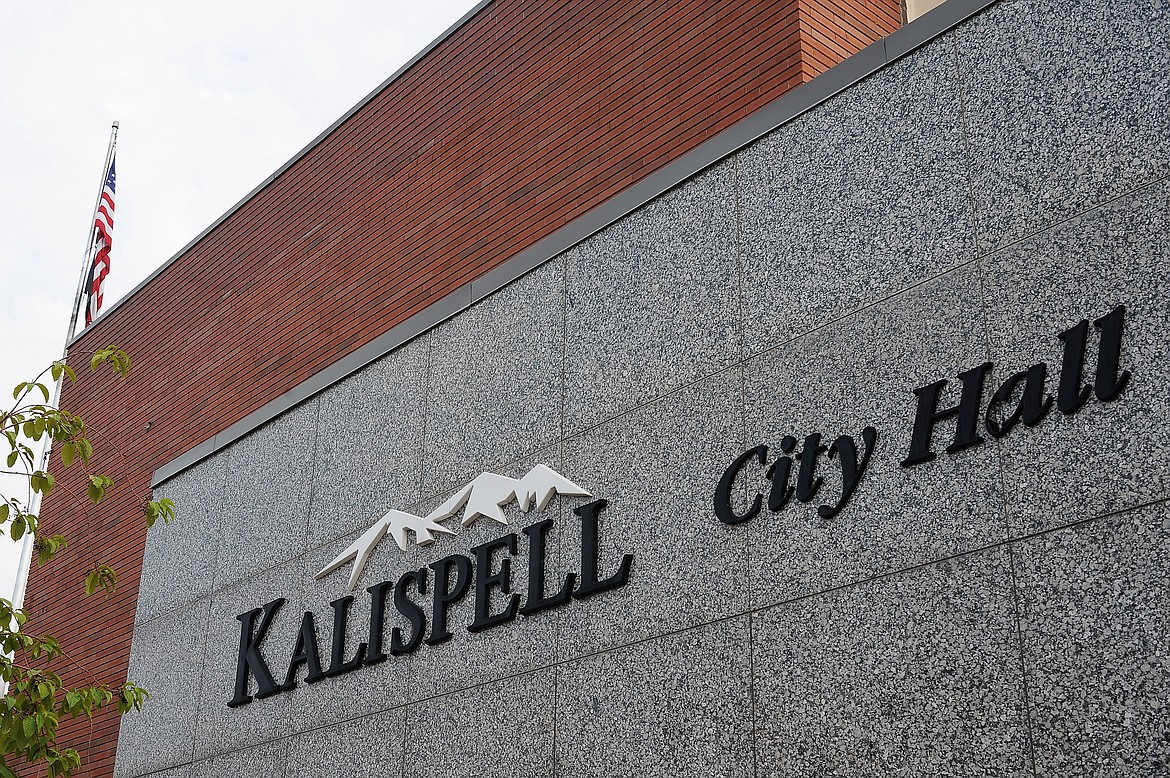
Kalispell City Hall is seen at the corner of First Avenue East and Second Street East in this July 21, 2021, file photo. (Chad Sokol/Daily Inter Lake)
KALISPELL GOVERNMENT, HOUSING AND TRANSPORTATION REPORTER Jack Underhill covers Kalispell city government, housing and transportation for the Daily Inter Lake. His reporting focuses on how local policy decisions affect residents and the rapidly growing Flathead Valley. Underhill has reported on housing challenges, infrastructure issues and regional service providers across Montana. His work also includes accountability reporting on complex community issues and public institutions. Originally from Massachusetts, Underhill graduated from the University of Massachusetts, Amherst with a degree in Journalism before joining the Inter Lake. In his free time, Underhill enjoys mountain biking around the valley, skiing up on Big Mountain or exploring Glacier National Park. IMPACT: Jack’s work helps residents understand how growth, housing and infrastructure decisions affect the future of their community. | September 11, 2024 12:00 AM
Kalispell City Council debated Monday whether to make workforce housing developments eligible for public funding through tax increment financing.
Doing so would require the city update its Downtown Urban Renewal Plan and West Side/Core Area Urban Renewal Plan. Council last considered the move almost two years ago but shelved the proposal indefinitely in October 2022.
That meeting saw councilors divided over who would be eligible for workforce housing, which in the initial proposal was defined as those making between 80% and 120% of the area median income.
Since then, Montana Legislature has defined workforce housing as serving individuals and families making between 60% and 140% of the area median income.
“Which does I think provide a little more guide rails on what the program within urban renewal can be used for,” Development Services Director Jarod Nygren said on Monday.
Kalispell, and the state, is experiencing a housing crunch driven by in-migration coupled with a lack of available housing. In Flathead County, population growth outpaced home construction in the decade preceding the 2020s 14.8% to 6.2%, according to U.S. Decennial Census data.
According to the latest data from the Northwest Montana Association of Realtors, the median household income in the Flathead Valley in 2022 was $66,395.
Experts say households should spend roughly 30% of their income on monthly housing costs, for example rent. The median household in Flathead County spent close to 70% of its income on housing, making the valley home to one of the highest income-to-housing ratios in Montana, according to data from the University of Montana’s Bureau of Business and Economic Research.
When discussing the proposal in 2022, councilors questioned how necessary the amendment would be as developers can apply for tax increment financing funding for infrastructure, thus reducing housing costs.
Nygren said on Monday that language in the urban renewal plans would ensure that the developer keeps the units affordable.
“There is no enforcement mechanism without having it defined in there that workforce housing is the goal,” he said.
A city and developer agreement could be created for every project, requiring yearly check-ins, Nygren said.
“Really just assuring that whatever funds were allocated were being used appropriately to lower the rent,” he said.
Councilor Ryan Hunter recommended requiring developers to partner with nonprofits that specialize in keeping developments affordable.
Nygren also said the tax increment financing funds could piggyback off state-funded housing initiatives and take various forms beyond direct subsidies.
“That’s what I think is crucial here is that flexibility,” agreed Hunter.
Councilor Chad Graham voiced skepticism of using tax increment financing funds for workforce housing, suggesting that the creation of a housing authority would be more appropriate.
“I feel like we are taking ... a tool that the city has for addressing blight and redevelopment,” Graham said. “To me we are trying to blur the lines a little bit.”
Tax increment financing funding is primarily designed to spur redevelopment in neglected parts of the community.
Missoula was the first Montana city to make workforce housing projects eligible for tax increment financing funds in September 2023, requiring long-term affordability through deed restriction, use restriction, community land trust and other mechanisms, according to city documents.
Rental projects in Missoula require a minimum 30-year affordability period and 75 years for sale-homeownership projects.
Kim Morisaki, executive director of the Northwest Montana Community Land Trust, thanked Council during public comment for revisiting the conversation on workforce housing and offered to partner with the city on projects.
Morisaki said that the land trust has an agreement with Polson to use tax increment financing funds to build workforce housing there, but has not yet utilized it. That’s because of the convoluted nature of that city’s tax increment financing district, Morisaki said.
“It seems to me it would be much easier to do it here,” she said.
The land trust also partners with Whitefish and Columbia Falls to create affordable workforce housing in those areas. Morisaki said Columbia Falls recently donated land for future affordable housing.
Reporter Jack Underhill can be reached at [email protected] and 758-4407.
ARTICLES BY JACK UNDERHILL

With Woodland Park pond’s skating future on thin ice, Council looks to recast its use
Skating on Woodland Park pond is becoming a memory of winters past.

Updated stormwater plan identifies system shortfalls in Kalispell
Public Works staff on Monday presented Kalispell City Council with new data they say will help upgrade the stormwater system to prevent flooding.

Kalispell City Council reviews updated stormwater plan
Kalispell City Council on Monday will review the city’s updated stormwater facility plan.