
Donation helps Confluence Health purchase new equipment
CHERYL SCHWEIZER | Hagadone News Network | UPDATED 8 months AGO
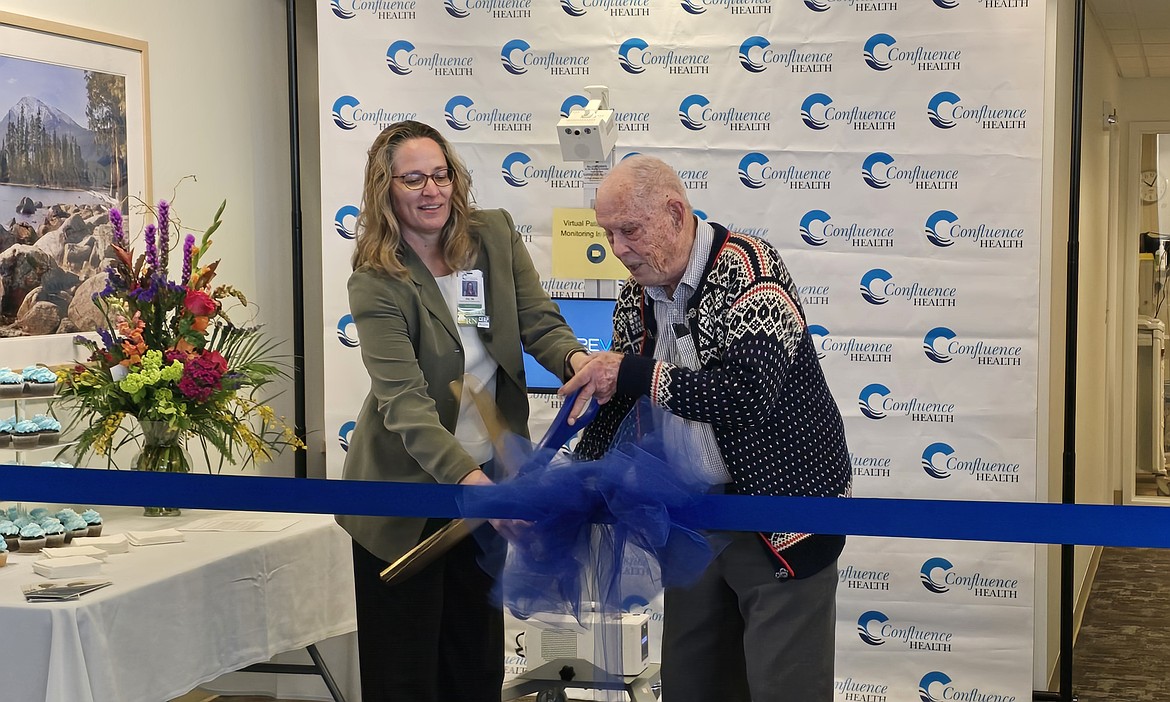
Retired physician Chris Stahler, right, and Kim Collier, Confluence Health director of nursing care services, cut the ribbon to celebrate the purchase of new equipment, paid for with a donation from Stahler.
COURTESY PHOTO/CONFLUENCE HEALTH
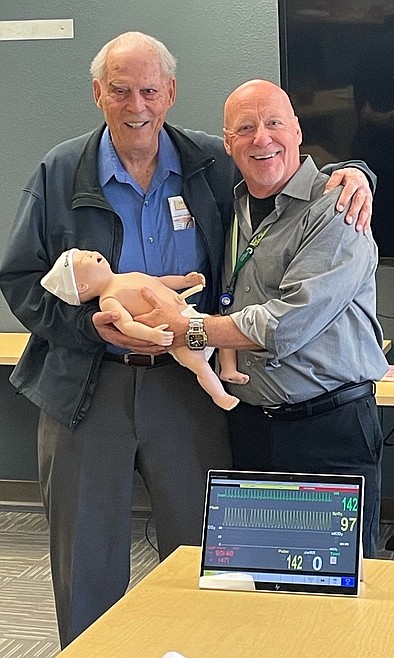
Chris Stahler, right, and Dave Shanley, Confluence clinical development and eLearning manager, with a simulation mannequin purchased with the help of a donation from Stahler.
Senior Reporter Cheryl Schweizer is a journalist with more than 30 years of experience serving small communities in the Pacific Northwest. She began her post-high-school education at Treasure Valley Community College and enerned her journalism degree at Oregon State University. After working for multiple publications, she has settled down at the Columbia Basin Herald and has been a staple of the newsroom for more than a decade. Schweizer’s dedication to her communities and profession has earned her the nickname “The Baroness of Bylines.” She covers a variety of beats including health, business and various municipalities. | April 17, 2025 2:00 AM
WENATCHEE — A donation from a longtime Wenatchee physician helped Confluence Health officials buy equipment for an upgraded patient monitoring system and simulators for emergency response.
Chris Stahler, a retired chest, vascular and general surgeon, helped cut the ribbon at a ceremony recognizing the donation and introducing the new equipment Tuesday at Central Washington Hospital. The amount of the donation was not disclosed.
Suzanne Carte-Cocroft, vice-president of philanthropy at Confluence Health, said Stahler has an understanding of the challenges faced by healthcare workers in general and in rural areas in particular.
“Having spent his career in the Wenatchee Valley, he wanted to make an investment aimed at addressing staffing resources and efficiencies through training,” she said.
The remote monitoring system, sometimes called a virtual sitter or telesitter, is used for patients in need of close observation, which previously required a hospital staff member to sit with the patient. The new system uses cameras, two-way communication, predictive fall monitoring and other tools to monitor patients. It allows one employee to monitor multiple patients, said Adam MacDonald, corporate communications program manager.
“This suite of tools allows for quicker response time and enhanced safety (and) gives other CNAs and staff more flexibility to care for more patients during their shifts,” MacDonald wrote in a press release.
Stahler’s donation also helped pay for updated and upgraded patient simulators, mannequins that can be used to train healthcare workers in emergency and trauma response. One newborn and two adult simulators can mimic a variety of medical conditions to help staff practice their response. The donation also paid for the purchase of practice dummies for taking blood pressure and inserting an IV.
Stahler attended the first training session where the new equipment was used, MacDonald said.
Dave Shanley, clinical development and eLearning manager, said the new equipment replaces pieces that were outdated. The new equipment will allow for more advanced training, he said.
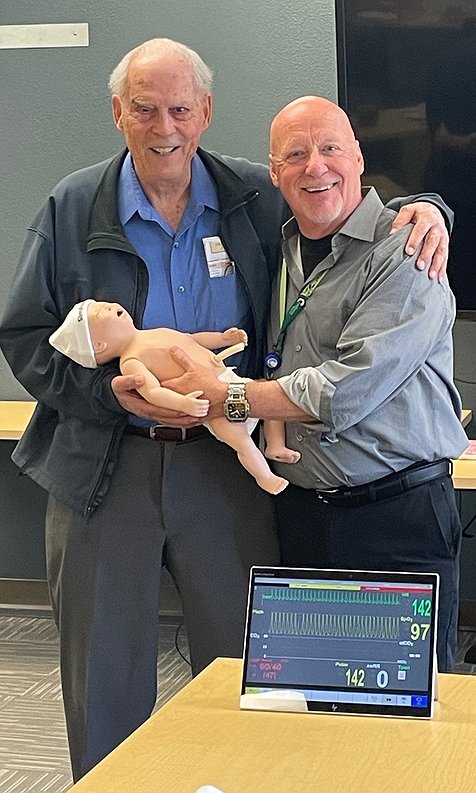 Chris Stahler, right, and Dave Shanley, Confluence clinical development and eLearning manager, with a simulation mannequin purchased with the help of a donation from Stahler.
ARTICLES BY CHERYL SCHWEIZER

More rain for Cascades, high winds for Columbia Basin this week
LEAVENWORTH — A second strong winter storm is projected to hit Washington this week, bringing heavy rains back to areas that were hard-hit by rain and flooding last week. Steve Bodnar, meteorologist with the National Weather Service office in Spokane, said rain is forecast to start Monday, but won’t last as long.
Revised Moses Lake ordinance designed to recover some MLFD costs
MOSES LAKE — An ordinance revision approved by the Moses Lake City Council will allow more consistent billing of insurance companies in cases of emergency response by the Moses Lake Fire Department. In certain circumstances, property owners or vehicle owners may be responsible for paying whatever emergency response costs are not covered by insurance. The revisions passed on a 6-1 council vote Tuesday, with council member Victor Lombardi voting no.

Quincy EP&O levy to go to voters
QUINCY — Quincy School District voters will be asked to accept or reject a four-year educational programs and operations levy in a special election in February. If it’s approved, it would replace the levy approved by voters in 2022. District superintendent Nik Bergman said money raised through the levy accounts for about 16% of the district’s budget. “The state doesn’t fully fund a lot of programs,” Bergman said. “It’s used to fund our highly capable (program) and STEAM enrichment. Some of it is used to fund special education, early learning, the arts, music. We have a music program that is just flourishing right now, and I can connect that to the community support of the levy.”