
Measles Q&A: Vaccine most effective way to prevent infection
KRISTI NIEMEYER | Hagadone News Network | UPDATED 11 months, 1 week AGO
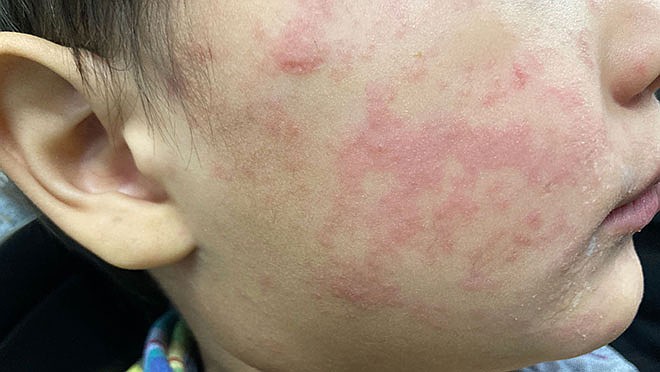
Measles rash (photo courtesy of CDC.gov)
Kristi Niemeyer is editor of the Lake County Leader. She learned her newspaper licks at the Mission Valley News and honed them at the helm of the Ronan Pioneer and, eventually, as co-editor of the Leader until 1993. She later launched and published Lively Times, a statewide arts and entertainment monthly (she still publishes the digital version), and produced and edited State of the Arts for the Montana Arts Council and Heart to Heart for St. Luke Community Healthcare. Reach her at [email protected] or 406-883-4343. | April 23, 2025 12:00 AM
Montana, as well as the rest of the United States, has been considered measles-free since 2000. As of last Friday, however, 800 cases had been reported nationwide, with the deaths of two children ages 6 and 8 in Texas, and the death of an adult in New Mexico. All three were unvaccinated.
Montana is now on the list of at least seven other states with active outbreaks (three or more cases). Five cases were reported last week in Gallatin County, marking the first reported cases of the disease in Montana in 35 years.
In light of the recent outbreak, we asked Lake County Public Health Services Director Emily Colomeda for suggestions on how to protect vulnerable kids and adults.
Leader: What advice can you offer regarding the measles outbreak in Gallatin County?
Colomeda: First of all, I would recommend everyone to check their immunization status as well as any children and other members of the household. Being fully vaccinated is the most effective way to prevent measles infection.
The more people who can get vaccinated among a population the better, as it lowers the virus's ability to be transmitted from one person to the next. With travel to various sports events throughout the state and with tourist season upon us, it may just be a matter of time until it arrives in Lake County.
Leader: What percent of Lake County kids have been vaccinated?
Colomeda: We do not have accurate data about the vaccination status of Lake County children. Up until 2021, school districts were required to report the vaccination coverage rates among their students to the Department of Health and Human Services. The Montana Legislature passed a law changed that requirement, so we no longer collect those data at the local level.
Leader: Have you seen a decline in the rate of childhood vaccinations in recent years?
Colomeda: Again, we do not have local data that indicates trends in childhood vaccination coverage. However, according to the National Immunization Survey, conducted annually and used to obtain national, state and selected local area estimates of vaccination coverage rates for U.S. children 19–35 months, it appears that coverage rates in the US have dipped slightly from 2019-2021.
Leader: Are you hearing from parents who are concerned about the outbreak?
Colomeda: We have received a few calls from older adults who want to know if they need additional MMR (measles, mumps & rubella) doses, more so than from parents of children. We are happy to answer any general questions about measles, but we urge people with more specific questions related to vaccination and health conditions to reach out to their healthcare providers.
Leader: What's the risk to adults who may or may not know whether they were vaccinated?
Colomeda: Measles is a highly contagious (and very preventable) disease with potential serious complications such as pneumonia, encephalitis and even death. The risk is considerable for both adults and children, so it is important to know your vaccination status.
The general recommendation for adults with no evidence of immunity to measles, mumps, or rubella is to receive one dose of MMR vaccine. Additional recommendations exist for certain other populations such as international travelers, healthcare personnel, and persons born between 1963 and 1967. It is recommended to consult your health care provider if you are unsure whether you should be vaccinated.
There are certain situations where an adult is presumed immune. They include:
• Written documentation of adequate vaccination;
• Laboratory evidence of immunity;
• Birth before 1957; or
• Laboratory confirmation of disease.
Persons who do not meet the above criteria are considered susceptible and should be vaccinated unless contraindicated.
Leader: Why is this age range significant: 1963-1967?
Colomeda: A very small proportion of adults (less than 5%) may have received killed measles vaccine from 1963 through 1967 during childhood, which is a different formulation of the MMR vaccine developed after that time. The ACIP (Advisory Council on Immunization Practices) recommends re-vaccinating anyone who received a measles vaccine of unknown type, inactivated measles vaccine, or further attenuated measles during these years.
Leader: Why are those born before 1957 considered immune?
Colomeda: Before 1957, measles was very prevalent in the population (before the development of a vaccine), and nearly everyone would have contracted measles at some time due to its highly infectious nature. People who have had measles have natural immunity, which is presumed to be lifelong.
Leader: How safe is the measles vaccine?
Colomeda: The MMR vaccine has been extensively studied and proven safe and effective across various populations. While vaccines can have side effects, those associated with MMR are generally mild and short-lived.
It's important to note that there is no link between the MMR vaccine and autism, despite some misconceptions. That said, there are some people who cannot get vaccinated such as those with an allergy to any of the vaccine's components, pregnant women, children under 1 year (there are some exceptions for international travel), immunocompromised individuals, and people with certain medical conditions.
Again, these are general recommendations. People with more specific questions should consult with their healthcare providers.
For more information about measles, visit the DPHHS website: dphhs.mt.gov/publichealth/cdepi/diseases/Measles.
CSKT Tribal Health encourages tribal members who aren't certain of their vaccination status to call a local Public Health nurse at 406-745-3525.
ARTICLES BY KRISTI NIEMEYER

Scholarship helps mother of two reach for college degree
For Taurie Matt, higher education offers a path to building a better life for her family. A recent scholarship from the Gianforte Family Foundation is helping her stay in school without drawing down her family’s resources.

Jig Jam: Cherry Valley students learn about music from The McDades
The McDades, a Canadian quintet that claimed the 2007 JUNO Award for Best Roots/Traditional Album, weren’t at all daunted by their audience of Cherry Valley students last Thursday.

Former Polson man files complaint against library alleging ADA violation
Former Polson resident Michael Ross has lodged a civil complaint in U.S. District Court in Missoula, accusing the North Lake County Library and its director, Abbi Dooley, of violating the Americans with Disabilities Act.