
COLUMN: The unforgettable Pope Francis
JOEL MARTIN | Hagadone News Network | UPDATED 1 year, 5 months AGO
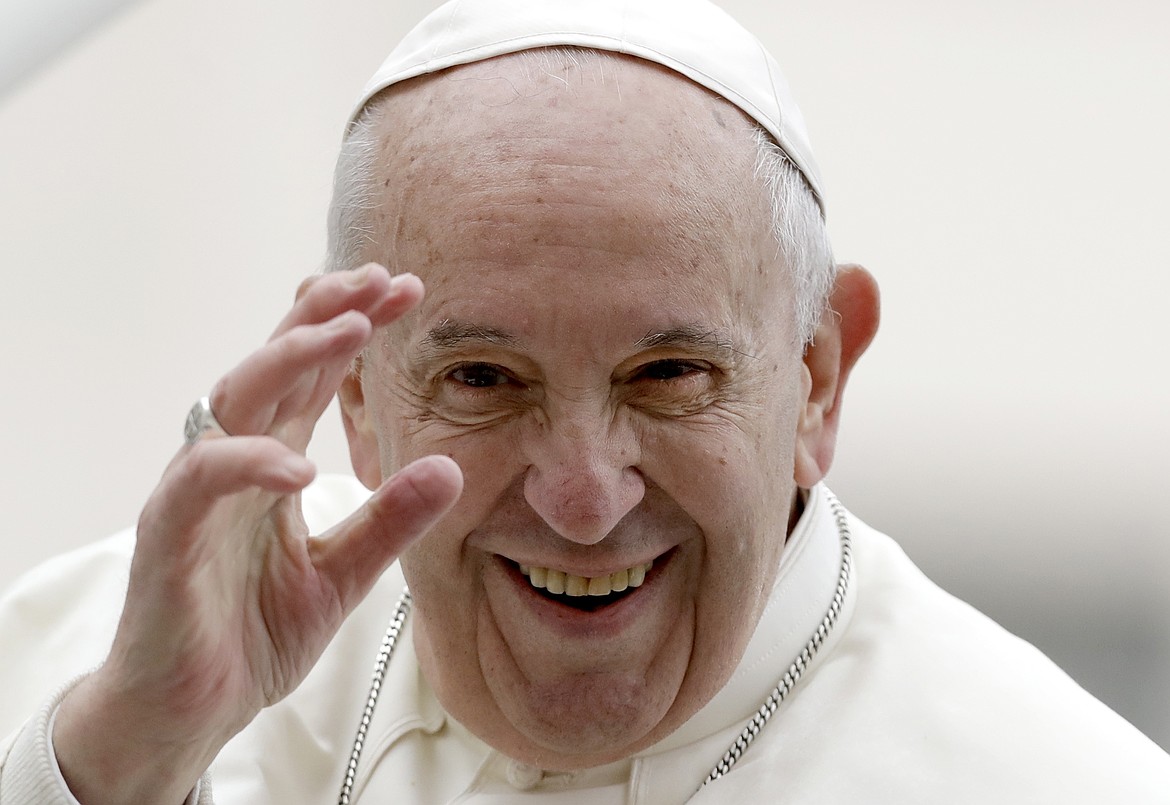
Pope Francis, shown here in 2019, will be remembered for his kindness, humility and love of people.
Andrew Medichini/AP
Joel Martin has been with the Columbia Basin Herald for more than 25 years in a variety of roles and is the most-tenured employee in the building. Martin is a married father of eight and enjoys spending time with his children and his wife, Christina. He is passionate about the paper’s mission of informing the people of the Columbia Basin because he knows it is important to record the history of the communities the publication serves. | April 24, 2025 1:00 AM
This week, His Holiness Pope Francis, the head of the Catholic Church, died. That’s not really surprising. He was 88 years old, and he’d been struggling with his health for several years. Nor is it unique; there have been 266 popes, give or take a few disputed claimants. Some of those guys made a huge difference in the world; most of them nobody has heard of outside dusty libraries and lists on Wikipedia. Name any pope who lived before their lifetime and most people will give you a blank look.
But Francis was different.
Born Jorge Bergoglio in Argentina, Francis was the first pope from the Americas, and the first one since the eighth century to come from outside Europe. That’s a big deal. Francis’ election in 2013 served as a reminder (and not always a welcome one) to Europeans that the Church isn’t actually their personal property. The demographics bear that out: According to the CIA Factbook, only slightly over a fourth of the world’s Catholic population is in Europe. By electing a Latin American, the College of Cardinals admitted that the Catholic Church really is, as the word “catholic” means, a worldwide institution.
Francis was the first pope who was also a member of the Society of Jesus. Only 33 other popes were members of religious orders before their election. Orders have their own structure independent of the Church hierarchy, which tends to put them outside the mainstream of Church politics. Almost as much as being Latin American, being a Jesuit made Francis an outsider.
It’s a little surprising, then, that he took the name of the founder of the Franciscan order for his papal name. Not only was Bergoglio the first pope since the 10th century to take on a name that hadn’t been used before, but his namesake, St. Francis of Assisi, was associated with humility and charity rather than education like Francis’ own Jesuit order.
By all accounts, humility defined Pope Francis. As archbishop of Buenos Aires, Bergoglio was known for ministering to the poorest and most dangerous slums in a city famous for rough neighborhoods. After he was elected pope, he rode back to the Vatican in a bus rather than the Popemobile. He refused to live in the papal palace, insisting instead on staying in the Vatican guest house. He had a reputation for sneaking out of the Vatican to shop, mix with ordinary people and tend to the homeless. He was active on social media and made jokes at news conferences. He made a point of building bridges with other religions and with political figures on all sides.
Francis might have been one of the most influential men in the world, but you’d never have known it from him.
And that, in the long run, is what Francis will be remembered for. Not for his name, not for his origins, not for great deeds or scholarly writings. Francis was the people’s pope, and people knew it.
As a Catholic myself, I feel Francis’ passing personally. But the rest of the world has lost something too. Goodness and mercy, as the Psalm says, followed him all the days of his life, touching millions of people. When the Church chooses a new leader in the coming weeks, Francis’ example will cast a long shadow.
Goodbye, Your Holiness. We won’t forget you.
ARTICLES BY JOEL MARTIN

Endless battle
Noxious Weed Control Board works to keep invasive plants under control
MOSES LAKE — Some of the nastiest plants in Grant County were the topic of a class led by Jay Johnson, a consultant with the Grant County Noxious Weed Control Board, Tuesday. The Noxious Weed Control Board, as its name would suggest, is tasked with keeping weeds under control in Grant County. That’s not a small job; the board’s website lists 129 species of noxious weeds that are found around Grant County. A noxious weed is defined as an invasive, non-native plant that threatens agricultural crops, local ecosystems or fish and wildlife habitat, according to the Noxious Weed Control Board. Washington state law requires that these weeds be identified and their spread kept to a minimum, if not completely eradicated. “We’re one of those agencies a lot of people don’t really understand,” Johnson said. “We’re a county office and … our funding is tax-based assessment. When you get your tax bill and you look down at all the expenses that you pay for, there we are.”

BASIN EVENTS: Oct. 16-24
COLUMBIA BASIN — Whether you feel like shopping, crafting, learning or seeing a show, there’s something happening for you this week in the Basin. Oct. 16 ‘My Family (Mi Familia)’ screening Spanning three generations, “My Family (Mi Familia)” is a heartfelt drama that follows the Sánchez family as they build their lives in East Los Angeles. Through love, hardship, triumph, and sacrifice, the film explores the immigrant experience, the strength of family bonds, and the traditions that connect one generation to the next. Lowrider show and taco truck before the screening. Sponsored by Columbia Basin Allied Arts, EDUBS C/S and the Moses Lake Creative District. $12 per person. Doors open at 6 p.m., film begins at 7 p.m. at the Moses Lake Civic Center Auditorium, 401 S. Balsam St. Tickets and info: www.cba-arts.org.

Moses Lake author encourages women to look beyond church culture norms
MOSES LAKE — A Moses Lake author’s book, “A Christian Woman Striving to Live Her Faith in a Man-Controlled World,” takes aim at the role to which many churches relegate the female half of their congregations. “It’s to encourage women in the faith,” Linda Curran said. “A lot of churches say, ‘Teach Sunday school, do this, do that, but don’t (evangelize.)’" In her book, Curran recounts a time when she moved to a new community and joined a church there. She was surprised to learn that, as a new female member, she had been automatically assigned church cleaning duties. When she questioned it, she wrote, she was met with condescension and her objections were brushed aside. In other churches, she said, women who were capable of teaching were relegated to “women’s ministry.”