
Pasco potato farmer growing into the future
JOEL MARTIN | Hagadone News Network | UPDATED 10 months, 2 weeks AGO
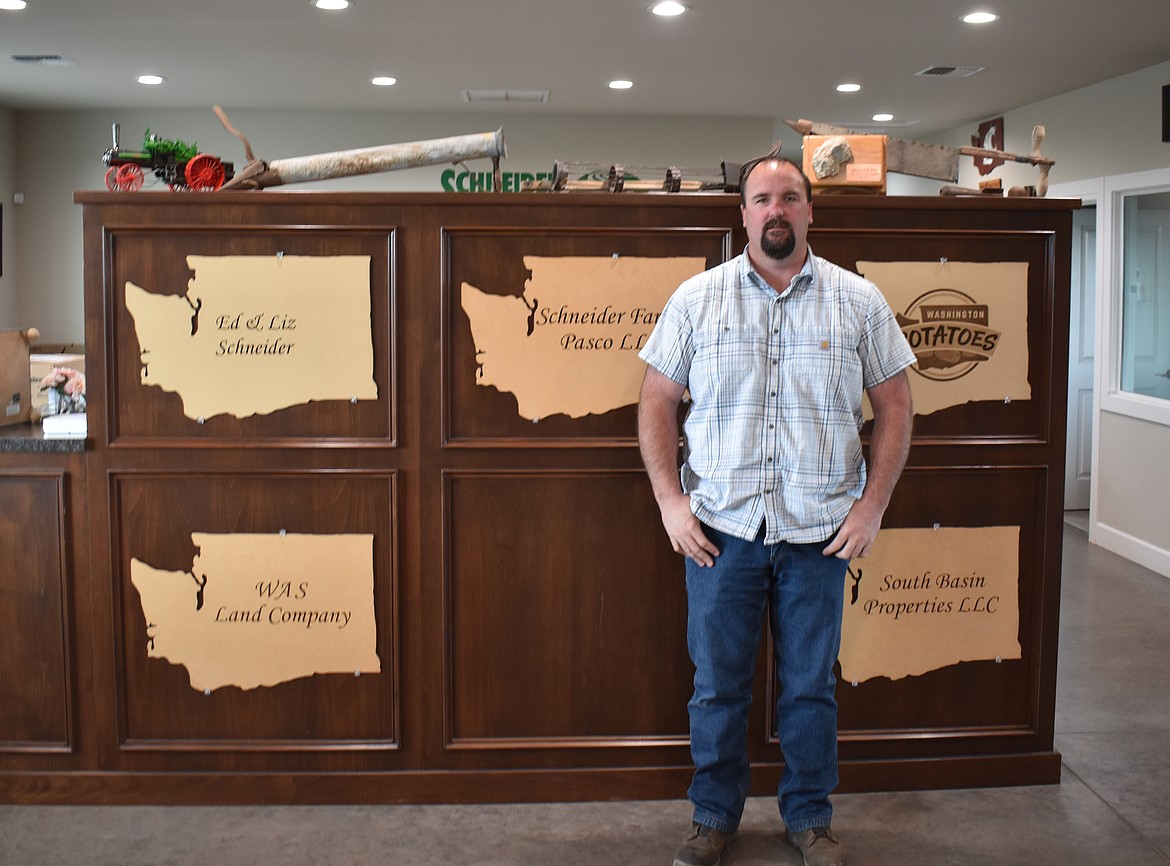
Grant Morris, co-owner of Schneider Farms, stands in his office near Pasco.
Joel Martin/Basin Business;Journal
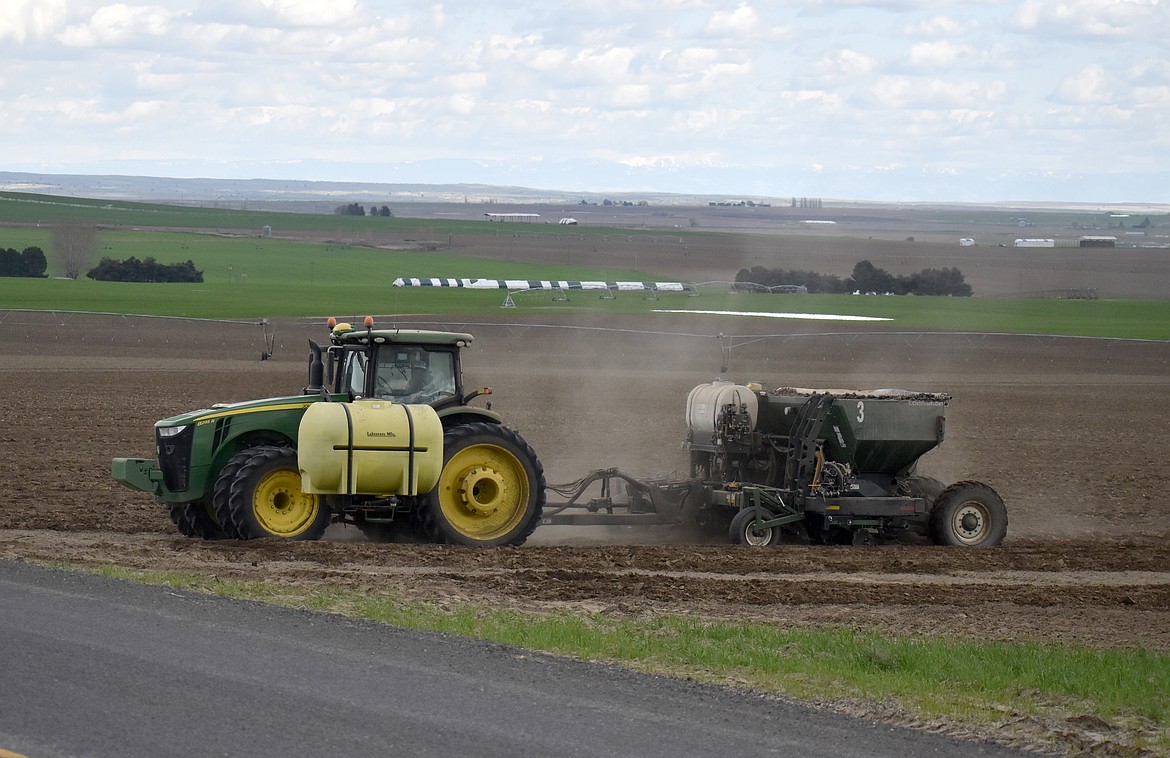
A worker drives a tractor at Schneider Farms. Farming equipment is almost entirely controlled by GPS today, co-owner Grant Morris said, much more than when he got into the business 20 years ago.
Joel Martin/Basin Business;Journal
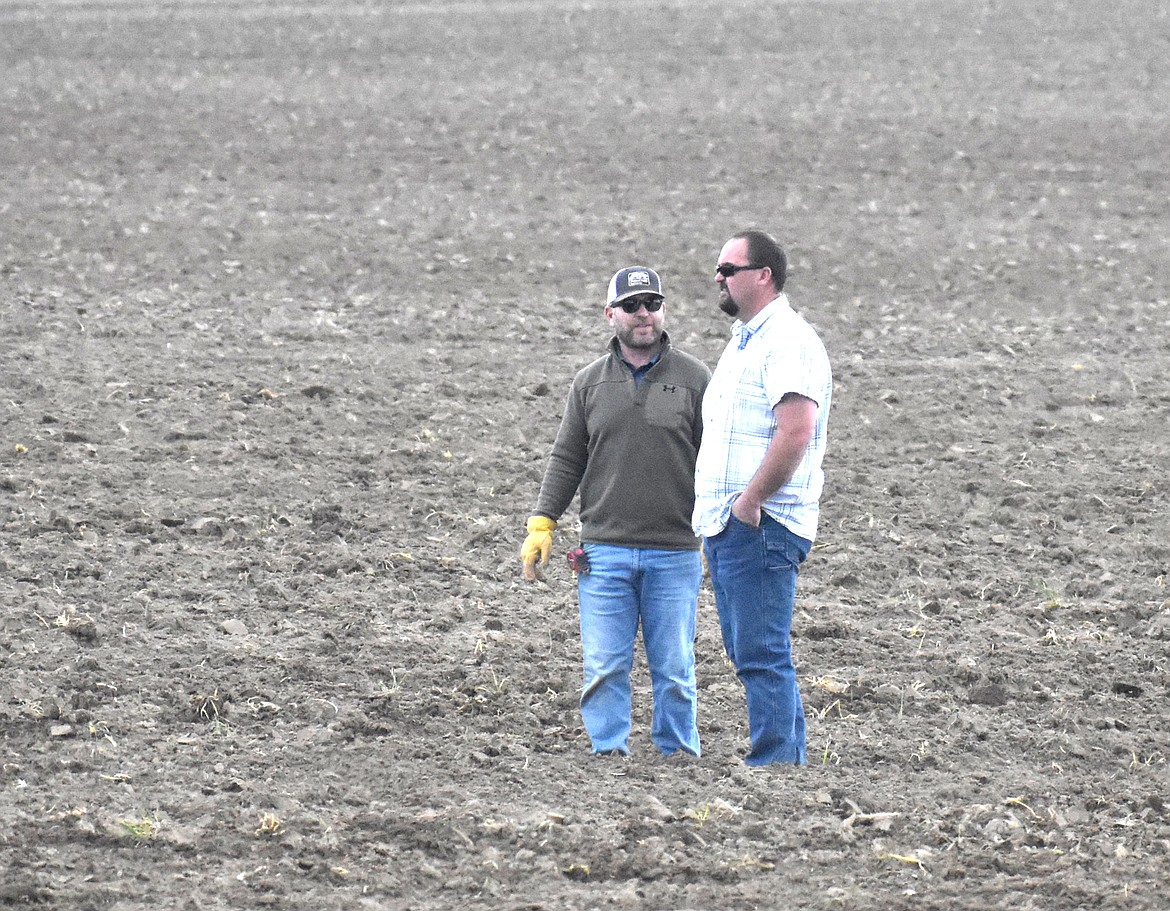
Grant Morris, right, talks with an employee in a field at Schneider Farms. Morris came to Schneider Farms 20 years ago right out of college and is now co-owner.
Joel Martin/Basin Business;Journal
Joel Martin has been with the Columbia Basin Herald for more than 25 years in a variety of roles and is the most-tenured employee in the building. Martin is a married father of eight and enjoys spending time with his children and his wife, Christina. He is passionate about the paper’s mission of informing the people of the Columbia Basin because he knows it is important to record the history of the communities the publication serves. | April 24, 2025 1:00 AM
PASCO — Grant Morris does a lot of his farming from a desk these days.
“There’s a lot of technology,” Morris said. “I complain about it regularly, that half my job this time of year is pushing ‘OK’ or changing an AB line. It makes what we do more efficient and makes us better growers, but it is a huge pain in the butt.”
Morris, the co-owner of Schneider Farms, got the farming bug early in life, he said. His family moved around a lot when he was growing up, he said, and when he graduated from WSU, he was ready to settle on a farm and stay put.
“There was no doubt,” he said. “I always felt bad for everybody in college who didn’t know what they were going to do and just wasted two years of their life screwing around.”
Morris’ uncle knew Ed Schneider, who needed someone to run water for him, and that was all it took. Twenty years later, Schneider is semi-retired and Morris is running the operation, about 2,000 acres planted in potatoes north of Pasco. When the irrigation season starts, Morris said, it’s all he can do to keep up with the equipment.
“I can’t tell you the last time I ran a planter,” Morris said. “It’s been years and years and years. Between getting water going, dealing with all those (hassles), keeping the equipment running and all the GPS stuff, that’s a full-time job this time of year.”
Technology can’t do everything, Morris said. There are still guys out on tractors doing the
actual planting, and others maintaining water lines.
Farmers still face the same issues with weather and plant diseases.
“We still have all the issues that our grandparents had,” Morris said. “We just have the new world issues on top of it. Every minute we spend worrying about the new stuff is a minute we’re not spending on growing food. There’s only so much of us to go around. When you add here, you have to subtract somewhere else, and usually that means bottom dollar for us. If we’re not managing our crop well enough, we’re going to suffer there and we’re converting our time, money, energy, everything, somewhere else.”
The biggest change has been the rise of GPS, Morris said. When he came to Schneider Farms 20 years ago, the technology was just beginning to take off.
“There’s nothing that goes through a field anymore that doesn’t use GPS,” he said. “It’s applying our pesticides with sub-inch accuracy and rates. Our fertilizer is (applied) that way. The seeds we’re planting in the ground from the planters are also put on by GPS and it controls the rate, so as the tractor speeds up or slows down, that all changes. It’s very, very accurate … I was in Chicago the other day, and I was sitting in a meeting, looking at what they were planting, and I was able to see something on the map, and I was able to text them ‘Hey, let’s stop, let’s fix this.’ Without that, we’d have planted that whole field, and maybe even then who knows when we’d have caught it?”
That technological prevalence is especially strong in the Northwest, said Chris Voigt, executive director of the Washington Potato Commission.
“That’s one of the reasons I’m here in Washington,” Voigt said. “The growers here truly are on the cutting edge. They’re all about trying to find efficiencies: ‘How can I grow more food using less resources?’”
That efficiency comes at a price, however, Morris said. Farmers have always had to be jacks of all trades – mechanics, welders, plumbers, able to fix whatever goes wrong. With so much equipment computerized, Morris said, that’s getting more difficult.
“Everything’s controlled digitally now,” he said. “It’s not just a toggle switch with a wire run into it … The harvesters, the planters, they all have touch screens, and you’re controlling everything that way … We can’t work on a lot of things, not because it’s not allowed, but (because) we don’t have the technical skill to get in there and understand what we’re looking at.”
When he’s not monitoring irrigation equipment or supervising the planting, Morris is a tireless advocate for farmers and the potato industry, Voigt said. Morris serves on the board of the Potato Commission and served as chairman one year, he said.
“Grant never hesitated to pick up the phone,” Voigt said. “He was picking up the phone every day with ideas that he wanted to bounce off me as chair. It was really refreshing to work with someone like Grant, who was so committed to the cause.”
Voigt and Morris are planning a trip to McDonald’s headquarters in Chicago to talk with the company about sustainability and the challenges it creates, Voigt said. That’s an idea Morris came up with last year, he said, talking with some of the biggest buyers of potatoes about the people and the process that produce those crops.
“Because of (serving on the Potato Commission) I’ve been exposed to a lot of research and a lot of industry stuff … that most guys don’t have the opportunity to do,” Morris said. “I’ve learned a great deal from that … I feel like I’ve gotten way more out of it than I’ve ever given back.”
“He really, truly believes in farming, and he’s really trying to make it better for everybody,” Voigt said.
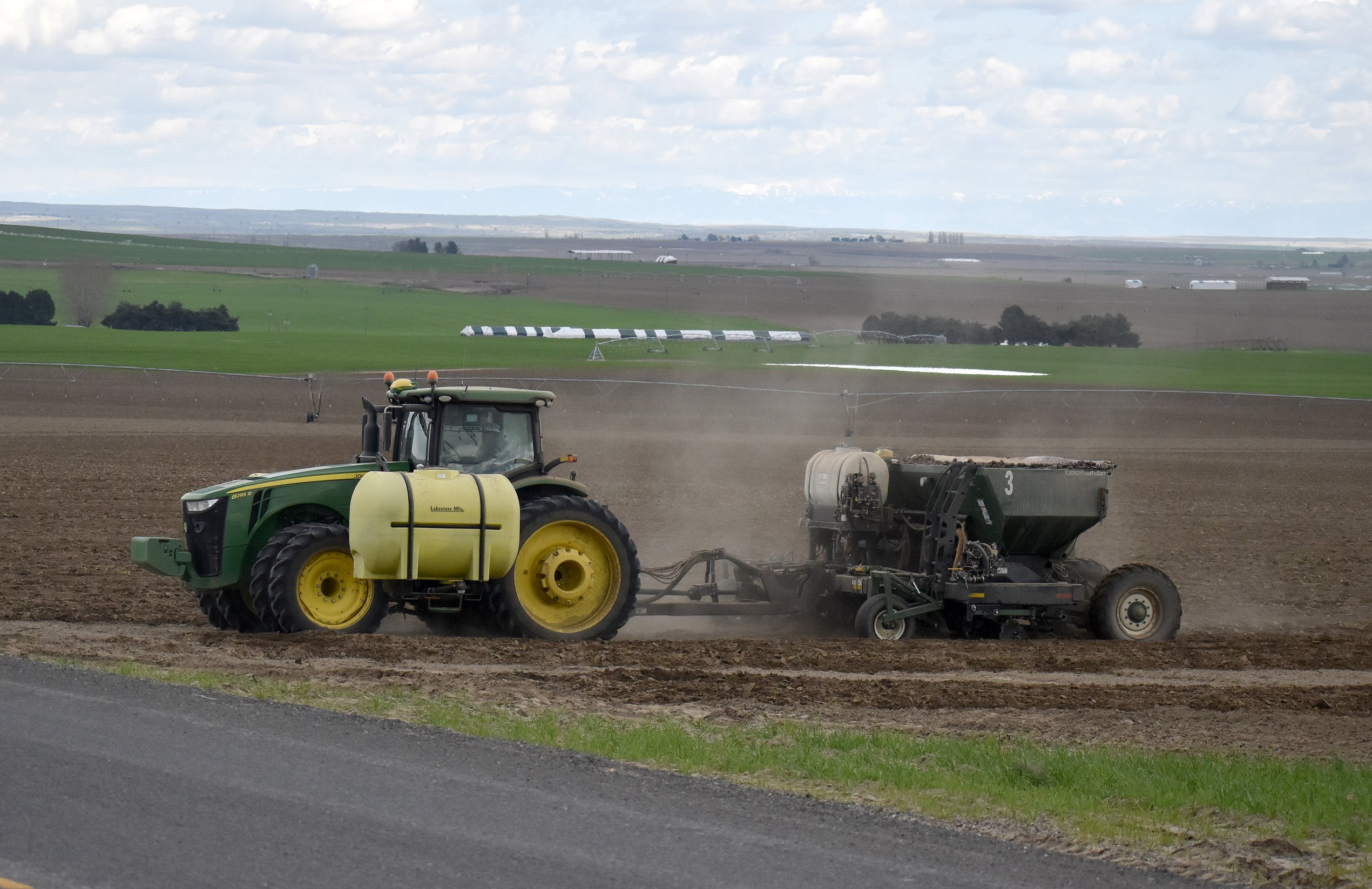 A worker drives a tractor at Schneider Farms. Farming equipment is almost entirely controlled by GPS today, co-owner Grant Morris said, much more than when he got into the business 20 years ago.
Joel Martin/Basin Business;Journal
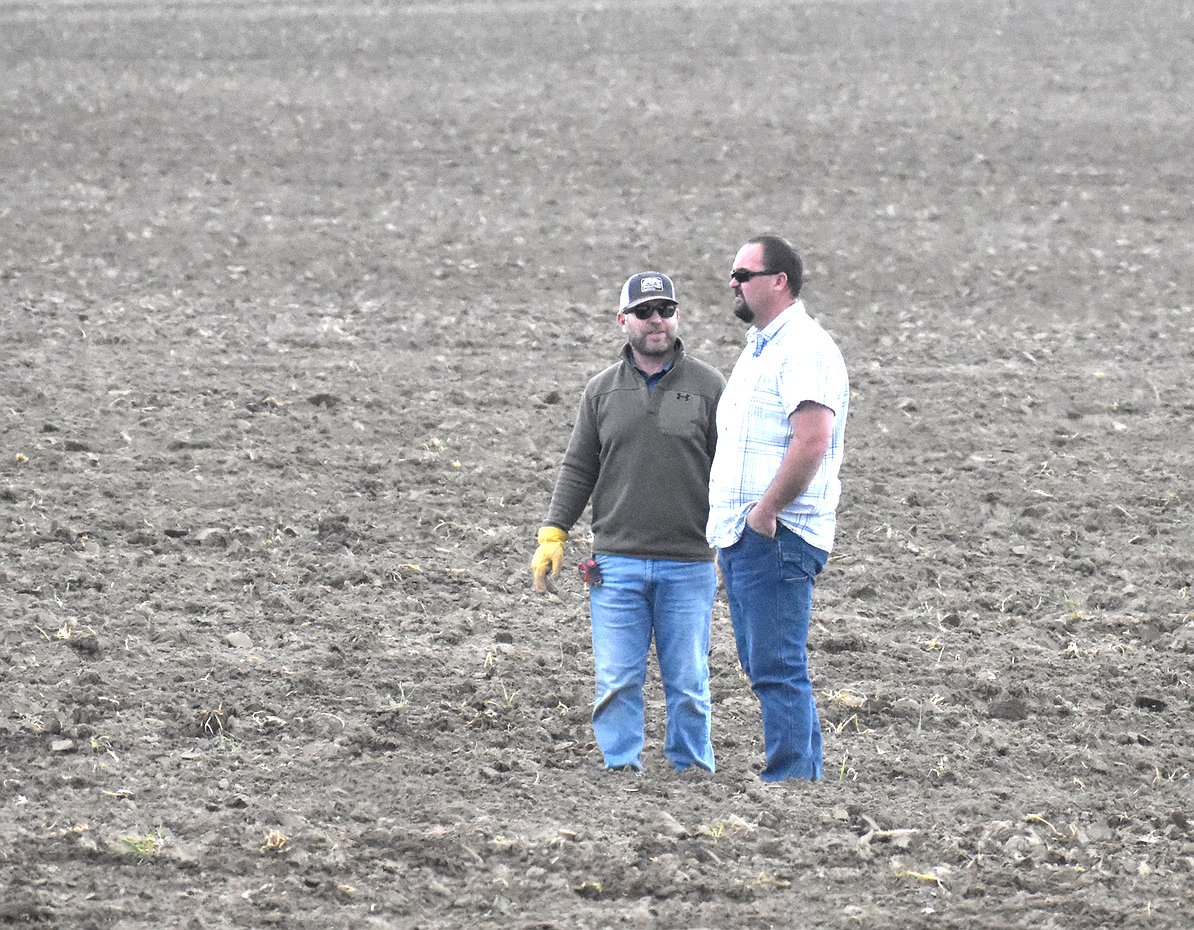 Grant Morris, right, talks with an employee in a field at Schneider Farms. Morris came to Schneider Farms 20 years ago right out of college and is now co-owner.
Joel Martin/Basin Business;Journal
ARTICLES BY JOEL MARTIN
Space Burger booth open March 13-15
MOSES LAKE — Those who can’t wait for the Grant County Fair can get their Space Burger fix next weekend, according to an announcement from the Lioness Club of Moses Lake. The iconic Grant County sandwiches will be available at the Grant County Fairgrounds March 13-15, according to the announcement. There is no admission fee to get into the fairgrounds that weekend.
SENIOR EVENTS: March 2026
COLUMBIA BASIN — Plays, art shows, auctions and more await seniors in the Columbia Basin this month. Here are some opportunities to get out and about in March.

Valentine’s Day cards flood Brookdale Hearthstone with love
MOSES LAKE — Residents at Brookdale Hearthstone Assisted Living in Moses Lake got Valentine’s Day greetings from across the country last month. “I believe that the only states we have not received (cards from) yet are Vermont and Maine,” Lifestyle Director Imelda Broyles said Feb. 24. “We keep receiving new cards every single day. They have not stopped. My residents are in awe with every single one of the cards that we’ve been receiving.” The Hearts Across America project started as a way for children in school classrooms to exchange Valentine’s Day cards with classes in other states or even countries, but the idea has expanded to senior living facilities, according to the project’s social media.