
Tariffs, other factors challenge lumber industry
CALEB PEREZ | Hagadone News Network | UPDATED 11 months AGO
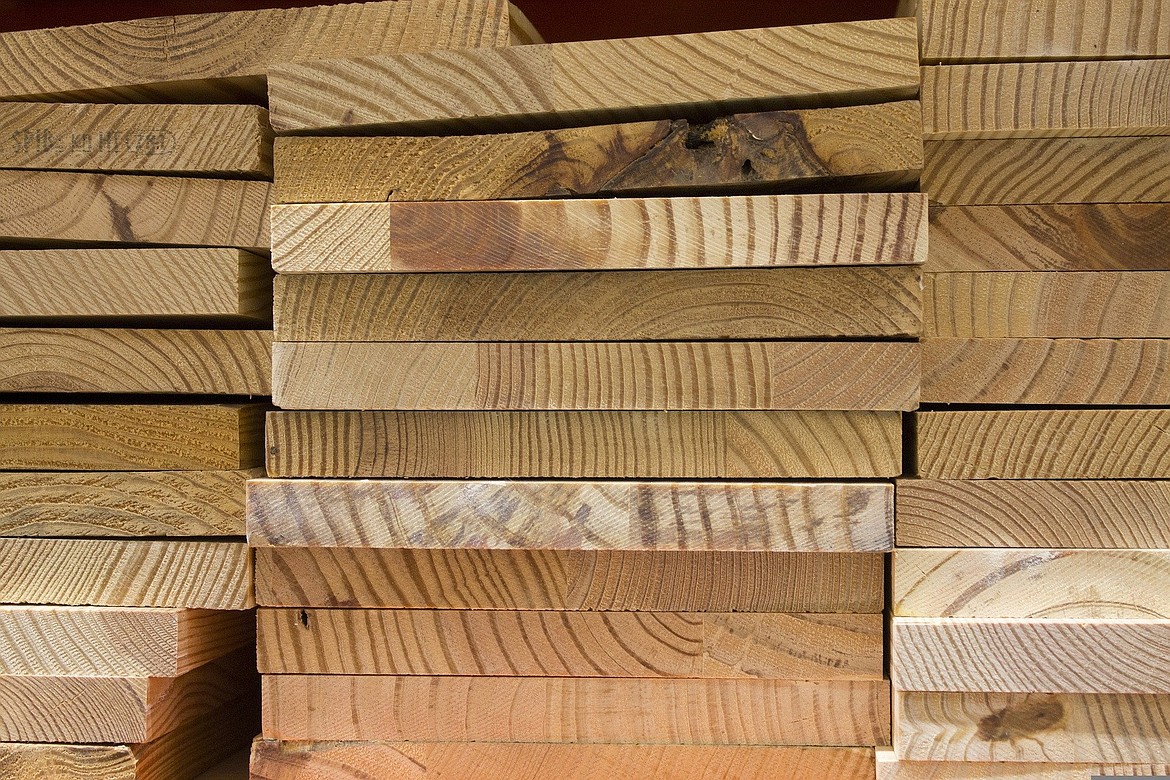
Dallin Brooks, executive director of the National Hardwood Lumber Association said there are there are two aspects to the tariffs that play a factor in the business with the first being the uncertainty of how high the tariffs will be and how long they will last, he said. The second is that their buyers might just decide to move on to other products rather than paying the tariff on hardwood.
FILE PHOTO
MOSES LAKE — The lumber industry provides important services that impact the lives of many and the recent introduction on tariffs and trade concerns has left many wondering what the future holds for both manufacturers and everyday consumers.
Dallin Brooks, executive director of the National Hardwood Lumber Association, weighed in on the situation and the impacts it might have for the hardwood industry.
“The uncertainty is hurting businesses,” said Brooks. “In fact, I can tell you right now my members are in a panic, and they are cutting costs trying to maintain this uncertainty of we don’t know how long or if this will last and if it does, we have to be prepared for it.”
There are two aspects to the tariffs that play a factor in the business with the first being the uncertainty of how high the tariffs will be and how long they will last, he said. The second is that their buyers might just decide to move on to other products rather than paying the tariff on hardwood.
When the first tariffs were placed on China in 2017 and China responded with a retaliatory tariff, these compounded in substantial losses for the hardwood industry which relies on export consumption, he said.
“We had export sales drop off significantly in 2017, going from an export business of about 1.8 billion board feet down to about 1.4 (billion),” said Brooks. “We’ve not recovered from that because China simply shifted to other wood products from other countries and never came back to American woods.”
Issues that existed even before the tariffs have been hurting the industry as well. The hardwood industry had also lost a large portion of their domestic manufacturing during the 2008 financial crisis, he said.
“We’ve been trending down since 1999 when we had a high of 6 billion board feet of domestic consumption, but after the 2008 financial crisis we bottomed out at 2 billion board feet of domestic consumption and we have never regained that,” Brooks said.
Even though GDP has gone back up and construction on houses and repair and remodeling has increased the hardwood consumption has not. Domestic production leaving during this time and the rise of substitute products such as aluminum, plastics and paper that can have wood grain printed onto them have continued to bring down the hardwood industry.
With products like flooring and furniture leaving the market in favor of the cheaper alternatives, the hardwood industry became increasingly dependent on the export market, he said. Because of this, West Coast hardwood species like alder and soft maple are now being shipped to places like China.
Brooks was also a member of the Western Wood Preservers Institute when he lived in Vancouver, British Columbia and has a background in Wood Science and a Masters in Forest and Society from the University of British Columbia.
Brooks provided some insight into the softwood side of the industry as well given his prior experience in it. Unlike hardwood, softwood is dependent on an import market where currently 30 percent of softwood lumber is being shipped from Canada for use in house construction.
Attempts were made to speak to a representative of the softwood industry, but representatives did not respond by press time.
“We are very concerned about losing this important export market that we rely on because there isn’t domestic manufacturing available,” said Brooks. “The reason there isn’t domestic manufacturing is because it’s a labor-intensive industry.”
While manufacturing wood products like flooring might be easier to bring back into America, industries like furniture might take longer to return, if at all. Building and maintaining a domestic plant takes time and without certainty of what the tariffs will look like, businesses can’t make the decision to start one without risking its immediate closure, he said.
“What we’re advocating for is fair trade,” said Brooks. “We want the ability to have goods and services go both ways and because we’re an export market we are very deeply hurt by this.”
Brooks said there should still be an effort to grow the market within the U.S. as this will help ensure that not only will there no longer be a full dependence on the export market, but it will also bring back jobs that have been lost over the years.
“We want more domestic consumption (and) support the initiatives to bring domestic production back to this side of the ocean, but you have to have certainty,” he said. “Long term certainty not even just four years you have to have certainty for eight years, 10 years, 20 years. That’s a business plan.”
Consumer choices when deciding what products to buy are what can make the difference in bringing back the lumber industry. Rather than picking up products that use substitutes, consumers should instead look for products that use real wood, he said.
Choosing real wood products also has a lasting effect on the environment as it is more eco-friendly to choose real wood products, he said. The amount of carbon it takes to manufacture wood products is less than it is to create an alternative like plastic.
Forests in the U.S. are also facing a crisis where hardwood trees are dying from old age, disease, insect infestation and other factors which lead to the forests becoming more prone to fire. An increase in domestic hardwood harvest and manufacturing can help restore the tree life cycle to a balance leading to healthier forests as well, he said.
“Not only are you doing more damage to the environment, but you’re doing more damage to rural America,” said Brooks. “We really want to get consumers to change their habits and support buying domestic (products), those are big things for helping our industry and showing our green initiative.”
The industry might be facing hardship, but Brooks said there is a solution to ensuring their success into the future.
“The best solution is for consumers to choose solid hardwood materials and products that are manufactured domestically and for the government to provide fair trade and certainty for all manufacturers so that we can bring back long-term plans and capital investment to invest in those rural communities.”
ARTICLES BY CALEB PEREZ

Knights secure road victory over Cougars
WARDEN — The Royal Knights (3-1-2) earned a 5-2 road victory against the Warden Cougars (2-4) in a South Central Athletic Conference matchup Tuesday evening. Knights Head Coach Jens Jensen said this win was great in getting the team back on track after a tough stretch of games prior.

District sets timeline for Ephrata High roof project
EPHRATA — A timeframe on the roof replacement at Ephrata High School was discussed at the Ephrata School District board meeting Monday evening.

Cougars sweep Eagles and LMU in weekend matches
PULLMAN — The Washington State Cougars earned a pair of team victories as they defended their home court over the weekend, sweeping both the Eastern Washington Eagles and Loyola Marymount University.