
'Addiction doesn’t discriminate'
Columbia Basin Herald | UPDATED 7 months, 3 weeks AGO

“The Us in Them: The line between us and them is thinner than you think” town hall to discuss addiction in the Moses Lake community had around 120 attendees.
NANCE BESTON/COLUMBIA BASIN HERALD
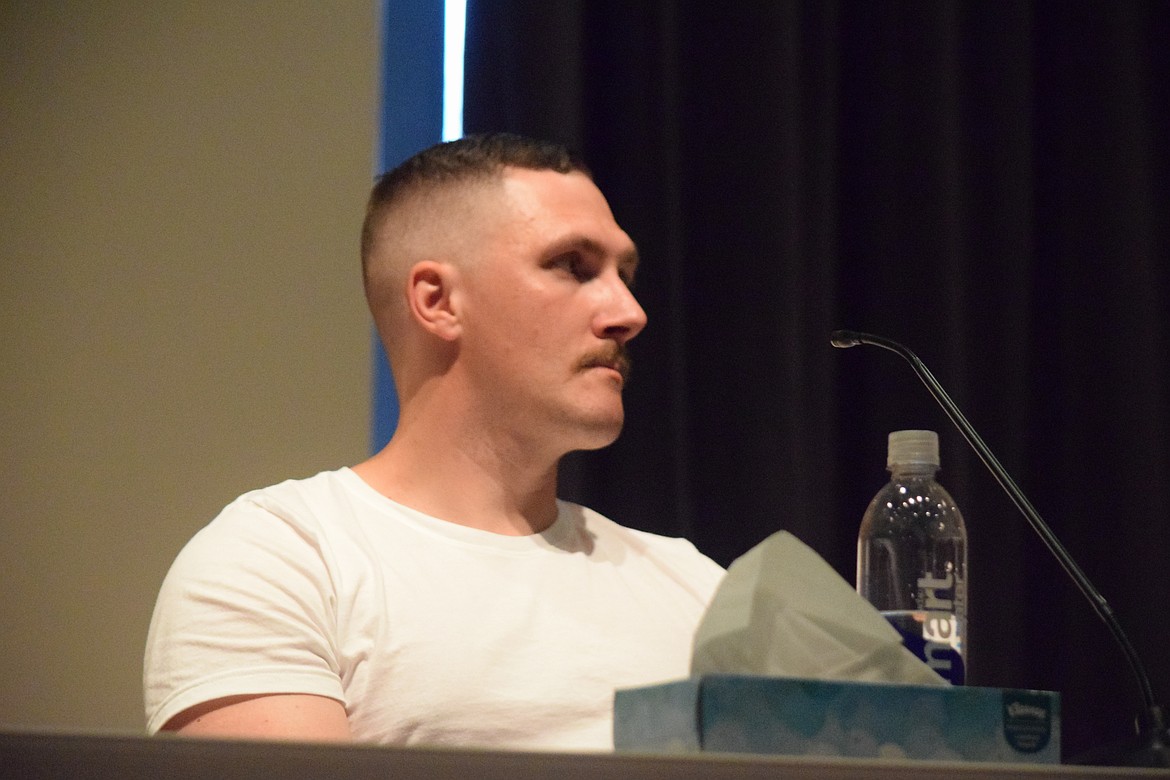
David Chapman told his story of addiction at the town hall. He has now been sober for two years, he said.
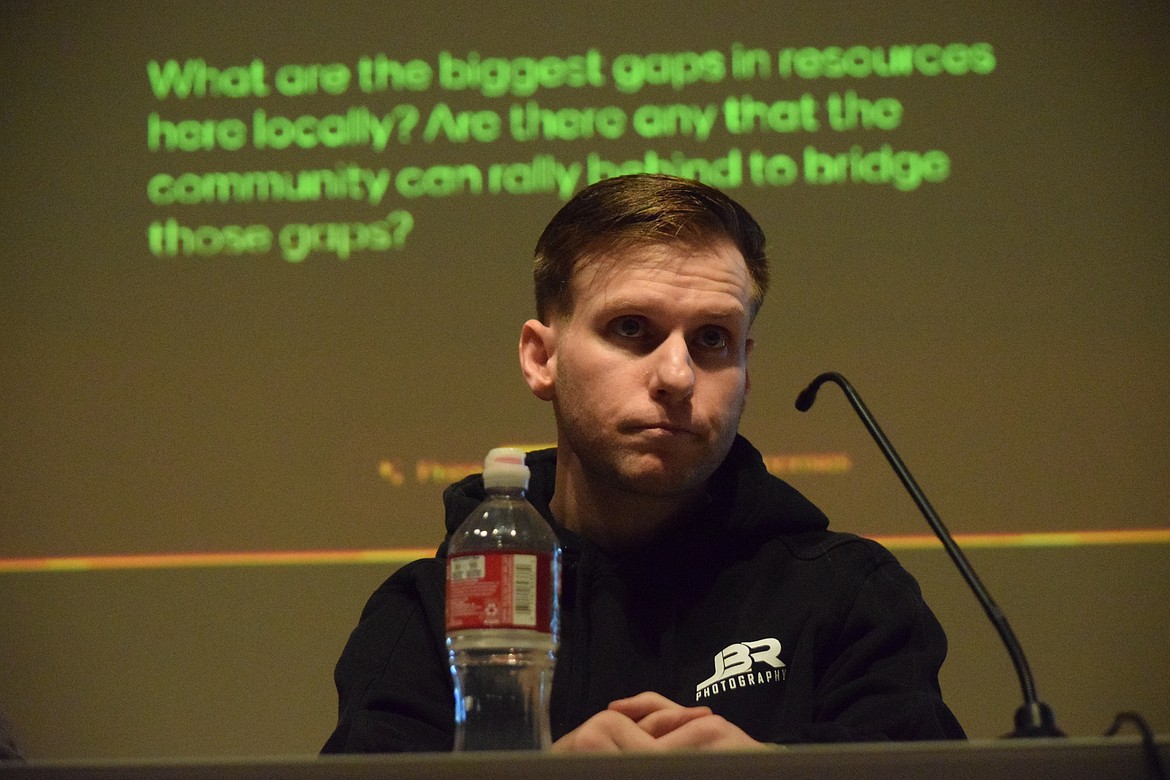
Alec Fisher talked about his struggle with addiction at the town hall. He said he has been in a vicious cycle of being sober and relapsing for a handful of years. He is now ten months sober.
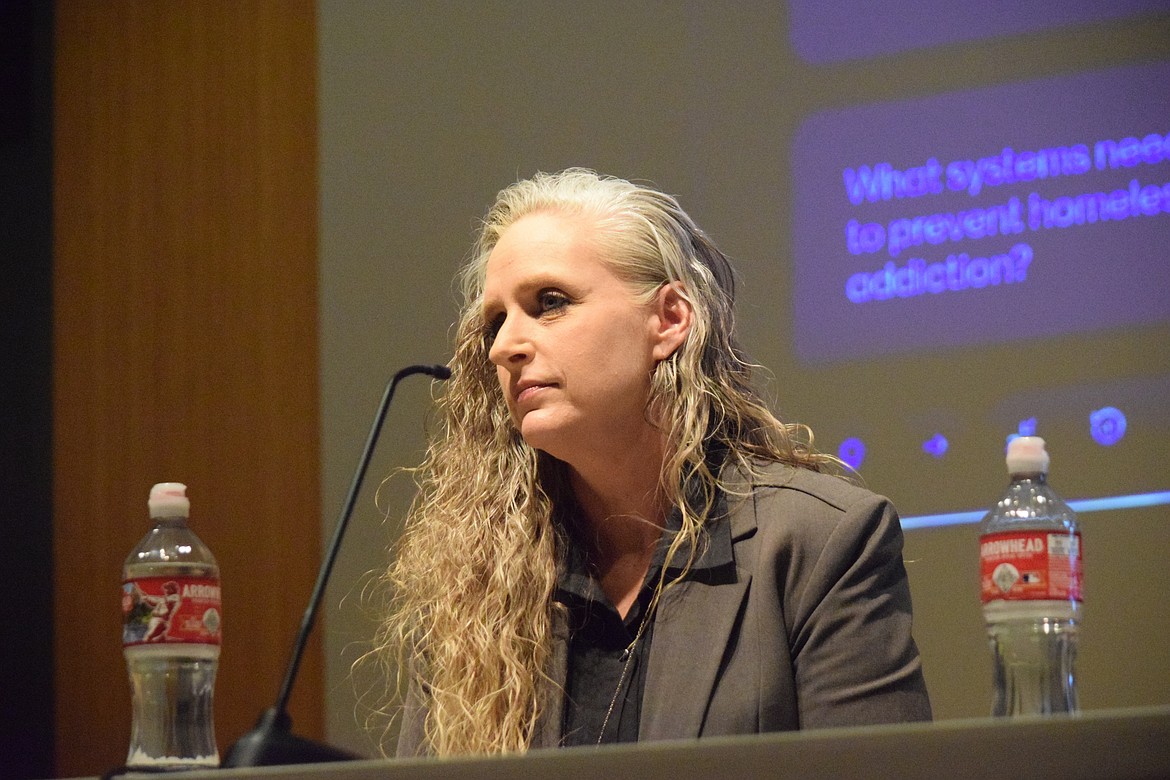
Tameara Johnson is Alex Fisher’s mom. She said she has been going through the challenges of addiction with her son for the past 12 years.
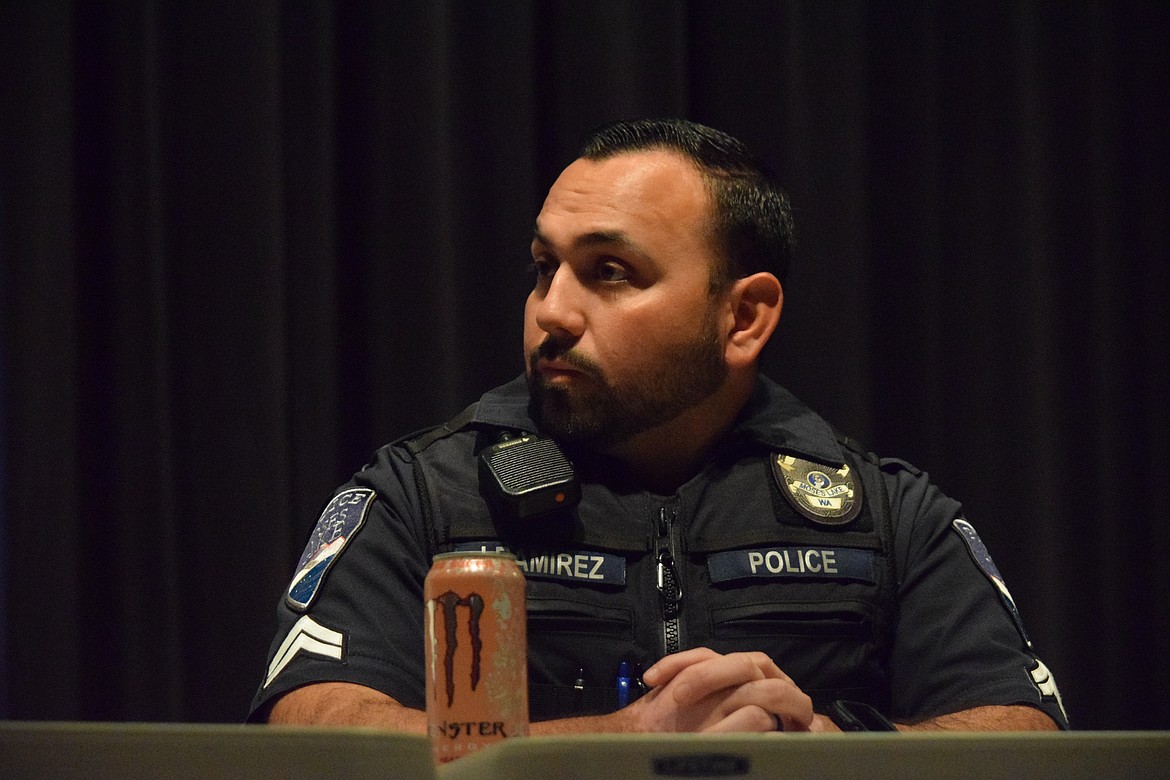
Moses Lake Police Department Officer Jose Ramirez said he comes from a family that struggles with addiction.
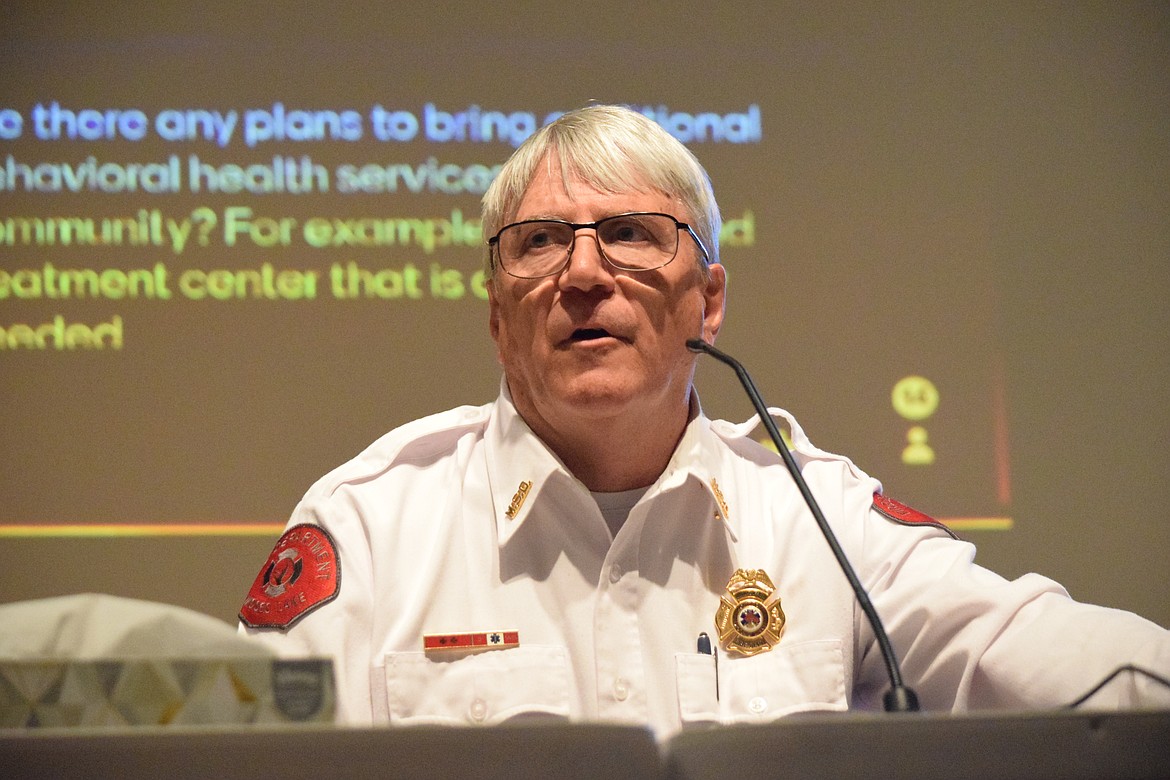
Emergency Medical Services Supervisor for Moses Lake Fire Department Todd Schanze said he has a daughter that struggled with methamphetamine usage. He said he is trying to be a bridge to help people get resources for their recoveries.
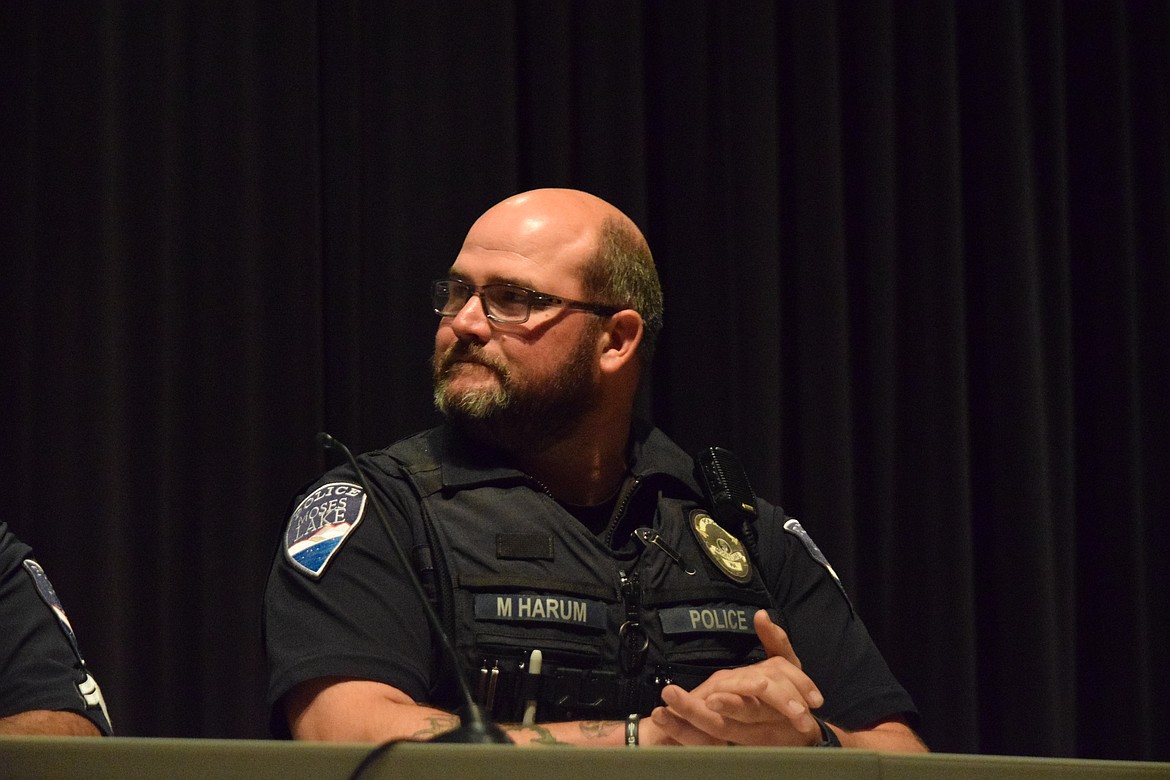
Moses Lake Police Department Officer Matt Harum said he has seen several members of the community deal with addiction. He said he also seen several of those people get clean.
MOSES LAKE – The Moses Lake Community Coalition held a town hall, “The Us in Them: The line between us and them is thinner than you think,” to discuss addiction in the Moses Lake community.
The meeting opened with questions for the crowd: “If drugs or addiction, alcoholism are impacting you, whether directly or indirectly, please stand up.”
Nearly every person in the 120-person crowd stood up, exchanging glances with one another, many people’s eyes filling with tears. The entire six-person panel also stood.
“You look around and even me, someone in recovery, I can have an idea of how people are affected by addiction or drug use or alcoholism,” Nokey Pando said.
Speakers included Tameara Johnson, a social worker and mom of recovering addict Alec Fisher; Alec Fisher, a recovering addict and active member of the Oxford house; Todd Schanze, Emergency Medical Services Supervisor for Moses Lake Fire Department; David Chapman, a recovering addict, also in the Oxford House who is now two years sober; Jose Ramirez, Moses Lake Police Department Officer and Matt Harum, MPLD officer.
This is how drug addiction has impacted each of these individuals.
David Chapman, recovering addict
Chapman opened the conversation by saying he began using drugs when he was 14 years old with marijuana.
“Over the years, it definitely progressed,” Chapman said. “I was addicted to methamphetamines at an early age.”
He said the addiction really took hold of him and his family began to lose trust in him. He said he began robbing family members. Later he said he found heroin, and his addiction got so bad that every time he would use a needle, he would nearly overdose. At one point in time, he did overdose, which he said would be the turning point for many, but not for him.
“My addiction was so severe that I just kept going and I had eventually overdosed twice on heroin. (I was) in and out of prison with no direction,” Chapman said.
He said he was then able to join a program called Drug Corps and was doing better for a while but became overwhelmed.
“I went from being homeless to working 70 hours a week and I just had a lot on my plate, and I ended up going out and relapsing,” Chapman said. “On that relapse I overdosed, and it took five Narcans and CPR for 20 minutes to bring me back to life.”
After that experience, he began to hit the ground running, he said, and transitioned to a program called Community Corp, eventually graduating from it.
“I get to be a father, I get to be responsible,” Chapman said. “I get to pay my bills, and I get to be an upstanding citizen in the community, and I get to be a role model, and I am really glad.”
Alec Fisher, recovering addict
Fisher said his story began when he graduated from high school and went to college. He said he began partying and was badly injured, went to the doctor and was prescribed opioids.
“I did not ever see myself becoming an addict; drugs and alcohol were not a part of my family growing up,” Fisher said. “...Next thing I know I am taking the drugs like they were Skittles, and I didn’t really realize the impacts that they would have on my body. One thing led to another, and I found heroin and I started doing heroin.”
He said he was using drugs behind closed doors; he continued to work and function with daily tasks.
“Pain pills became my best friend; they numbed the pain physically and mentally,” he said. “I spiraled out of control; I ended up losing my job. I ended up getting kicked out of college. I had a long road. I spent the last 12 years trying to recover – going in and out of treatment.”
Fisher said none of the treatments ever stuck with him. He said a vicious cycle began where he would get clean and then return to drugs soon after.
“I couldn’t figure out why I couldn’t fix this problem,” he said. “I didn’t really realize the disease was real until a few years ago (when) I started to look into the disease of addiction and started to understand if I didn’t take the disease of addiction like I take everything else, like cancer, I am not going to be able to heal from it.”
He said he has to do a little bit of treatment every day to combat the disease.
“I battle with pain every single day because of my condition so it has been a struggle for me to stay clean because of the pain,” he said. “... I am starting to fix my life by doing what I need to do.”
Fisher said he is now ten months clean.
Tameara Johnson, mom of Alec Fisher
Johnson said she has been on the journey of addiction with her son.
“You've all said on this panel that addiction does not discriminate. Our sons, our daughters, our grandparents, our children are out there on the streets, and addiction has taken hold of them,” Johnson said.
She said that as a parent, she is very grateful for the resources that are available for people in recovery.
“There's really an epidemic of addiction and drug use in Moses Lake, and it's like I said, it's taking our kids,” Johnson said. “...I can also tell you that a lot of the people that I've come in contact with, whether it's the Oxford house or in my work, are some amazing, kind, generous people that have a horrible addiction and they need help. They have to choose the help.”
Johnson said it is crucial for people to support their family members struggling with addiction.
“A lot of families just give up on their addicted loved ones, but I implore you to stay with them. Love them through it. Feed them if they're hungry, give them warm clothes if they're cold, don't lose hope,” she said. “Pray over them and use the resources that are available here.”
Jose Ramirez, MLPD
Ramirez said he was born and raised in Moses Lake, with around 12 years of law enforcement experience.
“As cliche as it sounds, I got into this career because I want to make a difference. I know we have talked about it before, but addiction doesn’t discriminate,” Ramirez said. “It runs in my family as well. I mean, you wouldn’t think me from a law enforcement family would have to deal with that kind of stuff, but you do, so it hits homes a little bit stronger than most.”
He said that his goal is to bridge the gap, seeing people as human and making a difference to them.
“We see it all the time, the problem with addiction,” he said. “We get into whether they're committing crimes because of their addiction, whether we're responding to overdoses and trying to save these people. And naturally, I speak for my partner as well, you become callous to it. It does take an emotional toll on you, whether you believe so or not. It's not just a job. It's part of the job. And every time you see that, you know that there's been a life destroyed. It takes a toll.”
Ramirez said one of the hardest cases he has dealt with was an overdose of a 15-year-old student.
“I think he was slowly spiraling,” he said. “This was a kid that was a good kid, a good athlete, doing well in school, and a good family. You would think that he wouldn’t have a problem, but he became addicted to it that fast, and I was the one that responded to him overdosing. I couldn't save him.”
Todd Schanze, MLFD
Schanze said he is working on improving the lives of citizens in Moses Lake. He said he has a daughter who has a long history of using methamphetamines. She is doing better, and he is grateful that she started her recovery before fentanyl became popular. “It was a hard battle and I'm thankful that there were recovery services that she was able to get into and they were able to help her get clean,” he said.
Matt Harum, MLPD
Harum said he has been with MLPD for a little over 15 years. He has worked with local rehabilitation organizations for the past three or four years. He said he served as a school resource officer for around five years.
“So, like Officer Ramirez and everybody else ... it hit my family hard,” he said. “My brother had some medical issues, got addicted to opioid pills, and took him several years to get some help with that. Now he's been off that for seven years.”
Harum said that although a lot of times the police department doesn’t get to see the benefit of local resources because they are helping people in active addiction, sometimes they do.
“I can speak from personal experience; I have had several people come to me later and say I have been clean for a year. I have been clean for two years. I have been 5, 6, 7 years clean. I mean I have been in the community long enough.”
Harum said he had worked with Chapman while he was in active addiction. He also got to speak with him about a year ago and Chapman told him he had been clean for a year.
“I told him I was proud of him and that reassurance that somebody cares about what they are doing in their recovery definitely helps,” he said.
The Columbia Basin Herald will be releasing another story in regard to this topic, focusing on the solutions and resources discussed at the meeting.
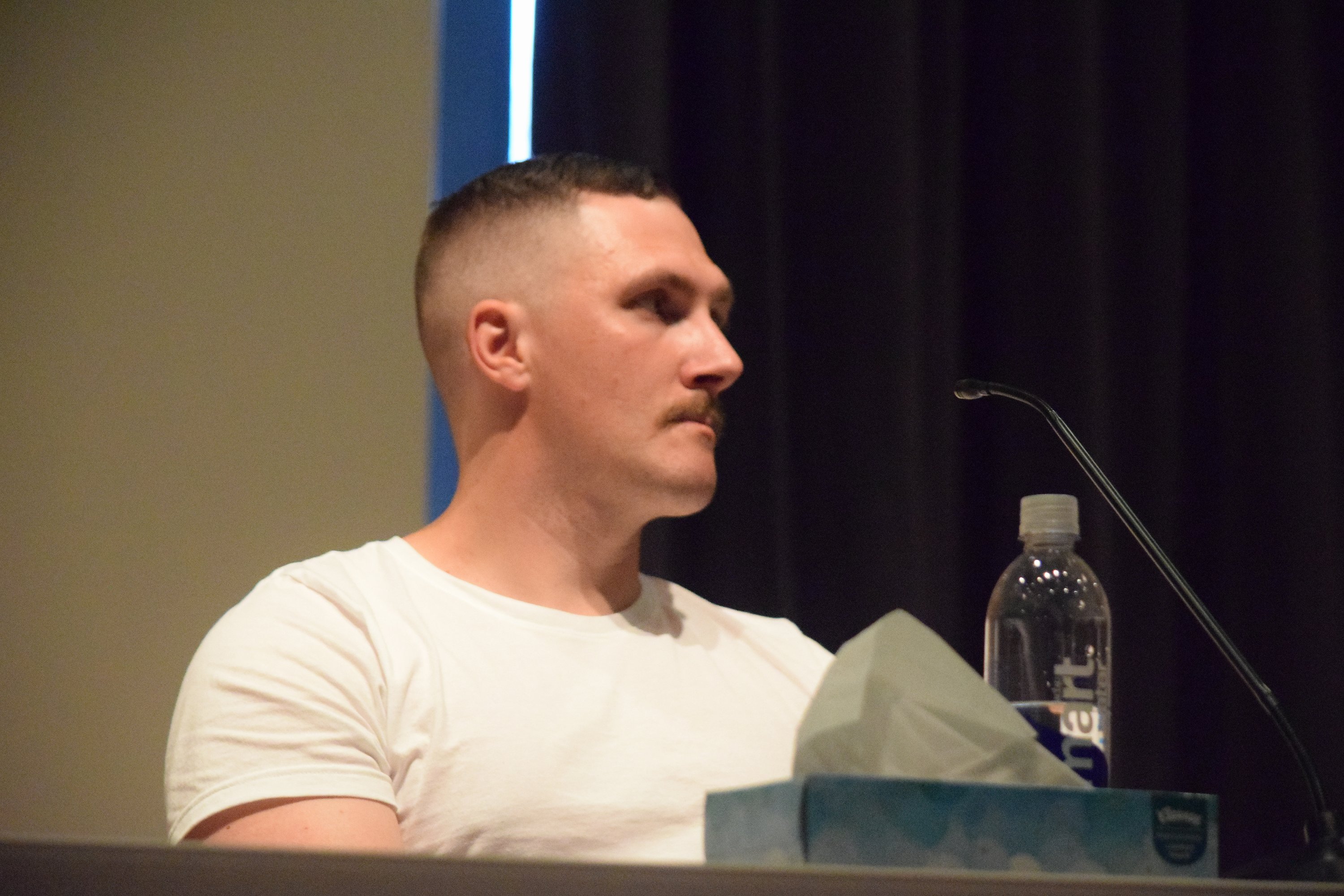 David Chapman told his story of addiction at the town hall. He has now been sober for two years, he said.
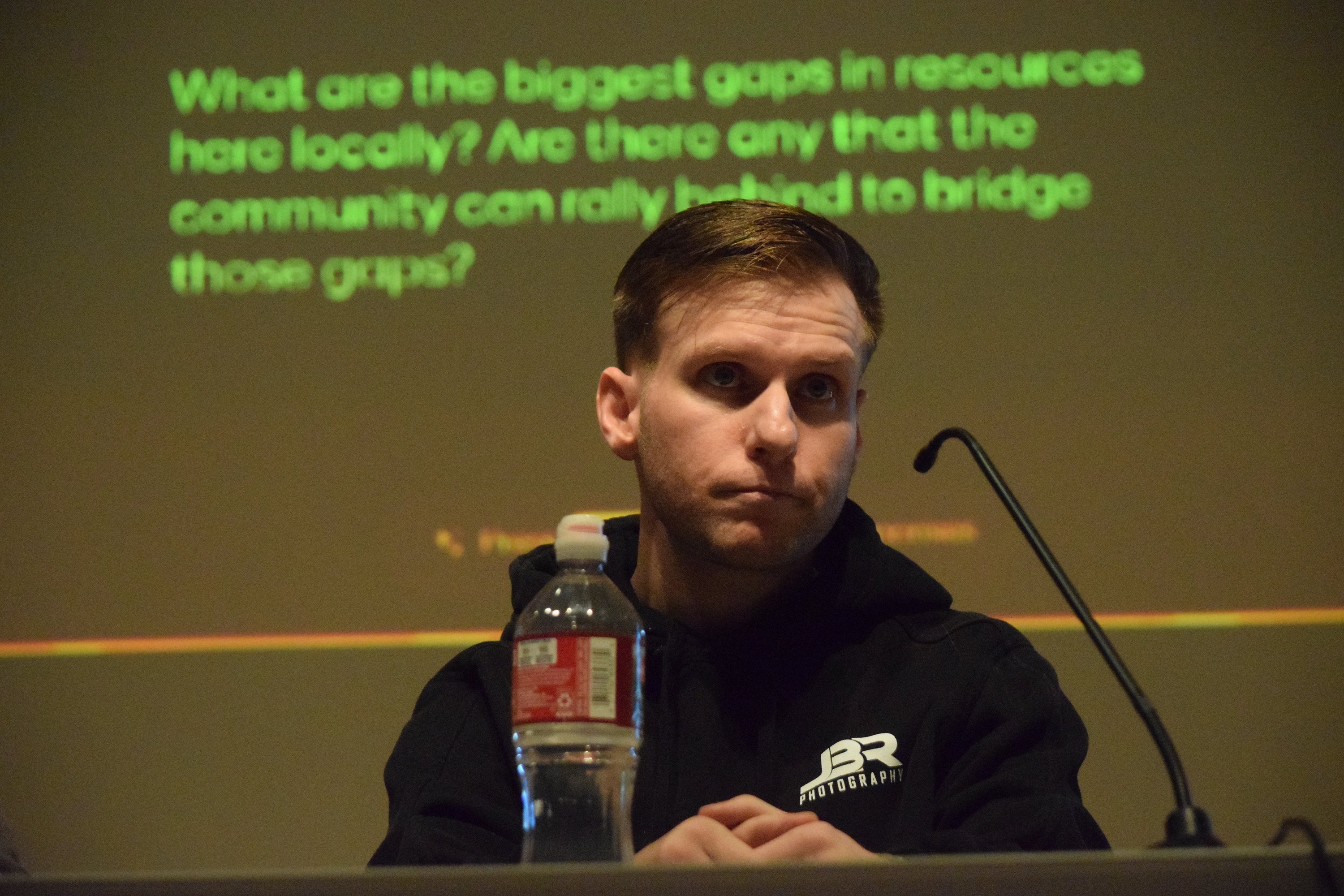 Alec Fisher talked about his struggle with addiction at the town hall. He said he has been in a vicious cycle of being sober and relapsing for a handful of years. He is now ten months sober.
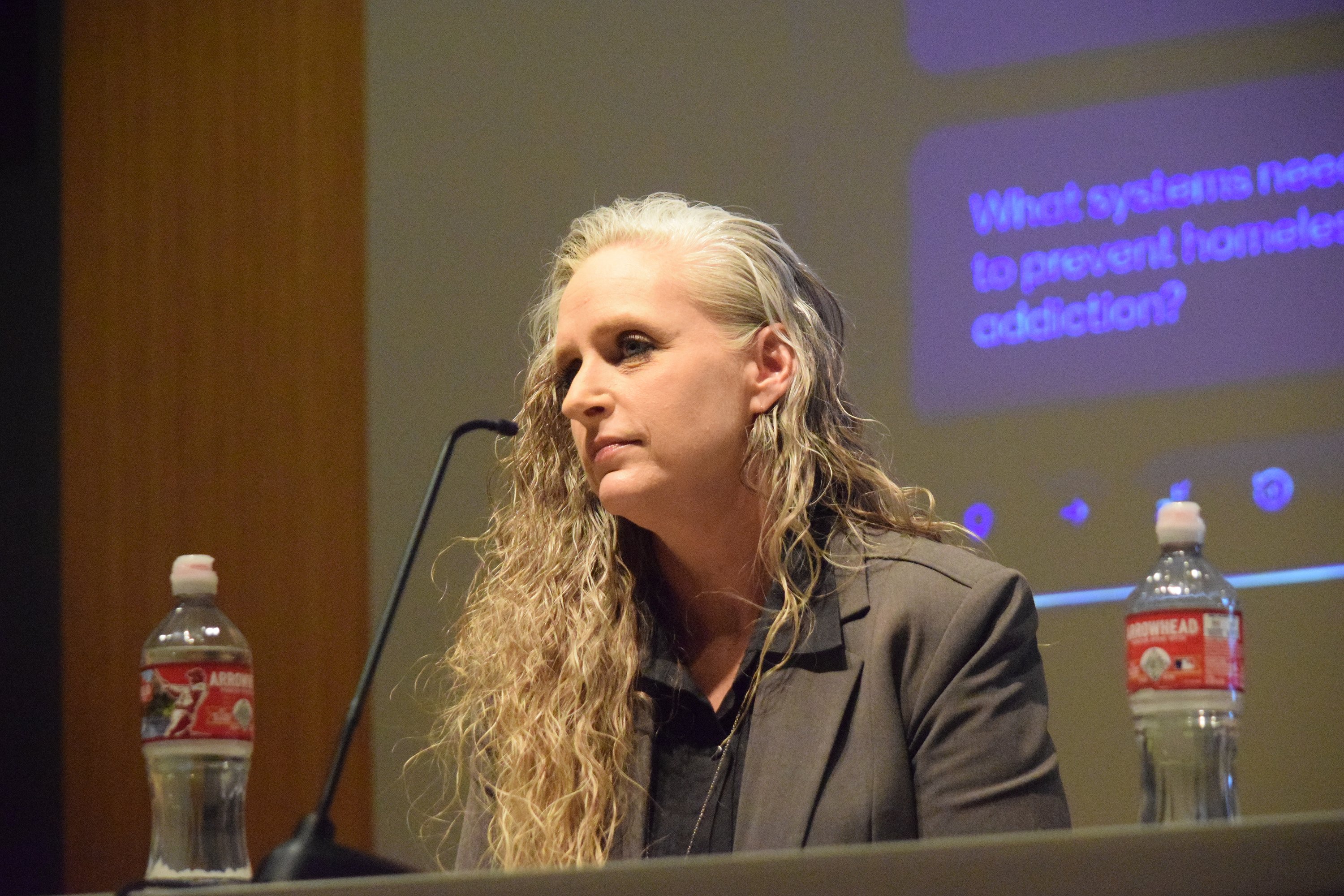 Tameara Johnson is Alex Fisher’s mom. She said she has been going through the challenges of addiction with her son for the past 12 years.
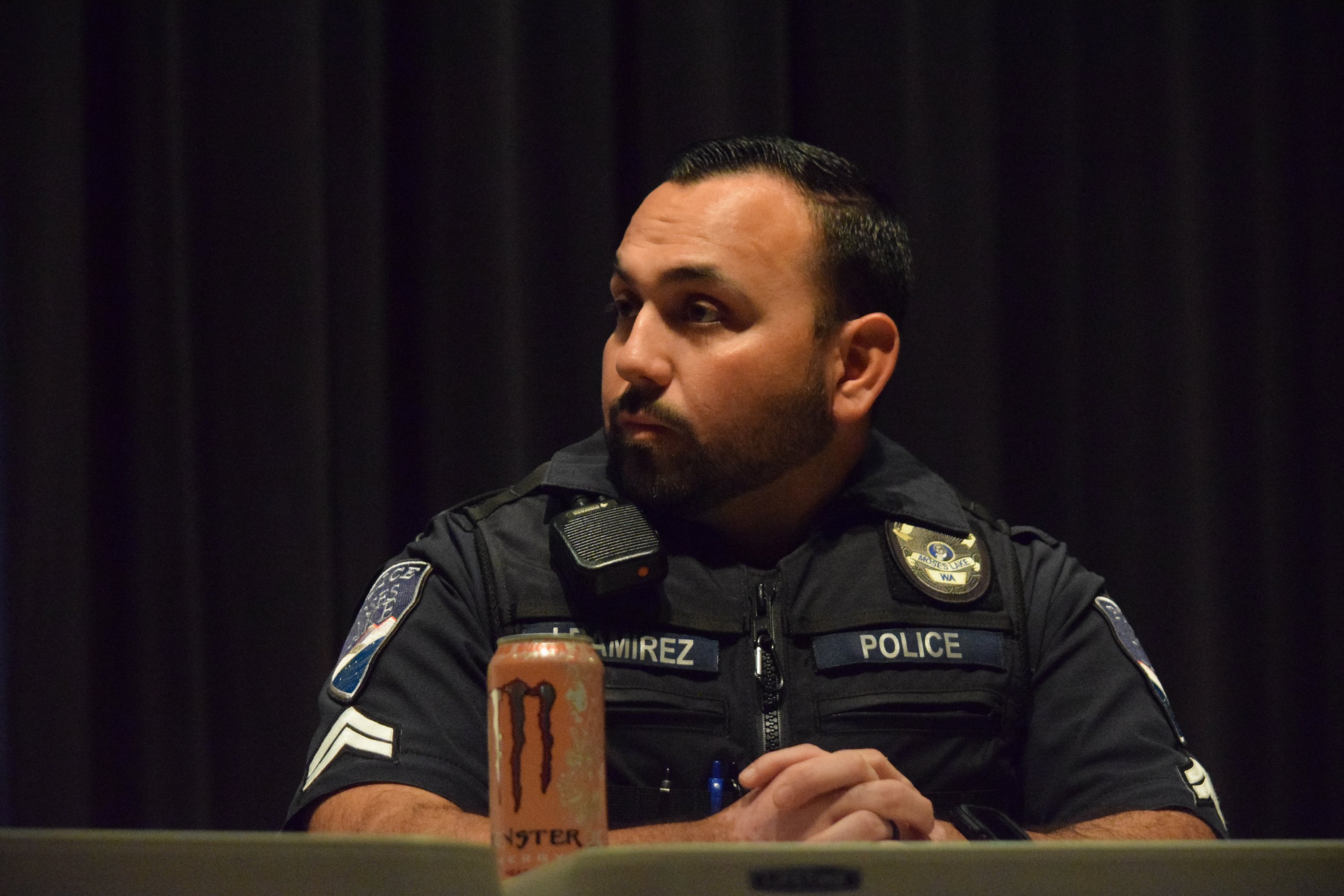 Moses Lake Police Department Officer Jose Ramirez said he comes from a family that struggles with addiction.
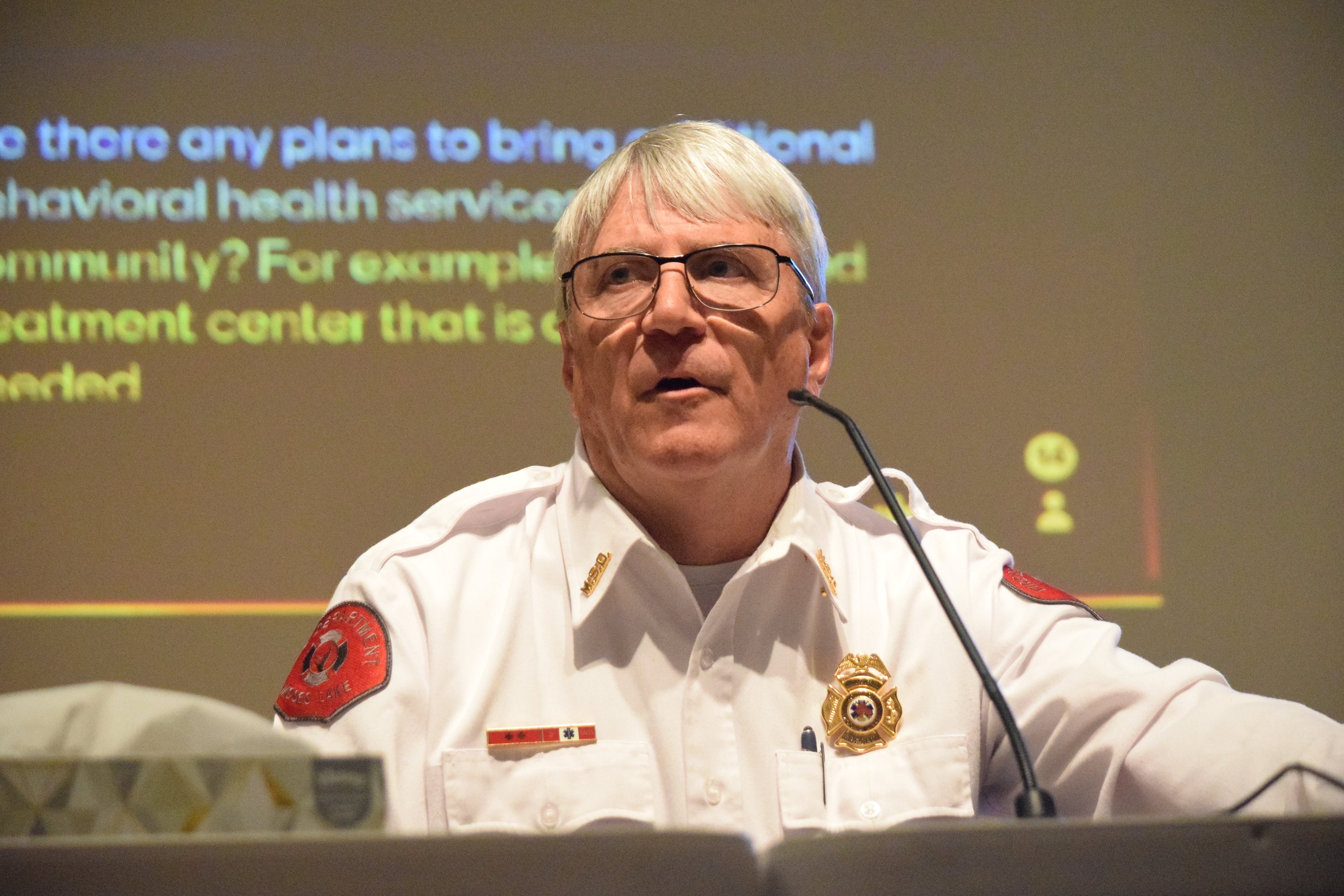 Emergency Medical Services Supervisor for Moses Lake Fire Department Todd Schanze said he has a daughter that struggled with methamphetamine usage. He said he is trying to be a bridge to help people get resources for their recoveries.
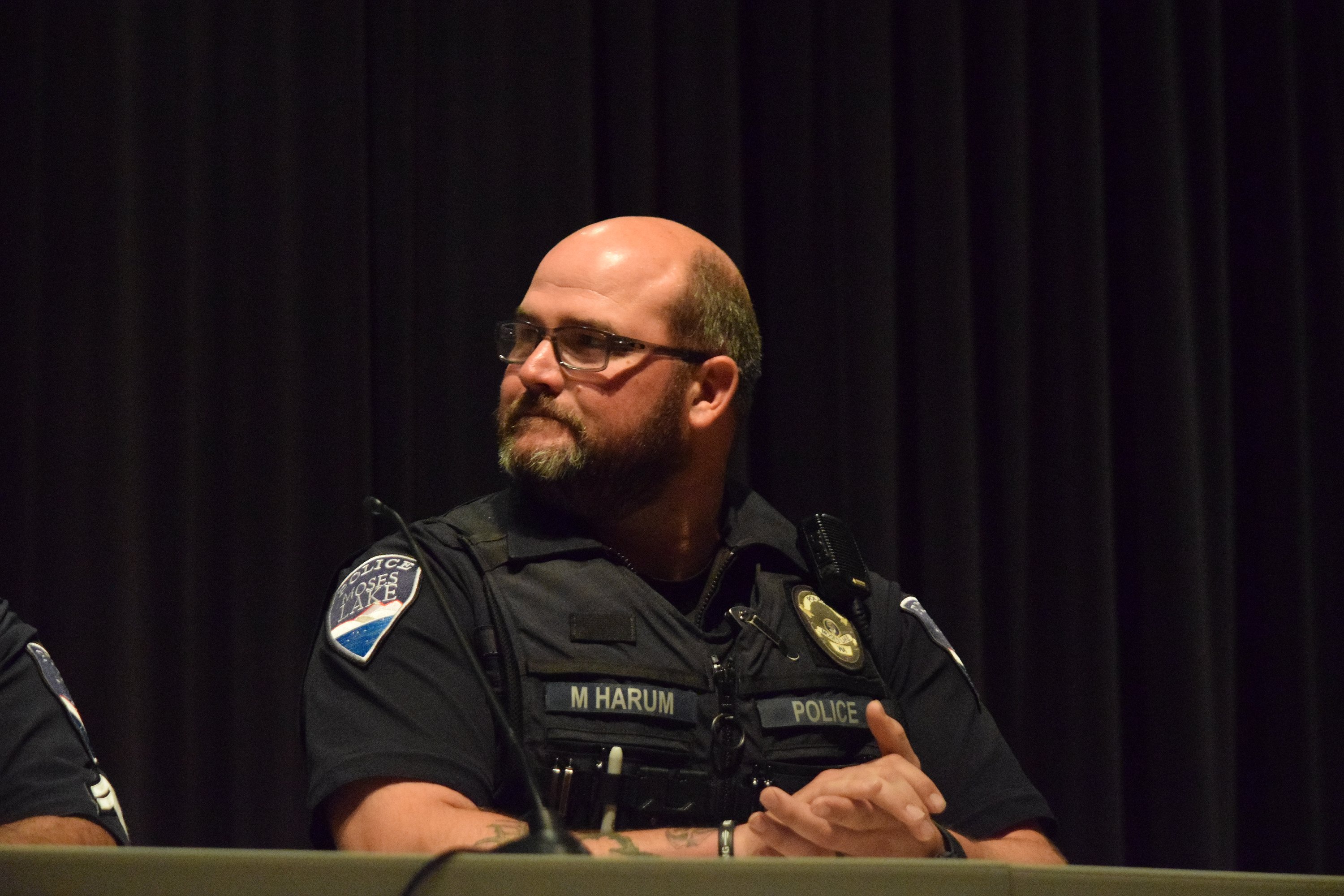 Moses Lake Police Department Officer Matt Harum said he has seen several members of the community deal with addiction. He said he also seen several of those people get clean.