
Regular screening can prevent heart attacks – if you take the time
JOEL MARTIN | Hagadone News Network | UPDATED 1 year, 2 months AGO
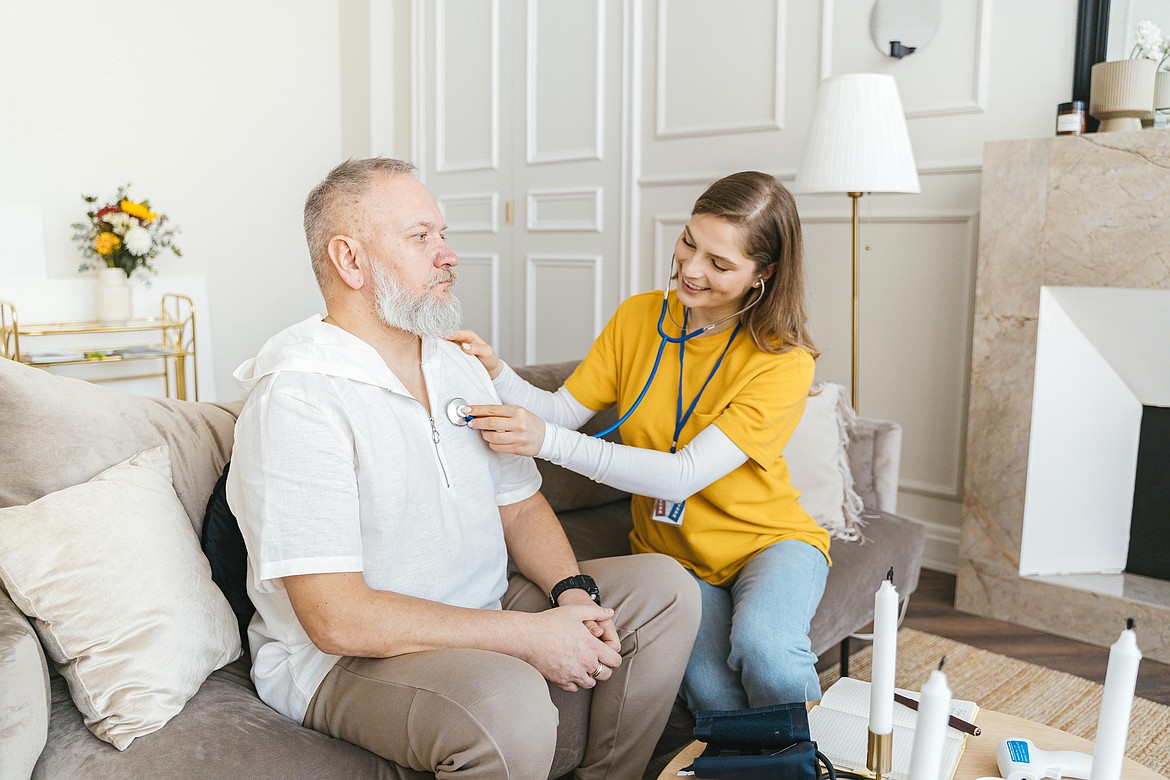
Most heart problems can be headed off if the patient takes the trouble to be screened regularly.
COURTESY PHOTO/ANTONI SHKRABA STUDIO/PEXELS
Joel Martin has been with the Columbia Basin Herald for more than 25 years in a variety of roles and is the most-tenured employee in the building. Martin is a married father of eight and enjoys spending time with his children and his wife, Christina. He is passionate about the paper’s mission of informing the people of the Columbia Basin because he knows it is important to record the history of the communities the publication serves. | August 6, 2025 1:00 AM
MOSES LAKE — Heart health is nothing to take lightly.
“Over the last 50 years, heart attacks have decreased almost 90% in the United States,” said Dollie Jo Cloud, a nurse at Samaritan Healthcare specializing in cardiac medicine. “(It’s due) to early detection, getting that preventative care.”
With the children of the 1970s now nearing or in their 50s, more people are realizing they don’t want to follow in their parents’ footsteps, gritting their teeth and working through health problems until they get too big to ignore, Cloud said.
“We can live a longer, healthier life,” she said. “The key is early detection, making sure we’re getting screened for congenital heart disease and heart failure, eating right, exercising and just making sure that we’re doing everything that we can.”
Cardiovascular disease is still the leading cause of death in the U.S., according to the Centers for Disease Control; a person dies every 34 seconds from it. Most of those deaths were preventable, Cloud said, if people would just take the time.
“We can do blood tests to make sure we’re not diabetic (and) if we are, we can get on medication,” she said. “We can (change) our lifestyle. We can change the way we eat. We can exercise, lose weight. If that doesn’t help, there are medications out there. We can start doing a log of our blood pressure. If it’s elevated, then we need to make sure we’re seeing our primary care (provider).”
Working out and eating healthy seem like a no-brainer, but 33% of Grant County residents 65 and over have difficulty even walking, according to the Grant County Health District. Twenty-three percent of Grant County adults 18 and over experience food insecurity and 32% are obese. Forty-two percent of adults in Grant County have not had a medical checkup in the past year, according to GCHD data.
“(The mistake people make) is just not paying attention to (their health),” Cloud said. “You’re hearing it, but it doesn’t resonate. It’s not going to happen to me. I’ve worked all my life and I’m healthy. I’m not feeling anything, so I’m good. And the next thing you know, they’re in the ER and they’ve had a heart attack.”
A huge factor in assessing the risk is family history. According to a study published by the College of Family Physicians in Canada, if your sibling had cardiovascular disease, you’re 40% more likely to have it yourself, and if one of your parents had premature cardiovascular disease, your risk increases by 60-75%.
“We can do all the exercise that we want. We can eat healthy,” Cloud said. “But if you got this from your parents - well, congratulations, that’s what you have inherited … If your grandparents have had these issues, and your parents have had these issues, and you’ve got cousins or siblings (who have had them), it’s coming for you.”
For people who are adopted or for some other reason may not know their family history, genetic testing may turn up some information, Cloud said. The key, again, is to talk to your primary care provider and if necessary, get a referral for a cardiologist.
“A lot of times when patients come in and (the doctor) sits down and he goes over everything, we ask, ‘Have you had any heart palpitations? Have you had shortness of breath when you’re walking upstairs? Have you had any chest pain?’ And sometimes they’ll be like, ‘Well, I thought it was just probably just indigestion, but I have had shortness of breath here lately,’ or ‘I’ve had a little pain in my chest, just a little pressure.’ That’s an indication to us that we need to look a little bit deeper.”
Modern technology offers several ways a cardiologist can monitor a patient’s heart for tests or for ongoing observation, Cloud said. There’s a seven- to 15-day monitor that can assess daily problems, and another that monitors 24/7 for 30 days for issues the patient may not be aware of.
But none of that technology helps if the patient doesn’t take that first step, Cloud said.
“Make sure you get your screenings,” she said. “Make sure you get your yearly blood work. Go to your doctor every year. It may be a scary thing to look at, but … it’s kind of like you’re going down the highway and there’s a hole in the road. If we do not get that fixed, it’s going to keep getting bigger and bigger and bigger, and then you’re just going to fall into it. So, with your health, make sure we get that prevention done.”
ARTICLES BY JOEL MARTIN
Endless battle
Noxious Weed Control Board works to keep invasive plants under control
MOSES LAKE — Some of the nastiest plants in Grant County were the topic of a class led by Jay Johnson, a consultant with the Grant County Noxious Weed Control Board, Tuesday. The Noxious Weed Control Board, as its name would suggest, is tasked with keeping weeds under control in Grant County. That’s not a small job; the board’s website lists 129 species of noxious weeds that are found around Grant County. A noxious weed is defined as an invasive, non-native plant that threatens agricultural crops, local ecosystems or fish and wildlife habitat, according to the Noxious Weed Control Board. Washington state law requires that these weeds be identified and their spread kept to a minimum, if not completely eradicated. “We’re one of those agencies a lot of people don’t really understand,” Johnson said. “We’re a county office and … our funding is tax-based assessment. When you get your tax bill and you look down at all the expenses that you pay for, there we are.”
BASIN EVENTS: Oct. 16-24
COLUMBIA BASIN — Whether you feel like shopping, crafting, learning or seeing a show, there’s something happening for you this week in the Basin. Oct. 16 ‘My Family (Mi Familia)’ screening Spanning three generations, “My Family (Mi Familia)” is a heartfelt drama that follows the Sánchez family as they build their lives in East Los Angeles. Through love, hardship, triumph, and sacrifice, the film explores the immigrant experience, the strength of family bonds, and the traditions that connect one generation to the next. Lowrider show and taco truck before the screening. Sponsored by Columbia Basin Allied Arts, EDUBS C/S and the Moses Lake Creative District. $12 per person. Doors open at 6 p.m., film begins at 7 p.m. at the Moses Lake Civic Center Auditorium, 401 S. Balsam St. Tickets and info: www.cba-arts.org.
Moses Lake author encourages women to look beyond church culture norms
MOSES LAKE — A Moses Lake author’s book, “A Christian Woman Striving to Live Her Faith in a Man-Controlled World,” takes aim at the role to which many churches relegate the female half of their congregations. “It’s to encourage women in the faith,” Linda Curran said. “A lot of churches say, ‘Teach Sunday school, do this, do that, but don’t (evangelize.)’" In her book, Curran recounts a time when she moved to a new community and joined a church there. She was surprised to learn that, as a new female member, she had been automatically assigned church cleaning duties. When she questioned it, she wrote, she was met with condescension and her objections were brushed aside. In other churches, she said, women who were capable of teaching were relegated to “women’s ministry.”