
Area residents weigh in on international river pollution study
NED NEWTON | Hagadone News Network | UPDATED 7 months, 2 weeks AGO
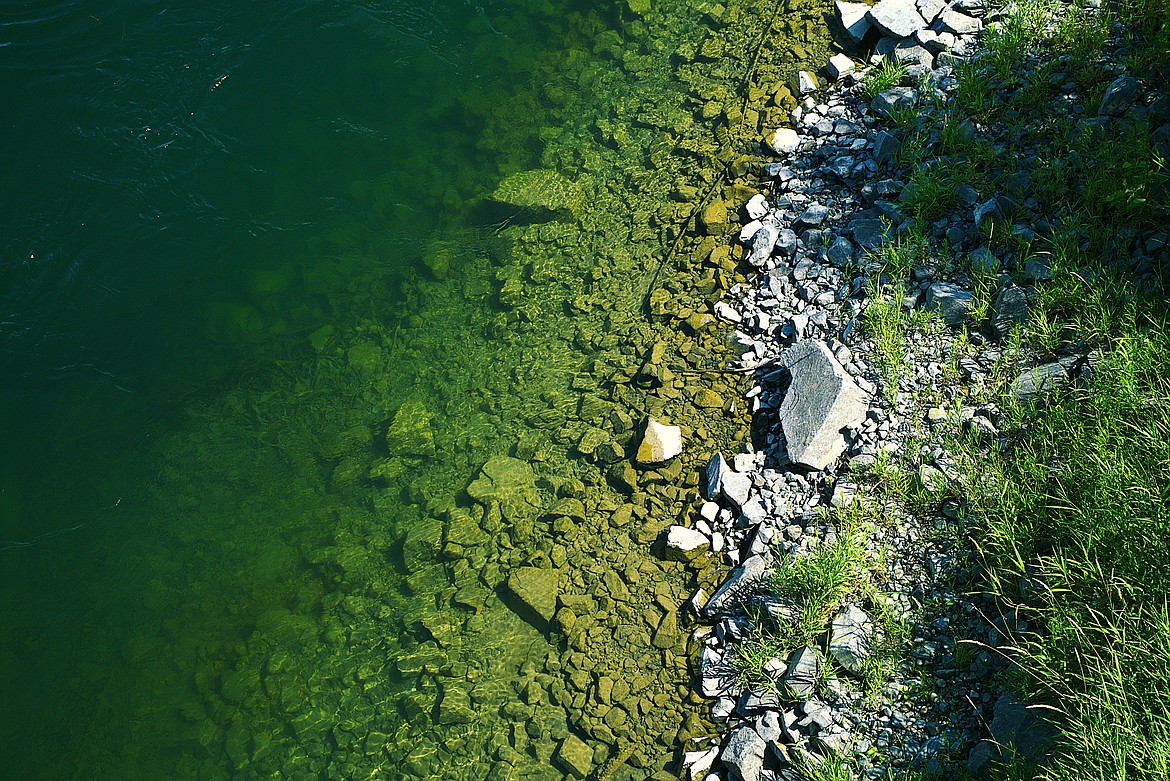
The International Elk-Kootenai/y Watershed Study will build off 15 years of ecological research by the Ktunaxa Nation to determine the extent and impact of regional river pollution.
Photo by NED NEWTON
BONNERS FERRY — On Aug. 8, concerned citizens from British Columbia, Montana, and Idaho gathered at the Kootenai River Inn for a public session to provide input amid a two-year pollution study of the transboundary Elk and Kootenai rivers.
The event was led by the International Joint Commission, an independent organization created over 100 years ago by the Canadian and U.S. governments, tasked with preventing and resolving ecological disputes over shared waters that cross the international border — in this case, the Elk River that merges with the Kootenay River (Canadian spelling) in British Columbia before crossing into Montana. At the session, a board of scientific experts overseeing the study listened as residents shared how they believe the IJC should collect data to inform its recommendation to both governments, as well as to a third key stakeholder, the Ktunaxa Nation.
Notably, this watershed study marks the first time the IJC has partnered with a tribal governing body since it was founded with the Boundary Waters Treaty of 1909.
Among other things, the study will examine the extent of water contamination caused by an open-pit coal mining operation in southeast British Columbia's Elk Valley, which has for decades discharged selenium, nitrate and sulphate into the international watershed. The mining operation was originally owned by Teck Resources before being sold to Glencore, a Swiss natural resource company, in 2024.
To open the session, Gary Aitken Jr., Kootenai Tribe of Idaho vice-chair, highlighted the many environmental protection and restoration efforts led by the Ktunaxa Nation — a cross-border alliance that includes four Ktunaxa First Nations: ʔakisq̓nuk First Nation, ʔaq̓am, yaqan nuʔkiy and Yaq̓it ʔa·knuqⱡi‘it; as well as the Kootenai Tribe of Idaho, and the Confederated Salish and Kootenai Tribes.
Aitken Jr. noted that, in the course of efforts to restore burbot and sturgeon populations in the Kootenai River, the Ktunaxa Nation discovered pollution levels far higher than initially expected when research began 15 years ago.
“To work things out with the United States and Canada and the International Joint Commission, we feel that we have a lot of traditional knowledge as well as Western knowledge to add — some of the most premier knowledge in the region,” he said. “We’ve been trying very hard as a Tribe to keep our covenant with the Creator, which says that as long as we take care of this land that we are placed upon, that it will in turn take care of us.”
A 2023 report by the U.S. Geological Survey revealed a dramatic spike in pollution levels in the Elk River, with selenium contamination up 581% and nitrate levels rising by 784% since the previous study. 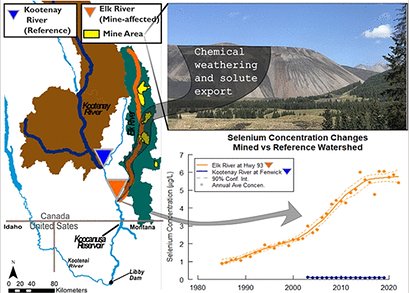 Research found that in spite of recent surface water treatment efforts, contaminating solutes in the Kootenai River derived from mine waste have not sufficiently reduced in concentration so as to meet U.S. water quality standards.
Members of the IJC study board said the listening session’s purpose was to hear directly from local residents, whose first-hand knowledge and lived experience provide crucial insights that will help shape the study board’s research questions about the ongoing decline in water quality.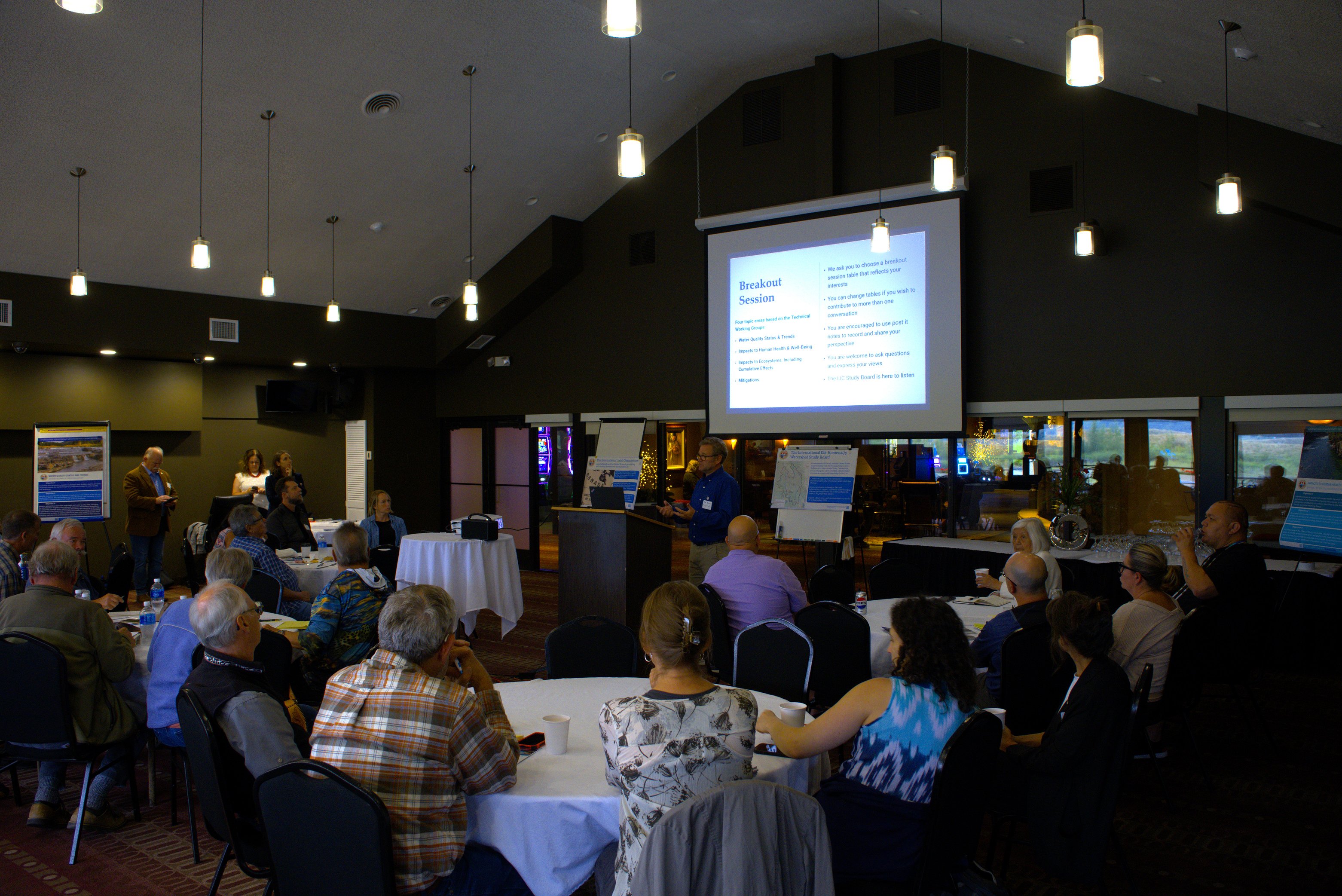
Following introductions, attendees broke into smaller groups, each joined by a study board member, to discuss topics including water treatment and mitigation efforts, the legitimacy of existing research and data, the effects of recently implemented regulatory standards, impacts on the ecosystem such as disrupted food chains, human health concerns, and more.
One attendee, a member of the Kootenai Valley Trout Club from the Libby area, reported noticing the complete disappearance of a mayfly species this year, which has had a cascading effect on food supply for fish and birds.
Last week’s event in Bonners Ferry marked the third and final listening session put on by the study board this summer. Previously, one session was held in Fernie, British Columbia, and another was held virtually.
The International Elk-Kootenai/y Watershed Study launched in September 2024 after several years of discussion between the federal governments of the U.S. and Canada. The study will conclude in September 2026, at which point the two federal governments and the Ktunaxa Nation will devise a resolution to ensure the international watershed remains adequately protected from future pollution.
ARTICLES BY NED NEWTON
Lessons learned in Bonners Ferry
It brings me no joy to announce that this is my final piece for the Bonners Ferry Herald. Though I am not entirely to blame, some of my articles here have admittedly spurred controversy, but my hope is that few, if any of you look to the heavens and celebrate my departure, as I have sincerely worked to the best of my ability to provide fair and accurate local reporting.

‘Generations of Champions’ at the County Fair
The 105th Boundary County Fair, themed “Generations of Champions,” showcased the community’s best and brightest young livestock exhibitors, artists, bakers, engineers, and more, all while bringing friends and families together for a week chock-full of entertainment.
Area residents weigh in on international river pollution study
On August 8, concerned citizens from British Columbia, Montana, and Idaho gathered at the Kootenai River Inn for a public session focused on protecting the transboundary Elk and Kootenai rivers from pollution.