
Planting the future
JOEL MARTIN | Hagadone News Network | UPDATED 1 year, 1 month AGO
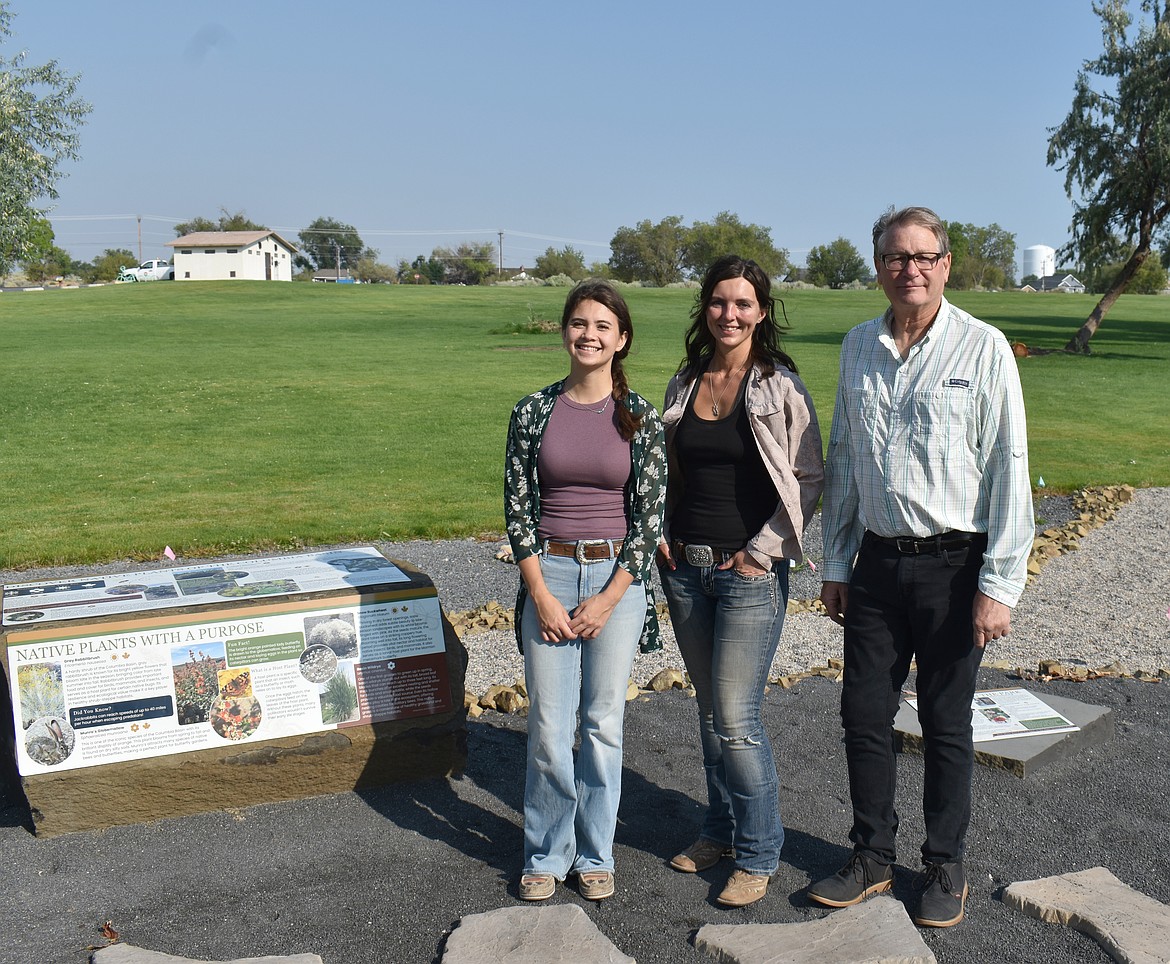
From left: Columbia Basin Conservation District Conservation Director Dinah Rouleau, Education and Outreach Program Manager Kaley Wisher and Conservation Director Ron Sawyer stand in the Heritage Garden at Lower Peninsula Park. The garden has been upgraded with signs explaining the plants and creatures to be found there.
JOEL MARTIN/COLUMBIA BASIN HERALD

Columbia Basin Conservation District Conservation Director Dinah Rouleau demonstrates the bee box, which will be used to nurture pollinators for the Heritage Garden.

The new signs at Lower Peninsula Park explain to visitors the plants and animals living there, and how they tie into the ecosystem at large.
Joel Martin has been with the Columbia Basin Herald for more than 25 years in a variety of roles and is the most-tenured employee in the building. Martin is a married father of eight and enjoys spending time with his children and his wife, Christina. He is passionate about the paper’s mission of informing the people of the Columbia Basin because he knows it is important to record the history of the communities the publication serves. | August 21, 2025 1:20 AM
MOSES LAKE — The Heritage Garden at Lower Peninsula Park, 3519 W. Peninsula Drive in Moses Lake, is beginning to come together, and now there are signs to explain to the public exactly what’s what.
“The first sign has the riparian plants,” said Dinah Rouleau, conservation director for the Columbia Basin Conservation District. “Then (another) honoring the history of the site and the Moses Columbia Tribe, talking about some of their historically used plants. We have a Heritage Program sign, an Urban Water Efficiency Program sign and one about us and why we did this.”
The signs are the latest phase in the Lower Peninsula Park’s Heritage Garden project, which began last October. The CBCD, with a lot of help from the city of Moses Lake and local businesses, removed the grass in a 15,0009-square-foot area of the park and replaced it with plants native to the area, interspersed with gravel beds and stone paths. The signs, designed by CBCD Communications Specialist Anna Maletzke, are affixed to stones and describe the plants in the garden, the animals and insects that live among them, and the history of the area, as well as what to do and what not to do to keep the flora and fauna thriving.
One sign indicates a small birdhouse-shaped box called a bee box, which will house bees to pollinate the garden — as well as the neighborhood around it. The box is filled with hollow sticks that the bees will use to lay eggs in, Rouleau said. The CBCD will help the bees along with the process, she said.
“(We) would pop those reeds open, collect the eggs, put them in the fridge and then set (them) out at the most ideal time, which is later spring after we’re done with the freezes,” Rouleau said. “(We) set the eggs in here, let them hatch and then come out and do it again each year.”
Bees can generally reproduce without human help, Rouleau explained, but CBCD intervention will help the bees resist diseases and parasites as well as the vagaries of Basin weather.
“We’re having very odd springs and falls where (the bees) will emerge early, and then we’ll have that cold snap, and that takes out the generation,” she said. “So we have to baby them a bit.”
Because the park is along the lake shore, many of the plants are riparian, which means they thrive along the water’s edge. The CBCD would like to see those plants become more popular with homeowners who live on the lakefront.
“A lot of the riparian plants that are planted against (the water) are shrub trees,” said CBCD Conservation Biologist Kaley Wisher. “We’re hoping that they’ll get nice and big, and then when we say, ‘You could plant this; it turns into a tree,’ they get a visual sense of how big it is.”
It’s not just the trees that take time. The plants in the garden aren’t showing very much this year, but they will next year, Rouleau said. The spots where they were planted last fall are marked with flags, and some of those have visible plants, but some don’t yet.
“This time of year, a lot of our spring forbs die back, and they almost look dead,” Rouleau said. “Landowners might think, oh, they died already, but there’s a good chance they’ll come back next spring, as long as you keep giving them something. Their roots are alive … they’re just going on vacation until next spring.”
The signs and the garden have been spared the sort of vandalism that often plagues public parks, Rouleau said. A couple of the signs were turned upside down, but nothing has been damaged. The garden remains an example of what can be done with very little water.
“I think (it’s) good for the public to see the growing pains that come with (the garden),” she said. “You plant the first year, the plants are small, some are flowering, you have weeds that you have to manage. It takes time for the public to see that and hopefully see what this becomes in two to three years.”
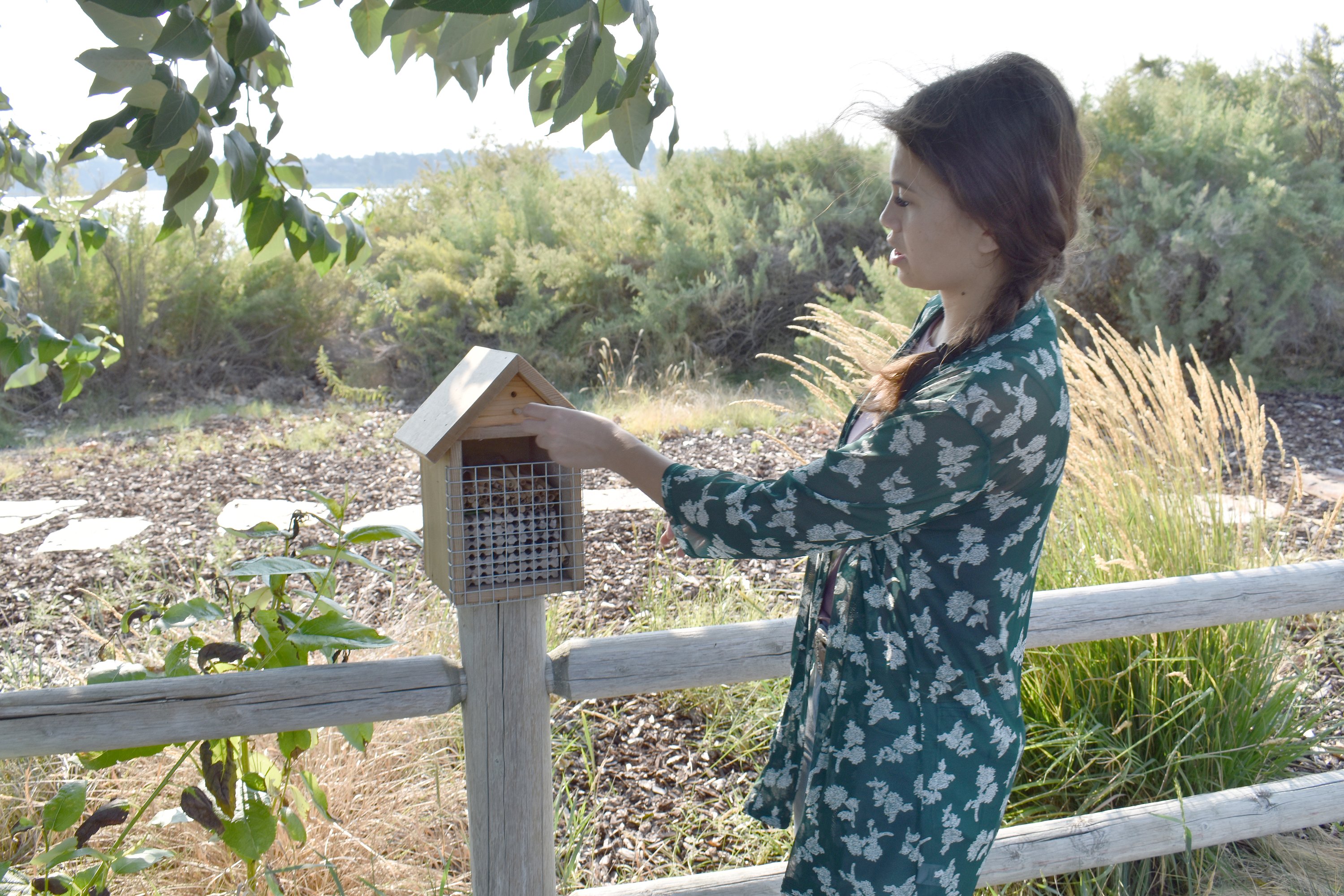 Columbia Basin Conservation District Conservation Director Dinah Rouleau demonstrates the bee box, which will be used to nurture pollinators for the Heritage Garden.
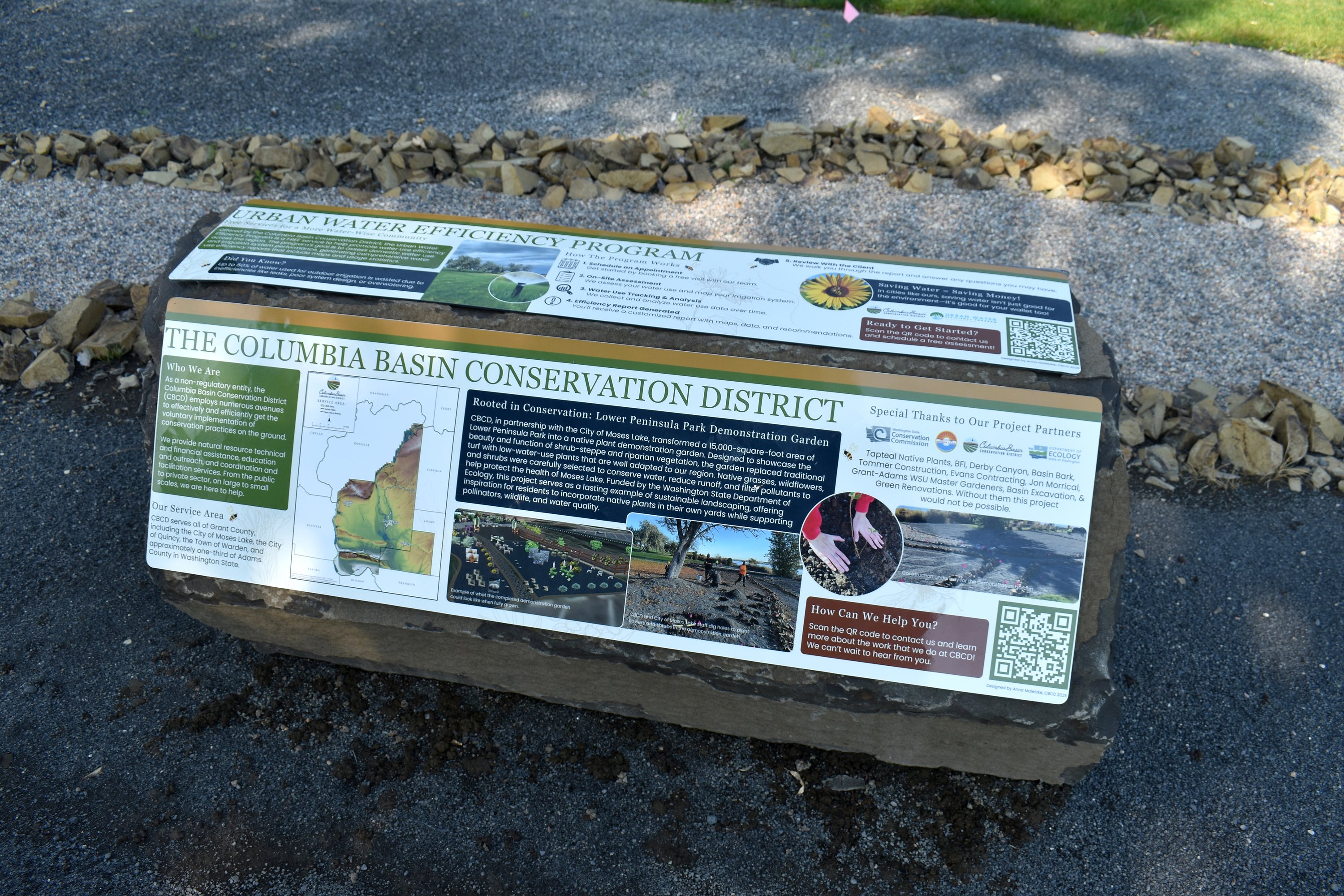 The new signs at Lower Peninsula Park explain to visitors the plants and animals living there, and how they tie into the ecosystem at large.
ARTICLES BY JOEL MARTIN

Endless battle
Noxious Weed Control Board works to keep invasive plants under control
MOSES LAKE — Some of the nastiest plants in Grant County were the topic of a class led by Jay Johnson, a consultant with the Grant County Noxious Weed Control Board, Tuesday. The Noxious Weed Control Board, as its name would suggest, is tasked with keeping weeds under control in Grant County. That’s not a small job; the board’s website lists 129 species of noxious weeds that are found around Grant County. A noxious weed is defined as an invasive, non-native plant that threatens agricultural crops, local ecosystems or fish and wildlife habitat, according to the Noxious Weed Control Board. Washington state law requires that these weeds be identified and their spread kept to a minimum, if not completely eradicated. “We’re one of those agencies a lot of people don’t really understand,” Johnson said. “We’re a county office and … our funding is tax-based assessment. When you get your tax bill and you look down at all the expenses that you pay for, there we are.”

BASIN EVENTS: Oct. 16-24
COLUMBIA BASIN — Whether you feel like shopping, crafting, learning or seeing a show, there’s something happening for you this week in the Basin. Oct. 16 ‘My Family (Mi Familia)’ screening Spanning three generations, “My Family (Mi Familia)” is a heartfelt drama that follows the Sánchez family as they build their lives in East Los Angeles. Through love, hardship, triumph, and sacrifice, the film explores the immigrant experience, the strength of family bonds, and the traditions that connect one generation to the next. Lowrider show and taco truck before the screening. Sponsored by Columbia Basin Allied Arts, EDUBS C/S and the Moses Lake Creative District. $12 per person. Doors open at 6 p.m., film begins at 7 p.m. at the Moses Lake Civic Center Auditorium, 401 S. Balsam St. Tickets and info: www.cba-arts.org.

Moses Lake author encourages women to look beyond church culture norms
MOSES LAKE — A Moses Lake author’s book, “A Christian Woman Striving to Live Her Faith in a Man-Controlled World,” takes aim at the role to which many churches relegate the female half of their congregations. “It’s to encourage women in the faith,” Linda Curran said. “A lot of churches say, ‘Teach Sunday school, do this, do that, but don’t (evangelize.)’" In her book, Curran recounts a time when she moved to a new community and joined a church there. She was surprised to learn that, as a new female member, she had been automatically assigned church cleaning duties. When she questioned it, she wrote, she was met with condescension and her objections were brushed aside. In other churches, she said, women who were capable of teaching were relegated to “women’s ministry.”