
Hay harvest faces challenges in Washington amidst weather woes and market stagnation
NANCE BESTON | Hagadone News Network | UPDATED 7 months, 2 weeks AGO
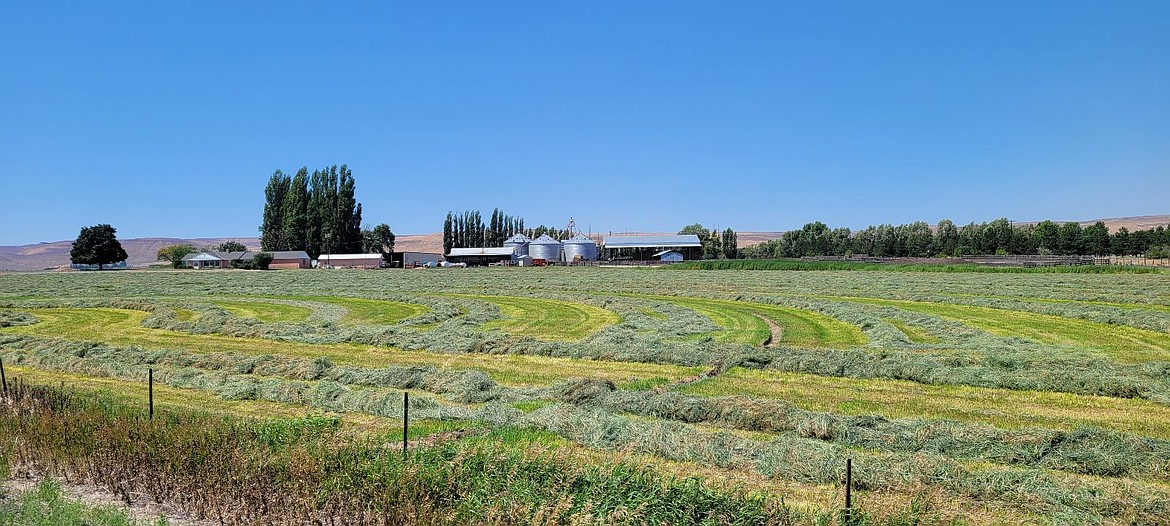
KENNEWICK — This season has unfolded with mixed outcomes for hay growers in Washington State, particularly in the Columbia Basin, as they navigate through a landscape marked by challenging weather, weak export demand, crop quality and financial viability.
Andrew Eddie, president of the Washington State Hay Growers Association, expressed concerns over both these critical factors, revealing that this year has presented significant challenges for farmers.
“The first and second cut went well, but now a lot of growers are working on their third cut,” Eddie said. “Unfortunately, the recent thunderstorms and continuing weather variables are impacting cutting schedules and the overall quality of the hay.”
As weather conditions continue to play havoc with production schedules, there’s apprehension surrounding the quality of the hay being harvested, Eddie said.
“We had a lot of hay put down last week just before this recent thunderstorm, so quality is going to be down a little bit,” Eddie said.
He added that growers are currently dealing with more weather systems moving in, which adds another layer of complexity to their operations.
Beyond the challenges posed by Mother Nature, demand for hay has also been less than favorable, particularly on the international front.
“Ninety percent of our hay here in the Columbia Basin goes to export. If there are no foreign buyers and domestic demand is low, we face oversupply issues,” Eddie said. “It’s been a very challenging couple of years for hay growers. We’re all hoping for a turnaround, but it’s uncertain how long it might take to see the light at the end of the tunnel.”
The diminished demand and overwhelming supply have placed significant financial strain on farmers. Eddie highlighted that hay prices have been persistently low, with prices hovering anywhere from $30 to $50 below the break-even costs for most growers.
“We can’t pass on these costs to consumers. We’re kind of stuck taking what we can get to ensure cash flow,” he said,
The impact of rising operational costs, coupled with external economic pressures such as tariffs and high interest rates, has compounded the difficulties for hay growers.
“We’re dealing with high input costs, and everything from labor to materials is expensive right now, yet commodity prices are not reflecting that,” Eddie said. “This year has seen a stark drop in market prices, approximately 40%, compared to previous years, leaving a lot of growers to absorb the financial blow.”
While there are always glimmers of optimism, Eddie noted that the influx of rain this season has complicated matters, impacting growth patterns and the quality of hay.
“We usually cut every 30 to 35 days, but the excessive rainfall is pushing those schedules back. This impacts tonnage, which is vital for our revenues, and results in challenges with quality and aesthetic appeal in our product,” he said.
Looking for a silver lining, Eddie disclosed a modest benefit within the Timothy grass market.
“The Timothy market saw steady prices during the first cutting, which is a bonus. However, moving into the second cutting, many still have first cutting stock unsold, raising concerns about how well the second cutting will move,” he said.
As growers forge ahead into their third cutting, there remains uncertainty about the future prospects of the hay market.
“Looking into next year, we might see some people pivoting away from hay if the trend continues. It’s a tough environment, and it could really test how many growers can endure,” he said.
Eddie emphasized that the fate of hay growers depends heavily on factors beyond their control: export markets and overall agricultural economics.
“We’re very reliant on external markets, and it’s alarming how extra hay is saturating the market without fault on our part. The farmers are doing all they can to hit yield goals while aiming to keep costs manageable,” he said.
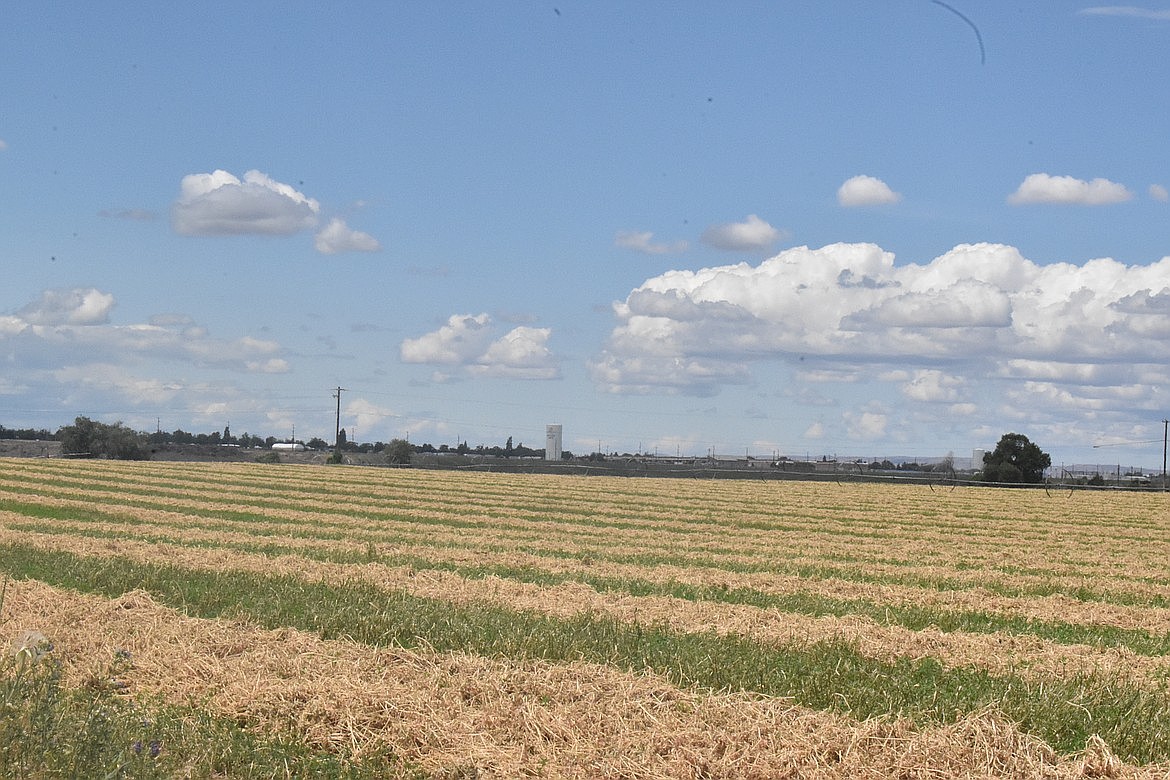
 While this year's hay crop has been healthy, many hay farmers have said they're having trouble selling the crop they've brought in.
ARTICLES BY NANCE BESTON
1 arrested after Highway 17 stop; detectives recover fentanyl, firearms
MOSES LAKE — The Moses Lake Street Crimes Unit conducted a traffic stop on Highway 17 near Randolph Road and executed a search warrant Friday morning as part of an ongoing narcotics investigation.
4th-year drought declaration in WA, subtle effects in the Columbia Basin
EPHRATA — Washington’s fourth straight year of drought is expected to hit some regions hard, but in Grant and Adams counties, the impacts will look different – quieter, less visible and centered underground. Statewide, the Department of Ecology issued an emergency drought declaration after a warm winter left Washington with about half its usual snowpack, raising concerns about low summer streamflows, stressed fish populations and heightened wildfire risk. Seven of the past 10 years have included drought somewhere in the state. “If you look at our mountains, the challenge we are facing is clear,” Gov. Bob Ferguson said during a press conference Wednesday. “We’re taking emergency action to protect fish, farmers and communities across Washington.”

Sleep Diagnostic Center to close after doctor’s sentencing
MOSES LAKE — The Central Washington Sleep Diagnostic Center announced it will be closing its doors effective April 30. This includes locations in Moses Lake, Spokane Valley, Brewster and Wenatchee. The announcement follows the March 25 guilty plea from Dr. Eric Edward Haeger, 57, in United States District Court to adulterating and misbranding medical devices with the intent to defraud or mislead, according to a statement from the U.S. Attorney’s Office. “The adulterations by Dr Haeger show a dangerous disregard for the safety of his patients,” Washington Attorney General Nick Brown said in a statement. “This is a win for patient safety, for protecting public dollars from fraud, and for ensuring citizens of Washington get necessary healthcare. This case exemplifies the great work our team is doing in collaboration with our federal partners to fight fraud and protect Washingtonians.”