
Audit reveals issues in MLSD '23-24 spending
NANCE BESTON | Hagadone News Network | UPDATED 7 months, 2 weeks AGO
The Moses Lake School District has received audit findings from the Washington State Auditor's Office showing compliance deficiencies related to around $4.4 million in unsupported funds. The district has taken corrective action to ensure paperwork is properly filled out when using federal funds, according to Superintendent Carol Lewis.
FILE PHOTO

None of the employees responsible for oversight during the time of the audit remains employed with the district. Instead, the district has a mostly brand-new administrative team. From left: Executive Director of Teaching and Learning Yvonne Walker, Executive Director of Employee Services Michelle Musso, Assistant Executive Director of Teaching and Learning Katie Phipps, Superintendent Carol Lewis, Executive Director of Safety and Well-Being Scott West and Assistant Executive Director of Safety and Wellbeing Adam Sawyer. The new admin staff are collectively being paid less than their predecess…
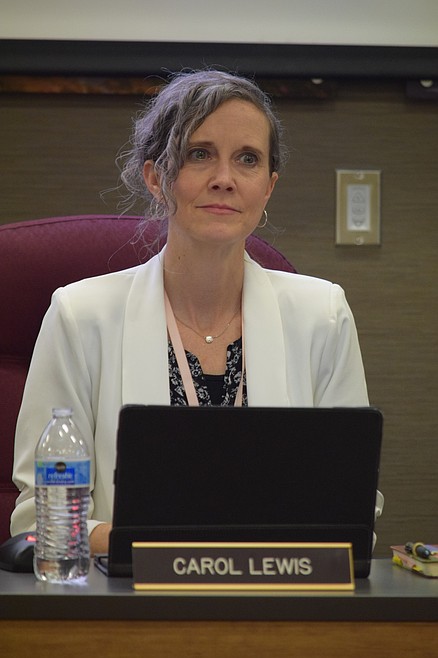
Superintendent Carol Lewis said corrective actions were already in place by the time the audit findings were released, including new internal controls to track federal spending and clarifying staff responsibilities.
MOSES LAKE — Findings from a recent audit conducted by the Washington State Auditor's Office and published Aug. 18 have revealed compliance deficiencies within the Moses Lake School District regarding the management of federal funds in 2023-24.
“The district fully anticipated all findings and implemented corrective measures prior to the audits beginning,” Superintendent Carol Lewis said.
Lewis said the deficiencies resulted from a lack of communication and connection between the finance department and those handling state and federal programs.
Federal awards
SAO found there were deficiencies with Title I Grants to Local Educational Agencies, Special Education Cluster Grants to States, Special Education Preschool Grants and COVID-19 Education Stabilization Fund. In total, the auditor's office is questioning around $4.4 million in unsupported funds.
“Unsupported funds” does not mean the money is missing, but instead proper paperwork was not completed, Lewis said.
“The state auditor requires very specific records of when federal dollars are used. If those records aren’t complete, the expense is flagged — even if the work was legitimate,” Lewis said.
However, according to Lewis, the district has taken steps to ensure audit compliance in the future. These include putting in place new internal controls to track federal spending, clarifying staff responsibilities for federal documentation, supervisors are now checking to verify time-and-effort records, stronger and more direct oversight with leadership restructure and none of the employees responsible for oversight during the time of these findings remain employed with the district.
Special education
Beginning with the two Special Education Grants, the district spent around $1.8 million from the special education program cluster, but did not provide the appropriate documentation to the auditor’s office for 19 district employees, accounting for around $1.4 million of those funds.
SAO recommended that the district create and follow internal controls to ensure that it complies with OSPI requirements for getting signed time-and-effort documentation.
“The district acknowledges the finding and has implemented new procedures to ensure strong internal controls over time-and-effort documentation,” reads a statement from MLSD in the audit report. “This issue primarily occurred during a period of staff turnover. The district has since hired experienced personnel who are now overseeing federal program compliance. We have implemented a compliant time-and-effort tracking system consistent with OSPI and federal requirements.”
Title I
The Title I program is used to improve the teaching and learning of children who are at risk of not meeting state academic standards and are low-income. The district was cited for deficiencies in time-and-effort documentation and identifying students in private schools who were eligible to receive Title I services.
The district spent around $2.9 million in federal funds from the Title I program but did not obtain time-and-effort documentation for 235 employees whose payrolls and benefits totaled around $2.9 million, according to the report. The district also did not contact three private schools within its boundaries to determine if there were eligible students who could have received Title I money. During the audit process, MLSD reached out to the three private schools and one of the schools said it would have been interested in participating, according to SAO.
“The district concurs with the finding. In response, the district has established a regularly updated list of private schools within our boundaries,” reads a statement from MLSD in the audit report. “We will be proactively reaching out to these schools each year to determine interest and eligibility for Title I services and are documenting all correspondence.”
The district has also established new procedures for time-and-effort documentation, including review and program director oversight, according to the audit report.
COVID-19
The COVID-19 Educational Stabilization Fund was used to prepare for and respond to the COVID-19 pandemic. In 2024, the district spent around $10.4 million from the fund. This included around $190,000 in Elementary and Secondary School Emergency Relief Fund, about $10.1 million in the American Rescue Plan Elementary and Secondary School Emergency Relief subprogram and around $57,000 in the American Rescue Plan Elementary and Secondary School Emergency Relief – Homeless Children and Youth subprogram.
The audit found the district transferred nearly $48,000 to salary and benefits, which was coded to other local, state and federal programs. This resulted in employees being paid by federal programs without the appropriate documentation.
SAO found that nine out of 29 transactions lacked proper paperwork, totaling nearly $48,000.
According to the audit report, this has since been fully corrected.
The State Auditor's Office is still conducting an accountability audit for the years 2022-23 and 2023-24. That audit will examine the district’s policies and procedures for preventing mismanagement of funds.
“This audit will most closely mirror the idea of a ‘forensic audit.’ The district fully expects that the auditor will identify many issues, all of which have been known to the district and have already been corrected under the new administration,” Lewis said.
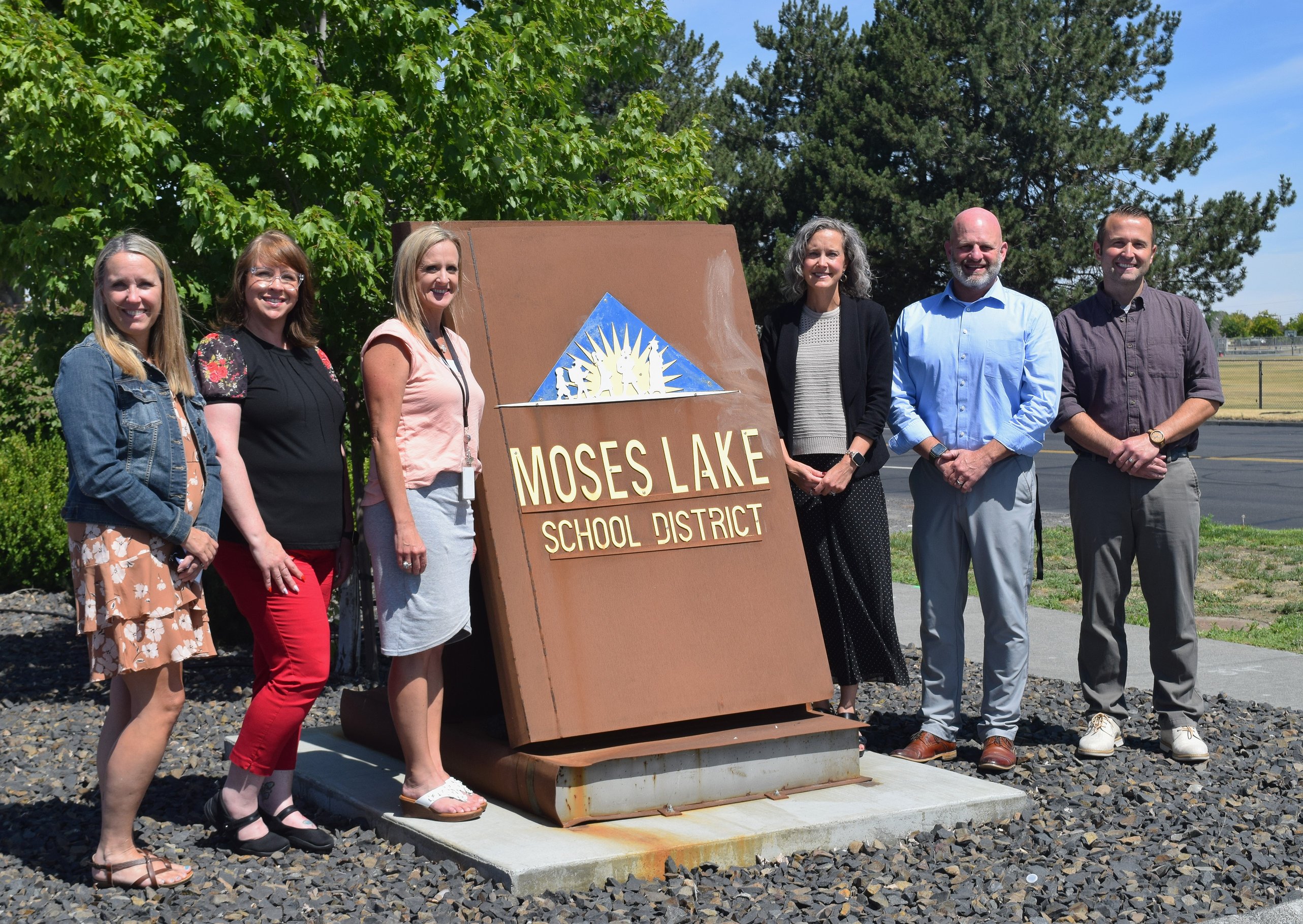 None of the employees responsible for oversight during the time of the audit remains employed with the district. Instead, the district has a mostly brand-new administrative team. From left: Executive Director of Teaching and Learning Yvonne Walker, Executive Director of Employee Services Michelle Musso, Assistant Executive Director of Teaching and Learning Katie Phipps, Superintendent Carol Lewis, Executive Director of Safety and Well-Being Scott West and Assistant Executive Director of Safety and Wellbeing Adam Sawyer. The new admin staff are collectively being paid less than their predecessors, according the district records.
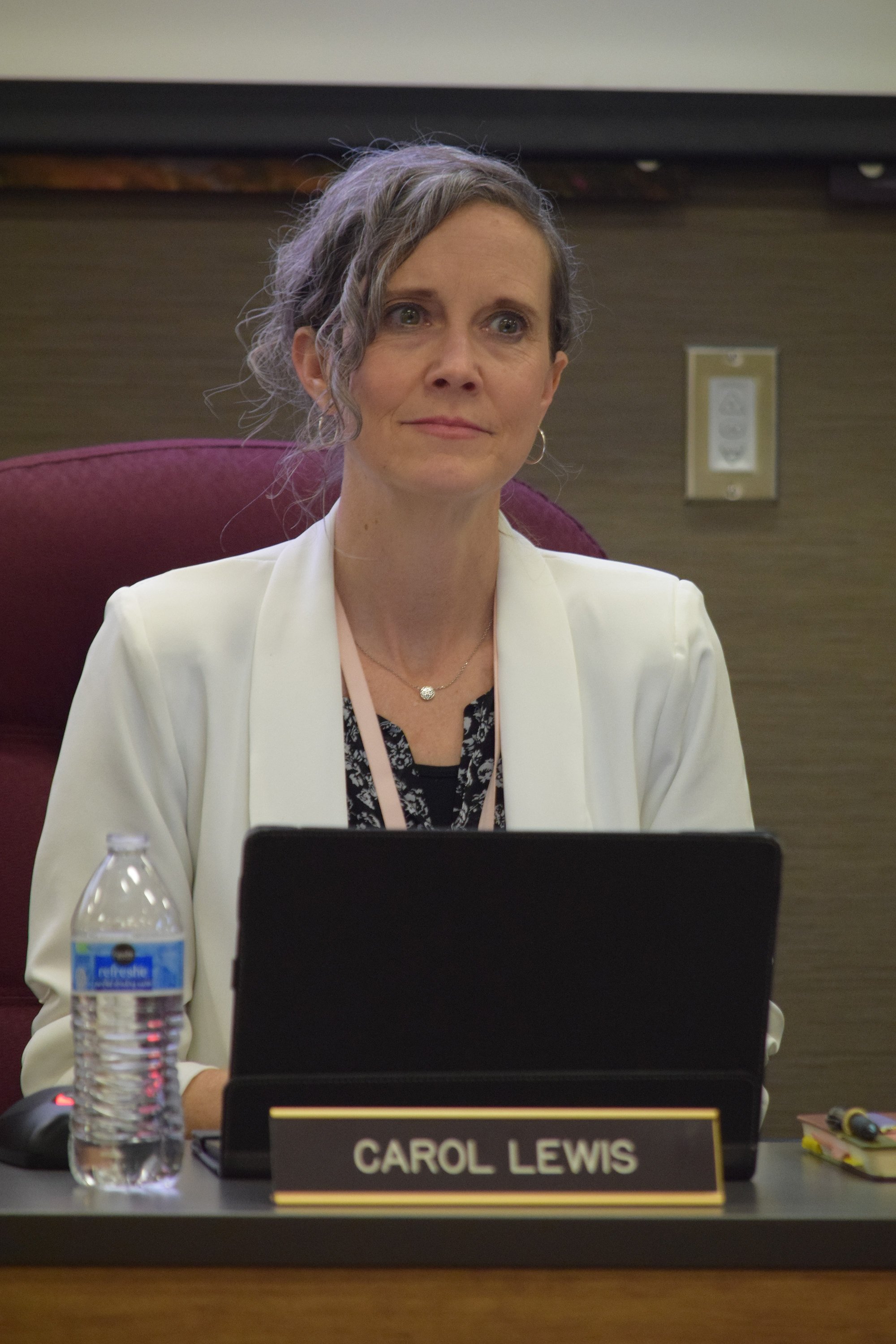 Superintendent Carol Lewis said corrective actions were already in place by the time the audit findings were released, including new internal controls to track federal spending and clarifying staff responsibilities.
ARTICLES BY NANCE BESTON
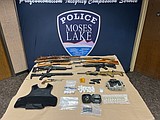
1 arrested after Highway 17 stop; detectives recover fentanyl, firearms
MOSES LAKE — The Moses Lake Street Crimes Unit conducted a traffic stop on Highway 17 near Randolph Road and executed a search warrant Friday morning as part of an ongoing narcotics investigation.
4th-year drought declaration in WA, subtle effects in the Columbia Basin
EPHRATA — Washington’s fourth straight year of drought is expected to hit some regions hard, but in Grant and Adams counties, the impacts will look different – quieter, less visible and centered underground. Statewide, the Department of Ecology issued an emergency drought declaration after a warm winter left Washington with about half its usual snowpack, raising concerns about low summer streamflows, stressed fish populations and heightened wildfire risk. Seven of the past 10 years have included drought somewhere in the state. “If you look at our mountains, the challenge we are facing is clear,” Gov. Bob Ferguson said during a press conference Wednesday. “We’re taking emergency action to protect fish, farmers and communities across Washington.”
Sleep Diagnostic Center to close after doctor’s sentencing
MOSES LAKE — The Central Washington Sleep Diagnostic Center announced it will be closing its doors effective April 30. This includes locations in Moses Lake, Spokane Valley, Brewster and Wenatchee. The announcement follows the March 25 guilty plea from Dr. Eric Edward Haeger, 57, in United States District Court to adulterating and misbranding medical devices with the intent to defraud or mislead, according to a statement from the U.S. Attorney’s Office. “The adulterations by Dr Haeger show a dangerous disregard for the safety of his patients,” Washington Attorney General Nick Brown said in a statement. “This is a win for patient safety, for protecting public dollars from fraud, and for ensuring citizens of Washington get necessary healthcare. This case exemplifies the great work our team is doing in collaboration with our federal partners to fight fraud and protect Washingtonians.”