
Water shortage causes facility closures at Logan Pass
HAILEY SMALLEY | Hagadone News Network | UPDATED 1 year, 1 month AGO
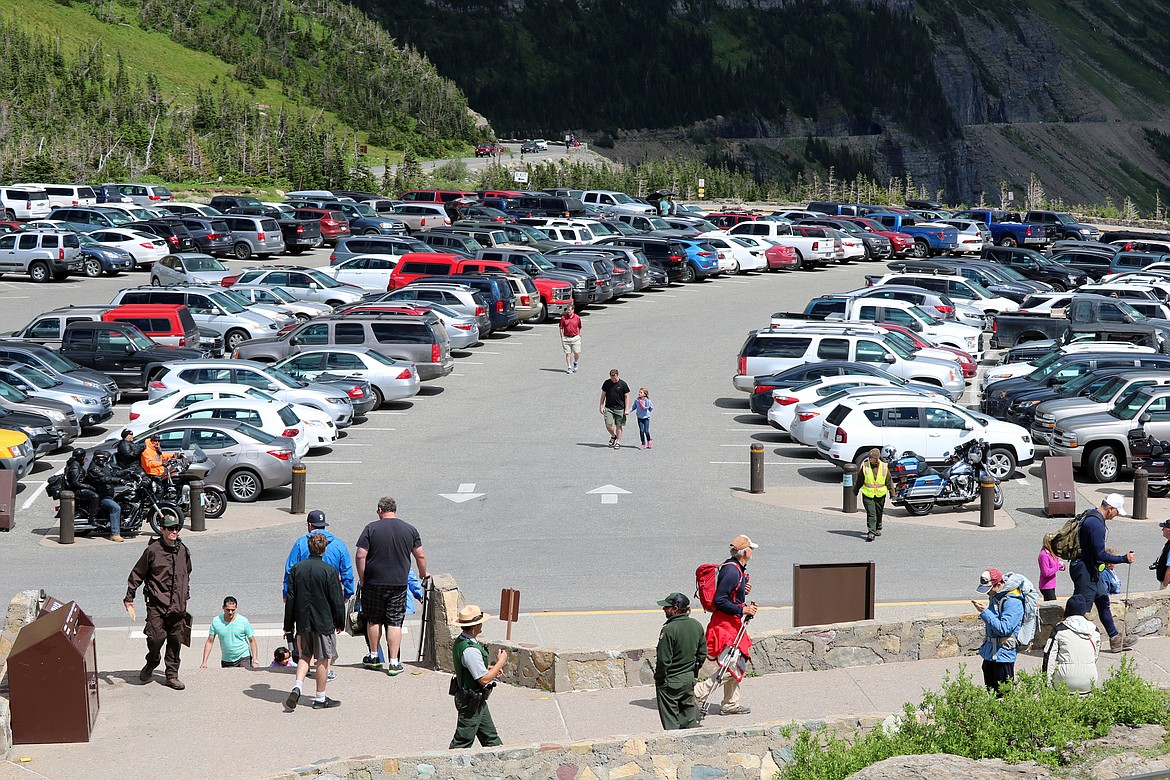
The parking lot at Logan Pass in Glacier National Park is crowded with cars and visitors on a summer day in this 2019 file photo. (Daily Inter Lake)
Park officials may turn off the tap at Logan Pass as heavy visitation diminishes the area’s limited water supply.
Facilities at Logan Pass, including plumbed restrooms and water filling stations, are primarily supplied by meltwater from a nearby ice field and summer rainfall.
The system dates back to 1963, when the park received fewer than 1 million visitors a year. This year, more than 1.34 million people visited the park in June and July alone.
While that number is on par with previous summers, the amount of water being used at Logan Pass Visitors Center has increased significantly, according to an Aug. 22 press release. In recent years, the facilities typically consumed between 5,000 and 6,000 gallons of water a day. This summer, water usage has averaged around 8,000 gallons a day.
Long-term weather patterns have done little to offset the increased demand. Between October 2024 and August 2025, weather stations at Flattop Mountain and Many Glacier reported around 80% of average precipitation.
“The park is observing that the water is being used faster than it is replaced,” the press release states.
To manage the shortage, officials may close the restrooms at Logan Pass between 5:30 p.m. and 8:30 a.m. Vault toilets will remain open and available to visitors. Water filling stations are also expected to remain open, but visitors are encouraged to be prepared and bring their own potable water.
Water at Logan Pass will be turned off for the season Sept. 7.
Earlier this year, officials revealed plans to repair and update much of Glacier National Park’s water distribution system. A portion of the project scheduled to begin in June 2027 is “intended to address water demand and rehabilitate infrastructure” at Logan Pass.
Reporter Hailey Smalley can be reached at 758-4433 or [email protected].
ARTICLES BY HAILEY SMALLEY

Trump stumps for Flint in Kalispell as Election Day nears
President Donald Trump, wearing a dark suit, red tie and red USA cap, ambled into the Majestic Valley Arena to the raucous roar of a crowd.
Flathead National Forest greenlights Swan Valley timber project
A 2,307-acre timber project is now under way in the Swan Valley.
Flathead National Forest greenlights Swan Valley timber project
A 2,307-acre timber project is now under way in the Swan Valley.