
Grant Co. COVID-19 outbreak ends
JOEL MARTIN | Hagadone News Network | UPDATED 1 year, 1 month AGO
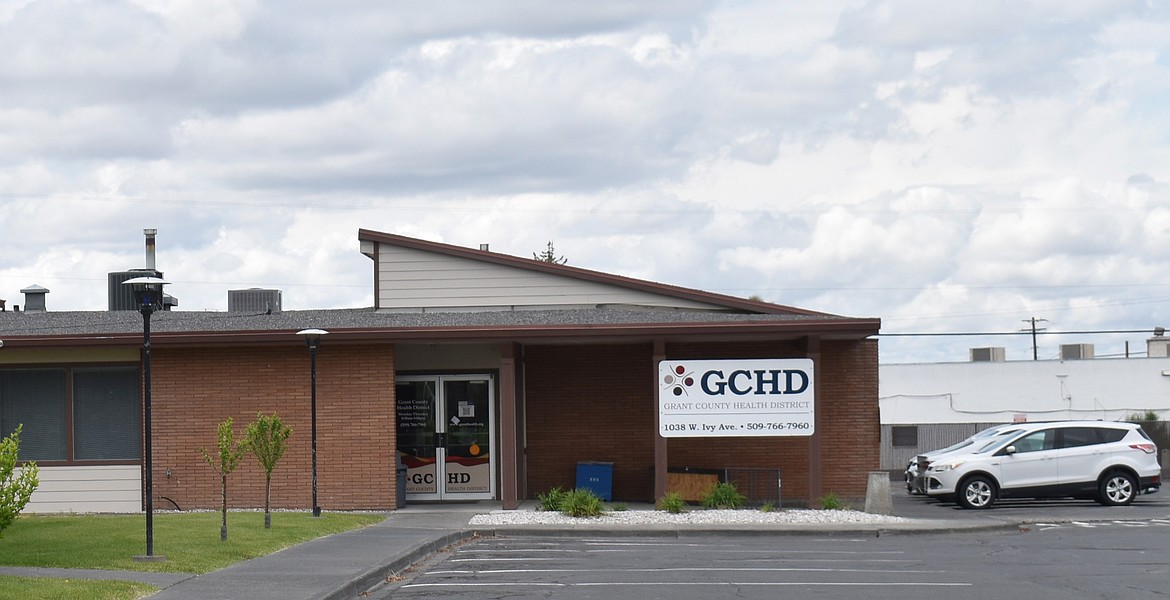
The COVID-19 outbreak that sickened 47 people at a local long-term care facility has ended, according to the Grant County Health District.
FILE PHOTO
Joel Martin has been with the Columbia Basin Herald for more than 25 years in a variety of roles and is the most-tenured employee in the building. Martin is a married father of eight and enjoys spending time with his children and his wife, Christina. He is passionate about the paper’s mission of informing the people of the Columbia Basin because he knows it is important to record the history of the communities the publication serves. | August 28, 2025 5:39 PM
MOSES LAKE — The COVID-19 outbreak that sickened 47 people and claimed at least two lives at a local long-term care facility is over, according to Grant County Health District Communication Coordinator Lexi Smith. The facility, which was not identified, has gone 14 days without an additional case, Smith wrote in an email to the Columbia Basin Herald. A third death was not immediately attributed to COVID-19 but was under investigation.
“Long-term care facilities … house at-risk individuals, and that makes them an area where COVID can circulate in dining rooms and community areas,” Smith said in an interview Thursday.
This is the eighth outbreak in a long-term care facility since October 2024, Smith wrote. By comparison, the period from October 2023 to October 2024 saw 19 outbreaks in care facilities and one in a school.
When an outbreak occurs, Smith said, the facility will take immediate precautions to contain it.
“The long-term care facility worked closely with our staff at Grand County Health District to ensure they were taking enhanced infection control measures,” Smith said. “They’ve been modifying their dining experiences, isolating cases, testing their staff. They’re certainly doing what it takes to mitigate the outbreak.”
A facility experiencing an outbreak notifies family members and other responsible persons, Smith said, and also puts a sign at the front of the facility warning visitors that there’s been an outbreak, Smith added.
COVID-19 outbreaks aren’t uncommon at this time of year, Smith said.
“It’s unfortunately becoming a pretty annual occurrence of having a summer wave of COVID-19,” Smith said. “It’s believed because in the summertime people are going to concerts and festivals and festivals and community events and they’re spending more time out and doing things with other people that we start seeing an increase of COVID-19. And unlike other common respiratory illnesses, COVID-19 is one that can get us sick at any point during the year.”
The GCHD can track the virus in a number of ways. Emergency room visits are one; this year ER visits for COVID-19 peaked the first week of August with 1.2% of visits COVID-related, according to Smith. Last year’s high point was 3.5% in the first week of September.
Officials can also detect the virus through the sewer system, said GCHD Investigations and Response Division Manager Amber McCoy.
“They are doing surveillance in wastewater here in Grant County.” McCoy said. “They test it for influenza, COVID, (Respiratory Syncytial Virus) … it determines whether it’s present in the community.”
Grant County’s wastewater viral activity level for COVID-19 was moderate in the first week of August, the most recent dates for which data was available, according to the Centers for Disease Control.
People who haven’t gotten the most recent COVID-19 vaccination are encouraged do so, according to the GCHD statement. It’s also a good idea to wash hands frequently, stay home if you’re sick and wear a mask if you have symptoms and have to go out, the GCHD wrote in its statement.
More information is available at granthealth.org.
ARTICLES BY JOEL MARTIN

Endless battle
Noxious Weed Control Board works to keep invasive plants under control
MOSES LAKE — Some of the nastiest plants in Grant County were the topic of a class led by Jay Johnson, a consultant with the Grant County Noxious Weed Control Board, Tuesday. The Noxious Weed Control Board, as its name would suggest, is tasked with keeping weeds under control in Grant County. That’s not a small job; the board’s website lists 129 species of noxious weeds that are found around Grant County. A noxious weed is defined as an invasive, non-native plant that threatens agricultural crops, local ecosystems or fish and wildlife habitat, according to the Noxious Weed Control Board. Washington state law requires that these weeds be identified and their spread kept to a minimum, if not completely eradicated. “We’re one of those agencies a lot of people don’t really understand,” Johnson said. “We’re a county office and … our funding is tax-based assessment. When you get your tax bill and you look down at all the expenses that you pay for, there we are.”

BASIN EVENTS: Oct. 16-24
COLUMBIA BASIN — Whether you feel like shopping, crafting, learning or seeing a show, there’s something happening for you this week in the Basin. Oct. 16 ‘My Family (Mi Familia)’ screening Spanning three generations, “My Family (Mi Familia)” is a heartfelt drama that follows the Sánchez family as they build their lives in East Los Angeles. Through love, hardship, triumph, and sacrifice, the film explores the immigrant experience, the strength of family bonds, and the traditions that connect one generation to the next. Lowrider show and taco truck before the screening. Sponsored by Columbia Basin Allied Arts, EDUBS C/S and the Moses Lake Creative District. $12 per person. Doors open at 6 p.m., film begins at 7 p.m. at the Moses Lake Civic Center Auditorium, 401 S. Balsam St. Tickets and info: www.cba-arts.org.

Moses Lake author encourages women to look beyond church culture norms
MOSES LAKE — A Moses Lake author’s book, “A Christian Woman Striving to Live Her Faith in a Man-Controlled World,” takes aim at the role to which many churches relegate the female half of their congregations. “It’s to encourage women in the faith,” Linda Curran said. “A lot of churches say, ‘Teach Sunday school, do this, do that, but don’t (evangelize.)’" In her book, Curran recounts a time when she moved to a new community and joined a church there. She was surprised to learn that, as a new female member, she had been automatically assigned church cleaning duties. When she questioned it, she wrote, she was met with condescension and her objections were brushed aside. In other churches, she said, women who were capable of teaching were relegated to “women’s ministry.”